
Israel and Iran Trade Strikes, Threatening to Drag Region Back to Full-Scale War

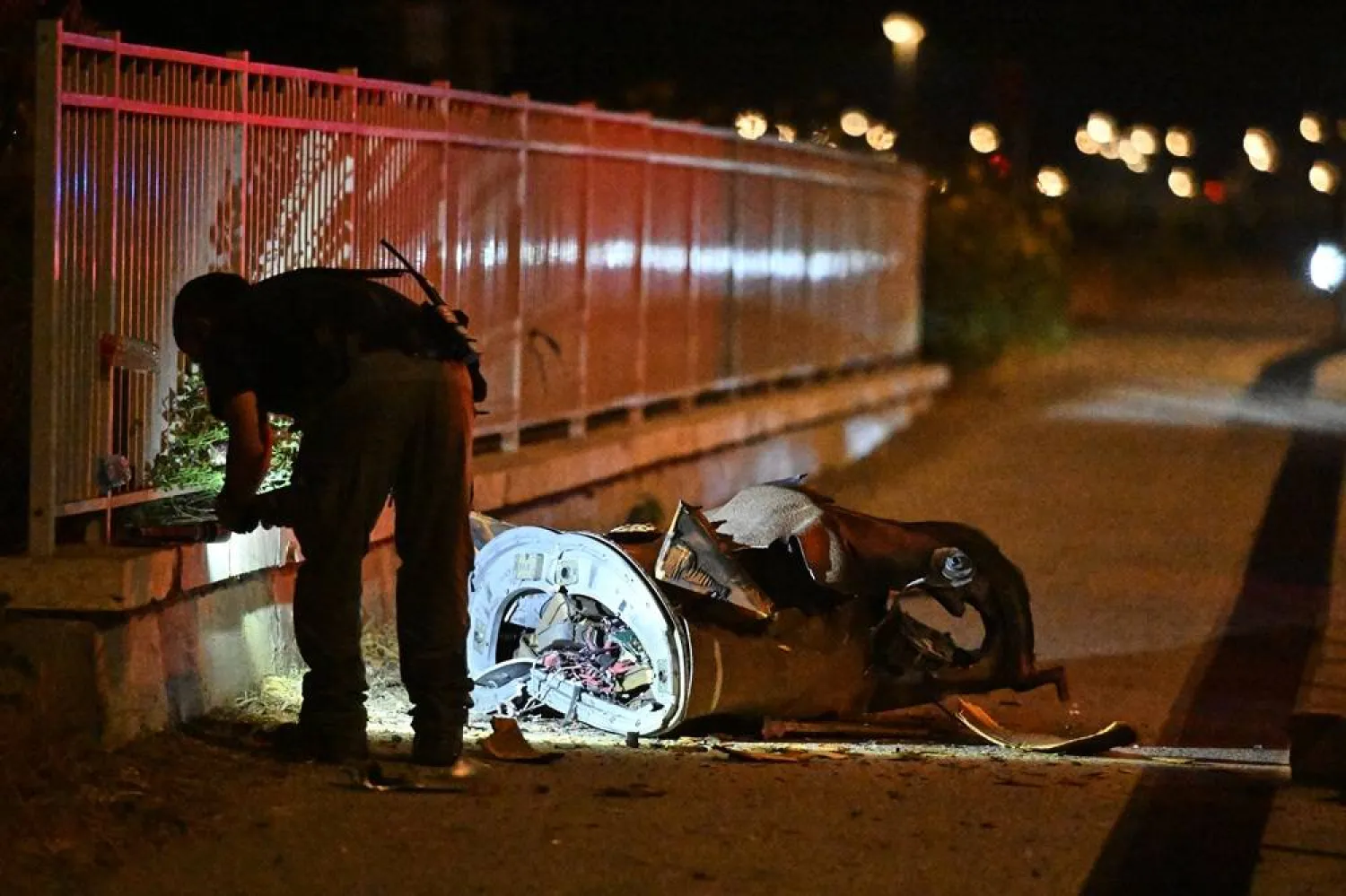
 Israeli security forces examine a fragment of an intercepted Iranian missile in northern Israel, early Monday, June 8, 2026. (AP)
Israeli security forces examine a fragment of an intercepted Iranian missile in northern Israel, early Monday, June 8, 2026. (AP)
TT

Israel and Iran Trade Strikes, Threatening to Drag Region Back to Full-Scale War

 Israeli security forces examine a fragment of an intercepted Iranian missile in northern Israel, early Monday, June 8, 2026. (AP)
Israeli security forces examine a fragment of an intercepted Iranian missile in northern Israel, early Monday, June 8, 2026. (AP)

Israel and Iran traded fire early Monday in retaliatory strikes that threatened to drag the wider Middle East back into a full-scale regional war, while Yemen’s Houthi militants also fired at Israel and warned they would target Israel-affiliated ships in the Red Sea, further escalating tension. 

Israel launched strikes on central and western Iran early Monday in response to missile fire from Tehran, in the most serious crossfire since an April 8 ceasefire was reached in the Iran war. Iran retaliated with waves of attacks, and explosions could be heard in central Israel as Israeli air defenses sought to intercept incoming Iranian fire. 

Iran's paramilitary Revolutionary Guard said it had targeted two military bases in Israel, describing the attack as being part of Operation Nasr, or “Victory.” The Guard said it launched the missiles after Israel targeted radar sites in three areas of Iran. 

Tehran warned of retaliation on Sunday after Israel struck Beirut’s southern suburbs without warning in defiance of Washington’s request days ago to stand down. 

Monday marked the 100th day of the Iran war, launched Feb. 28 when Israel and the United States killed Supreme Leader Ali Khamenei and other senior Iranian leaders. The war raged until reaching a nominal ceasefire on April 8, but a permanent end to the hostilities have been challenged by Iran's chokehold on the Strait of Hormuz, through which a fifth of all traded oil and natural gas once passed in peacetime, as well as fighting between Israel and the Lebanese Iran-backed Hezbollah group. 

With global energy supplies threatened, Iran still holding a vast stockpile of highly enriched uranium and even the Houthis getting involved in the fighting Monday, the risks of the war fully erupting again appears to be rising. 

Houthis claim attack on Israel  

Yemen’s Iran-backed Houthis claimed an attack on Israel and said Israel-affiliated vessels would again be a target in the Red Sea, putting the Red Sea, the Gulf of Aden and the narrow Bab el-Mandeb Strait connecting them in danger. 

The statement from Brig. Gen. Yahya Saree was broadcast on the Houthis’ al-Masirah satellite news channel. During the Israel-Hamas war in the Gaza Strip, the Houthis killed at least nine mariners and sunk four ships in over 100 attacks, often targeting vessels with tangential or no ties at all to Israel. 

The assaults upended shipping in the Red Sea, through which about $1 trillion of goods passed each year before the war. 

They also greatly disrupted transits through Egypt’s Suez Canal, which links the Red Sea to the Mediterranean. The canal remains one of the top providers of hard currency for Egypt, providing it $10 billion in 2023 as its wider economy struggles. 

Israel strikes Iran  

Iranian state television reported the sound of explosions being heard in Isfahan, Karaj, Tabriz and Tehran, without immediately elaborating. A witness in Tehran described hearing at least one large blast somewhere to the west of the country’s capital city.  

Iran closed the airspace around Tehran’s Imam Khomeini International Airport, the country’s main airfield, after the Israeli attack. 

Officials offered no details on what had been struck, nor any damage information. The Revolutionary Guard said that Israel used air-launched ballistic missiles in its attack Monday morning, without elaborating. 

The semiofficial Fars and Mehr news agencies said Israeli strikes had hit a petrochemical factory in city of Mahshahr in Khuzestan province. It did not elaborate on damage. 

The Israeli military later confirmed the strike on the petrochemical plant. 

Earlier Monday, sirens sounded across Israel after its military said a missile launched from Yemen targeted the country, without elaborating. Israel’s rescue services said there were no reports of casualties or impacts from the launch from Yemen. 

Trump says ‘I call the shots,’ not Israel 

The White House did not respond to messages about the Israeli strikes and whether they were done in coordination with the US. 

A senior US official on Sunday said US President Donald Trump had called Israeli Prime Minister Benjamin Netanyahu to urge him not to retaliate immediately for the Iranian missile attack. The official, who spoke on condition of anonymity to describe a private phone call, said that Trump believed he had convinced Netanyahu to wait. 

Trump “got Bibi to hold off for the time being,” the official said. The official would not offer any other details of the call, and there was no immediate comment from Netanyahu’s office. 

For days, negotiations between Iran and the United States over the fragile ceasefire in the war had been stalled by the fighting between Israel and Hezbollah. Israel now occupies southern Lebanon and had moved into areas of the country it hadn't held in a quarter century, leading to fears about them further widening their campaign. 

On Sunday, Israel launched airstrikes in Beirut's southern suburbs. Iran retaliated with its own strike on Israel, which led to Monday morning's attack by Israel on Iran. 

Trump earlier told a Fox News Channel reporter that he wanted the Iranians to stop firing missiles and return to the negotiating table. He also said that Israel’s strikes in Lebanon earlier Sunday were not coordinated with the US and “I’m not happy about it.” 

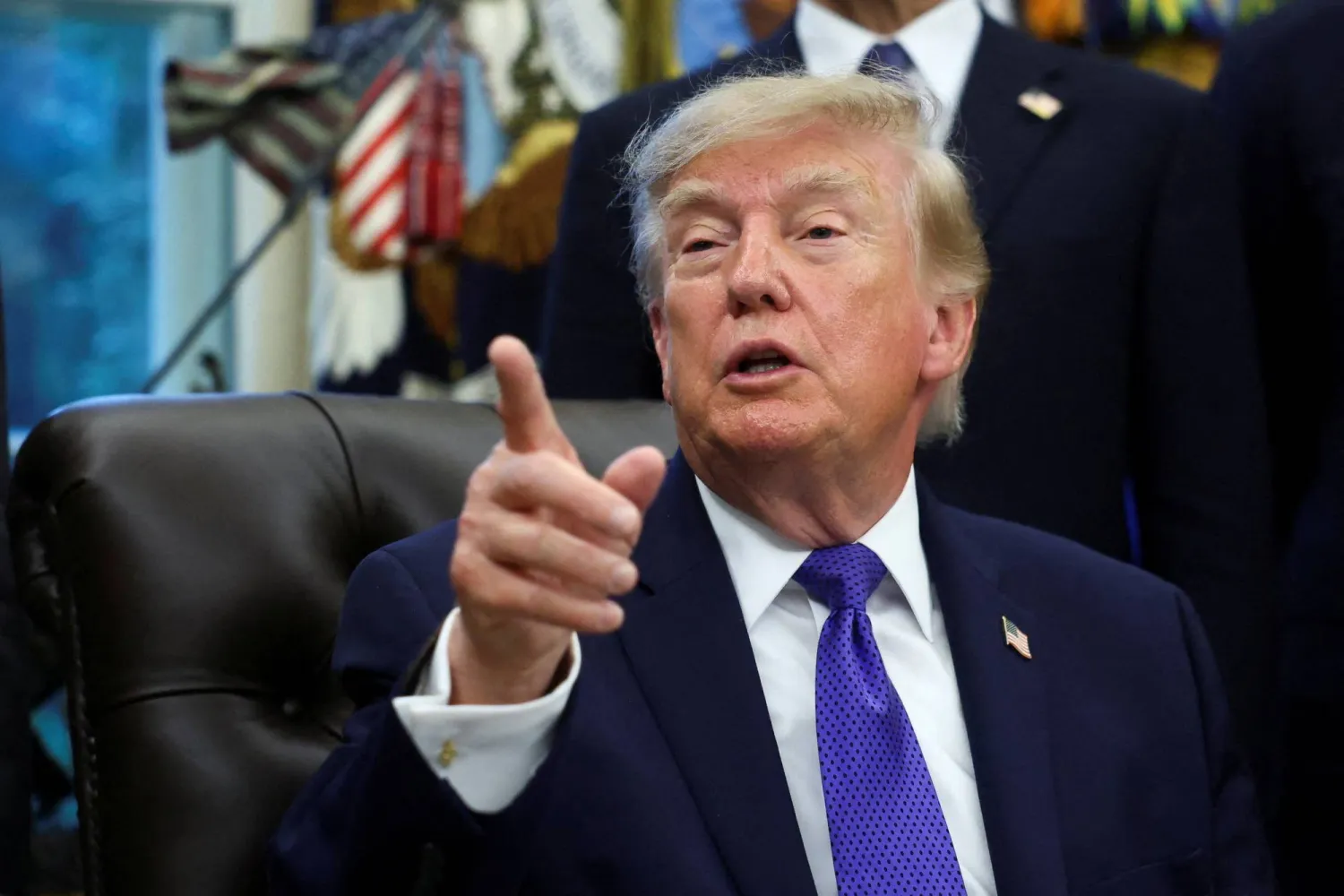
Speaking to The Financial Times before the Israeli strikes on Iran, Trump insisted he dictated terms to Netanyahu on how the war should be prosecuted. 

“He won’t have any choice,” Trump told the newspaper in a telephone interview. “I call the shots. I call all the shots. He (Netanyahu) doesn’t call the shots.” 


Armenia PM’s Ruling Party Wins Polls, Show Preliminary Results

 Armenian Prime Minister and leader of the Civil Contract party Nikol Pashinyan holds a press conference following the parliamentary election at the party's headquarters in Yerevan early on June 8, 2026. (AFP)
Armenian Prime Minister and leader of the Civil Contract party Nikol Pashinyan holds a press conference following the parliamentary election at the party's headquarters in Yerevan early on June 8, 2026. (AFP)
TT

Armenia PM’s Ruling Party Wins Polls, Show Preliminary Results

 Armenian Prime Minister and leader of the Civil Contract party Nikol Pashinyan holds a press conference following the parliamentary election at the party's headquarters in Yerevan early on June 8, 2026. (AFP)
Armenian Prime Minister and leader of the Civil Contract party Nikol Pashinyan holds a press conference following the parliamentary election at the party's headquarters in Yerevan early on June 8, 2026. (AFP)

Armenian Prime Minister Nikol Pashinyan's ruling party has won parliamentary elections, preliminary results showed on Monday, cementing the nation's Westward tilt after threats from Moscow and claims of Russian interference.

Pashinyan has sought to loosen the ex-Soviet republic's dependence on Moscow, while forging closer ties with the West.

His ruling Civil Contract party got 49.8 percent of the vote, comfortably ahead of the 23.3 percent of the Russian-Armenian billionaire Samvel Karapetyan's Strong Armenia alliance, after all electoral precincts declared results, the Central Election Commission said.

Two other opposition forces -- ex-president Robert Kocharyan's "Armenia" alliance and the Prosperous Armenia party -- also cleared the electoral threshold to get into parliament, winning 9.9 percent and four percent of the vote, respectively.

Turnout was 59 percent, the commission said.

Pashinyan hailed his party's "historic victory that will ensure Armenia's eternity and development."

He pledged to "continue the course of rapprochement with the West" while also developing Armenia's relations with Russia.

His opponent Karapetyan called the elections "shameful" and denounced violations and repression, saying dozens of his campaign staff had been arrested.

Armenia's Investigative Committee said it had opened 59 criminal cases over alleged electoral violations -- including multiple voting -- and detained nine people.

Pashinyan has frozen participation in a Russia-led security bloc while deepening ties with the European Union and United States, and set Armenia on a path toward possible EU membership.

Moscow has bristled at the possible loss of yet another ally in its backyard.

In a pointed remark, Russian President Vladimir Putin said in May: "We all see what is happening with Ukraine now... How did it all begin? With Ukraine's attempt to join the EU."

The Kremlin has been accused of seeking to sway the vote.

Analysts have noted misinformation on the web, hacker activity and Kremlin-friendly narratives portraying Western cooperation as dangerous.

In the weeks before the vote, Russia banned the import of several products from Armenia -- seen as a move to heap economic pressure on the country.

And Armenian officials have warned "enemies of freedom" are funding propaganda efforts.

For many Armenians, the opposition remains associated with Russian influence and oligarchs.


Taiwan Says China Maritime Operation ‘Provocative’

A crew member on board a Taiwan Coast Guard ship monitors a Chinese Coast Guard vessel in waters east of Taiwan. (AFP file)
TT

Taiwan Says China Maritime Operation ‘Provocative’

A crew member on board a Taiwan Coast Guard ship monitors a Chinese Coast Guard vessel in waters east of Taiwan. (AFP file)

Taiwan said Monday that China's maritime operation in waters to the east of the island democracy was "provocative" and "expansionism in disguise".

Chinese ships are conducting a "law enforcement operation" in response to talks between Japan and the Philippines to draw a boundary in waters to the east of Taiwan, Chinese state media said Saturday.

China, which asserts Taiwan is part of its territory, called the talks "illegal" and has claimed exclusive control over the waters.

"It's nothing but expansionism in disguise that threatens regional peace & stability," Taiwan's National Security Council chief Joseph Wu wrote on X.

Defense Minister Wellington Koo said the Chinese actions were "provocative".

Koo told reporters that the move was a "cognitive warfare operation" designed to claim that the waters off Taiwan's east coast fell within China's "enforcement jurisdiction".

Taiwan's coast guard has deployed seven patrol vessels to monitor the Chinese ships.

The Taiwanese vessels expelled four Chinese ships from waters off the island's southernmost tip on Sunday.

The ships have since moved further east, Taiwan's coast guard said Monday, after an hours-long standoff.


Ukrainian Drone Kills One in Russia-Annexed Crimea, Moscow-Installed Governor Says

A drone crater at the site of a Russian strike on a residential area in Odesa, Ukraine, 01 June 2026, amid the Russian invasion. (EPA)
TT

Ukrainian Drone Kills One in Russia-Annexed Crimea, Moscow-Installed Governor Says

A drone crater at the site of a Russian strike on a residential area in Odesa, Ukraine, 01 June 2026, amid the Russian invasion. (EPA)

A Ukrainian drone struck a train in Crimea, killing its assistant driver and injuring the driver, the peninsula's Russian-installed governor Sergei Aksyonov said in a Telegram post early on Monday.

Passengers on the train, commuting between Moscow and Simferopol, the main city of the Russia-annexed Black Sea Crimea peninsula, were not harmed, Aksyonov added. The train connection in Crimea was ‌suspended, Interfax ‌news agency reported.

Russia seized and ‌annexed ⁠Crimea in 2014 - ⁠long before its 2022 full-scale invasion of Ukraine - after public protests in Kyiv prompted a Moscow-friendly president to flee Ukraine. Crimea is a popular destination for Russian tourists.

Drone raid sirens were sounded in the early hours of Monday in the Black ⁠Sea port of Novorossiysk, a ‌major export hub for oil ‌and grains in Russia's Krasnodar region about a ‌two-hour drive from the bridge Moscow built to ‌connect to Crimea, local authorities said on Telegram.

The most recent Ukrainian drone strikes, attacking fuel infrastructure, have forced the Russian-controlled Crimea to tighten its rationing of fuel ‌supplies.

In the Crimean port of Sevastopol, the peninsula's second-largest city where the Russian ⁠Black ⁠Sea fleet is stationed, the local Russian-installed governor, Mikhail Razvozhayev, said on Telegram that fuel rationing would continue.

"The number of (electronic) codes issued for (fuel refill at) the gas stations for tomorrow was bigger than yesterday. Those were gone in just a few dozen seconds," he said on Monday.

"Those who received a code today will not be able to get the new one for the next seven days."

Reuters could not independently verify all the reports.