
Pentagon Sees Growing Espionage Threat from Israel

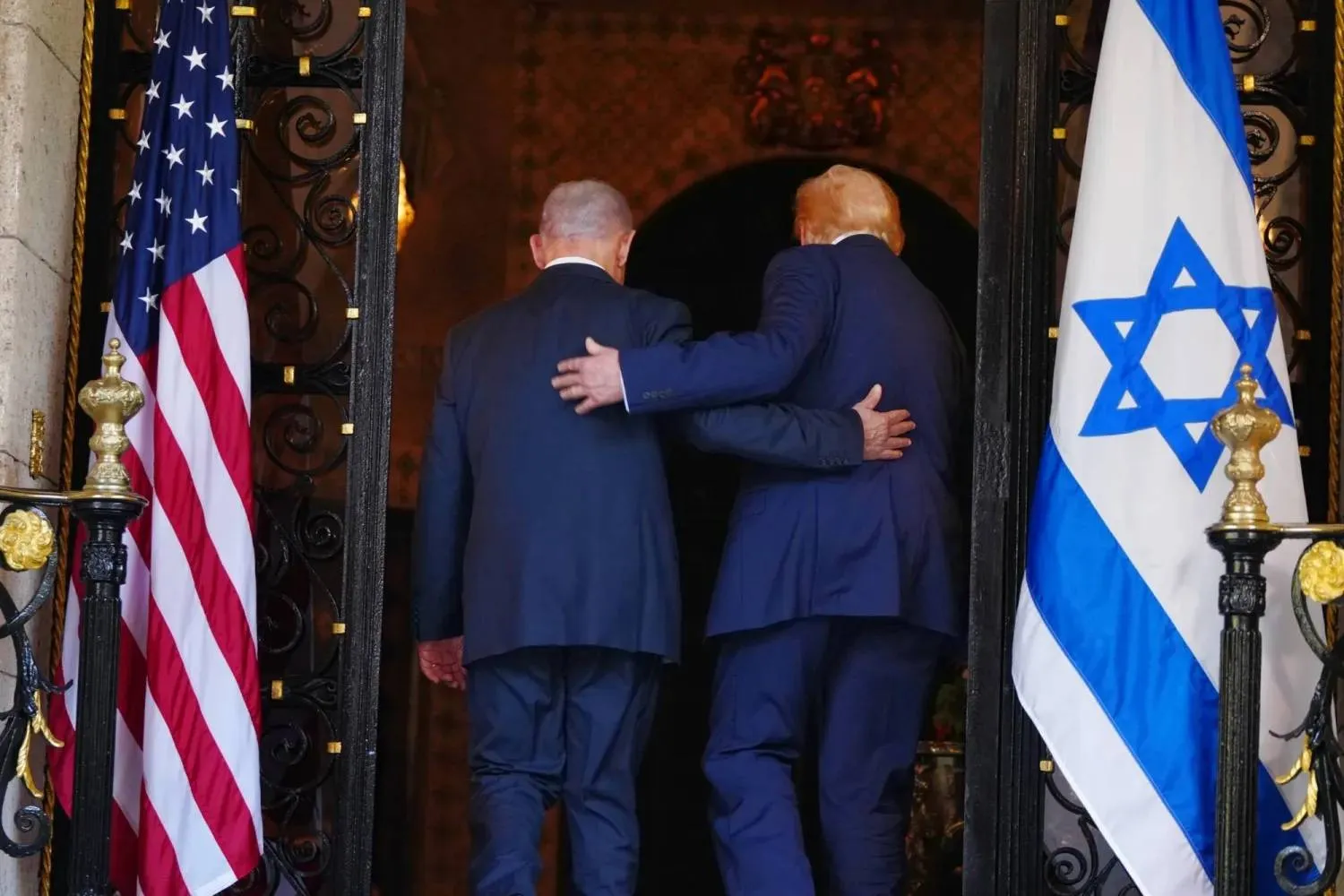
President Donald Trump and Israeli Prime Minister Benjamin Netanyahu last December. (The New York Times)
TT

Pentagon Sees Growing Espionage Threat from Israel

President Donald Trump and Israeli Prime Minister Benjamin Netanyahu last December. (The New York Times)

Washington: Julian E Barnes, Eric Schmitt

Recent US intelligence reports have raised concerns about Israeli spy agencies eavesdropping on American negotiators working on a peace deal with Iran, amid rising concern over a more general counterintelligence threat by Israel.

Israel and the United States have long known, and tolerated, that each was spying on the other. But an intensified Israeli effort to learn about US positions in talks with Iran has crossed a line, according to some American officials.

The reports include concerns that Israel has stepped up its efforts to eavesdrop on senior American officials, including Steve Witkoff, President Trump’s top negotiator, Elbridge A Colby, the Pentagon’s top policy official, and one of his main deputies, Michael P DiMino IV.

Another report, written by the Defense Intelligence Agency and other military intelligence offices and focused on earlier events going back several years, said that the counterintelligence threat level posed by Israel had been increased in recent weeks to the top level, from high to critical.

The report, to which the Defense Counterintelligence and Security Agency contributed, outlines various efforts by Israel to spy on American military personnel and government officials.

The reports and the intensified concern about Israeli spying come at an especially sensitive time.

Israel and the US have been fighting the war against Iran together, and have never had such close military coordination as they do now, with Israeli military officers working side-by-side with their American counterparts at US Central Command.

The US military is sharing huge amounts of tactical and operational information with its Israeli counterparts. But senior American officials said that Israel is looking for insights into Trump’s strategy and shifting stances on the peace talks.

The new warning could potentially complicate efforts to further integrate military war planning between US Central Command and Israel, especially if the Pentagon makes a decision to place new restrictions on information shared with Israeli officers.

There has already been tension between the two nations as Trump pursues a peace deal even as Prime Minister Benjamin Netanyahu of Israel seeks to further degrade Iran’s capabilities, weaken or topple its regime and assault Tehran’s proxy in Lebanon, Hezbollah.

The Defense Intelligence Agency (DIA) report was drafted after incidents in which American defense personnel in Israel detected that software to tap their communications had been surreptitiously installed on their phones.

The existence of the Defense Intelligence Agency report and the increased threat level were reported earlier by NBC News.

The Defense Department declined to comment. A White House official, speaking on the condition their name not be used, said the account was false.

A spokesperson for the Israeli embassy in Washington also disputed claims that Israel poses a counterintelligence threat, saying that Israel does not spy on American officials or entities.

The developments were described by several current and former US officials, speaking on the condition of anonymity to discuss sensitive intelligence matters.

They said that in some respects the counterintelligence warning is no surprise. Israel has long engaged in aggressive intelligence collection operations against both its enemies and its allies, as does the United States.

Still, Israel’s counterintelligence threat level is now higher than any other ally and higher than some adversarial countries. Of American allies, only South Korea, which is rated at high in certain situations, approaches the concern with Israel’s espionage efforts, the officials said.

The aggressiveness of the Israeli intelligence collection on top US officials during the second Trump administration has been “unhinged,” one senior official said.

Two senior US military officials said that American personnel, particularly those serving in Israel or with Israeli counterparts, were well aware of the counterintelligence risks before the new report.

The officials, who spoke on the condition of anonymity to discuss internal assessments, said US personnel employ a range of security procedures and protocols to help counter the threat and to protect their cellphones and other electronic devices, especially while traveling in Israel, but declined to describe those measures in detail for security reasons.

Cooperation between the two militaries is very close, but each side also needs to keep its most sensitive information secret.

At the US-led Civil-Military Coordination Center in Kiryat Gat, Israel, for instance, American and Israeli military and diplomatic personnel work side-by-side to enforce the Gaza cease-fire and facilitate humanitarian efforts. But the building also has a US-only floor and an Israeli-only floor where personnel from each country can discuss the most sensitive topics.

The report says counterintelligence incidents began increasing in late 2024, as the Biden administration pressed Israel to curb its attacks on Gaza, and continued into 2025, as the Trump administration weighed options to attack Iran.

The report, which incorporated contributions from a number of military intelligence agencies, also details several episodes in recent years. In 2021, Israeli military intelligence officers were caught planting listening devices at DIA headquarters. Last year, officers from Shin Bet, Israel’s domestic intelligence agency, were discovered to have tried to plant a listening device in a Secret Service vehicle.

While the DIA document does not explicitly discuss the peace negotiations, other recent intelligence reports have raised concern about Israelis’ listening to Witkoff and other top negotiators as they try to reach a long-term agreement for a peace deal between the US and Iran.

The tendency of some senior Trump administration officials to fly on private aircraft, to conduct national security business on their personal phones and to reject staffing from US embassies abroad made them especially vulnerable targets for the spy services of allies and adversaries alike, said a former senior US official who has dealt extensively with Israel.

Other current officials also acknowledged the use of personal cellphones by top American officials has made them easy targets for eavesdropping.

US and Israel were largely aligned at the beginning of the Iran war, with Trump endorsing Netanyahu’s long-sought goal to push the theocratic government from power.

But the war aims quickly diverged, as the United States focused more on trying to erode Iran’s military capabilities to force concessions at the bargaining table, while Israel hoped the Iranian hard-line government would lose its grip on power.

It is not entirely clear why Colby, who is in charge of Pentagon policy, would be a target. But he is one of the most prominent proponents inside the US government of a restrained foreign policy. DiMino is in charge of Pentagon policy for the Middle East, making him a person of natural interest to Israel.

The New York Times


Trump's Iran Deal Faces Wide Criticism and Some Fear it Could Cost Republicans the Midterm

A sign protesting the Iran war and its impact on gas prices is seen during a protest outside of the US Capitol (AFP)
TT

Trump's Iran Deal Faces Wide Criticism and Some Fear it Could Cost Republicans the Midterm

A sign protesting the Iran war and its impact on gas prices is seen during a protest outside of the US Capitol (AFP)

US President Donald Trump’s interim agreement to end the war with Iran has dragged down his approval rating and garnered criticism across the political spectrum — even from his own supporters.

Recent interviews with 18 Americans who voted for Trump in 2024, a group that Reuters has interviewed monthly since he returned to office, show that most have doubts about the deal, which has reopened the Strait of Hormuz while temporarily lifting US oil sanctions on Iran and authorizing a $300 billion fund for its reconstruction.

“We need to truly weaken the Iranian regime instead of this, ‘beat them up a little bit and then step back and let them rebuild’,” said Terry Alberta, 65, a pilot in Michigan.

Overall, only a quarter of Americans believe the war with Iran was worth the costs, and a majority worry that the truce with Tehran is unlikely to last, according to the latest Reuters/Ipsos poll.

Many of the Trump voters feared his unpopular concessions to Iran would make it harder for Republicans to retain control of Congress in November's midterm elections, although those most critical of the deal had already begun to lose faith in the president before the war.

Six in the group believed he still had plans to bring down the Iranian government.

The group largely supported the war during its early days, believing US strikes were necessary to deplete Iran's stockpile of long-range missiles and cripple its nuclear program.

Lack of Trust in Tehran

Nearly four months later, with Iran politically emboldened and many of its military capabilities still intact, 14 of the voters criticized some aspects of the memorandum of understanding announced on June 14.

Most were skeptical that Tehran could be trusted to honor any agreement and dismayed by the prospect of granting it billions of dollars to rebuild.

The $300 billion fund will be a private investment vehicle rather than a government-funded plan, though exact details have not been released.

Juan Rivera, 26, said Trump “criticized his predecessors about negotiating with terrorists, and he’s basically done the same exact thing.”

Trump’s Midterm Endorsement now ‘Kiss of Death?’

Rivera still plans to support mostly Republican candidates in the midterms. But he said that when he volunteered recently to canvass Latino voters in his community near San Diego, many fellow Trump supporters were so disappointed by the president's handling of the war, among other issues, that they felt unmotivated to back his party in November.

“A lot of people say: ‘Why should I vote when the president's not doing what he promised?’” Rivera recalled.

Asked for comment, a White House spokesperson told Reuters that Trump's achievement “on the battlefield and at the negotiating table is nothing short of remarkable and will strengthen American security for many years.”

Steve Egan, 65, a promotional product distributor in Tampa, soured on Trump in early 2025 after tariff-triggered price hikes hurt his business. From the outset, Egan was skeptical of the president's rationale for the war and upset that it further jacked up the price of gas and other goods.

“Right now it doesn't seem like it's been worth it to go through all that,” he said, noting that the stated goal of regime change “didn't happen.”

His opinion of the president is now so low, Egan said, that Trump's endorsement would be “the kiss of death” for him when deciding which candidates to vote for in the midterms.

Brandon Neumeister, 37, a Pennsylvania state corrections worker and former National Guardsman, said the conflict seemed only to have benefited oil companies. Even before the war, though, Neumeister said he was unlikely to vote in November because he was disgusted with politics.

Robert Billups, 35, of ⁠Washington state, was cautiously optimistic the peace deal would hold. But he believed the war had spawned more hostility toward the United States rather than making the country safer.

Vice President JD Vance, tasked with leading US negotiations with Iran, has fallen in his esteem, and Billups said he no longer feels preferential toward Republican candidates. Come November, “whoever has a better strategy this time, I'm gonna vote for them regardless of their party,” he said.

‘A Bigger Plan’

Though Trump has been adamant about wanting to end the war, six ⁠of his more loyal voters expressed hope that he still had secret plans to bring Iran to heel.

Kate Mottl, 63, a secretary at a municipal office in the Chicago suburbs, said that “destroying” the regime in Tehran seemed like the only way to avert future conflict.

It would be “very disappointing” if Trump refrained from further military intervention, Mottl said, adding that she believed “there’s a bigger plan here.”

Rich Somora, 62, an engineer in North Carolina, agreed that Trump probably had more aggressive ⁠plans up his sleeve. “I can't imagine that he would have gone through all this and not found out a way to get rid of those mullahs,” he said.

According to diplomats and analysts, however, the war has only strengthened the grip of Iran’s clerical rulers. If they remain in power for another month, Somora said, he'll start to worry.

In Prescott, Arizona, 74-year-old retiree Joyce Kenney said she supported lifting sanctions and believed restoring Iran's ability to trade with other countries would ensure its leaders honored the truce.

But the reconstruction fund was a bridge too far: “That's not our responsibility,” she said.


Iran, US Continue Escalating Attacks

This aerial photograph shows boats anchored off Oman's northern Musandam Peninsula near the Strait of Hormuz on June 27, 2026. (Photo by AFP)
TT

Iran, US Continue Escalating Attacks

This aerial photograph shows boats anchored off Oman's northern Musandam Peninsula near the Strait of Hormuz on June 27, 2026. (Photo by AFP)

Iran and the US continued their attacks in the Gulf as ​each accused the other of violating an interim deal signed less than two weeks ago to end their four-month-old war.

Shortly after President Donald Trump warned the US might "militarily complete the job", Iran early on Sunday launched missiles and drones on US military sites in Kuwait and Bahrain, continuing a series of escalating attacks.

The US military said earlier it had struck Iran again, hours after a tanker was hit in the Strait of Hormuz, the world's most important energy shipping route, which Iran had largely cut off for most of the conflict.

The 14-point US-Iran interim agreement was meant to halt the fighting, which the US and Israel started on February 28, and reopen the strait to shipping while talks began on more deep-seated issues, such as Iran's nuclear program.

One round of mediated talks, led by ‌Vice President JD Vance ‌and Iran's Parliamentary Speaker, Mohammad Baqer Qalibaf, was held in Switzerland a week ago and Washington ​then ‌waived ⁠sanctions on Tehran, ​but ⁠the fighting and recriminations have since resumed and intensified.

"There may come a point when we are no longer able to be reasonable, and will be forced to militarily complete the job that we very successfully started," Trump posted on social media. "If that happens, the Islamic Republic of Iran will no longer exist!"

About an hour after Trump's post, the Kuwaiti army said its air defenses were responding to "hostile" missile and drone attacks, while sirens sounded in Bahrain, according to that country's interior ministry.

US Central Command said earlier that its forces had carried out fresh strikes after a Panama-flagged tanker was attacked by ‌an Iranian drone on Saturday.

"Iran was given a chance to honor the ceasefire agreement but elected not to," Central Command said in a statement, adding the strikes were "in direct response to continued Iranian aggression against commercial shipping" and targeted Iranian military surveillance, communications, air defense, drone storage and mine-laying facilities.

Iranian state broadcaster IRIB said explosions were heard in Sirik in southern Iran, without providing further details.

The Guards said "America's blind shots at Sirik will not resolve our dominance over the Strait ‌of Hormuz. But our shots at violators will remind the rest of the vessels of the clear passage route."


Israel Defense Minister Says Will Use ‘Force’ Against Iran if It Prevents Lebanon Deal Implementation

 A car with Iranian and Hezbollah flags attached to it as displaced people make their way back to their homes in southern Lebanon following an interim deal between the US and Iran, in Sidon, Lebanon, June 24, 2026. (Reuters)
A car with Iranian and Hezbollah flags attached to it as displaced people make their way back to their homes in southern Lebanon following an interim deal between the US and Iran, in Sidon, Lebanon, June 24, 2026. (Reuters)
TT

Israel Defense Minister Says Will Use ‘Force’ Against Iran if It Prevents Lebanon Deal Implementation

 A car with Iranian and Hezbollah flags attached to it as displaced people make their way back to their homes in southern Lebanon following an interim deal between the US and Iran, in Sidon, Lebanon, June 24, 2026. (Reuters)
A car with Iranian and Hezbollah flags attached to it as displaced people make their way back to their homes in southern Lebanon following an interim deal between the US and Iran, in Sidon, Lebanon, June 24, 2026. (Reuters)

Israeli defense minister vowed on Saturday to respond with "great force" if Iran attacked Israel in an attempt to prevent the implementation of an agreement with Lebanon aimed at securing peace between the two countries. 

"If Iran tries to attack Israel to prevent the implementation of the agreement, we will act against it with great force," Israel Katz said in a video statement, adding that the agreement with Lebanon had dealt a "strategic blow to the Iranian axis". 

Lebanon and Israel, under US sponsorship, signed an agreement on Friday hoping to end hostilities between them, but experts say it does not guarantee Israeli withdrawal from Lebanon and its implementation depends on Hezbollah and its backer Iran. 

Hezbollah leader Naim Qassem condemned the agreement on Saturday, accusing the government of surrendering Lebanese sovereignty and declaring the agreement null and void. 

Lebanon took the historic step of negotiating directly with Israel despite them having no diplomatic relations, as a reaction to Tehran-backed Hezbollah drawing the country into the Middle East war on March 2. 

Israel said it will not leave occupied Lebanese territory unless the group is disarmed. 

Katz added on Saturday that Israeli forces had been ordered to prepare for an extended stay in the so-called occupied security zone in southern Lebanon, after Israel and Lebanon agreed on the framework to end hostilities. 

"The prime minister and I have instructed the army to prepare for an extended stay in the security zone," Israel Katz said in a video statement, referring to an area up to 10 kilometers (six miles) inside the Lebanese territory. 

"The important principle established in the agreement is that there will be no redeployment by Israel in southern Lebanon, no withdrawal, as long as the terrorist organization Hezbollah is not disarmed throughout Lebanon," he said.