


Trump Vows Attacks on Iran for ‘Playing’ the US over Peace Deal

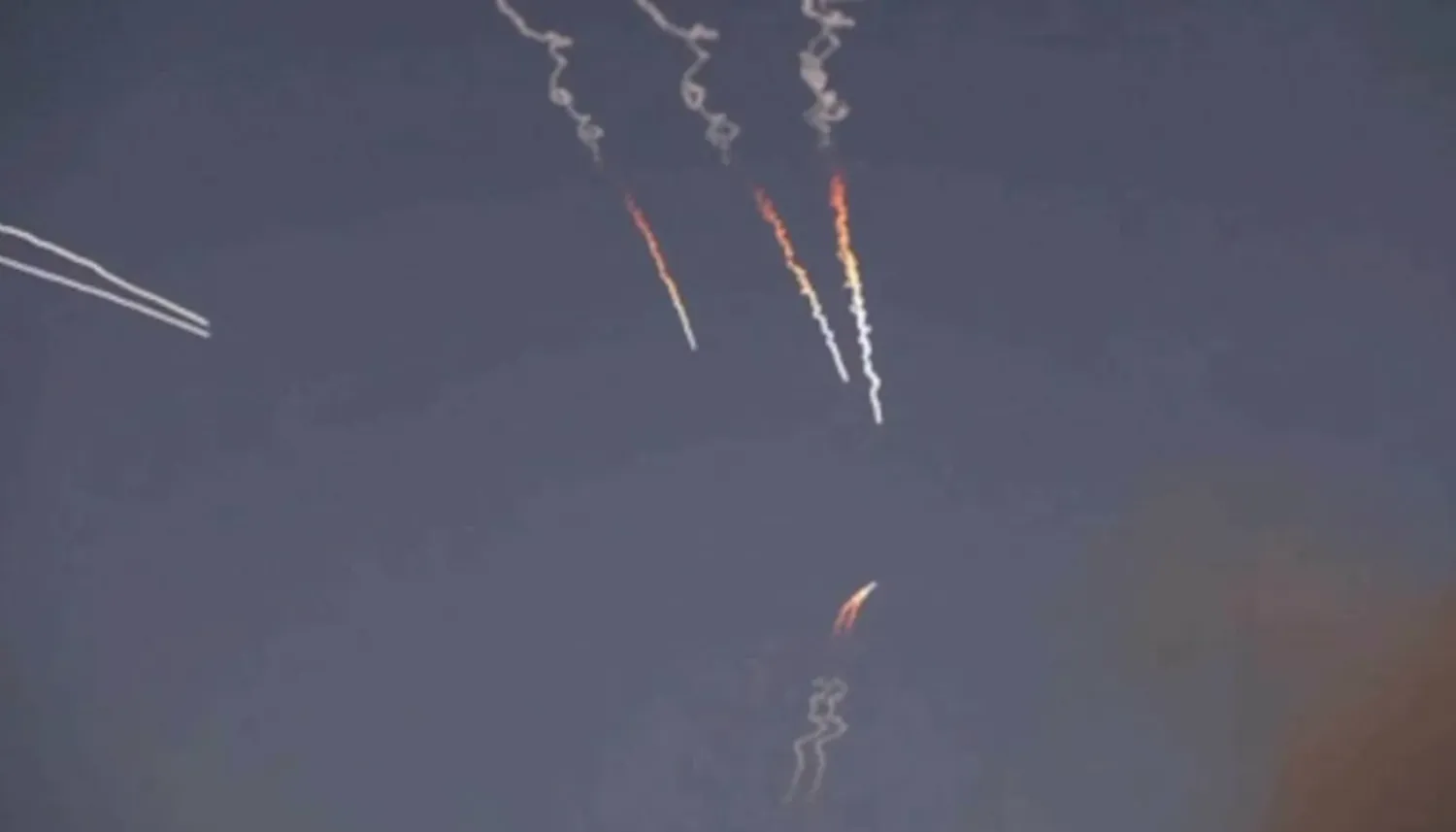
Iranian missiles are launched, as Iran's Revolutionary Guards said they had carried out attacks against a US base in Jordan and 21 other targets in the Gulf on Wednesday in retaliation for American strikes around the Strait of Hormuz, from a location given as Tehran, Iran, released June 10, 2026. - REUTERS
TT

Trump Vows Attacks on Iran for ‘Playing’ the US over Peace Deal

Iranian missiles are launched, as Iran's Revolutionary Guards said they had carried out attacks against a US base in Jordan and 21 other targets in the Gulf on Wednesday in retaliation for American strikes around the Strait of Hormuz, from a location given as Tehran, Iran, released June 10, 2026. - REUTERS

President Donald Trump warned on Wednesday that he would renew US attacks on Iran, saying Tehran had taken too long to agree a deal to end the Middle East war and accusing its negotiators of "playing us for suckers." 

The remarks came after Iran and the US once again traded fire following the downing of an American helicopter, further straining a ceasefire that took effect in April but has been marked by sporadic flare-ups of violence. 

The exchange drew international calls for restraint on the eve of the World Cup, which the US is co-hosting and Iran is participating in, including from the head of the United Nations who cautioned against a return to all-out war. 

"We hit them hard yesterday. We're going to hit them again hard today," Trump told reporters in the Oval Office. 

"We were really close to a deal, but they keep tapping us along, they keep playing us for suckers." 

The US leader had earlier accused Iran of taking too long to negotiate a peace deal after weeks of talks and warned it would "have to pay the price", offering a different assessment to a day before when he said talks to agree a peace deal were in the "final throes." 

"Iran is all talk and no action," he said. "They've taken too long to negotiate a deal that would have been great for them, now they will have to pay the price!!!" 

In a sign that diplomacy was continuing however, negotiators from Qatar -- which along with Pakistan has been assisting in mediation efforts -- traveled to Tehran on Wednesday "to meet with the Iranians in an effort to bridge the remaining gaps", a diplomat with knowledge of the situation said. 

At a Security Council meeting on the Middle East, United Nations chief Antonio Guterres suggested that an imperfect ceasefire was preferable to a return to full-scale hostilities. 

"We should not minimize the risks of a lesser fire becoming full fire, or in another word -- full war," he said. 

- Wednesday’s attacks - 

The war, which began with US-Israeli strikes on Iran, threw the region into chaos and rattled global markets before the shaky truce began. 

Iran said it had attacked Jordan and Bahrain on Wednesday after the US carried out strikes on the country in retaliation for the downing of a helicopter. 

The Apache was the second crewed aircraft that Washington has confirmed to have been shot down by Iran during the war. Its two crew members were rescued, the US military said. 

Bahrain said it intercepted and destroyed "a number of Iranian aerial attacks", while Jordan's military said it shot down five missiles, with no casualties or material damage. 

The Kuwaiti military also said its air defenses were engaging "hostile aerial targets". Iran has recently carried out deadly attacks there too. 

US Central Command (CENTCOM), which oversees American forces in the Middle East, said on X that it had earlier "struck Iranian air defense, ground control stations, and surveillance radar sites near the Strait of Hormuz". 

An American warplane also fired on and disabled a tanker in the Gulf of Oman that was attempting to transport oil from Iran in violation of a US blockade of Iranian ports, the US military said on Wednesday. 

The violence sparked calls for de-escalation from Iranian allies Russia and China. 

A spokesperson for China's foreign ministry called on the warring parties to "stop intensifying the conflict and escalating the situation". 

- 'We've packed our things' - 

Iran has insisted any deal to end the war must include a truce in Lebanon, which was drawn into the conflict when Iran-backed Hezbollah group within its borders fired rockets at Israel on March 2. 

Israel responded with a campaign of airstrikes and a ground invasion that has killed more than 3,600 people. Exchanges of fire with Hezbollah have not stopped despite a nominal truce. 

On Wednesday, a medical source told AFP that Israeli strikes on south Lebanon had killed 12 people. 

On Tuesday, the Israeli military told the entire southern city of Tyre to evacuate, with an AFP correspondent witnessing residents fleeing and heavy traffic heading north after the warning. 

An AFP correspondent in the coastal city of Sidon, further north, saw displaced people arriving from Tyre, some with belongings strapped to the roofs of their cars. 

On Wednesday, a strike hit the center of Sidon, with an AFP correspondent seeing a car burning and emergency personnel heading to the scene after hearing a blast. 

"We've packed our things, and we're leaving," Tyre resident Elias Barbour told AFP. 

"What have we done wrong? What are we supposed to do?" 


Kremlin Says Putin and Trump Agreed During Weekend Call to Talk Again in ‘Near Future’

 Russian President Vladimir Putin listens to Dmity Milyaev, Governor of Tula region of Russia at the Kremlin in Moscow, Monday, July 6, 2026. (Gavriil Grigorov/Sputnik, Kremlin Pool Photo via AP)
Russian President Vladimir Putin listens to Dmity Milyaev, Governor of Tula region of Russia at the Kremlin in Moscow, Monday, July 6, 2026. (Gavriil Grigorov/Sputnik, Kremlin Pool Photo via AP)
TT

Kremlin Says Putin and Trump Agreed During Weekend Call to Talk Again in ‘Near Future’

 Russian President Vladimir Putin listens to Dmity Milyaev, Governor of Tula region of Russia at the Kremlin in Moscow, Monday, July 6, 2026. (Gavriil Grigorov/Sputnik, Kremlin Pool Photo via AP)
Russian President Vladimir Putin listens to Dmity Milyaev, Governor of Tula region of Russia at the Kremlin in Moscow, Monday, July 6, 2026. (Gavriil Grigorov/Sputnik, Kremlin Pool Photo via AP)

The Kremlin said on Monday that Russian President Vladimir Putin and US President Donald Trump had agreed in a weekend call that they would talk again "in the near future," suggesting they are likely to talk this week during or after the NATO summit.

Trump is planning to meet Ukrainian President ‌Volodymyr Zelenskiy on ‌Wednesday in Türkiye where ‌he ⁠will be attending ⁠the NATO summit, a senior US official said on Sunday. The idea, the official said, was to make a renewed push to end the war in Ukraine.

The same official said Trump would likely ⁠follow up with Putin after talking ‌to Zelenskiy. ‌

Asked on Monday if Trump would phone Putin after ‌meeting Zelenskiy, Kremlin spokesman Dmitry Peskov ‌told reporters: "Yes, indeed, both President Putin and President Trump have agreed that their contacts will continue in the near future."

Peskov said Trump ‌had held a pretty consistent position on the conflict in Ukraine.

"You ⁠know, ⁠President Trump, the US president, has a fairly consistent stance, and all these fabrications about him supposedly changing his views like a weather vane are, of course, untrue," said Peskov.

"He is consistent and confident in his understanding of what is happening, but, most importantly, he (Trump) is open to listening to the information that is conveyed to him by Putin."


Netanyahu Urges US Not to Sell F-35 Fighter Jets to Türkiye

Israel's Prime Minister Benjamin Netanyahu gives a news conference in Jerusalem on June 15, 2026. (AFP)
TT

Netanyahu Urges US Not to Sell F-35 Fighter Jets to Türkiye

Israel's Prime Minister Benjamin Netanyahu gives a news conference in Jerusalem on June 15, 2026. (AFP)

Israeli Prime Minister Benjamin Netanyahu on Monday urged the United States not to sell its F-35 fighter jets or components to Türkiye, arguing it would "upset the power balance" in the region.

US President Donald Trump travels later Monday to Ankara for a NATO summit, and his visit could be seen by the Turks as an opportunity to secure acquisition of dozens of jet engines and potential readmission to the F-35 fighter jet program.

The Israeli prime minister however warned that it would be a mistake for Washington to reward Turkish President Recep Tayyip Erdogan, whom Netanyahu said "calls openly for the annihilation of Israel," with advanced military technology.

"I don't think they should be given F-35s or the engines for their fighter jets, because that'll upset the power balance in the Middle East, which is ultimately guaranteed by Israeli air superiority and also by, I think, by America's posture in the Middle East," Netanyahu told Fox News morning show "Fox & Friends."

Last month, Trump promised to make Erdogan "very happy" when asked about Türkiye looking to secure F110 jet engines and regaining access to the F-35 program.

Analysts say Türkiye wants to secure the new engines for use in its flagship KAAN stealth fighter project, as Ankara seeks to join the exclusive club of nations producing fifth-generation combat aircraft, notably the United States, China and Russia.

In 2017 however, Türkiye acquired a Russian S-400 missile defense system, a move that infuriated Washington, which expelled Türkiye from the F-35 program in 2019.

Netanyahu also reiterated that he remains a close ally to Trump, despite hiccups in their relationship in recent weeks over the Iran war.

"We are the best of allies," the Israeli leader said. "My relationship with the president is fine."


French Government Survives No-Confidence Vote Over Heatwave Handling

French Prime Minister Sebastien Lecornu speaks during a parliamentary session on a motion of censure against the government presented by Les Ecologistes (The Ecologists party) at the National Assembly in Paris, France, 06 July 2026. (EPA)
TT

French Government Survives No-Confidence Vote Over Heatwave Handling

French Prime Minister Sebastien Lecornu speaks during a parliamentary session on a motion of censure against the government presented by Les Ecologistes (The Ecologists party) at the National Assembly in Paris, France, 06 July 2026. (EPA)

The French government survived a vote of no-confidence in parliament on Monday over its handling of a severe heatwave in late June.

Backers of the motion said the government failed to do enough to blunt the effects of last month's ‌heatwave in a country ‌where 2,025 excess deaths ‌have ⁠been recorded so ⁠far. French health authorities warned the number would likely rise.

The motion, filed by France's Green Party, which needed 289 votes to pass, was backed by only 132 members of ⁠parliament.

"No one is fooled. This ‌motion will ‌not protect an isolated elderly person. It will ‌not cool down a hospital room. It ‌will not modernize a water supply network. On the contrary, it will add a political crisis to climate, healthcare and international ‌crises that the government already must deal with," French Prime Minister ⁠Sebastien ⁠Lecornu told lawmakers ahead of the vote.

The vote took place as firefighters battled a wildfire in southwestern France that has forced the evacuation of 10,000 people.

Early summer heatwaves in France and across western Europe have made the scorched land particularly vulnerable to wildfires this year, and temperatures are set to rise again.
