


Iran Says UN Watchdog Will Not Be Allowed to Inspect Bombed Nuclear Sites

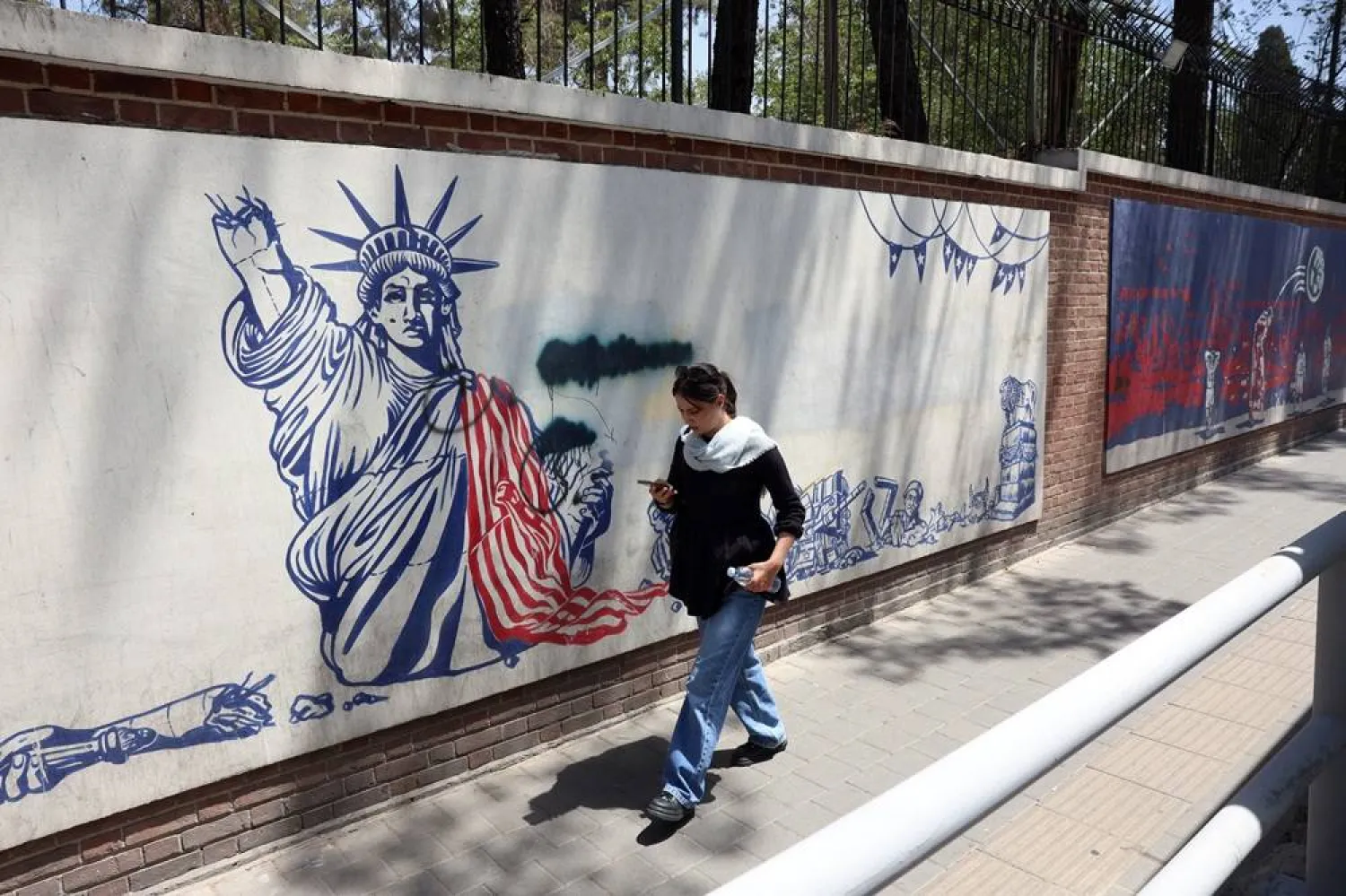
An Iranian woman walks past an anti-US mural next to the former US embassy in Tehran, Iran, 22 June 2026. (EPA)
TT

Iran Says UN Watchdog Will Not Be Allowed to Inspect Bombed Nuclear Sites

An Iranian woman walks past an anti-US mural next to the former US embassy in Tehran, Iran, 22 June 2026. (EPA)

Iran said Tuesday that the UN's nuclear watchdog will not be able to inspect key nuclear sites bombed by the US and Israel last year, as the first round of talks to end the Middle East war wrapped up in Switzerland. 

Tehran and Washington have signed a memorandum of understanding to end a war that sowed chaos across the Middle East and rattled the global economy, embarking on a 60-day period to settle broader issues including Iran's nuclear program and sanctions relief. 

Diplomacy on that final deal ramped up on Tuesday, with Iran's leader heading to mediator Pakistan, US Secretary of State Marco Rubio setting off on a tour of Gulf countries, and Lebanon and Israel due for direct talks in Washington. 

But Iran denied the claim of US Vice President JD Vance that Tehran had agreed to invite International Atomic Energy Agency (IAEA) inspectors back after Iran blocked them from nuclear sites struck by its arch foes in a 12-day war last year. 

"We have not had a meeting with the director general of the IAEA, nor do we have any plans for the agency to inspect Iran's nuclear facilities damaged by the US and Zionist military aggression," foreign ministry spokesman Esmaeil Baqaei told a press briefing attended by AFP. 

When the US joined Israel's war with Iran in mid-2025, it bombed nuclear facilities at Fordow, Natanz and Isfahan, including with powerful bunker-busting bombs dropped from B-2 stealth bombers. 

The extent of the damage remains unknown despite US President Donald Trump claiming they were "obliterated". 

Iran's UN ambassador Ali Bahreini also told reporters Tuesday "there hasn't been such a decision" to allow IAEA inspectors into the country. 

It came as Tehran's top negotiator said Tuesday that the strategic Strait of Hormuz wouldn't return to the days of free passage before the war, despite both sides agreeing Monday to set up communication lines to keep the vital trade route open. 

"The Strait of Hormuz will never return to its pre-war conditions and will be administered by Iran, in accordance with international law," Ghalibaf said on his return from the talks, according to IRNA. 

Yet marine traffic through the waterway reached a record level on Monday since the war began, with at least 35 commodity carriers transiting it, according to maritime tracking firm Kpler. 

- Diplomatic whirlwind - 

After talks wrapped up in Switzerland, Rubio was to visit the United Arab Emirates, Kuwait and Bahrain -- all attacked by Iran during the war -- to discuss the deal with Tehran, the Hormuz strait and regional security. 

The comments of Rubio, an ardent Iran hawk, will be closely watched as he has largely remained out of the spotlight, with Vice President JD Vance taking a lead role in defending the deal. 

Iranian President Masoud Pezeshkian, meanwhile, was visiting key mediator Pakistan on Tuesday, state media reported. 

The round of negotiations launched this weekend at Switzerland's luxury Burgenstock resort raised hopes for a lasting settlement of the conflict and pushed down oil prices. 

Pakistan's Foreign Minister Ishaq Dar told Al-Arabiya on Tuesday that "we are very hopeful that things will progress" after the first round of talks. 

Mediators Pakistan and Qatar said both sides had agreed on a "roadmap" to reach a final document for an agreement within the 60-day timeframe. 

They agreed that four negotiating groups be set up on nuclear issues, sanctions and other matters, Iranian state media said on Tuesday. 

The US Treasury said it had temporarily lifted sanctions on Iran to allow it to produce, sell and deliver crude and related products until mid-August. 

As part of their deal, Washington agreed to release $12 billion in frozen funds to Iran, Iranian state media reported. 

Vance said Iranian assets had not yet been unfrozen and that, if they were, they would be used to buy US goods such as soybeans and would not fund terrorism. 

But Bahreini said Iran would be the "only country" to decide what to do with its assets if they are released. 

- Lebanon war - 

On the Lebanon front, a fifth round of negotiations between Lebanese and Israeli officials is scheduled to begin in Washington on Tuesday. 

Lebanese President Joseph Aoun and Vance discussed a so-called "de-confliction mechanism" for Lebanon on Monday to prevent spiraling Israel-Hezbollah violence. 

Lebanese authorities are seeking the withdrawal of Israeli troops from the country and to separate the negotiations from the US-Iran deal. 

Fighting between Israel and Hezbollah, which drew Lebanon into the Middle East war on March 2 with rocket fire at Israel in support of its backer Iran, has repeatedly threatened to derail peace efforts. 

The goal of the Washington talks will be "to end the cycle of violence for good," and "advance a comprehensive peace and security agreement between the two countries," a US State Department official told AFP on Monday. 

Despite a reduction in hostilities in Lebanon following the declaration of a new ceasefire, two people were killed on Tuesday when Israeli soldiers fired "machineguns in their direction while they were standing near an excavator" unblocking a road in the south, state media reported. 


Lavrov Says Russia Ready to Resume Talks with Ukraine from Point Where They Left Off

 Russian Foreign Minister Sergei Lavrov attends a joint press conference with Madagascar's Foreign Minister following their talks in Moscow on June 19, 2026. (Sergei Ilnitsky / Pool / AFP)
Russian Foreign Minister Sergei Lavrov attends a joint press conference with Madagascar's Foreign Minister following their talks in Moscow on June 19, 2026. (Sergei Ilnitsky / Pool / AFP)
TT

Lavrov Says Russia Ready to Resume Talks with Ukraine from Point Where They Left Off

 Russian Foreign Minister Sergei Lavrov attends a joint press conference with Madagascar's Foreign Minister following their talks in Moscow on June 19, 2026. (Sergei Ilnitsky / Pool / AFP)
Russian Foreign Minister Sergei Lavrov attends a joint press conference with Madagascar's Foreign Minister following their talks in Moscow on June 19, 2026. (Sergei Ilnitsky / Pool / AFP)

Russian Foreign Minister Sergei Lavrov said on Tuesday that Russia was ready to resume peace negotiations with Ukraine from the point where they left off.

"We are ready ‌to talk ‌with Kyiv, ‌as ⁠we have always ⁠been," Lavrov told reporters, referring to talks that took place in Istanbul soon after the start ⁠of the war in ‌2022 ‌and were resumed in 2025.

However, ‌he did not ‌signal any shift in Moscow's demand, rejected by Kyiv, for Ukraine to ‌surrender the remaining part of the Donbas region ⁠that ⁠it has successfully defended from Russian forces.

The last US-mediated peace talks took place in February, before the United States and Israel launched a war against Iran.


Armed Group in Nigeria Kills at Least 20 People and Exchanges Gunfire with Police

Security personnel stand guard near Eagle Square during a Democracy Day protest in Abuja, Nigeria, June 12, 2026. REUTERS/ Marvellous Durowaiye
TT

Armed Group in Nigeria Kills at Least 20 People and Exchanges Gunfire with Police

Security personnel stand guard near Eagle Square during a Democracy Day protest in Abuja, Nigeria, June 12, 2026. REUTERS/ Marvellous Durowaiye

An armed group killed at least 20 people in a community located in the north-central region of Nigeria, police said Monday.

The attack occurred Sunday in the Kawel community located in the Bokkos area of Plateau State, The Associated Press quoted police spokesman Alfred Alabo as saying in a statement.

Police officers quickly arrived at the scene and exchanged gunfire with the assailants, forcing them to retreat, Alabo said. No arrests were reported.

No group immediately claimed responsibility for the attack in a region that has experienced a recurring pattern of violence.

“The remains of the victims have since been released to their families for burial, as the families declined autopsy,” Alabo said.

Plateau State Gov. Caleb Mutfwang instructed the government's emergency management and humanitarian agencies to provide immediate relief and support to victims and families, spokesperson Joyce Ramnap said in a statement.

An insurgency in northeastern Nigeria has killed thousands of people and displaced millions over the years, according to the United Nations. Armed gangs are also active in the northwest and north-central parts of the country.

A nighttime attack in March, killed 20 people in Gari Ya Waye community in Plateau.


Afghan Taliban to Hold Rare, Closed-door Talks with EU Officials on Deportations

Taliban administrative staff use feature phones at the Department of Information and Culture building in Kandahar on June 22, 2026. (Photo by Sanaullah SEIAM / AFP)
TT

Afghan Taliban to Hold Rare, Closed-door Talks with EU Officials on Deportations

Taliban administrative staff use feature phones at the Department of Information and Culture building in Kandahar on June 22, 2026. (Photo by Sanaullah SEIAM / AFP)

A delegation from the Afghan Taliban is traveling to Brussels on Tuesday for closed-door talks with European Union staff, expected to focus on deportations, said a Taliban official. 

Afghans make up one of the largest groups of migrants seeking asylum in the European Union, but a growing number of governments in the 27-nation bloc want to speed up and increase deportations for those whose claims are rejected or who commit crimes in their host countries. 

Afghan authorities have imposed draconian restrictions on rights, particularly for women and girls, since the Taliban seized power in the country in 2021 in the wake of the withdrawal of US-led forces. 

Rights groups said Tuesday's meeting undercuts the EU’s human rights obligations and could endanger people in Europe and Afghanistan. 

“Any engagement with the Taliban needs to prioritize protecting human rights and accountability — not deporting people to danger there,” said Fereshta Abbasi, a researcher at Human Rights Watch. “EU countries are undermining their credibility by condemning Taliban abuses and pursuing accountability on one hand, while cooperating with the Taliban to forcibly return Afghans on the other.” 

With not a single EU nation recognizing the Taliban, the meeting in Brussels symbolizes a small crack in the group’s diplomatic isolation since seizing power five years ago. 

The five-person delegation in Brussels from the Taliban — a government that none of 27 EU nations recognizes — includes Abdul Qahar Balkhi, a New Zealand-born spokesperson for the Taliban’s foreign ministry, said a Taliban official speaking on condition of anonymity. 

Belgian Foreign Minister Maxime Prévot said that while Belgium doesn’t recognize the Taliban, it would comply with EU requests to grant the Taliban visas. 

“Belgium cannot confer legitimacy on a regime accused of serious human rights violations,” he said in a statement referring to Belgium’s hosting of the EU institutions. “Making a meeting possible in the framework of our host-state policy does not amount to recognition, does not amount to legitimacy, and does not constitute an invitation by the Belgian government.” 

Members of the Taliban delegation were issued visas after security screening with limited territorial validity, giving them 24 hours in Belgium and no access to other countries in the Schengen border-free travel zone. 

Since neither Belgium nor the EU officially recognizes the Taliban government, the meeting will not take place on official buildings or sites belonging to either. The European Commission has declined repeated requests to provide additional information. 

Drive to increase deportations  

A spokesperson for the European Commission said Monday that the meeting is in response to pressure from a clear majority of the 27 EU nations – 20 of whom signed a letter in October calling for stronger migration policies including a ramping up of deportations. 

“They had asked the Commission to coordinate such technical contacts on returns,” said spokesperson Markus Lammert. “Member states are looking into ways to return persons who have committed serious crimes and who are possibly a security threat.” 

The first EU-Taliban meeting was held in Afghanistan in January when the Commission sent a mission to Kabul. It also maintains staff there. 

The October letter was drafted in part by Belgian Migration Minister Anneleen Van Bossuyt, who said then that “we have sent a clear and powerful message to the European Commission: we can no longer afford a standstill. It is high time for a firm and joint approach, so that Europe can regain control over migration and security.” 

Bossuyt said that across the EU, only 2% of the 22,870 Afghans told to return had done so. 

Another Commission spokesperson said the meeting “does not mean by any means recognition.” 

Deteriorating situation in Afghanistan  

Afghanistan has been dealing with the return of about 3 million Afghans from Pakistan and Iran in the past year alone, all of whom have pretty much been forcibly repatriated from those two countries, exacerbating a humanitarian disaster in Afghanistan, already reeling from food and economic crises including biting sanctions. 

Afghan Taliban authorities have imposed draconian restrictions on women and girls, including bans on education beyond primary school and on working in all but very few professions, as well as strict regulations on what women are allowed to wear in public. 

“The desperate scenes of people — including EU staff — fleeing Afghanistan are a recent memory. It is unconscionable that the EU would now try and deport people to Afghanistan, which has only become more dangerous in the meantime,” said Eve Geddie, Director of Amnesty International’s European Institutions Office. 

Facing political pressure to toughen migration policies across the 27-nation bloc, the EU has recently passed deep reforms to its collective rules aiming to ramp up deportations -- including allowing the setting up of so-called “return hubs,” increased domestic surveillance capabilities, tighter border controls, and engagement with the Taliban government which it does not recognize because of human rights abuse allegations. 

With Afghanistan facing food shortages and economic collapse, the Taliban government is in need of humanitarian aid and hopes to lessen its international economic and political isolation.
