

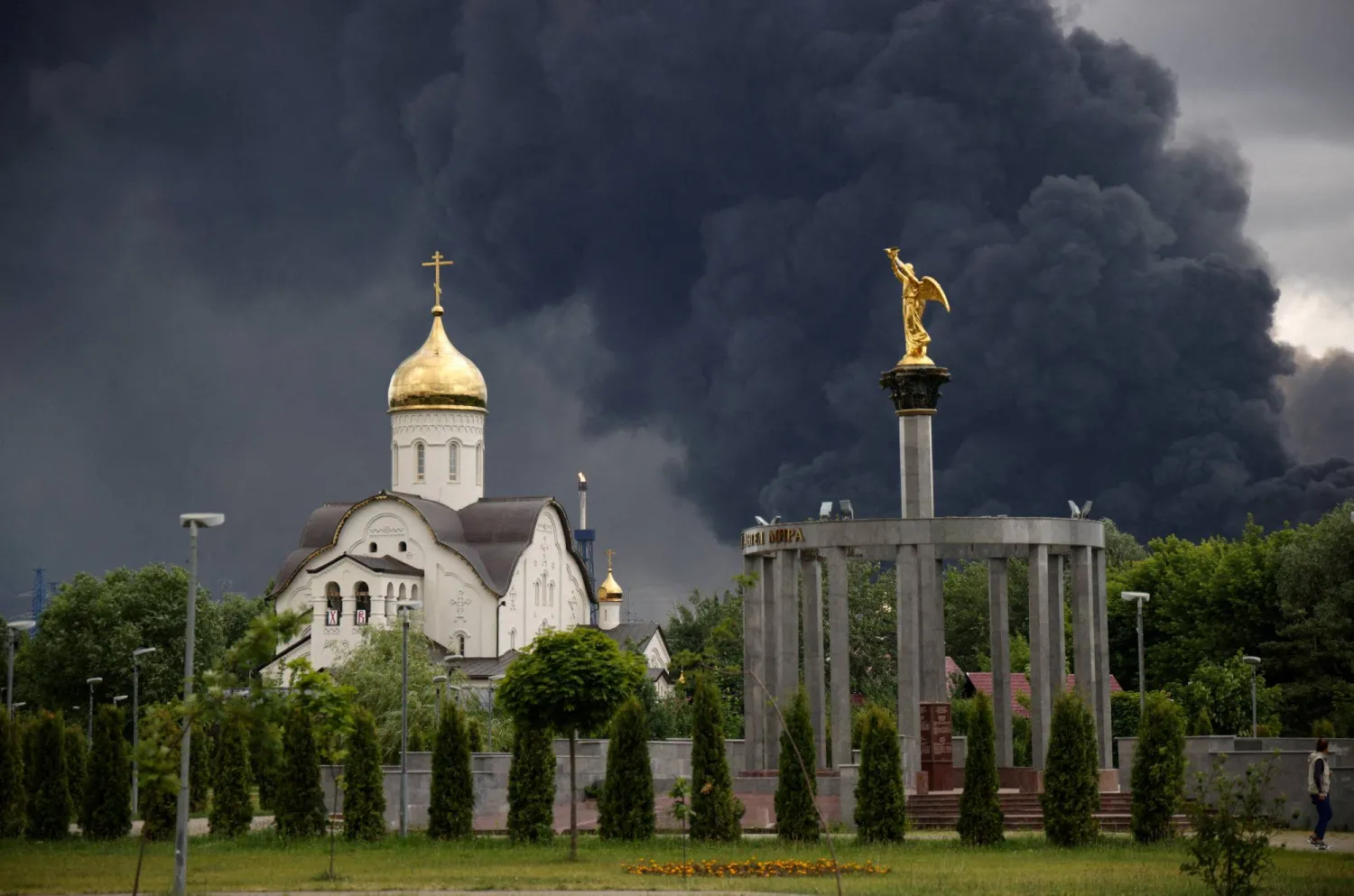

Ukraine Drone Assault Ignites Major Russian Oil Refinery, Putin Acknowledges 'Difficult Period'

FILE PHOTO: Smoke rises from an oil refinery following a Ukrainian drone attack in the course of Russia-Ukraine conflict, in Moscow, Russia, June 18, 2026, in this picture obtained from social media. SOCIAL MEDIA/via REUTERS
TT

Ukraine Drone Assault Ignites Major Russian Oil Refinery, Putin Acknowledges 'Difficult Period'

FILE PHOTO: Smoke rises from an oil refinery following a Ukrainian drone attack in the course of Russia-Ukraine conflict, in Moscow, Russia, June 18, 2026, in this picture obtained from social media. SOCIAL MEDIA/via REUTERS

Ukraine kept up its heavy drone assault on Russia, setting fire to a major oil refinery in the south and killing at least two people, Russian authorities said Sunday, as President Vladimir Putin acknowledged his country is going through a “difficult period.”

Ukraine has markedly stepped up its long-range attacks on Russian military industries and energy facilities in recent months, aiming to cut Moscow’s revenue for its invasion — now in its fifth year — and make Russians feel the consequences.

The campaign has choked Russian fuel supplies and military deliveries. According to Western analysts, it has also slowed Moscow’s efforts on the battlefield, heaping pressure on the Kremlin to come to the negotiating table.

“Our ‘long-range sanctions’ reached two oil refineries in Russia,” Ukrainian President Volodymyr Zelenskyy wrote on the Telegram messaging app on Sunday, according to The Associated Press. “Each (strike) means a reduction in the resources that fuel the Russian war machine, and another step toward peace.”

Debris from downed Ukrainian drones sparked a blaze at the refinery in Slavyansk-na-Kubani, a town in Russia's Krasnodar region, east of occupied Crimea, according to Gov. Veniamin Kondratyev. The falling debris killed one person in Slavyansk and wounded another in a nearby village, local authorities said.

The Slavyansk site is one of southern Russia’s major refineries, processing close to 4 million tons of crude per year, according to its operator’s website. It is also a key source of petroleum products intended for export through Russia’s Black Sea ports, including fuel oil, naphtha and marine fuel.

Zelenskyy also claimed that a second Russian refinery, in the Yaroslavl region around 700 kilometers (435 miles) from the Ukrainian border, was hit during the nighttime strikes.

There were no immediate reports from Russian authorities about the strike on the Yaroslavl refinery. Local Gov. Mikhail Evraev reported on Sunday morning that some roads between Moscow and the region's capital, Yaroslavl, were temporarily closed due to “an enemy attack by Ukrainian drones.”

Yaroslavl's airport also briefly closed overnight, along with others in southern and western Russia, according to the country's civil aviation agency.

Fuel shortages in Russia as Putin says plans will be ‘adjusted’ For months, Ukraine has been stepping up attacks on energy facilities deep inside Russia. Despite a raft of Western sanctions, Moscow remains among the world's top exporters of oil and natural gas.

More recently, Ukraine has attempted to choke off fuel deliveries to Crimea, the Black Sea peninsula illegally annexed by Moscow in early 2014. Last weekend, Kremlin-installed officials in Crimea suspended gasoline sales to civilians, after Kyiv's targeting of supply routes triggered the worst energy crisis there since the annexation.

Russian President Vladimir Putin commented on Sunday that the country was “going through a difficult period,” but insisted that Moscow would “honor all its social obligations” to citizens. He did not directly reference the Ukrainian strikes or fuel shortages.

“Naturally, we are adjusting certain plans in light of the current situation, but all strategically important (domestic) development programs will undoubtedly be implemented in full,” Putin said at a conference of his ruling United Russia party.

“We will continue to build housing and roads, create new, modern, high-paying jobs, and support domestic businesses,” he said. “We are going through a difficult period, but this has taught us a great deal, and allowed us to grasp the very essence of what it means to be a Russian citizen.”

Russian Deputy Prime Minister Alexander Novak said that Moscow was actively reviewing fuel export agreements to avoid compromising domestic needs.

Fuel sales to civilians were also being restricted in Russia’s Irkutsk region in Siberia, thousands of kilometers (miles) from the Ukrainian border, local Gov. Igor Kobzev announced on Sunday.

Drivers will be barred from buying more than 50 liters (13 gallons) of fuel per vehicle per day at state-run Rosneft gas stations in the province, Kobzev said, adding that other gas stations may set lower limits.

At least two private gas station networks in Siberia — KreisNeft in the Irkutsk region and Elke Auto in the Tomsk region farther west — said earlier this month that they were limiting sales due to supply disruptions.

Drones, bombs and missiles target more regions Also on Sunday, a Russian aerial bomb killed two people in Zaporizhzhia — a city in southern Ukraine — and injured 16 others, including two children, said regional administration head Ivan Fedorov.

In Russia's border region of Belgorod, Ukrainian drone strikes killed one person and injured another earlier on Sunday, according to acting local Gov. Alexander Shuvayev.

Russia’s Defense Ministry said its forces shot down 213 Ukrainian drones during the night, including over Russia, occupied Crimea and the Black and Azov seas.

Meanwhile, Russia attacked Ukraine with 142 long-range strike drones and eight missiles overnight, according to the Ukrainian air force. Of those, 125 drones and seven missiles were struck down, the air force said.
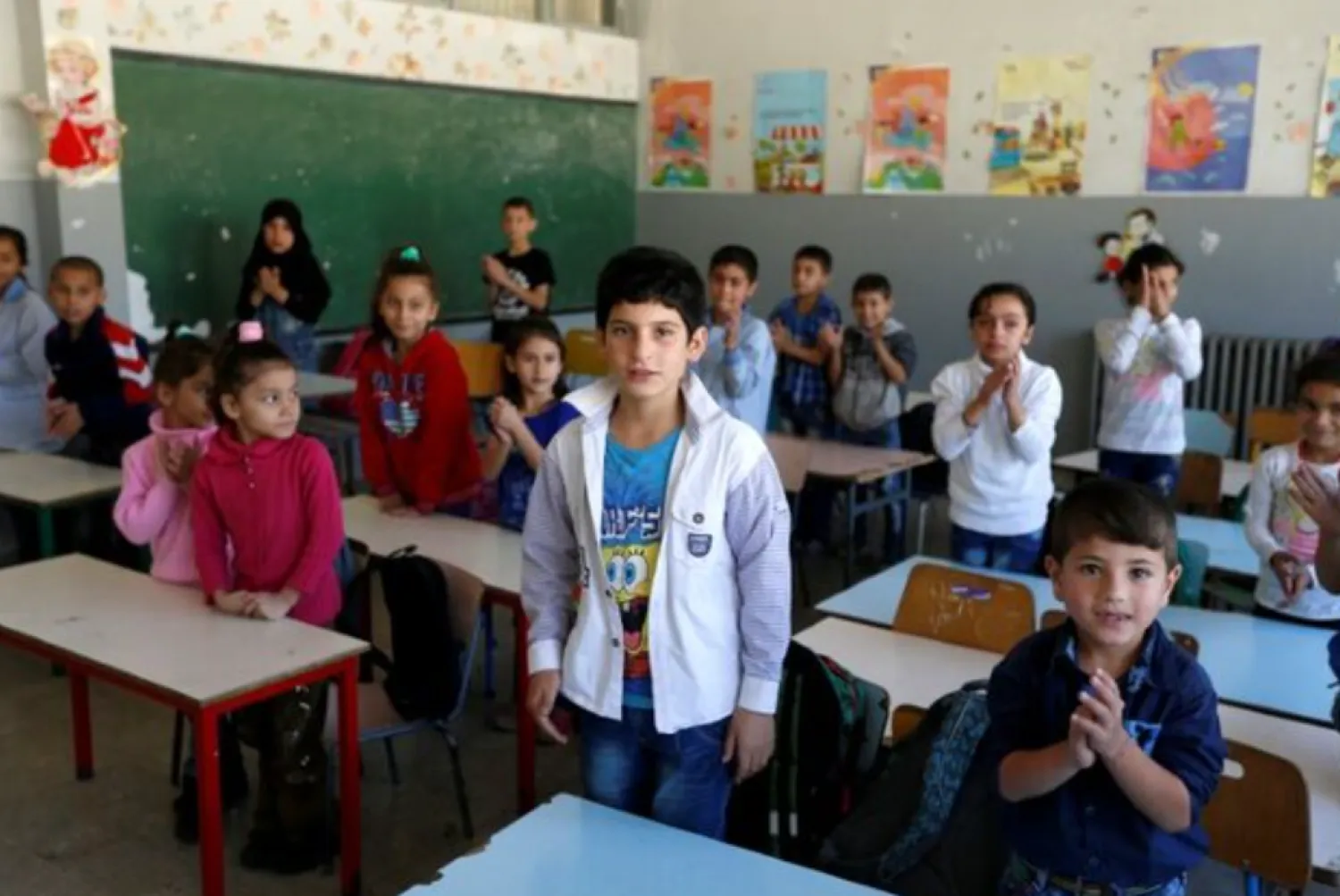



UN Says 5.8 mn Refugee Children Out of School

Syrian refugee children attend a class at a school in Mount Lebanon, October 7, 2016. REUTERS/Mohamed Azaki
TT

UN Says 5.8 mn Refugee Children Out of School

Syrian refugee children attend a class at a school in Mount Lebanon, October 7, 2016. REUTERS/Mohamed Azaki

Some 5.8 million refugee children were out of school in 2025, the United Nations said Friday, warning that funding cuts threatened to make the situation worse.

UNHCR, the UN refugee agency, said 44 percent of the world's 13.1 million school-age refugee children were out of school last year.

"Education is protection. But it is also a pathway to opportunity and self-reliance," said Barham Salih, the UN high commissioner for refugees, AFP reported.

"At a time of severe pressure on humanitarian and development financing, cuts to education risk reversing decades of collective investment and closing opportunities for a generation of young people."

The former Iraqi president, who was a refugee, said that looking back on his own life, "education gave me opportunities that displacement might otherwise have denied me".

"Displacement should not determine the limits of a child's life."

UNHCR said that while 65 percent of refugee children of primary school age were enrolled in education in 2025, only 32 percent were enrolled in secondary.

Refugee tertiary education enrolment reached a record 11 percent in 2025.

Earlier this week, UNHCR said its available funding had fallen from $5.2 billion in 2024 to $3.9 billion in 2025, while the number of people it is mandated to protect is hovering around historically high levels.

UNHCR said it needed $8.5 billion this year to protect refugees, but by the end of July had received only 32 percent of that amount ($2.7 billion).

UNHCR said nearly 8.3 million refugees and other forcibly displaced people faced losing vital assistance from the agency as protection services crumble due to the "severe" funding cuts.


Iran: Strait of Hormuz Will Not Reopen Until Conditions Are Met

Iran: Strait of Hormuz Will Not Reopen Until Conditions Are Met
TT

Iran: Strait of Hormuz Will Not Reopen Until Conditions Are Met

Iran: Strait of Hormuz Will Not Reopen Until Conditions Are Met

The Strait of Hormuz will not reopen until seven Iranian conditions set out in a June interim agreement with the US are met, Nournews reported Iran's parliament speaker Mohammad Baqer Qalibaf as saying on Sunday, a few days after Tehran received Washington's reply to its diplomatic proposal.

“The Americans, who say something different in the media, have recently put forward proposals through a mediator. ⁠But they must understand that ⁠the period of dragging out the process and dictating one-sided demands is over," Qalibaf was quoted as saying.

"The position of the Islamic Republic of Iran is completely clear and firm, and the Strait of Hormuz ⁠will not be opened until our seven conditions, based on the Islamabad Memorandum of Understanding, are met."

Meanwhile, army spokesperson Mohammad Akraminia told Fars news on Sunday that Iran will upgrade the range of its missiles following the war with the US as American forces are now ⁠positioned as much ⁠as 1,000 km (621 miles) away from the Iranian ⁠coast.

"During this war, we concluded that we absolutely must increase the ⁠range of ⁠our missiles, and we have now moved in that direction," he said.


Iran Tells US There is No Military Solution to Mideast War

(FILES) Vehicles drive past a giant billboard reading 'The Strait of Hormuz remains closed' at the Revolution Square in Tehran on April 28, 2026. (Photo by ATTA KENARE / AFP)
TT

Iran Tells US There is No Military Solution to Mideast War

(FILES) Vehicles drive past a giant billboard reading 'The Strait of Hormuz remains closed' at the Revolution Square in Tehran on April 28, 2026. (Photo by ATTA KENARE / AFP)

Iran's top diplomat insisted on Sunday that there would be no military solution to the United States' war against Iran, with talks on ending the conflict apparently at an impasse.

A campaign of heavy bombardment failed to bring a decisive close to the war launched by the US and Israel in late February, and Washington in recent weeks has dialed back military operations in favor of economic pressure.

The main point of contention remains Iran's attempt to blockade the Strait of Hormuz where a UK maritime agency reported on Sunday another tanker struck by an unknown projectile.

"If our enemies again choose the path of military confrontation, our response will be stronger than before, and we will defend ourselves with even more force," Iranian Foreign Minister Abbas Araghchi said at a gathering of foreign ambassadors.

"There is no military solution, nor any solution based on new sanctions," he continued, adding "only negotiations based on justice and fairness" could end the conflict.

The two sides agreed a memorandum of understanding in June that spelled out a framework for a permanent resolution, but Iranian attacks on vessels in the Hormuz prompted a return to US military operations.

On Sunday, the British maritime security agency UKMTO said a tanker in the Hormuz "reported being struck by an unknown projectile, causing damage to the engine room", though the crew were reported safe and no environmental impact was recorded.

The agency did not specify the date of the incident, the vessel's origin or destination, or whether it was an oil tanker or LNG carrier.

Iranian and US officials last week held indirect talks on the sidelines of the UN General Assembly, with Tehran saying it presented seven conditions for reopening the strait.

Iran has demanded, among other things, a ceasefire across the Middle East, the unfreezing of its assets abroad, the lifting of sanctions on its oil sector and an end to the US naval blockade.

Trump, however, rejected the proposal, while leaving the door open both to further talks or renewed military operations.

Iranian foreign ministry spokesman Esmaeil Baqaei on Sunday characterized the latest US counterproposal as being "in line with their previous proposals concerning nuclear issues".

"We have clearly indicated that we are focusing on the issue of the Strait of Hormuz," he said, adding that reopening the waterway required "an end to the disruptions to Iranian commercial maritime traffic and the lifting of sanctions".