


Pakistan Says US and Iran Close to ‘Some Sort’ of Deal Despite Attacks on Shipping

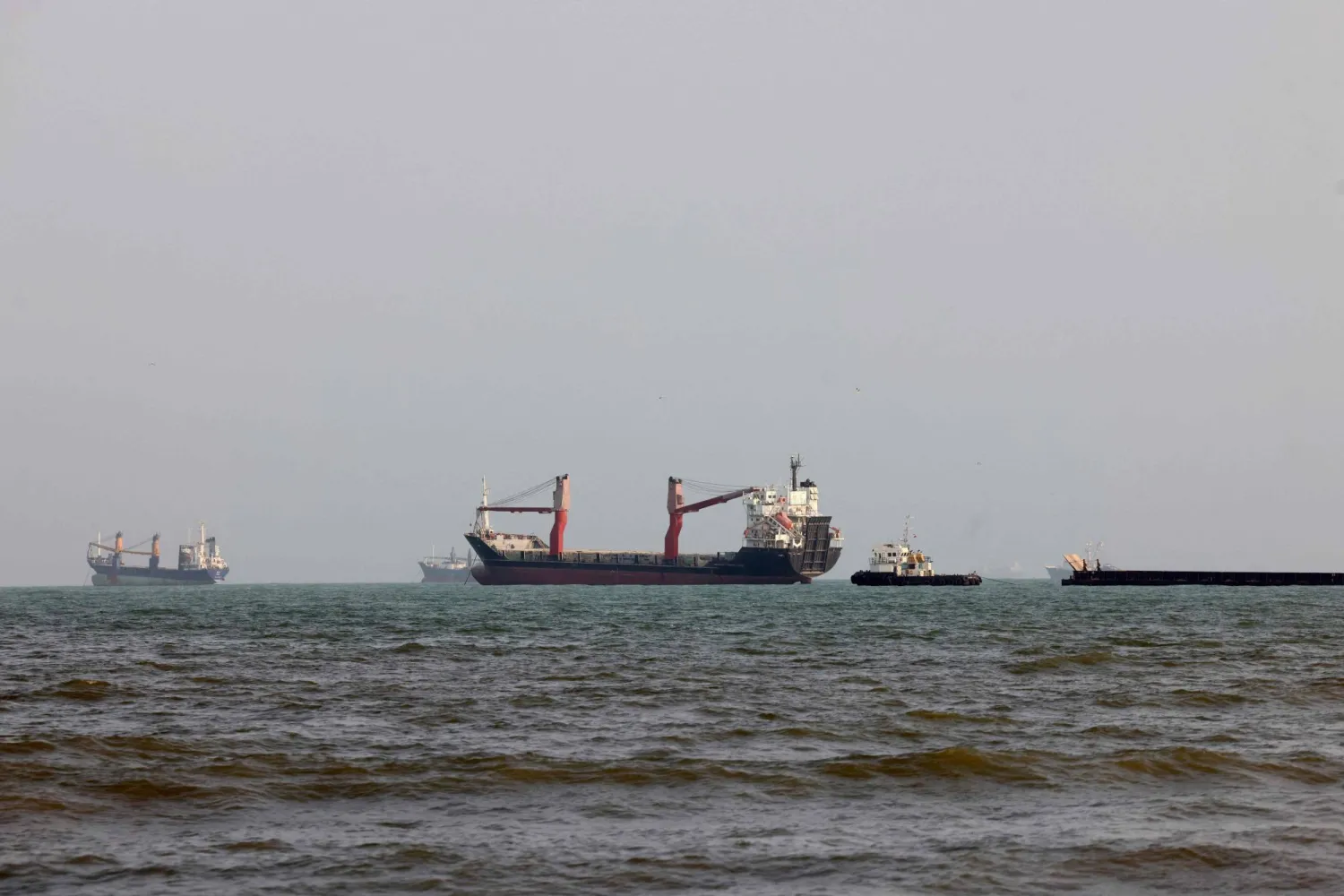
Vessels are seen in the Strait of Hormuz, off the port city of Bandar Abbas in southern Iran on August 10, 2026. (AFP)
TT

Pakistan Says US and Iran Close to ‘Some Sort’ of Deal Despite Attacks on Shipping

Vessels are seen in the Strait of Hormuz, off the port city of Bandar Abbas in southern Iran on August 10, 2026. (AFP)

Pakistan said on Tuesday the United States and Iran were close to "some sort" of deal, and fellow mediator Qatar said talks on managing the Strait of Hormuz were at an advanced stage, despite reports of new attacks on shipping in regional waters.

The comments offered some hope that Iran and the US can end a stalemate that has in effect blocked the vital waterway, through which a fifth of global oil and liquefied natural gas flowed before the war. Prospects for a deal had appeared to dim on Monday after the sides' latest remarks and demands.

In an interview with Bloomberg News, Pakistani Defense Minister Khawaja Asif said "things are shaping up again in favor of a peace arrangement or a deal."

"The signals in the last two three days are that we are close to some sort of an arrangement."

Iranian Foreign Minister Abbas Araghchi met Pakistani Interior Minister Mohsin Naqvi in Tehran on Tuesday, Araghchi’s Telegram channel said on Tuesday, without providing further details.

Qatar's Foreign Ministry spokesperson told a ‌briefing earlier on Tuesday ‌that separate discussions between Oman and Iran over management of the Strait of Hormuz were at ‌an ⁠advanced stage.

Iran's Foreign Ministry's ⁠Public Relations Office did not immediately respond to a call for comment.

Pakistan and Qatar have been the main mediators in the conflict in which thousands have been killed — mainly in Iran and Lebanon — since US and Israeli attacks on Iran on February 28. Iran has hit back by striking Gulf countries, Jordan and Israel.

OIL PARES GAINS ON DEAL HOPES

Oil fell back on Tuesday after hitting a one-week high earlier in trading although it remains much higher than before the war.

Iran said on Sunday it was nearing a final pact with Oman defining new shipping lanes in the Strait of Hormuz, which runs between them, but said that in itself would not ⁠open the waterway unless the US met certain conditions.

Those conditions were largely in line with a ‌memorandum of understanding to end the conflict that was reached between Washington and Tehran in June ‌and included compensation and an end to sanctions and military threats.

Araghchi said on Sunday that Tehran and Washington were not holding ‌direct talks, but that messages were being exchanged through intermediaries.

US President Donald Trump responded on Monday night, making new demands, saying he was ‌seeking his own reparations from Tehran, seemingly leaving the two sides deadlocked.

"We're going to ask for money for the damage they've done over a 50-year period," Trump said at the White House, saying payments would cover deaths among both civilian demonstrators and US forces in the region.

"So, if there's damages to be paid, I think Iran should pay those damages," Trump said.

TWO VESSELS STRUCK

Despite tentative signs of progress in diplomacy, there were reports of new attacks on shipping ‌in the Gulf of Oman and the Red Sea, highlighting the widening threat to maritime trade.

Four crew members were killed in a suspected attack by Yemen's Iran-backed Houthis on a small cargo ⁠vessel in the Bab el-Mandeb strait ⁠on Tuesday, Yemen's Transport Ministry said.

The fatalities aboard the Egyptian-owned Tihamah, if confirmed, would be the first deaths in a Houthi strike on shipping since the Iran war began. The Houthis have not claimed the attack.

A container ship was also hit by a missile off Pakistan, while sailing through the Gulf of Oman in a suspected US attack, sources said.

The Wall Street Journal reported a US official as saying that the ship had been hit by a US military helicopter after its crew ignored warnings from personnel working to enforce a naval blockade on Iranian ports.

The US first announced a blockade of shipping trying to reach Iran's ports in April and reimposed it in July after the June peace accord crumbled.

Trump is under pressure to end a war that US polls show is deeply unpopular with the US electorate, just months before key midterm elections in which his Republican Party risks steep losses with high gasoline prices a key pain point.

So far, a months-long US military campaign, including a two-week campaign of strikes in July, has not broken Iran's grip on the strait, despite Trump saying the strait was open and that the "only one that has control of the Strait of Hormuz right now is the United States Navy."



US Military Says It Struck Vessel in Caribbean, Killing Three

This screen grab from a video posted by US Defense Secretary Pete Hegseth on his X account on October 24, 2025, shows what Hegseth says is US military forces conducting a strike on a vessel being operated by Tren de Aragua trafficking narcotics in the Caribbean Sea in on October 23, 2025. (Photo by HANDOUT / US Secretary of Defense Pete Hegseth's X Account / AFP)
TT

US Military Says It Struck Vessel in Caribbean, Killing Three

This screen grab from a video posted by US Defense Secretary Pete Hegseth on his X account on October 24, 2025, shows what Hegseth says is US military forces conducting a strike on a vessel being operated by Tren de Aragua trafficking narcotics in the Caribbean Sea in on October 23, 2025. (Photo by HANDOUT / US Secretary of Defense Pete Hegseth's X Account / AFP)

The US military said on Wednesday three people were killed in a strike on a vessel in the Caribbean Sea, the latest in a series of attacks that Washington says target "narco-terrorists" but human rights groups condemn as extrajudicial ‌killings, Reuters said.

DETAILS:

* US Southern ‌Command said on ‌X ⁠it "executed a lethal kinetic strike ⁠on a go-fast vessel operating along established narco-trafficking routes in the Caribbean."

* It cited "confirmed intelligence" to allege the vessel's active involvement in narco-trafficking, without providing more details.

* The US military said three people, ‌whom it ‌called "narco-terrorists," were killed.

* President Donald Trump's ‌administration has said the vessels it ‌has struck since September 2025 were transporting narcotics.

* The US military's strikes on such vessels in the Caribbean and Eastern ‌Pacific have killed more than 220 people.

* Experts and rights ⁠advocates, ⁠both in the US and globally, have questioned the legality of the strikes.

* Human Rights Watch, Amnesty International and independent UN experts have called the strikes unlawful extrajudicial killings.

* The American Civil Liberties Union has cast the assertions by the Trump administration against those it targets as "unsubstantiated, fear-mongering claims."


UNICEF: Girls Worst Hit by Climate Shocks on Schools

UNICEF logo at the organization's headquarters in Geneva (Reuters)
TT

UNICEF: Girls Worst Hit by Climate Shocks on Schools

UNICEF logo at the organization's headquarters in Geneva (Reuters)

Girls are at greater risk of dropping out of education when their schools are hit by heatwaves, storms or wildfires linked to climate change, the UN children's agency said on Thursday.

Unicef analysis suggested that one in 10 or more than 171 million students in 106 countries or territories had their education disrupted by extreme weather last year.

But the agency said girls were worst affected when schools were damaged, classes cancelled or education switched online.

"Girls are at greater risk of dropping out when climate hazards disrupt or close schools," it said.

"Damage to schools and sanitation facilities, displacement and lost family income can place additional caregiving and water-collection responsibilities on girls, said AFP.

"These pressures can also increase the risk of child marriage, making it more difficult for girls to return to class when schools reopen."

According to the analysis, storms were the most common cause of disruption and last year affected 109 million students around the world.

Floods hit at least 70 million while heatwaves disrupted schooling for some 50 million youngsters.

The overall figures for 2025 are down on analysis of the previous year, in which Unicef said nearly 250 million children in 85 countries -- one in seven -- were affected by climate hazards.

The agency said it had changed its methodology, basing its analysis on information from aid agencies and local media rather than government figures.

Unicef said about one billion or about half the world's children live in countries at very high risk of climate and environmental shocks.

Lost learning and the effects on literacy and numeracy could lead to lifetime income losses of at least $200 billion and worsen global inequalities, it estimated.

Most of the children come from low- and lower-middle income countries "where education systems often lack the resources needed to safeguard learning during climate-related emergencies", the study said.

Unicef urged governments and their partners to spend more on building new educational facilities to withstand climate and environmental hazards.


How a Billion-dollar Sanctions Dodge Kept Chinese Goods Flowing to Iran

Vehicles move along a street near a pedestrian bridge displaying a billboard depicting a US underwater drone captured by the Iranian military with text in Persian reading "hunting the hunter", in Tehran on September 9, 2026.  (Photo by ATTA KENARE / AFP)
Vehicles move along a street near a pedestrian bridge displaying a billboard depicting a US underwater drone captured by the Iranian military with text in Persian reading "hunting the hunter", in Tehran on September 9, 2026. (Photo by ATTA KENARE / AFP)
TT

How a Billion-dollar Sanctions Dodge Kept Chinese Goods Flowing to Iran

Vehicles move along a street near a pedestrian bridge displaying a billboard depicting a US underwater drone captured by the Iranian military with text in Persian reading "hunting the hunter", in Tehran on September 9, 2026.  (Photo by ATTA KENARE / AFP)
Vehicles move along a street near a pedestrian bridge displaying a billboard depicting a US underwater drone captured by the Iranian military with text in Persian reading "hunting the hunter", in Tehran on September 9, 2026. (Photo by ATTA KENARE / AFP)

Iran has used a barter-like arrangement to bypass sanctions on its oil sales and buy billions of dollars’ worth of goods from China, including military gear, two senior Iranian sources and three other people familiar with the matter told Reuters.

The secretive trade mechanism, in which Iranian oil is exchanged for credits for Chinese imports, has provided a financial lifeline for Tehran in recent years as the United States stepped up economic and military pressure over its nuclear program, according to the sources, who spoke on condition of anonymity.

It has also helped China, the world’s biggest crude importer, retain access to discounted Iranian oil while shielding banks and companies that export to Iran from international scrutiny or penalties, they said.

The US has imposed sanctions on some smaller Chinese entities that buy or facilitate shipments of Iranian oil but has stopped short of the most punishing measures that could have repercussions on the global economy.

Washington has intensified the pressure as it tries to resolve its war with Iran and reopen the Strait of Hormuz. In August, Treasury Secretary Scott Bessent warned countries to cut business ties with Iran or risk being forced out of the dollar-based financial system.

Reuters could not determine the impact on the barter-like arrangement of the US naval blockade imposed on Iran as part of the six-month war. No Iranian crude cargoes have successfully transited the Strait of Hormuz to China since the blockade was reinstated on July 14, the news agency reported last week.

China and Iran have repeatedly denounced what they regard as illegal unilateral Western sanctions and have vowed to protect their interests. The countries are longstanding economic and political partners but have said little publicly about how they keep trade flowing despite international restrictions.

Iran has used the arrangement to buy medicines, vehicles and communication equipment from China, all the sources said. The manufacturers were not ⁠dealing directly with ⁠Iran, and there is no indication they were in breach of sanctions.

The mechanism was also used at least once in the past year in connection with contracts to supply Iran with air defense equipment worth millions of dollars, the sources said.

They did not provide details about any of the alleged transactions with Chinese manufacturers, and Reuters could not independently verify that they took place.

A UN embargo on the export of most major conventional weapons to Iran was reinstated with other sanctions in September 2025 after the US withdrew from a 2015 nuclear accord between Iran and world powers during President Donald Trump’s first term, and Tehran stopped complying with some of its provisions.

Iran and China said the move by European countries to automatically restore the sanctions through a “snapback” mechanism was “legally and procedurally flawed.”

Responding to Reuters questions about the barter-like trade, China’s foreign ministry said it was “not familiar with the situation you describe.”

“China has consistently opposed unilateral sanctions that have no basis in international law and have not been authorized by the United Nations Security Council,” it said.

Iran’s UN missions in New York and Geneva did not respond to requests for comment.

In response to questions to the ⁠White House, a US official said the Trump administration works with economic partners including the European Union to “deprive Iran of the material means of furthering its nuclear ambitions.” The official did not comment on the arrangement described to Reuters.

Decades of US sanctions have left Iran with few oil customers. China is the main buyer, accounting for more than 80% of Iran’s shipped oil in 2025, or an average 1.4 million barrels per day, according to commodities data and analytics firm Kpler.

In 2021, the two countries signed a 25-year strategic partnership accord covering sectors such as energy and infrastructure, but public details remain scarce.

The arrangement described to Reuters is one of a number of mechanisms through which Iran purchases goods and services from China without paying Chinese companies directly through international banking channels, three of the sources said.

A Western official and two other people familiar with the matter said a buyer acting on behalf of Chinese state-owned oil trader Zhuhai Zhenrong was at least until this year depositing hundreds of millions of dollars a month with an obscure, China-based financial entity known as ChuXin.

The deposits covered purchases agreed with a Hong Kong-registered company linked to Iran’s national oil company, the people said, citing material gathered by intelligence agencies.

ChuXin would then send funds to Chinese exporters and companies that build infrastructure in Iran, likely via other Chinese financial institutions.

Roughly 70% of the Iranian oil proceeds handled by ChuXin are allocated to infrastructure projects, the three sources said, an arrangement first reported by the Wall Street Journal last October. The rest go into accounts belonging to a special purpose vehicle (SPV) used to pay companies that supply goods to Iran.

The Iranian sources, who are close to the country’s decision-making circle, confirmed the existence of the SPV, which has ⁠not previously been reported.

All five sources said funds in ⁠the SPV are managed by two entities: a firm acting on behalf of China's Ministry of Commerce and one linked to Iran’s central bank. The Iran-linked firm notifies the Chinese one when Iran’s central bank authorizes importers to access funds in the SPV so payments can be sent to the suppliers, three said.

Reuters could find no record of a financial institution called ChuXin in Chinese company registries or of the firms said to be acting on behalf of China’s commerce ministry and Iran’s central bank. One source said ChuXin might only exist on a spreadsheet.

Companies with the same names as those said to be acting on behalf of the National Iranian Oil Company (NIOC) and Zhuhai Zhenrong are listed in the Hong Kong companies registry, but Reuters could find no public records of their ownership structure or business dealings.

Neither responded to questions delivered to their registered addresses, which are in offices belonging to secretarial services companies.

Zhuhai Zhenrong has been a target of US sanctions over its alleged dealings with Iran. One source shared what appeared to be a July 22, 2025, letter from NIOC to the Chinese oil trader requesting confirmation of an outstanding balance – evidence, the person said, of a business relationship.

Reuters could not independently authenticate the document. NIOC and Zhuhai Zhenrong did not respond to questions about it or their alleged roles in the trade mechanism.

Iran’s central bank and China’s commerce ministry also did not respond to requests for comment.

The mechanism described to Reuters has been in place since at least 2021 and was first used to supply medicines and COVID-19 vaccines to Iran, three sources said.

As Washington has stepped up pressure on companies that do business with Iran, it has become increasingly important for trade, they said. They estimated that between $2 billion and $2.5 billion flowed through the SPV over the last year.

China is using such arrangements to push back against the US and show it cannot be coerced with the threat of secondary sanctions, said Andrea Ghiselli, an international politics lecturer at the University of Exeter who studies Beijing’s relations with the Middle East.

But he said China’s leaders do not want their banks or companies excluded from the international financial system.

“They want plausible deniability.”