Iran Says Considering Two-day Plan to Reopen Hormuz

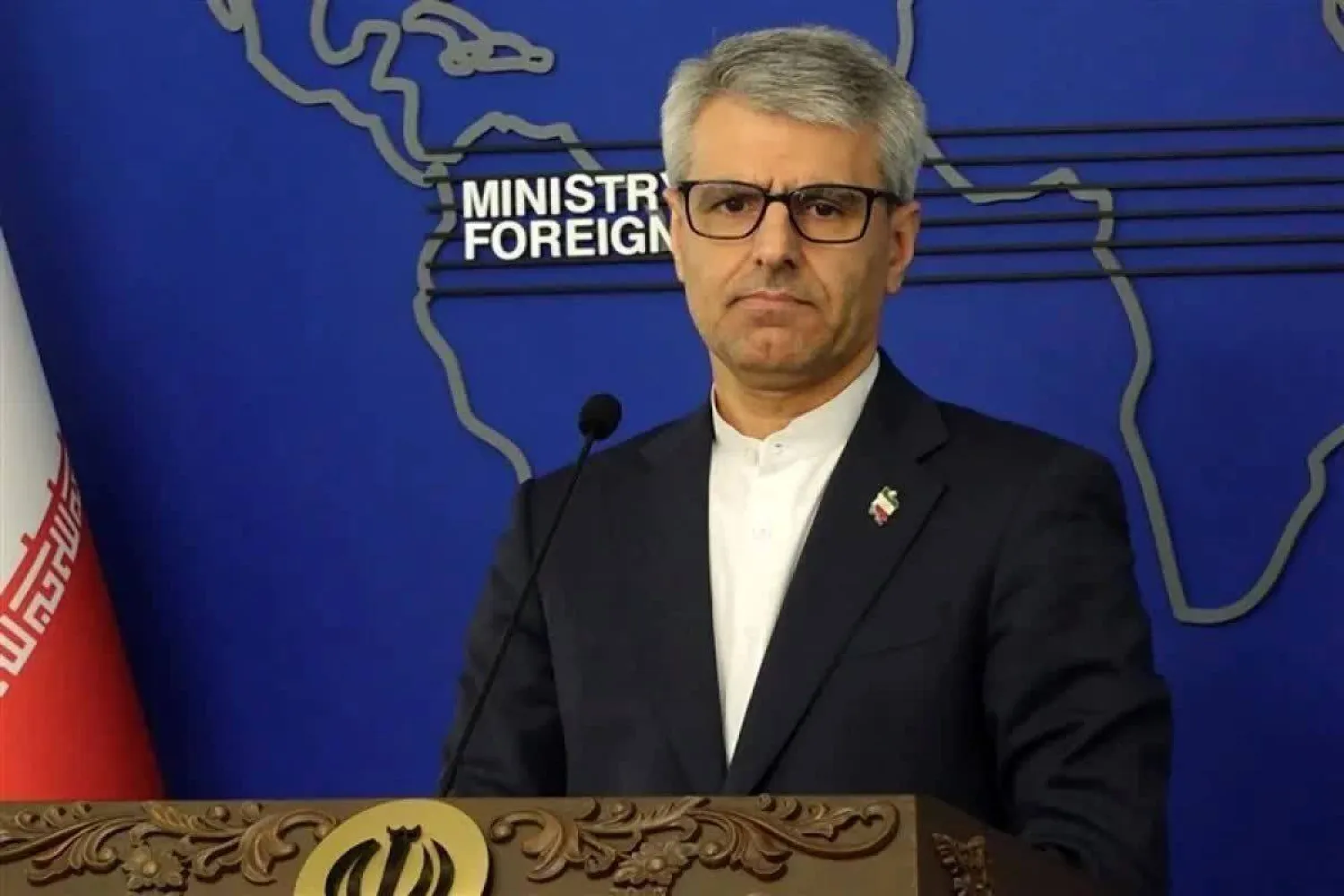
Image published by the Iranian government's media website showing Foreign Ministry Spokesperson Esmaeil Baqaei during a press conference
TT

Iran Says Considering Two-day Plan to Reopen Hormuz

Image published by the Iranian government's media website showing Foreign Ministry Spokesperson Esmaeil Baqaei during a press conference

Iran's foreign ministry on Monday said it was considering a two-day plan to reopen the Strait of Hormuz if the US agrees to its conditions, having previously proposed a one-week timeline, AFP said.

"The possibility of implementing this plan in two days is another indication of Iran's good-faith approach. We have stated that, if Iran's demands are met, it would be possible to restore security to the Strait of Hormuz and resume the negotiating process within a short period," said foreign ministry spokesman Esmaeil Baqaei, adding that the "exchange of messages is still ongoing" via mediators.


Iran Says Considering Two-day Plan to Reopen Hormuz

Image published by the Iranian government's media website showing Foreign Ministry Spokesperson Esmaeil Baqaei during a press conference
TT

Iran Says Considering Two-day Plan to Reopen Hormuz

Image published by the Iranian government's media website showing Foreign Ministry Spokesperson Esmaeil Baqaei during a press conference

Iran's foreign ministry on Monday said it was considering a two-day plan to reopen the Strait of Hormuz if the US agrees to its conditions, having previously proposed a one-week timeline, AFP said.

"The possibility of implementing this plan in two days is another indication of Iran's good-faith approach. We have stated that, if Iran's demands are met, it would be possible to restore security to the Strait of Hormuz and resume the negotiating process within a short period," said foreign ministry spokesman Esmaeil Baqaei, adding that the "exchange of messages is still ongoing" via mediators.


China's Xi Says Middle East Should Not Become Battleground for Great Power Rivalry

Chinese President Xi Jinping attends a signing ceremony with Oman's Sultan Haitham bin Tariq (not pictured) during the Sultan's state visit to China, at the Great Hall of the People, in Beijing, China, 02 November 2026.  EPA/TINGSHU WANG / POOL
Chinese President Xi Jinping attends a signing ceremony with Oman's Sultan Haitham bin Tariq (not pictured) during the Sultan's state visit to China, at the Great Hall of the People, in Beijing, China, 02 November 2026. EPA/TINGSHU WANG / POOL
TT

China's Xi Says Middle East Should Not Become Battleground for Great Power Rivalry

Chinese President Xi Jinping attends a signing ceremony with Oman's Sultan Haitham bin Tariq (not pictured) during the Sultan's state visit to China, at the Great Hall of the People, in Beijing, China, 02 November 2026.  EPA/TINGSHU WANG / POOL
Chinese President Xi Jinping attends a signing ceremony with Oman's Sultan Haitham bin Tariq (not pictured) during the Sultan's state visit to China, at the Great Hall of the People, in Beijing, China, 02 November 2026. EPA/TINGSHU WANG / POOL

The Middle East and Gulf region should not become a battleground for great-power rivalry and China is willing to work with Arab nations to achieve lasting peace, Chinese President Xi Jinping told Oman's sultan on Monday.

China has traditionally played a low-key diplomatic role in the Middle East, but has stepped up efforts to try to help end tensions amid the US-Israeli war on Iran, which has snarled the Strait of Hormuz and driven up global energy and shipping costs.

Xi told Omani Sultan ‌Haitham bin Tariq ‌al-Said that the world is undergoing profound changes.

"The Middle ‌East ⁠Gulf region should ⁠not become an arena for great-power rivalry and geopolitical conflict. Peace and stability in the region require joint nurturing and protection by all parties," Xi said, according to China's Foreign Ministry.

China has consistently been committed to stopping the war, and hopes to contribute "wisdom and solutions to resolving the region's security dilemmas," he added.

China is willing to strengthen communication and coordination with Arab countries, including the Gulf Cooperation Council states, to work together ⁠toward restoring peace and achieving lasting stability and security, Xi ‌said.

China's Foreign Ministry said later on Monday that ‌Zhai Jun, its special envoy to the Middle East, would visit Iran, Oman and Saudi ‌Arabia this month.

FIRST CHINA TRIP

Haitham arrived in Beijing on Sunday for a ‌two-day visit, the first by an Omani head of state since the countries established ties in 1978.

Haitham told Xi his government had deep appreciation for China's positions on key issues concerning the region, Omani state media reported.

"We believe that development and stability are inextricably linked," he said.

"The ‌prosperity of nations requires an environment defined by security, peace, respect for state sovereignty, and adherence to international law — an ⁠environment where disputes ⁠are resolved through peaceful means."

He also said Oman was open to entering into a preferential bilateral trade and investment agreement with China.

"We are confident that such an agreement would open new avenues for trade and investment, facilitate and enhance commercial and investment exchanges between our two nations," Haitham said.

China is Oman's largest trade partner, with tourism and business links boosted by direct flights between Beijing and Muscat since November last year.

Oman, which exports crude oil and energy products to China, has also been looking to further develop its renewable energy supply chains and digital commerce.

The Omani leader, who was welcomed on the tarmac in Beijing by People's Bank of China Governor Pan Gongsheng, also emphasized cooperation between investment and financial institutions.


Taliban Government Voices 'Serious Concern' over US Afghan Deportation Plans

TOPSHOT - Taliban security personnel stand guard near the Torkham border crossing between Afghanistan and Pakistan in the Nangarhar province on February 27, 2026. (Photo by Aimal Zahir / AFP)
TT

Taliban Government Voices 'Serious Concern' over US Afghan Deportation Plans

TOPSHOT - Taliban security personnel stand guard near the Torkham border crossing between Afghanistan and Pakistan in the Nangarhar province on February 27, 2026. (Photo by Aimal Zahir / AFP)

Afghanistan's Taliban authorities voiced concern on Monday over reported plans by Washington to deport scores of Afghan immigrants to Pakistan with the aim of their eventual return to their home country.

More than 150 Afghans in the United States would be deported via Pakistan to Afghanistan, including relatives of those who assisted US forces before their 2021 withdrawal, according to US media reports and an advocacy group.

"The Islamic Emirate of Afghanistan expresses its serious concern over reports that the United States intends to deport some Afghan refugees to Pakistan who have not yet been able to obtain legal residency documents in that country," foreign ministry spokesman Abdul Qahar Balkhi said in a statement.

Advocacy groups have warned that the removal of former allies and their families could endanger their lives.

After regaining power, Taliban authorities announced a general amnesty for Afghans who worked with Western-backed forces and governments and have repeated promises this year that their former foes could safely return home.

However, the United Nations has recorded reports of extrajudicial killings, detentions and abuses.

President Donald Trump's administration last year issued travel bans for a number of countries, including Afghanistan, as part of a broad immigration crackdown.

His administration sort to sought to end deportation protections for Afghans, some of whom were granted special immigrant visas following the 2021 takeover by Taliban authorities.

Among those expected to be deported are relatives of Afghans who assisted the US military in the country prior to the fall of Kabul, according to AfghanEvac, a group seeking to help former Afghan allies.

While the United States cannot arrange deportations directly to Afghanistan, anonymous US officials told The New York Times that Pakistan will oversee their expulsion to Afghanistan.

In recent years, Germany and Türkiye have deported Afghan nationals directly to Afghanistan, despite concerns from human rights groups over the risks facing returnees.

Balkhi said Taliban authorities urged "the United States of America to adopt a responsible and measured approach in this regard and to take any decisions and measures regarding the fate of Afghan citizens with clear mutual understanding, necessary coordination, and consideration of the rights and legitimate demands of the individuals concerned".

"The Afghan side is ready to interact in this regard in a practical and mutually understanding manner," he added.

Pakistan's government earlier this year ordered law enforcement nationwide to arrest Afghan citizens without visas as part of a years-long repatriation policy that has pushed back millions of Afghans who fled throughout decades of war.

Relations between Pakistan and Afghanistan have been fraught since the Taliban authorities took power and worsened after deadly border clashes last October that led to near-total closure of the border.