



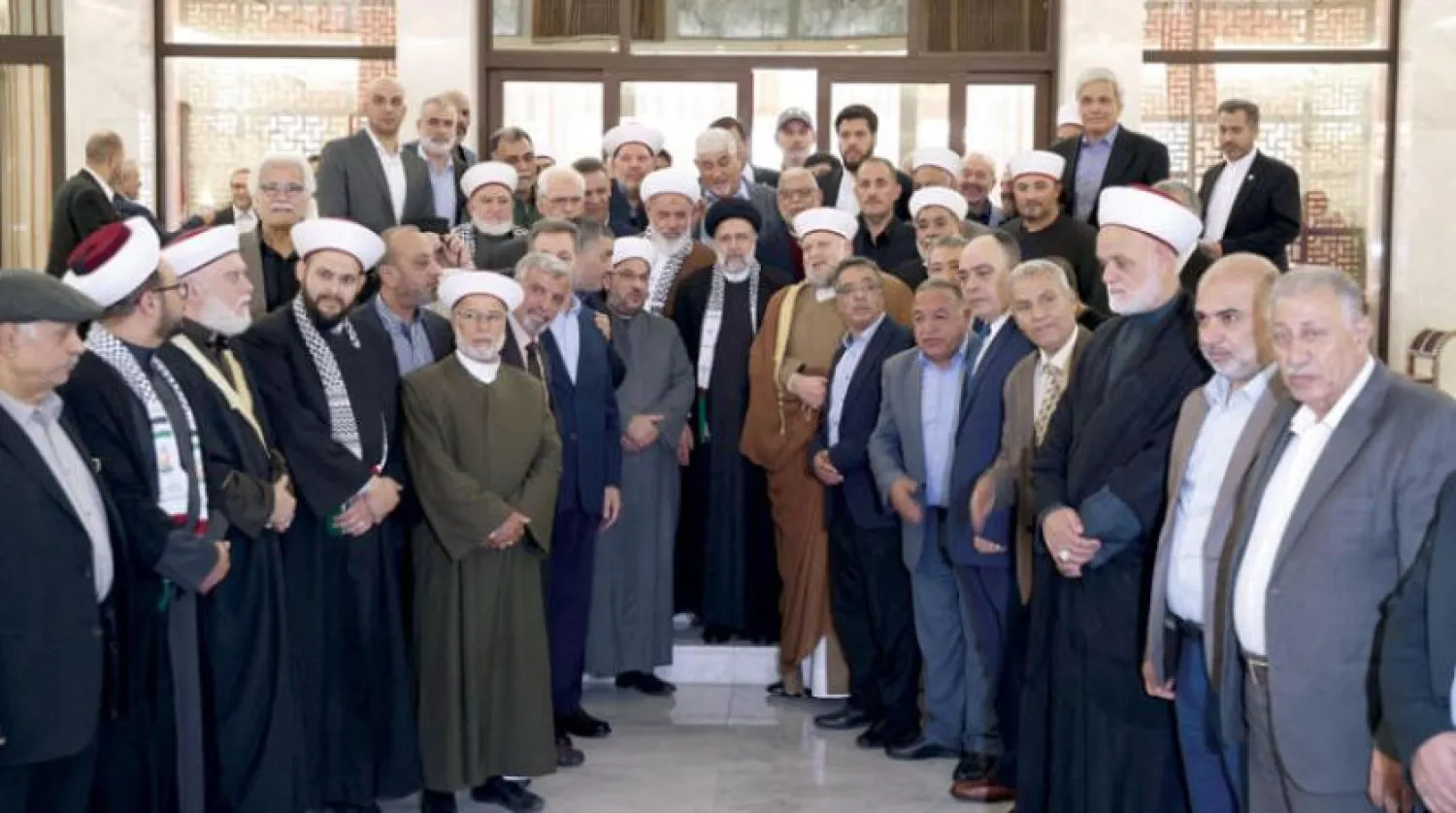

On the second day of Iranian President Ebrahim Raisi’s visit to Syria, sources from the Syrian regime emphasized the economic aspect of the trip.
The official newspaper Tishreen, in an editorial published on Thursday, urged for a “reexamination of the scene,” characterizing Raisi’s visit to Damascus as a “significant event.”
The newspaper referred to comprehensive data and proposed that Syria, Iraq, and Iran could potentially form a robust regional bloc that complements a broader emerging pole with an economic identity, based on political agreements.
In today’s reality, regional economic blocs are increasingly becoming the strategic choice and economics is leading politics, argued the newspaper.
According to the Damascus regime’s mouthpiece, the recent meetings of the Syrian-Iraqi and Syrian-Iranian committees were “reassuring beginnings for the birth of a cohesive, integrated, and interconnected economic region with lively economic arteries.”
Raisi arrived in Damascus on Wednesday leading a high-level political and economic delegation, in response to an official invitation from his Syrian counterpart, Bashar al-Assad. This marks the first visit by an Iranian president to Syria in 13 years.
The two leaders held extensive political and economic talks and signed an MoU for a comprehensive long-term strategic cooperation plan between the two countries, in addition to 15 other agreements signed during the visit, according to Iranian and Syrian media outlets.
For its part, the official Syrian news agency SANA reported that an MoU was signed between the two countries for cooperation in agriculture, as well as a meeting summary for cooperation in railways between Syria and Iran.
Additionally, an MoU was signed regarding mutual recognition of maritime certificates between the two countries, along with a meeting summary for civil aviation cooperation between Syria and Iran, and an MoU for cooperation in free zones between Syria and Iran.
Another MoU was signed for cooperation in the oil sector.


