UN Food Agency: 1 in 5 Children Who Arrive in South Sudan from Sudan Are Malnourished

Sudanese move past trucks in Shendi, 190 kilometers (120 miles) from Khartoum, on September 21, 2023. (AFP)
TT

UN Food Agency: 1 in 5 Children Who Arrive in South Sudan from Sudan Are Malnourished

Sudanese move past trucks in Shendi, 190 kilometers (120 miles) from Khartoum, on September 21, 2023. (AFP)

At least one in five children arriving in South Sudan from Sudan are malnourished and more than 90% of arrivals haven’t eaten in days, the UN food agency said Tuesday.

The World Food Program said that nearly 300,000 people have arrived in South Sudan in the last five months — the majority of whom are South Sudanese. South Sudan plunged into civil war in 2013, forcing thousands of its citizens to flee to neighboring countries, including Sudan.

“We are seeing families leave one disaster for another as they flee danger in Sudan only to find despair in South Sudan,” says Mary-Ellen McGroarty, WFP’s country director in South Sudan.

Sudan plunged into chaos in mid-April when long-simmering tensions between the military, led by Gen. Abdel Fattah Burhan, and the Rapid Support Force paramilitary, or RSF, commanded by Mohammed Hamdan Dagalo, escalated into open warfare.

The WFP is appealing for additional funding of more than $120 million to meet humanitarian needs at the border.

The agency says with the start of the rainy season, there’s flooding that has contributed to the spread of disease.

“Those arriving today are in an even more vulnerable condition than families that fled in the early weeks of the conflict,” a WFP statement said.

The UN estimates that 5,000 people have been killed and more than 12,000 others wounded since the conflict in Sudan started in mid-April.

More than 5.2 million people have fled their homes, including more than 1 million who crossed into Sudan’s neighboring countries. Half of the country’s population — around 25 million people — needs humanitarian assistance, including about 6.3 million who are “one step away from famine,” according to UN humanitarian officials.


Israeli Evacuation Orders Affect 14% of Lebanon, NGO Says

Emergency personnel at the scene after an Israeli airstrike had targeted a neighborhood in the town of Mieh Mieh near Sidon, southern Lebanon, 13 March 2026. (EPA)
TT

Israeli Evacuation Orders Affect 14% of Lebanon, NGO Says

Emergency personnel at the scene after an Israeli airstrike had targeted a neighborhood in the town of Mieh Mieh near Sidon, southern Lebanon, 13 March 2026. (EPA)

Over an eighth of Lebanon's territory is under Israeli orders for people to leave their homes, an aid group said on Friday, while the United Nations peacekeeping mission said Israeli ground troops were making incursions and erecting roadblocks.

Israel has been carrying out daily strikes on Lebanon since March 2 when the Iran-backed group Hezbollah launched rockets at Israel to avenge the killing of Iran's supreme leader in Tehran on the first ‌day of ‌the US-Israeli war with Iran.

Almost 700 people ‌in ⁠Lebanon have died ⁠in Israeli attacks and over 800,000 have been displaced. Israel's military says it has targeted Hezbollah militants and Iranian forces.

The Norwegian Refugee Council said Israel's evacuation orders for southern Lebanon and parts of Beirut now covered about 1,470 square kilometers or about 14% of the country.

"Israel’s mass evacuation orders have expanded to broad geographic directives, often ⁠demanding immediate movement, creating panic and fear across communities ‌that strikes are imminent – even when ‌they are not," said Maureen Philippon, NRC Country Director in Lebanon.

UN human rights ‌chief Volker Turk has said the blanket Israeli evacuation orders ‌raise serious international law concerns.

NRC's office in Tyre, south Lebanon, was badly damaged, it said, with no injuries. The Israeli military has carried out several strikes on Tyre since March 2, including a Tuesday strike on what ‌it described as a Hezbollah command center in the area.

The International Organization for Migration's Mathieu Luciano told a ⁠Geneva press ⁠briefing that around 600 shelters had been set up across the country, with many of them almost full. Hospitals are increasingly overstretched due to surging trauma cases, a World Health Organization official added.

The UN Interim Force in Lebanon told the same briefing its operations had been limited by the ongoing hostilities which injured two soldiers a week ago. Still, its troops had observed Israeli troop incursions, saying they had travelled up to 7 kilometers inside Lebanon and erected roadblocks restricting access.

“We are deeply concerned that the situation will deteriorate further," UNIFIL spokesperson Kandice Ardiel said by video link from Lebanon.


4 US Service Members Killed in Plane Crash Over Iraq

(FILES) A US Air Force Boeing KC-135 Stratotanker aerial-refuelling aircraft flies over Tel Aviv on March 4, 2026. (Photo by JACK GUEZ / AFP)
TT

4 US Service Members Killed in Plane Crash Over Iraq

(FILES) A US Air Force Boeing KC-135 Stratotanker aerial-refuelling aircraft flies over Tel Aviv on March 4, 2026. (Photo by JACK GUEZ / AFP)

Four of the six crew members aboard a US military aircraft that crashed in western Iraq are confirmed to have been killed, the US military said on Friday, ⁠as rescue efforts ⁠continued for the remaining two.

A US military refueling aircraft crashed in western ⁠Iraq on Thursday, in an incident the military said involved another aircraft but was not the result of hostile or friendly fire.

"The circumstances of the incident are ⁠under ⁠investigation. However, the loss of the aircraft was not due to hostile fire or friendly fire," a statement from US Central Command said.

The plane was taking part in the operation against Iran.

Both President Donald Trump and Defense Secretary Pete Hegseth have warned that the Iran war would likely claim more American lives before it ends.


Iran War Raises Concerns Over Impact on Suez Canal Traffic

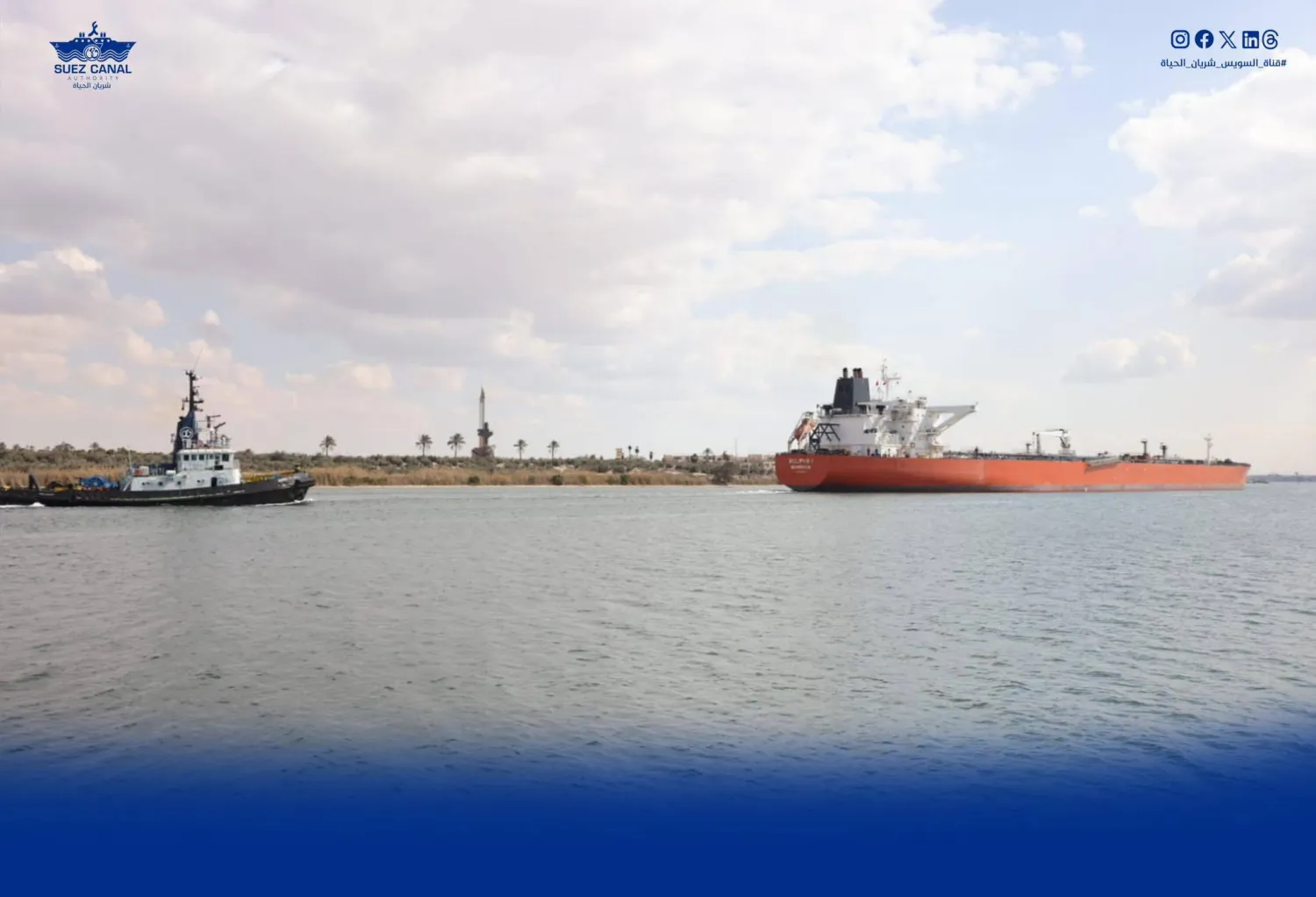
A ship transits the Suez Canal last month (Suez Canal Authority). 
TT

Iran War Raises Concerns Over Impact on Suez Canal Traffic

A ship transits the Suez Canal last month (Suez Canal Authority). 

The Iran war has sparked growing concern in Egypt over its potential impact on navigation through the Suez Canal, one of the country’s most important sources of national income. Experts say the conflict has already begun affecting traffic through the strategic waterway as security risks for ships increase.

Recent reports indicate that several major global shipping companies—including Denmark’s Maersk, France’s CMA CGM, and Germany’s Hapag-Lloyd—have suspended the transit of some vessels through the canal.

The head of the Suez Canal Authority, Admiral Osama Rabie, expressed hope that regional stability would return soon, warning that escalating tensions could have serious repercussions for maritime transport and global supply chains.

In a statement issued Thursday, Rabie said the authority has moved to upgrade its maritime and navigational services and introduce new activities designed to meet customer needs in both normal and emergency circumstances. These include ship maintenance and repair services, maritime rescue operations and marine ambulance services, alongside continued modernization of the authority’s fleet of marine units.

Early impact on canal traffic

International transport expert Osama Aqil said the war’s effect on the canal had been evident since the first days of the conflict.

“Current indicators show that canal traffic has declined by about 50 percent since the war began,” Aqil told Asharq Al-Awsat. He attributed the drop to rising security risks and higher insurance premiums imposed on vessels passing through the region.

Aqil warned that the impact could deepen if the conflict drags on. Even after hostilities end, he said, it may take considerable time for shipping traffic to return to normal.

“International shipping groups that divert their vessels to the Cape of Good Hope route will likely sign contracts for the alternative passage,” he said. “Ending those arrangements and redirecting ships back through the canal will take time.”

Before the latest tensions, the Suez Canal had been showing signs of recovery following an earlier setback caused by Houthi attacks on commercial vessels in the Red Sea linked to the war in Gaza.

In January, the Suez Canal Authority said navigation statistics showed a “noticeable improvement” during the first half of the 2025–2026 fiscal year. Rabie said at the time that indicators pointed to improving revenues as some shipping lines resumed using the canal after conditions stabilized in the Red Sea.

Wider threat to global trade

Egyptian President Abdel Fattah el-Sisi has also warned about the impact of regional tensions on shipping in the Red Sea. During a meeting in Cairo earlier this month with Ajay Banga, president of the World Bank Group, Sisi said Egypt had lost roughly $10 billion in Suez Canal revenues due to the Gaza war, according to the Egyptian presidency.

Aqil said the Iran war could affect not only the canal but global trade more broadly, which he said has already shown signs of slowing.

“If the conflict continues, transport costs will rise, which will push up prices for many goods and commodities,” he stated.

Suez Canal revenues dropped sharply in 2024, falling 61 percent to $3.9 billion, compared with about $10.2 billion in 2023.

Security risk management expert Major General Ihab Youssef noted that the continuation of the war poses a threat to global navigation, not only to the Suez Canal.

Egypt secures ships along the canal and up to the limits of its territorial waters, he remarked. However, vessels traveling to and from the waterway must still pass through areas affected by military operations in the Gulf region and the Bab el-Mandeb Strait, prompting many shipping companies to reroute vessels around the Cape of Good Hope.

“Any closure of the Strait of Hormuz would further increase the risks of transit, particularly if the war is prolonged,” Youssef said.