More Than 4,360 Killed in Syria War in 2023

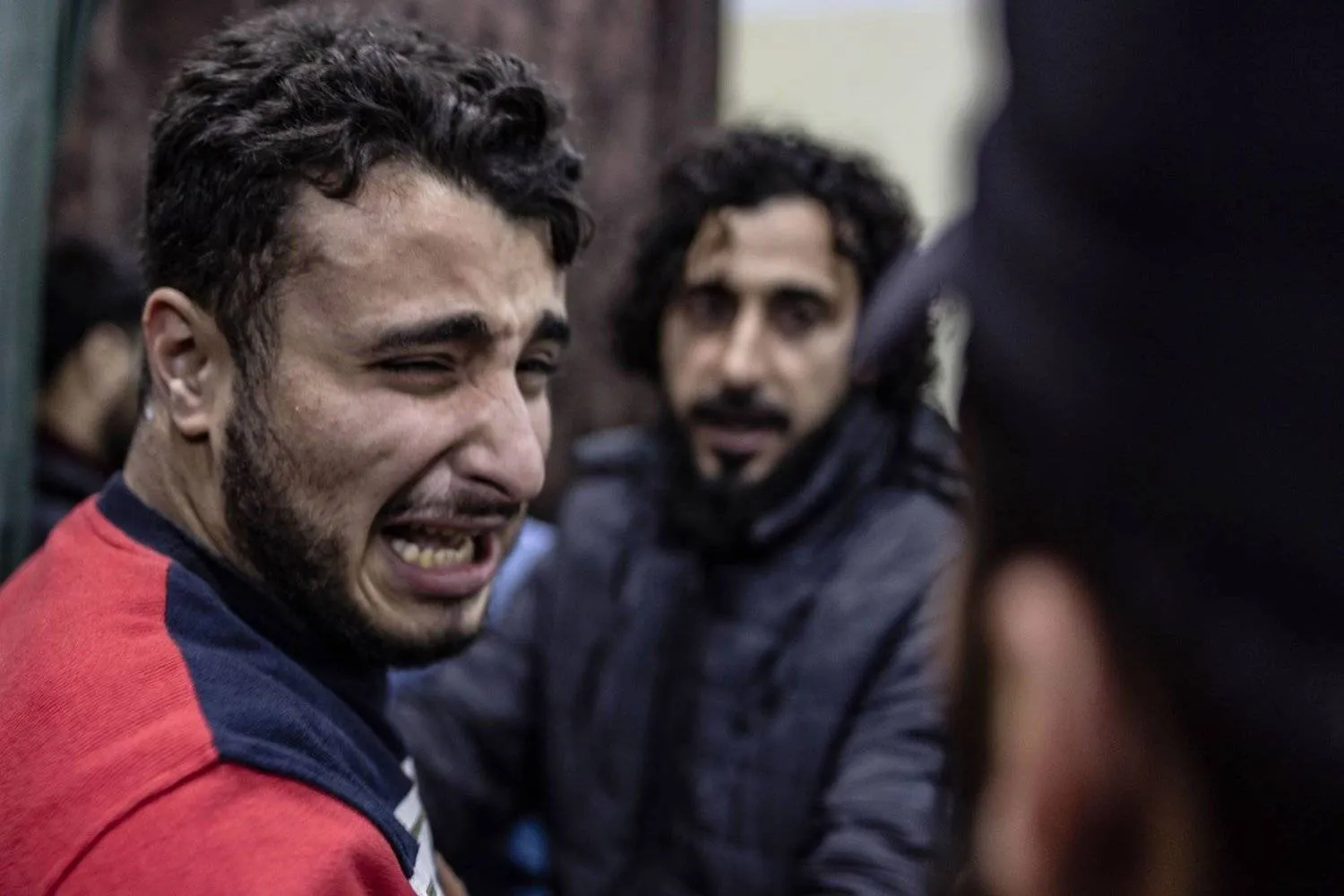
A man cries after his brother was injured following artillery shelling on Idlib on Sunday (dpa)
TT

More Than 4,360 Killed in Syria War in 2023

A man cries after his brother was injured following artillery shelling on Idlib on Sunday (dpa)

More than 4,360 people were killed in Syria’s war in 2023, a war monitor said on Sunday.

The figure was an increase compared to 2022, when roughly 3,800 people were killed. That was the lowest annual death toll since the conflict began in 2011, according to the Syrian Observatory for Human Rights.

This year’s count included 1,889 civilians, of whom 241 were women and 307 children.

The dead included 898 members of the regime forces and about 600 loyalist militants of various Syrian and non-Syrian nationalities. The remaining are from ISIS, the opposition, the Syrian Democratic Forces, and the Kurdish units.

The Observatory documented on Sunday the killing of three people, including a child, in an artillery attack by Syrian regime forces against a market in the center of Idlib city on Saturday evening. A total of 14 injuries, including children, were recorded.

The intensity of clashes decreased in several areas in the past three years, particularly in Idlib. Hayat Tahrir al-Sham (formerly known as Nusra Front) controls large parts of Idlib and neighboring provinces.

A ceasefire brokered by Russia and Türkiye was declared in Idlib in March 2020.

Also on Saturday, 25 pro-Iran fighters were killed in air strikes in eastern Syria likely carried out by Israel, the Observatory added.

Moreover, four pro-Iran militants were killed in an Israeli attack in the north of the country.

Last year, Israel launched dozens of air strikes in Syria against Iranian and Hezbollah targets, including warehouses and shipments of ammunition and weapons, as well as sites of the Syrian army.

Since declaring victory over ISIS in 2019, the group’s militants have been conducting operations against Kurdish fighters and regime forces from rural areas. The government has no control over large areas of agricultural land and oil and gas wells.

The conflict - which began in 2011 - caused the killing of over half a million people, and the vast destruction of infrastructure and economy, and displaced more than half the population - inside Syria or abroad.


Lebanon Moves to Protect Land Ownership in Occupied South

Smoke rises after Israeli demolition operations targeted the occupied southern Lebanese town of Khiam (AFP)
TT

Lebanon Moves to Protect Land Ownership in Occupied South

Smoke rises after Israeli demolition operations targeted the occupied southern Lebanese town of Khiam (AFP)

Lebanon’s government has approved a draft law banning property sales in Israeli-occupied parts of the south, seeking to prevent wartime displacement and destruction from being exploited to transfer land through intermediaries, front companies, or fictitious buyers.

The cabinet approved on Thursday, at the Finance Ministry’s request, “a ban on real estate sales in areas occupied by the Israeli army.”

Lebanese Finance Minister Yassine Jaber told Asharq Al-Awsat that the government’s decision to ban land sales in occupied southern areas was intended to protect property rights and prevent any attempt to transfer ownership to parties linked to the occupation.

He said the preventive measure would protect the land from sales conducted through indirect or deceptive means.

“The government was keen to take a clear measure in light of the concerns raised about this issue, preventing any sales that could effectively lead to land ownership being transferred indirectly to undisclosed parties,” Jaber said.

The aim, he added, was to prevent sales “to fictitious individuals or companies,” referring to the potential use of names or corporate entities as fronts for indirect purchases.

Jaber linked the decision to efforts to preserve and protect land ownership in the south, saying it was part of “strengthening the resilience of southern communities, preserving and protecting the land in every respect, and safeguarding coexistence.”

The draft law comes as southern areas face widespread destruction, while residents remain displaced and some are unable to return to their towns. The situation has raised concerns extending beyond physical damage to the future of property ownership and residents’ ability to return.

Lebanese MP Abdel Rahman al-Bizri said the protection of property ownership was part of an effort to prevent the destruction and displacement from becoming permanent.

“It is clear that the Israeli occupier is pursuing a scorched-earth policy and working to eliminate every possibility for people and communities to return to the occupied territories in southern Lebanon,” al-Bizri told Asharq Al-Awsat.

“The systematic destruction it is carrying out — whether of homes, infrastructure, crops, schools, clinics, shelters or hospitals — targets every element people need to live and build a functioning community.”

“This indicates a deliberate plan to ensure that these lands remain unfit for the residents’ return, even if the Israeli occupier withdraws from them,” he added, pointing to “repeated visits and tours of Lebanese territory by extremist groups from within Israeli society.”

“This recalls similar scenes in the Syrian Golan Heights and the West Bank,” al-Bizri said. “Despite the Israeli government’s denials, it raises concerns about possible parallel activity by the Israeli authorities and extremist movements.”

Al-Bizri said the Lebanese government had prohibited land sales as a pre-emptive and preventive measure, barring the sale of property in occupied areas to Lebanese and non-Lebanese buyers alike.

The measure was intended to prevent such transactions from becoming “an entry point for a broader process that could later be exploited,” he said, recalling “what happened historically in Palestine before the Nakba.”

“Sovereignty does not mean only the deployment of the Lebanese army and security forces. It also means the return of the state, with all its services, to those areas — from municipalities and schools to healthcare and social protection,” al-Bizri said, adding that a substantial part of the responsibility rested with the government itself.

“Preventing land sales is part of the confrontation and part of our insistence that this land is Lebanese and that we want to keep it Lebanese,” he said. “This must go hand in hand with the state’s return and presence across all Lebanese regions.”

Ayoub Hmayed, an MP from the Development and Liberation parliamentary bloc, told Asharq Al-Awsat that the government’s decision was a “precautionary measure” aimed at protecting the land and closing any loophole that Israel could exploit.

The measure “reinforces Lebanese sovereignty over Lebanese territory,” he said.

Hmayed said the decision’s importance stemmed, “as a matter of principle,” from the need to prevent sales or transfers of ownership that could be exploited under occupation.

On the demographic implications, Hmayed said the problem extended beyond land sales to the conditions created by the war and occupation, including residents’ displacement and the inability of some to return to their towns. If the situation persisted, he warned, it would “certainly produce a different reality” on the ground.

He said the ban provided additional protection to landowners even when their homes had been destroyed and they were unable to return.

“Preventing land sales protects these people, just as it reinforces Lebanese sovereignty over Lebanese territory,” Hmayed said.


Iraqi Army Commander Sacked After Drone Attacks Targeted Saudi Arabia

Iraqi Prime Minister Ali Al-Zaidi (Reuters)
TT

Iraqi Army Commander Sacked After Drone Attacks Targeted Saudi Arabia

Iraqi Prime Minister Ali Al-Zaidi (Reuters)

The office of Iraqi Prime Minister Ali al-Zaidi announced on Saturday the dismissal of the commander in charge of the southern Maysan province after Saudi Arabia said drones launched from Iraq hit the East-West pipeline and led to its closure.

The commander was fired following the "confirmation that the attacks targeting our brethren in the Kingdom of Saudi Arabia originated from a location within the governorate,” said al-Zaidi’s office.

The Saudi Foreign Ministry condemned "the targeting of the East-West pipeline in the Riyadh and Madinah regions by several drones coming from Iraq, which caused human injuries and damage.”

"The pipeline was stopped as a precaution, and the attacks resulted in some injuries," an Energy Ministry official told the SPA news agency earlier.

"At the request of the Iraqi Prime Minister... (Riyadh) has chosen not to respond at this stage and to support the efforts of the Iraqi government ... to prevent attacks launched from Iraq against the Kingdom and neighboring countries," the Foreign Ministry said.


Israel-Lebanon Talks in Rome Next Week Reportedly Postponed

(2L/R) Israel's Ambassador to the US Yechiel Leiter, State Department Chief of Staff Daniel Holler, US Ambassador to Lebanon Michel Issa and Lebanese Ambassador to the US Nada Hamadeh attend a meeting between Israeli and Lebanese delegations hosted by the United States at the State Department in Washington, DC, on June 3, 2026. (Photo by Oliver Contreras / AFP)
TT

Israel-Lebanon Talks in Rome Next Week Reportedly Postponed

(2L/R) Israel's Ambassador to the US Yechiel Leiter, State Department Chief of Staff Daniel Holler, US Ambassador to Lebanon Michel Issa and Lebanese Ambassador to the US Nada Hamadeh attend a meeting between Israeli and Lebanese delegations hosted by the United States at the State Department in Washington, DC, on June 3, 2026. (Photo by Oliver Contreras / AFP)

Talks between Israel and Lebanon that were scheduled to take place in Rome next week have been postponed and will occur instead in ⁠October, Axios reported ⁠on Friday, citing a US official.

Jewish holidays, a Paris conference ⁠and UN General Assembly preparations meant participants could not convene in Rome, Axios cited a source as saying.

The Lebanese and Israeli ambassadors are ⁠due ⁠to meet in Washington, according to the post on X.