Pressure Grows on Israel to Open More Aid Routes into Gaza by Land and Sea as Hunger Worsens 

The Palestinian flag flies surrounded by the rubble of destroyed buildings following an Israeli military operation in Khan Younis in the southern Gaza Strip, 06 March 2024. (EPA)
TT

Pressure Grows on Israel to Open More Aid Routes into Gaza by Land and Sea as Hunger Worsens 

The Palestinian flag flies surrounded by the rubble of destroyed buildings following an Israeli military operation in Khan Younis in the southern Gaza Strip, 06 March 2024. (EPA)

Efforts to get desperately needed humanitarian aid to war-wracked northern Gaza gained momentum Wednesday with the European Union increasing pressure for the creation of a sea route from Cyprus to Gaza and British Foreign Minister David Cameron saying that Israel’s allies were losing patience.

While aid groups say all of Gaza is mired in a humanitarian crisis, the situation in the largely isolated north stands out. Many of the estimated 300,000 people still living there have been reduced to eating animal fodder to survive. The UN says that one in six children younger than 2 in the north suffers from acute malnutrition.

Amid the global pressure to alleviate the crisis, two Israeli officials said Wednesday the government will begin allowing aid to move directly from its territory into northern Gaza and will also cooperate with the creation of the sea route from Cyprus.

Israel would allow 20 to 30 aid trucks to enter northern Gaza from Israel on Friday, the start of more regular deliveries via that route, one of the officials said. It will also begin doing security checks Sunday on aid in Cyprus before it's delivered via sea to Gaza, the official said. The ship will be part of a pilot project to test the feasibility of the sea route. The aid is UAE-funded and made possible with US involvement.

The officials spoke on condition of anonymity because they were not authorized to discuss the upcoming shipments with the media.

Aid groups have said it has become nearly impossible to deliver supplies within most of Gaza because of the difficulty of coordinating with the Israeli military, the ongoing hostilities and the breakdown of public order. It is even more difficult to get aid to the north.

Trucks carrying humanitarian aid have to drive from the Rafah crossing with Egypt or the Kerem Shalom crossing with Israel, both on the southern edge of Gaza, through the conflict zone to reach the largely cut-off areas in the north.

Last week, an attempt by the Israeli military to facilitate the movement of aid ended in tragedy when more than 100 Palestinians were fatally shot by Israeli forces or trampled to death in a melee.

On Wednesday, hundreds of people ran along a seaside road on the outskirts of Gaza City to collect bags of flour and boxes of water and canned food donated by Türkiye and Egypt and were part of a shipment trucked in from southern Gaza.

British Foreign Secretary David Cameron met with Benny Gantz, a visiting member of Israel's war Cabinet, and pressed him to increase the flow of aid into Gaza.

“We are still not seeing improvements on the ground. This must change,” Cameron said in a statement posted on X, formerly known as Twitter.

South Africa, which filed a genocide case against Israel at the International Court of Justice, asked the court Wednesday to order Israel to allow in aid “to address famine and starvation” in Gaza.

Meanwhile, European Union Commission Chief Ursula von der Leyen will visit Cyprus on Friday to inspect installations at the port of Larnaca, from where aid would leave for Gaza if a sea route is established, Cypriot government spokesman Constantinos Letymbiotis said.

EU spokesman Eric Mamer said the bloc is hopeful the corridor will open “very soon.”

Concerned by the lack of access to food, the United States, Jordan and other nations have begun making air drops of aid in recent days, but aid groups say only a fraction of the needed assistance can be delivered by air.

The war began with a Hamas attack on southern Israel on Oct. 7 in which Palestinian militants killed around 1,200 people and took about 250 hostages. More than 100 of them were released during a weeklong ceasefire in November.

The attack sparked an Israeli invasion of the enclave of 2.3 million people. Gaza’s Health Ministry said Wednesday the Palestinian death toll from the war climbed to 30,717. The ministry is part of the Hamas-run government and maintains detailed casualty records. It does not differentiate between civilians and combatants in its tallies but says women and children make up around two-thirds of those killed.

Israel says it has killed over 13,000 Hamas fighters, without providing evidence.

Aid groups say the fighting has displaced most of the territory’s population and pushed a quarter of the population to the brink of famine.

Meanwhile, efforts to negotiate a ceasefire to start before the beginning of the Muslim holy month of Ramadan in a few days have so far borne no fruit.

The US, Qatar and Egypt have worked on an agreement in which Hamas would release up to 40 hostages in return for a six-week ceasefire, the release of some Palestinian prisoners and a major influx of aid to Gaza. Hamas has said it wants a full end to the war and Israeli forces’ withdrawal.


Israel Pounds South Beirut, Says Captured Hezbollah Members

Smoke rises from the site of an Israeli airstrike that targeted an area in Beirut's southern suburbs on March 24, 2026. (AFP)
TT

Israel Pounds South Beirut, Says Captured Hezbollah Members

Smoke rises from the site of an Israeli airstrike that targeted an area in Beirut's southern suburbs on March 24, 2026. (AFP)

A series of strikes hit Beirut's southern suburbs on Monday and early Tuesday, the first attack on the Hezbollah stronghold in days, as Israel's military said it captured two members of the Iran-backed group in southern Lebanon.

An earlier Israeli strike hit the upscale, predominantly Christian area of Hazmieh near Beirut, with Israel saying it targeted a member of the Iranian Revolutionary Guards' foreign operations arm.

AFPTV's live broadcast showed clouds of smoke over the capital's southern suburbs, and Lebanon's state-run National News Agency reported a series of strikes on the area, with low Israeli warplanes heard across Beirut and its surroundings.

The Israeli military also announced it was "striking Hezbollah infrastructure in Beirut" after having called on residents to leave the southern suburbs beforehand.

Lebanon was pulled into the Middle East war when Hezbollah began firing rockets into Israel on March 2 to avenge the killing of Iran's supreme leader Ali Khamenei in an Israeli-US attack.

Israel has since launched strikes across Lebanon, killing at least 1,039 people, and sent ground troops into the country's south.

In a statement on Monday, the Israeli army said that "during an activity to locate weapons in southern Lebanon, (Israeli) troops identified several armed Hezbollah Radwan Force terrorists who were planning to fire an anti-tank missile", referring to the group's commando force.

"After being identified, the terrorists surrendered. They were apprehended by the troops and transferred to Israeli territory for further questioning," it added.

The Israeli military told AFP two Hezbollah members were captured.

Hezbollah, for its part, announced more than 50 attacks targeting Israeli troops and bases in northern Israel and southern Lebanon, particularly in the border coastal town of Naqoura.

The UN peacekeeping force in Lebanon (UNIFIL) announced Monday that its headquarters in Naqoura had been hit by a projectile, probably launched by a "non-state actor".

Elsewhere in the south, the NNA reported several Israeli strikes.

Early on Tuesday, the Israeli military issued evacuation warnings for two coastal towns near the southern city of Tyre.

- Strike near Beirut -

The Israeli strike on Hazmieh killed at least one person, according to Lebanon's health ministry.

The upmarket area, overlooking Beirut and adjacent to the presidential palace, houses diplomatic missions, government offices and luxurious residential buildings.

The Israeli military said it had "struck an IRGC Quds Force terrorist in Beirut", referring to the foreign operations arm of Iran's Revolutionary Guards.

Mayor Jean Asmar told journalists at the scene that the strike targeted a room inside an apartment rented by a displaced family.

Asmar said the attack forced the municipality to take new measures regarding hosting people displaced by the war, "so that this incident is not repeated".

Israel had previously struck the area on March 5, though it was not clear who the target was. It said another strike in central Beirut days later killed five people, including three Quds Force commanders.

Iran accused Israel of killing four of its diplomats in that attack.

Lebanese Prime Minister Nawaf Salam on Sunday told the Al Hadath network that Iran's Revolutionary Guards were "unfortunately... managing the military operation in Lebanon".

- 'Only just begun' -

The two Hezbollah members captured in the south were the latest additions to a list of Lebanese who have been held in Israel since the last war between it and the group.

Hezbollah lawmaker Hussein al-Hajj Hassan said in January that Israel was holding "20 Lebanese prisoners", alleging 10 had been abducted "inside Lebanese territory after the ceasefire" that sought to end the previous conflict in 2024.

The next month, Israeli forces seized a member of the Hamas-allied Jamaa Islamiya in southern Lebanon.

The Israeli army's Arabic-language spokesperson Ella Waweya said on Monday "the battle against Hezbollah... has only just begun".

In a video statement, Israeli Prime Minister Benjamin Netanyahu said his country will "continue to strike both in Iran and in Lebanon".

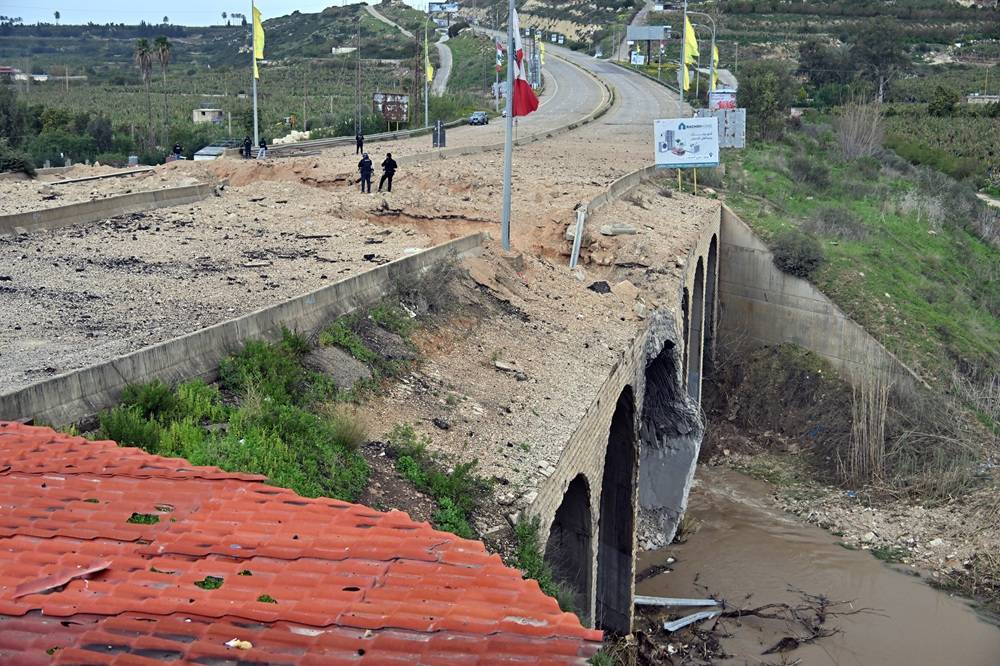
Israel earlier struck a bridge linking areas in southern Lebanon to the Bekaa Valley in the east of the country, a day after a major bridge in the Tyre region was targeted.

Israeli Defense Minister Israel Katz said on Sunday he and Netanyahu had instructed the military to "destroy all the bridges over the Litani River that are used for terrorist activity".


World Gave Israel ‘License to Torture Palestinians’, Says UN Expert

 United Nations (UN) special rapporteur on the occupied Palestinian territories Francesca Albanese presents her latest report before delegates at the UN Rights Council, in Geneva, on March 23, 2026. (AFP)
United Nations (UN) special rapporteur on the occupied Palestinian territories Francesca Albanese presents her latest report before delegates at the UN Rights Council, in Geneva, on March 23, 2026. (AFP)
TT

World Gave Israel ‘License to Torture Palestinians’, Says UN Expert

 United Nations (UN) special rapporteur on the occupied Palestinian territories Francesca Albanese presents her latest report before delegates at the UN Rights Council, in Geneva, on March 23, 2026. (AFP)
United Nations (UN) special rapporteur on the occupied Palestinian territories Francesca Albanese presents her latest report before delegates at the UN Rights Council, in Geneva, on March 23, 2026. (AFP)

The world has given Israel "a license to torture Palestinians", a UN expert said Monday, with life in the occupied territories "a continuum of physical and mental suffering".

Francesca Albanese, the UN's special rapporteur on the rights situation in the Palestinian territories occupied since 1967, said "torture has effectively become state policy" in Israel.

"Israel has effectively been given a license to torture Palestinians, because most of your governments, your ministers, have allowed it," she said, as she presented her latest report to the UN Human Rights Council.

Albanese has faced harsh criticism, allegations of anti-Semitism and demands for her removal, from Israel and some of its allies, over her relentless criticism and long-standing accusations of "genocide".

"Francesca Albanese is not a promoter of human rights; she is an agent of chaos... and any document she produces is nothing but a politically-charged, activist rant," Israel's mission in Geneva said in a statement Monday.

Albanese "advocates dangerous extremist narratives to undermine the very existence of the State of Israel", it said.

Albanese's report claimed Israel was systematically torturing Palestinians on a scale "that suggests collective vengeance and destructive intent".

"My report also shows that torture extends far beyond prison walls, in what can only be described as a torturous environment imposed by Israel across the entire occupied Palestinian territory," she told the Human Rights Council.

She said torture destroys the conditions that make life meaningful, stripping away human dignity, leaving empty shells behind.

"The testimonies that I and many others are documenting are not only tragic stories of suffering; they are evidence of atrocity crimes targeting the totality of the Palestinian people, across the totality of the occupied land, through a totality of criminal conduct," she said.

Albanese warned that the international response would be a test of countries' collective legal and moral responsibility.

"Disregard for international law will not stop in Palestine. It is already unfolding from Lebanon to Iran, across the Gulf countries, and in Venezuela. And if left unchecked, it will spread far beyond," she said.

Though appointed by the UN Human Rights Council, special rapporteurs are independent experts and do not speak on behalf of the United Nations itself.


Iran Pledges to its Allies in Lebanon to Include Them in Any Possible Deal to End the War

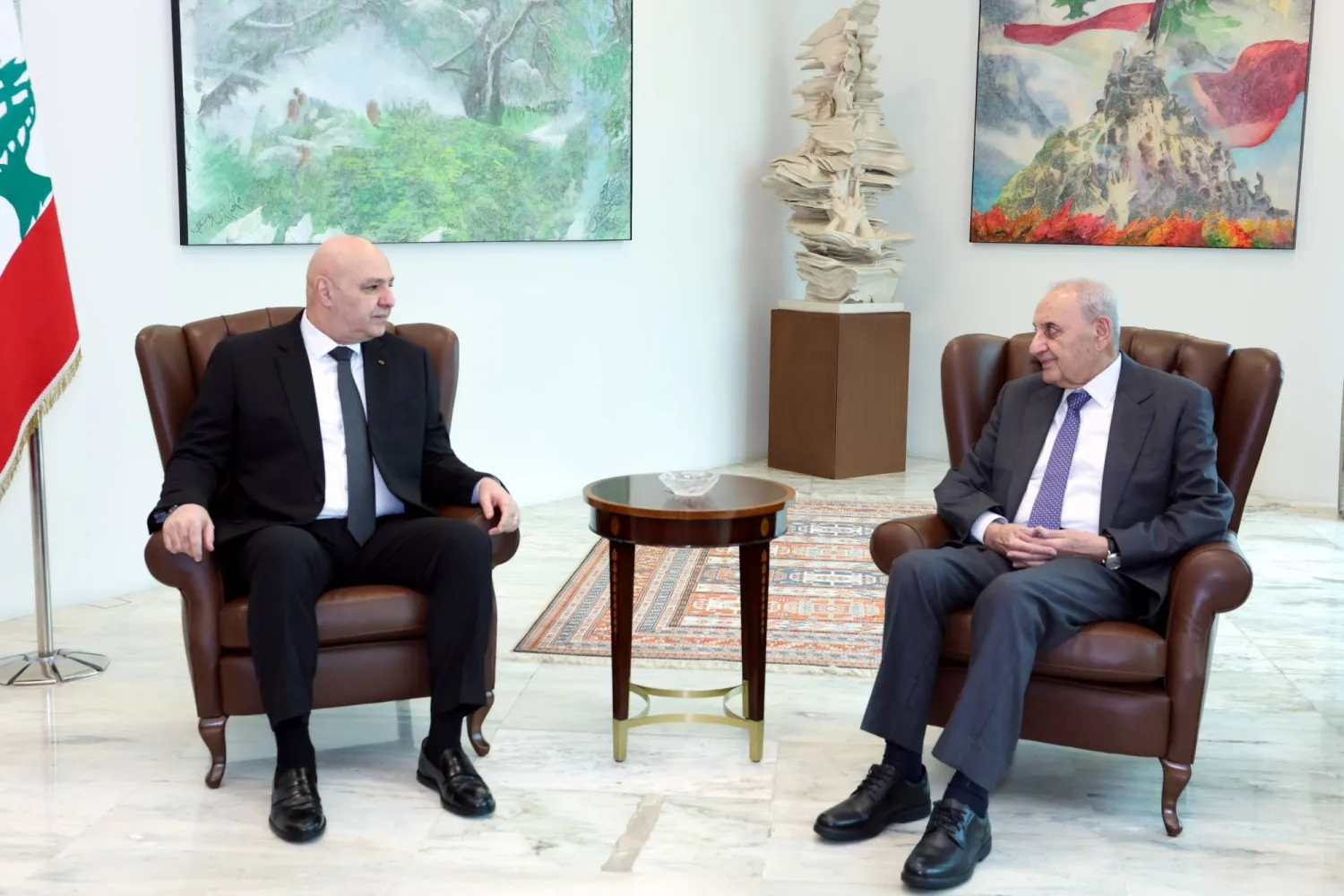
President Joseph Aoun meets with parliament Speaker Nabih Berri at the Baabda presidential palace. (Lebanese Presidency)
TT

Iran Pledges to its Allies in Lebanon to Include Them in Any Possible Deal to End the War

President Joseph Aoun meets with parliament Speaker Nabih Berri at the Baabda presidential palace. (Lebanese Presidency)

Widely informed Lebanese sources revealed to Asharq Al-Awsat that Iran has “clearly pledged” to leaderships in Beirut to include Lebanon in any possible deal that could end the war between it and the US and Israel.

The sources said Lebanese officials learned through non-diplomatic channels that Tehran informed a number of its allies in Lebanon that any agreement to end the war will “certainly include Lebanon.”

Lebanon fears that should the war end, Israel will shift all of its attention on the Lebanese front. The Israeli military’s recent maneuvers indicate that it may be planning to launch broader operations.

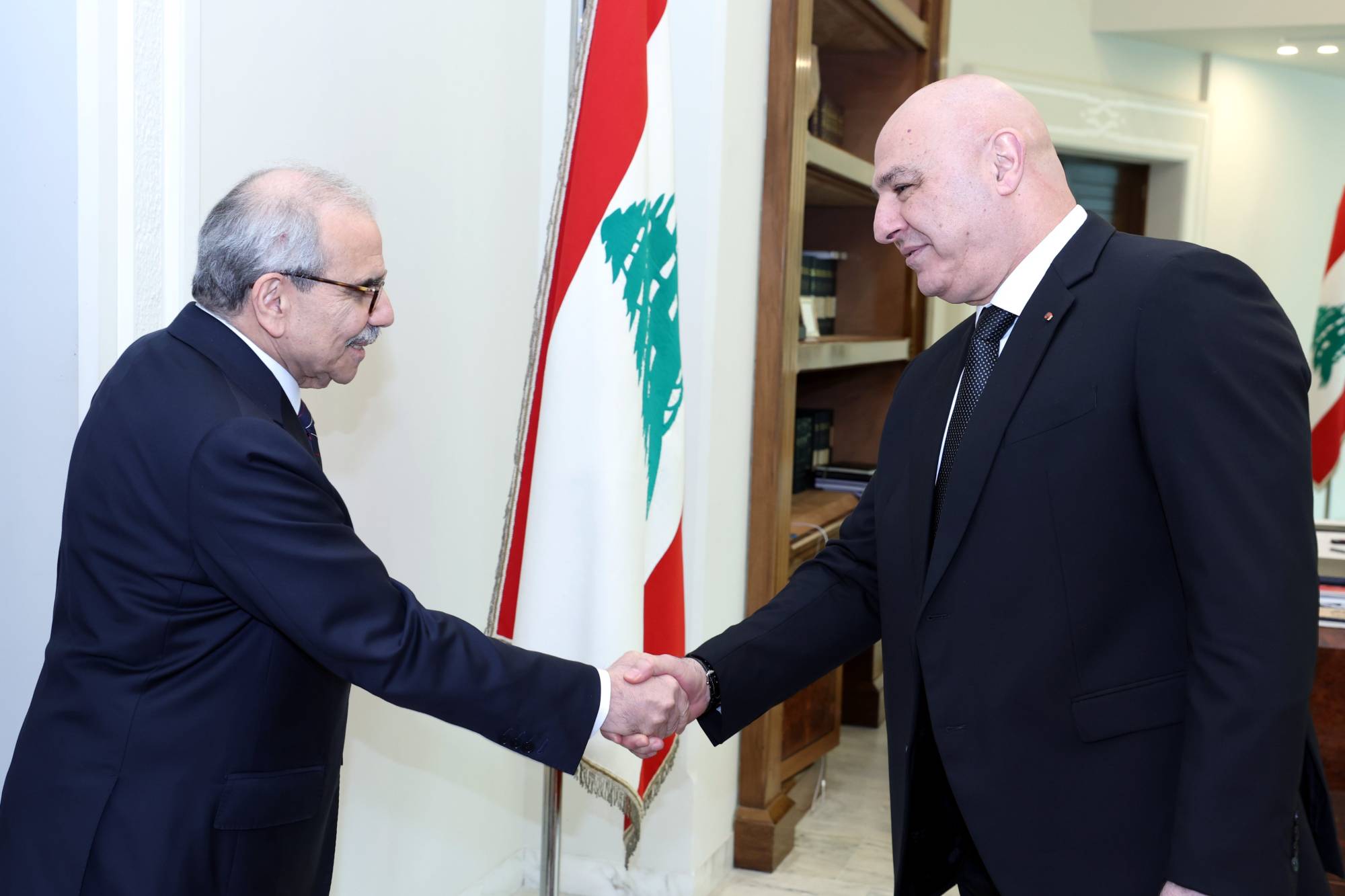
President Joseph Aoun, meanwhile, received parliament Speaker Nabih Berri, Prime Minister Nawaf Salam, Druze leader Walid Jumblatt and army commander Rodolphe Haykal in separate meetings at the Baabda presidential palace.

In a telephone call with Asharq Al-Awsat, Berri hoped that Iran and the US would reach a deal soon and that it would also lead to an end to Israel’s war on Lebanon.

President Joseph Aoun meets with Prime Minister Nawaf Salam at the Baabda presidential palace. (Lebanese Presidency)

Asked if Aoun had brought up with him the issue of naming a Shiite representative to the Lebanese delegation expected to hold negotiations with Israel, he replied: “I focused on the issues of the displaced that should be addressed through the utmost seriousness.”

He expressed his concern that “Israel may exploit the situation in order stir strife in Lebanon.”

“Israel is bombing bridges in the South and we must not lose internal bridges of communications. This is what Israel is seeking,” he warned.

A statement from the presidency said Aoun and Berri discussed Israel’s targeting of bridges with the aim to cut off the South from the rest of Lebanon. They addressed the plight of the nearly 1 million displaced people.

They praised the Lebanese people for welcoming the displaced, underlining national unity and solidarity during the crisis and the importance of maintaining civil peace and avoiding rumors that aim to harm Lebanon.

Aoun then met with PM Salam, who told reporters at the presidential palace that he was in daily contact with the president. “We are working with everyone to end the war as soon as possible,” he added.

Damage at the site of an Israeli strike targeting the Qasmiyeh bridge near Tyre, southern Lebanon, 23 March 2026. (EPA)

After meeting with Aoun, Jumblatt condemned to reporters “accusations of treason” that have been directed against the president and prime minister given their willingness for Lebanon to hold negotiations with Israel.

“Negotiations are acceptable if they are held on declared foundations. The president's swearing in speech committed to the truce agreement, Taif Accord and international resolutions,” he went on to say.

“Negotiations are among the world’s legitimate means. We object to the rejection of the negotiations for the sake of rejecting them and for keeping Lebanon an open battlefield,” he stressed.

Aoun and Haykal discussed the security situation in the country, especially in the South amid the expected Israel escalation.

The president urged the army commander to bolster security measures throughout the country, especially in Beirut and to closely watch over the safety of displacement shelters.