


IMF Warns Escalation in Red Sea Could Adversely Affect Economic Activity in Yemen

IMF representatives and Yemeni officials at the conclusion of their meetings in Amman
TT

IMF Warns Escalation in Red Sea Could Adversely Affect Economic Activity in Yemen

IMF representatives and Yemeni officials at the conclusion of their meetings in Amman

The International Monetary Fund (IMF) has warned of negative effects on Yemen due to escalation in the Red Sea, also affirming that the halt in oil exports since the Houthi attack on oil facilities in October 2022 have deprived the government of half of its revenues.

The Fund said growth in Yemen is estimated to have contracted by 2 percent in 2023 while inflation remained high, despite declining global food prices.

The findings were released after an IMF team held this week its annual consultative meetings with the Yemeni government in the Jordanian capital, Amman.
At the meetings, the government was represented by Central Bank Governor Ahmed Ghaleb and Finance Minister Salem bin Buraik, while the IMF team was led by Joyce Wong.

Discussions covered recent economic developments in Yemen, the economic outlook, and progress on key policy reforms.

At the end of the mission, Wong said the loss of oil exports, which represented more than half of the government’s revenues (4 percent of GDP), is estimated to have widened the fiscal deficit to 4.5 percent of GDP in 2023, adding to pressures on reserves and the exchange rate.

Challenging Humanitarian Situation

Also, the IMF mission said the humanitarian situation in Yemen remains difficult with 17 million people facing food insecurity. Disbursements of the GCC support package and stable remittances have been mitigating factors, it noted.

“An escalation of the Red Sea tensions could adversely affect economic activity through trade and financial channels, and lower external support including humanitarian assistance,” the Missions’ statement said.

Despite the challenging situation, the IMF said the authorities remain steadfastly committed to reforms, including further aligning multiple exchange rates for government transactions and refining the FX auction system.

“Cash management has been strengthened with better expenditure control and prioritization. These measures have contributed to limiting the budget deficit, recourse to monetary financing, and associated inflationary pressures,” it added.

Acceleration of Fiscal Reforms

Also, the IMF mission found that “amid high uncertainty, the mission urged the further acceleration of fiscal reforms, including improving revenue administration while enhancing expenditure reprioritization and control.”

It said ensuring consistency and predictability in FX auctions will help the central bank preserve hard-won credibility amidst constrained FX resources. Strengthening central bank governance while improving data collection will enhance transparency and accountability, it added.

The mission also stressed the importance of continuing to preserve stability in the financial sector and further strengthen compliance in line with international frameworks, including AML/CFT, and national standards. It said this will further facilitate trade and remittances, which are key lifelines for the Yemeni population.

Meanwhile, external financial support remains critical to help ease fiscal pressures, limit monetary financing, and preserve price stability, the mission affirmed.

“To this end, active engagement with donors to address outstanding needs, together with improving the availability and consistency of financing will be crucial,” it said.

And while the IMF pledged to continue to provide comprehensive technical assistance to Yemen to further enhance institutional capacities, it said it held discussions with partners and key stakeholders to enhance synergies and improve coordination of external assistance.

The mission team then expressed deep appreciation to the Yemeni authorities, technical staff, and all counterparts for their excellent cooperation and candid discussions and looks forward to continued close engagement.



Burhan on Independence Anniversary: Victory Is Coming

Al-Burhan in a still from a video recorded outside the Republican Palace in the capital, Khartoum (Sudan News Agency). 
TT

Burhan on Independence Anniversary: Victory Is Coming

Al-Burhan in a still from a video recorded outside the Republican Palace in the capital, Khartoum (Sudan News Agency). 

The head of Sudan’s Transitional Sovereignty Council and commander-in-chief of the armed forces, Abdel-Fattah al-Burhan, said on Thursday that “victory is coming” and will be “on the side of the Sudanese people.”

Al-Burhan’s address came as fierce fighting continues between the army and allied forces on one side and the Rapid Support Forces (RSF) and their allies on the other, particularly in South Kordofan state.

In a recorded message delivered from outside the Republican Palace in the capital, Khartoum, al-Burhan congratulated the Sudanese on the 70th anniversary of independence, marked annually on January 1.

“This is an existential battle of dignity that we are all fighting,” he stated, adding: “We reassure our citizens everywhere, in Darfur and Kordofan, that victory is coming, and that Sudanese forces are coming to you. We will surely gather here again as Sudanese to celebrate the expulsion of the rebellion, traitors and defeatists from our country.”

Al-Burhan continued that those who “betrayed their country and sold it” would not prevail, dismissing what he described as “mirages of states that speak of illusions that will never be realized on this land.” He stressed that the Sudanese people are determined to win.

He also stressed that the door remains open to national reconciliation. “We welcome everyone who wishes to join the voice of the nation and of truth,” he said, pledging to work toward building “a state of citizenship, peace and justice.”

In a contrasting message, the prime minister of the rival, RSF-aligned parallel administration, Mohamed Hassan al-Taaishi, argued that political independence was a great national achievement but remained incomplete because it failed to become an inclusive national project addressing imbalances in power and wealth.

Speaking on the eve of Independence Day, Al-Taaishi said the so-called “Government of Peace” had presented a declared national project for a comprehensive re-foundation of the Sudanese state on new principles.

He added that the war would not end through partial solutions or narrow security approaches, calling instead for a decentralized system of governance that redistributes power and wealth fairly through a new social contract and a secular, democratic civilian constitution.


Arab Parliament Affirms Support for Stability in Yemen, Unity Efforts in Sudan

Arab Parliament Affirms Support for Stability in Yemen, Unity Efforts in Sudan
TT

Arab Parliament Affirms Support for Stability in Yemen, Unity Efforts in Sudan

Arab Parliament Affirms Support for Stability in Yemen, Unity Efforts in Sudan

The Arab Parliament reiterated its strong and unwavering support for the security and stability of Yemen. It emphasized that prioritizing dialogue, understanding, and wisdom is essential to serve the best interests of the Yemeni people.

In a statement issued on Friday, the parliament highlighted the importance of making every effort to de-escalate the situation, address the crisis, and achieve a sustainable political solution that respects Yemen's sovereignty and the will of the Yemeni people, the Saudi Press Agency said.

The parliament expressed its full commitment to supporting all initiatives that enhance security, stability, and development in Yemen, as well as to fulfilling the legitimate aspirations of the Yemeni people for progress, stability, and prosperity.

The Arab Parliament also reiterated its strong and unwavering support for all initiatives aimed at resolving the Sudanese crisis and ensuring the security, stability, and unity of Sudan.

In a statement, the Arab Parliament congratulated the Sudanese people on the anniversary of Independence Day. It expressed hope that the next Independence Day will be celebrated with the crisis fully resolved, fulfilling the aspirations of the Sudanese people for security, stability and development.


Lebanon PM Pledges State Authority, Vows to End Israeli Attacks

An Israeli officer displays weapons seized by the army in Gaza, Lebanon and Syria during a media tour (AFP). 
TT

Lebanon PM Pledges State Authority, Vows to End Israeli Attacks

An Israeli officer displays weapons seized by the army in Gaza, Lebanon and Syria during a media tour (AFP). 

Lebanon’s Prime Minister Nawaf Salam has pledged to press ahead with reforms, extend the authority of the state, and work to end Israeli attacks and remove the occupation, even as Israel signals preparations for a “measured” military action against Hezbollah.

In a New Year message posted on X, Salam wished Lebanese a year marked by hope, continued state recovery, and restored public trust.

“We promise to continue together the path of reform and the extension of state authority,” he wrote. He added a renewed pledge “to keep working to end Israeli attacks, remove the occupation, and secure the return of our detainees,” saluting the Lebanese army and security forces deployed nationwide to safeguard public safety.

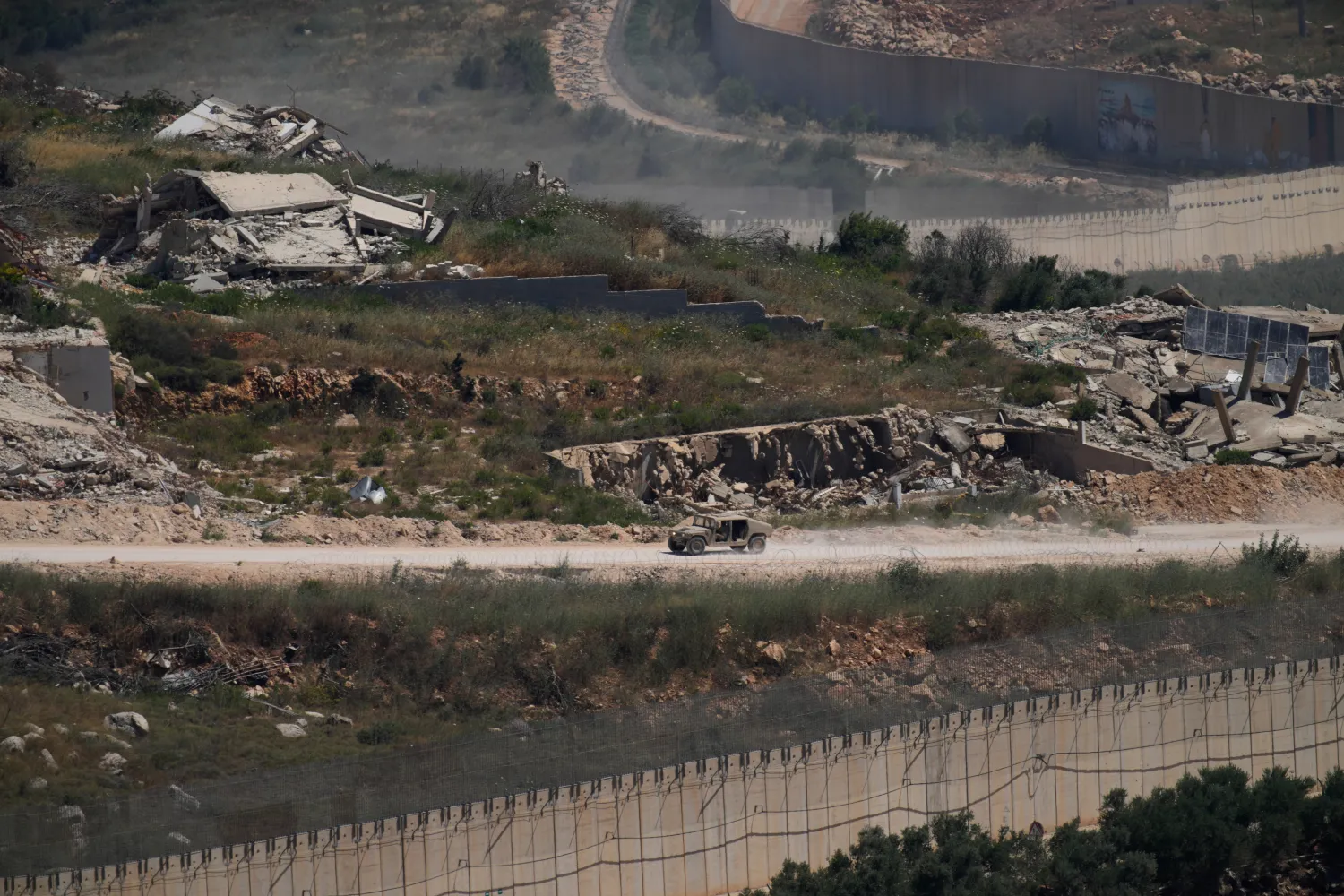
Lebanon has maintained diplomatic contacts with the sponsors of the ceasefire with Israel, which took effect in November 2024 and ended 66 days of fighting between Hezbollah and the Israeli army.

Beirut says diplomacy and steps by the Lebanese army have prevented a renewed war. Israel, however, still occupies five border points inside Lebanese territory, holds around 20 detainees, including civilians, and continues to violate the agreement through intermittent strikes and targeted killings inside Lebanon.

In parallel, Israeli media report heightened security readiness for possible action against Hezbollah, citing Israeli assessments that recent Lebanese measures fall short of ceasefire terms.

The daily Maariv said security chiefs are preparing to brief Prime Minister Benjamin Netanyahu on readiness levels, pointing to what Israel describes as Lebanon’s failure to dismantle Hezbollah’s military infrastructure south and north of the Litani River.

According to the report, Lebanon may soon declare the end of army operations to disarm Hezbollah south of the Litani without extending them northward, an outcome Israel deems a breach. Israeli assessments suggest this could prompt unilateral action if Lebanon is seen as unable or unwilling to comply.

Israel accuses Hezbollah of rebuilding capabilities, including precision missiles, and says recent airstrikes targeted training sites linked to the Radwan Forces. Israeli officials argue Hezbollah is currently in a weakened operational state, enabling “calibrated” options aimed at pressuring the group while preserving the ceasefire framework.