


Israeli Bombardment Kills Dozens Across Gaza, amid Fierce Fighting

A Palestinian child walks with a stuffed bear recovered from the rubble of a destroyed building following Israeli bombardment in Khan Younis on June 21, 2024, in the southern Gaza Strip, amid the ongoing conflict in the Palestinian territory between Israel and Hamas. (AFP)
TT

Israeli Bombardment Kills Dozens Across Gaza, amid Fierce Fighting

A Palestinian child walks with a stuffed bear recovered from the rubble of a destroyed building following Israeli bombardment in Khan Younis on June 21, 2024, in the southern Gaza Strip, amid the ongoing conflict in the Palestinian territory between Israel and Hamas. (AFP)

Israeli forces pounded Rafah in southern Gaza on Friday, as well as other areas across the enclave, killing at least 32 Palestinians as troops engaged in close-quarter combat with Hamas militants, residents and Israel's military said.

Residents said the Israelis appeared to be trying to complete their capture of Rafah, which borders Egypt and has been the focus of an Israeli assault since early May.

Tanks were forcing their way into the western and northern parts of the city, having already captured the east, south and center. Israeli forces fired from planes, tanks and ships off the coast, forcing a new wave of displacement from the city, which had been sheltering more than a million displaced people, most of whom have been forced to flee again.

Later on Friday, Palestinian health officials said at least 12 Palestinians were killed in Mawasi in western Rafah in what Palestinians said was a tank shelling that hit a tent housing displaced families.

Palestinian health officials said at least 32 Palestinians had been killed in separate Israeli military strikes on Friday.

The Israeli military said on Friday it was looking into the reported strikes on Mawasi and a separate incident in Gaza City.

It said its forces were conducting "precise, intelligence-based" actions in the Rafah area, where troops were involved in close-quarter combat and had located tunnels used by militants.

The military also said that over the past week its forces had targeted a university that it said served as a Hamas headquarters from which militants fired on its soldiers and had found weapons and barrel bombs. It did not name the university.

In the central Gaza Strip area of Nusseirat, the military said, soldiers killed dozens of militants over the past week and found a weapons depot that contained mortar bombs and military equipment belonging to Hamas.

Some Rafah residents said the pace of the Israeli raid has accelerated in the past two days. They said sounds of explosions and gunfire, indicating fierce fighting, have been almost non-stop.

"Last night was one of the worst nights in western Rafah, drones, planes, tanks, and naval boats bombarded the area. We feel the occupation is trying to complete the control of the city," said Hatem, 45, reached by text message.

"They are taking heavy strikes from the resistance fighters, which may be slowing them down."

AREAS OF FOCUS

More than eight months into the war in Gaza, Israel's advance is now focused on the two last areas its forces had yet to storm: Rafah on Gaza's southern edge and the area surrounding Deir al-Balah in the center.

"The entire city of Rafah is an area of Israeli military operations," Ahmed Al-Sofi, the mayor of Rafah, said in a statement carried by Hamas media on Friday.

"The city lives through a humanitarian catastrophe and people are dying inside their tents because of Israeli bombardment," he added.

Sofi said there was no medical facility functioning in the city, and that remaining residents and displaced families lacked the minimum daily needs of food and water.

Palestinian and UN figures show that fewer than 100,000 people may have remained in the far western side of the city, which had been sheltering more than half of Gaza's 2.3 million people before the Israeli assault began in early May.

The Israeli military accused Hamas of using Palestinian civilians as human shields, an allegation Hamas denies.

"The soldiers located inside a civilian residence large quantities of weapons hidden in wardrobes, including grenades, explosives, a launcher and anti-tank missiles, ammunition, and arms," the military said in a statement late on Thursday.

Hamas' armed wing said on Thursday its fighters had hit two Israeli tanks with anti-tank rockets in the Shaboura camp in Rafah, and killed soldiers who tried to flee through the alleys. There was no immediate Israeli comment on the Hamas claim.

In nearby Khan Younis, an Israeli air strike on Friday killed three people, including a father and son, medics said.

In parallel, Israeli forces continued a new push back into some Gaza City suburbs in the north of the enclave, where they fought with Hamas-led militants. Residents said army forces had destroyed many homes in the heart of Gaza City on Thursday.

Later on Friday, an Israeli air strike on a Gaza City municipal facility killed five people, including four municipal workers, the territory's Civil Emergency Service said. It added that rescue teams were searching the rubble for more missing victims.

In the nearby Beach camp, an Israeli air strike on a house killed at least seven people, medics said.

Israel's ground and air campaign was triggered when Hamas-led fighters stormed into southern Israel on Oct. 7, killing around 1,200 people and seizing more than 250 hostages, according to Israeli tallies.

The offensive has left Gaza in ruins, killed more than 37,400 people, according to Palestinian health authorities, and left nearly the entire population homeless and destitute.



Hamas Killings Spark Anger as Pursuit of Gazans Resumes

Hamas police officers in a street in Gaza City (file photo - Reuters)
TT

Hamas Killings Spark Anger as Pursuit of Gazans Resumes

Hamas police officers in a street in Gaza City (file photo - Reuters)

Security tensions are rising in the Gaza Strip as Hamas-run security agencies resume measures against Palestinians that include summonses and arrests targeting people described as “activists” or critics of the group’s policies.

Anger has grown further after two Gaza residents were killed in separate incidents in the central part of the enclave.

Shortly before sunset prayers on Sunday, Hamas personnel stationed at a security checkpoint opened fire on a vehicle belonging to Asaad Abu Mahadi, 49, at the Abu Srar junction in the Nuseirat refugee camp in central Gaza. He was critically wounded and later died.

Abu Mahadi’s family said the vehicle trader was killed by masked men acting outside the law and without legal justification. In a statement, the family described the shooting as “a criminal act, a blatant violation of social and legal norms and values, a direct threat to civil peace, and an assault on the stability that had begun to prevail in recent months.”

The family, part of a large and well-known Bedouin clan in Gaza, called for a neutral and independent investigation and demanded that those responsible be brought to justice. It also urged the authorities to strictly limit the use of live ammunition and impose tighter controls to prevent similar incidents.

The family said it reserved its “tribal and legal right” to hold the perpetrators accountable, either through the courts or on its own if the authorities fail to act.

A source in the Abu Mahadi family told Asharq Al-Awsat that Hamas had sent a delegation of community elders and clan leaders to try to defuse the situation, but the family rejected the effort and demanded the handover of the perpetrators, whom they say they now know.

The source said Abu Mahadi had no links to any faction and that the delegation acknowledged he had been killed by mistake after his vehicle had merely come under suspicion.

A Hamas security source told Asharq Al-Awsat that Abu Mahadi had been asked to stop at the checkpoint but did not comply, prompting officers to open fire. The source said there had been “no justification whatsoever” for the shooting and that immediate measures had been taken against recently recruited security personnel who were filling gaps after the security services lost thousands of members during the war.

The source said the checkpoints were meant to prevent infiltration by Israeli forces or armed gangs, particularly after several recent attempts to carry out criminal attacks in Gaza.

Days earlier, Asharq Al-Awsat reported that Hamas security forces had foiled an attack by members of an armed gang in Gaza City and arrested one suspect. Another gang later carried out an attack near the Zeitoun neighborhood, abducting a Hamas government employee and seizing weapons from an arms dealer.

Another killing

Two days after Abu Mahadi’s death, security personnel shot dead another young man, Mohammed Abu Amra, on Tuesday evening in Deir al-Balah in central Gaza.

Family and independent sources told Asharq Al-Awsat that Abu Amra had previously been responsible for securing humanitarian aid deliveries during a period of the war when aid trucks were frequently looted. The sources said his uncle, who supervised him, had also been killed a few months earlier by armed Hamas members.

Hamas has not offered an explanation for the incident. Security sources said the case was under investigation.

Kidnapping and assault allegations

The incidents come as accusations grow that Hamas security agencies are again tightening security measures, including summoning and arresting people described as social media activists or opponents of its policies.

Activists recently condemned the abduction of Ashraf Nasr, who frequently posts on social media criticizing conditions in Gaza and Hamas policies, including his refusal to align with any political or regional camp.

Nasr was reportedly abducted from a tent where he and his family had taken shelter near the Shujaiya neighborhood in eastern Gaza City and beaten in front of them. Activists said he was questioned about his posts on Facebook and other platforms and was repeatedly beaten during interrogation, requiring medical treatment.

Independent sources have not confirmed the claims, while Hamas sources declined to comment. Some Gaza activists say summonses and arrests are also targeting people who criticize charitable organizations or youth initiatives accused of failing to distribute assistance properly.

Hamas security sources told Asharq Al-Awsat there was no such campaign and said the measures were aimed at maintaining security and stability amid attempts by some parties to spread misinformation about events or living conditions. Some individuals were summoned following complaints from citizens who said they had been harmed.

The sources denied that detainees were beaten during questioning and said those summoned were treated “with full respect.”

Many Gaza residents had expected security conditions to change after the two-year Israeli war, especially amid repeated US and Israeli calls for Hamas to leave power and end pursuit measures.

Expectations also rose after an agreement to form a technocratic committee to administer the enclave.

The committee has recently begun receiving applications to form its own security force, raising hopes of a shift in the situation. But its future remains uncertain as the Gaza file remains largely frozen by the US and some mediating countries, amid broader regional developments and the ongoing war with Iran.

For the first time, a figure associated with Hamas publicly commented on the developments.

Ibrahim al-Madhoun, a political analyst and prominent Hamas supporter, wrote on Facebook that he supports “freedom and the right of every person to say what they want,” and opposes harming anyone because of their views.

He said he rejects “any assault or harm, even by a word, by any government against any person,” and called on Palestinian security agencies in Gaza and the West Bank to respect citizens, safeguard their rights, especially freedom of expression, and allow broader space for free opinion.


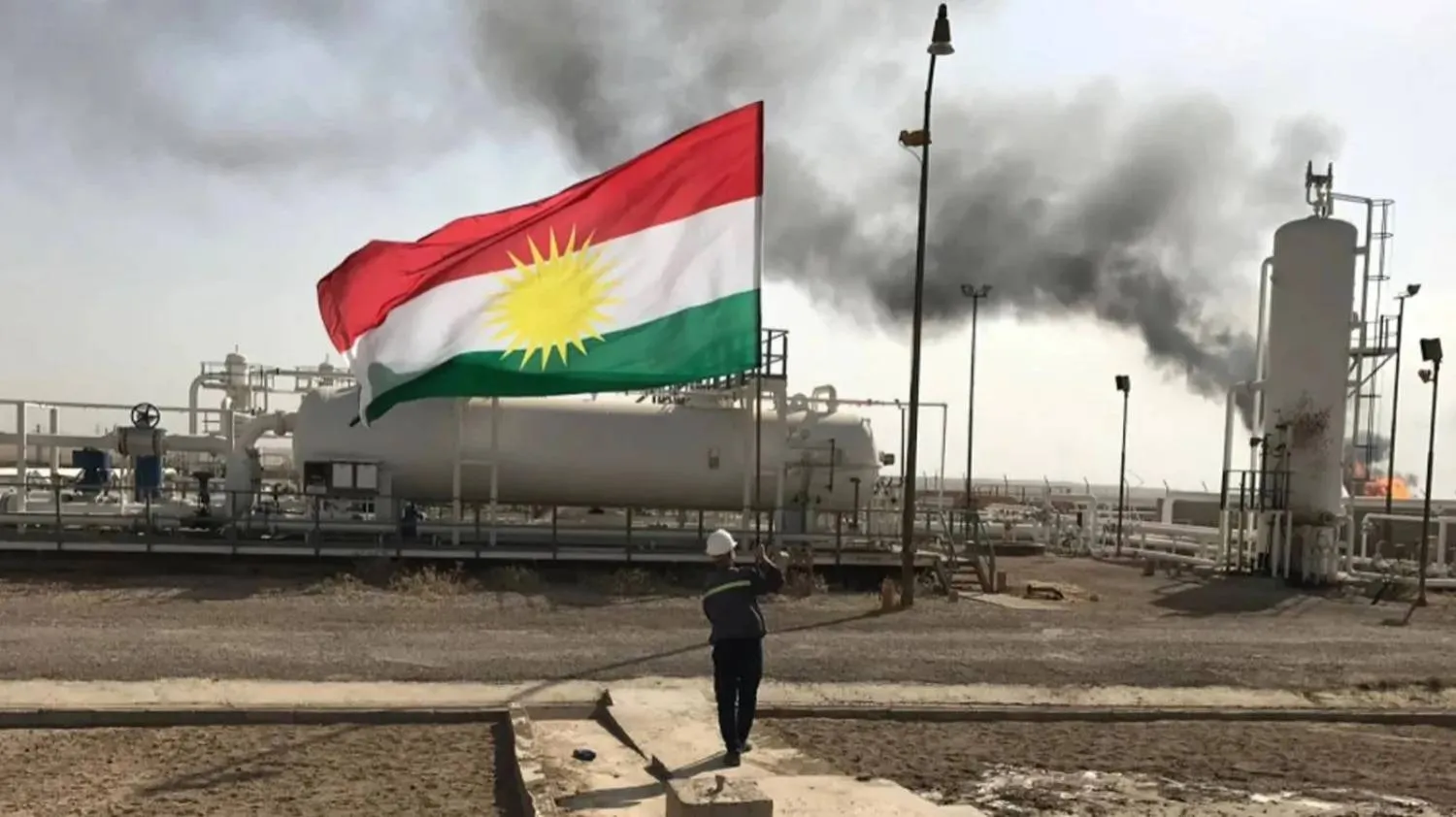
Erbil Rejects Exporting Oil for Baghdad without Conditional Deal

 An oil field in Iraqi Kurdistan. (Kurdistan government /AFP)
An oil field in Iraqi Kurdistan. (Kurdistan government /AFP)
TT

Erbil Rejects Exporting Oil for Baghdad without Conditional Deal

 An oil field in Iraqi Kurdistan. (Kurdistan government /AFP)
An oil field in Iraqi Kurdistan. (Kurdistan government /AFP)

Two Kurdish officials ruled out allowing Iraqi oil exports through the Kurdistan Region’s pipeline to Türkiye’s Ceyhan port “without a deal and conditions.”

Their remarks come after reports that Iraq’s Oil Ministry sent a letter to the Kurdistan Regional Government requesting the export of at least 100,000 barrels per day through the Kurdistan pipeline to the Turkish port.

Speaking to Asharq Al-Awsat on condition of anonymity, the officials said the region may agree to allow Iraqi oil from the Kirkuk fields to pass through its pipeline “under the weight of the current crisis and US pressure.”

However, they stressed that the region would not allow the oil to pass free of charge or without conditions.

There has been no official confirmation or denial from the Kurdistan Region regarding the federal ministry’s request. One official said the issue is expected to be discussed at a meeting of the region’s government and predicted a “conditional Kurdish approval.”

He noted that the pipeline in the Kurdistan Region cost billions of dollars to build and was largely financed through loans taken by the region from Türkiye and other countries.

The official said the region’s authorities “were forced to build the pipeline” after Baghdad cut the region’s financial allocations between 2014 and 2018, prompting Kurdistan to seek alternative revenue sources to sustain daily life and cover government spending.

“It is not logical for Baghdad to pay only transit fees,” he said. “It should pay more than that to the regional government because this pipeline was not built from the Iraqi state treasury but from funds that became debts owed by the region.”

He added that “the time has come to hold accountability on many issues, including the suspension of the region’s budget for several years.”

The second official said exporting oil through the Kurdistan Region’s pipelines to Türkiye “cannot happen without conditions.”

“Such a step is usually linked to a package of political and economic understandings between the region and the federal government,” he said, adding that it could also influence developments in the energy market, particularly the sharp rise in oil prices.

He said it was “natural for the region to seek to resolve several outstanding issues with Baghdad within a framework that takes into account the interests of both sides and strengthens stability in the energy file.”

“We also have the dollar problem resulting from the application of the ASYCUDA system at the region’s border crossings, which has caused significant damage to imports and trade in the region in recent months,” he added.

Iraq’s crisis

Baghdad is facing a serious challenge after halting oil exports following the war that erupted between the US, Israel, and Iran, leaving it unable to meet financial obligations or pay public sector salaries in the coming months.

Nabil Al-Marsoumi, a professor of economics at the University of Basra, said Iraq has made the largest oil production cuts in the world due to the war and the closure of the Strait of Hormuz, reducing output by about 2.9 million barrels per day.

In a Facebook post, Al-Marsoumi said that because of the war and the shutdown of most oil fields, Iraq’s crude exports from Kurdistan fields via the Turkish Ceyhan pipeline had fallen from 200,000 barrels per day to between 20,000 and 40,000 barrels per day.

He said this means Iraq’s current exports do not exceed 50,000 barrels per day after including shipments to Jordan of about 10,000 barrels per day.

Al-Marsoumi said it would be possible to export 250,000 barrels per day of Kirkuk oil through the Kurdistan Region’s pipeline to Ceyhan once the Kurdistan Regional Government approves.

He added that contacts are underway with the Jordanian government to increase oil exports through tanker trucks.

Authorities in Baghdad have faced strong public criticism for relying entirely on southern ports for oil exports and for failing to complete alternative export pipelines through Jordan or Syria.

Alternative routes

Saheb Bazoun, an Oil Ministry spokesperson, told AFP that Iraq’s oil sector has been heavily affected by the disruption.

“Much like other countries in the region, oil production and marketing have been severely impacted, leaving the government no choice but to seek alternative export routes to the Strait of Hormuz,” Bazoun said.

He added that several Iraqi oil shipments are currently stranded at sea.


Lebanon Village Wants Army Protection from Israel, Hezbollah

Residents of the Christian Lebanese border village of Qlayaa carry the coffin of the village's priest, Father Pierre al-Rai during his funeral on March 11, 2026. (AFP)
TT

Lebanon Village Wants Army Protection from Israel, Hezbollah

Residents of the Christian Lebanese border village of Qlayaa carry the coffin of the village's priest, Father Pierre al-Rai during his funeral on March 11, 2026. (AFP)

After narrowly escaping death in her border village, Myriam Nohra is among the people in south Lebanon imploring the army for protection from the war between Israel and Hezbollah.

In Christian-majority Qlayaa, which overlooks a vast green plain separating Lebanon and Israel, hundreds of people buried their parish priest Father Pierre Rai on Wednesday, two days after he was killed by Israeli shelling while inspecting the site of an attack.

Army commander Rodolphe Haykal, who came to the church, faced angry residents who called on the military to bolster its presence in the border area, stop Hezbollah fighters from launching rockets near their village, and to ensure locals can remain.

Dressed in black, 34-year-old teacher Nohra told AFP that just hours after Rai's death "a Hezbollah rocket fell over our heads after going off course towards Israel" as her family slept.

She, her husband and two children "survived by a miracle".

"I ran like crazy looking for (the children) in their room. I couldn't believe they were alive," she said, her voice trembling.

"I can't describe the destruction to the house or the trauma they went through."

Until days ago, Qlayaa had been spared the regional war that Lebanon was drawn into last week when Hezbollah attacked Israel in response to the killing of Iranian supreme leader Ali Khamenei in US-Israeli strikes.

Israel, which had kept up strikes in Lebanon even before the war despite a 2024 ceasefire with Hezbollah, has since launched air raids across the country and sent ground troops into border areas.

- 'We'll stay' -

Rai's death and the rocket that hit Nohra's home have heightened fears in Qlayaa, where like in some other Christian villages near the border, residents are refusing to leave despite sweeping Israeli army evacuation warnings.

"What price have we paid today and for who? We've never harmed anyone in our lives. We only want to live in our village in peace and safety," said Nohra as the sound of prayers mixed with aircraft noise overhead.

Following the ceasefire that sought to end the previous hostilities between Israel and Hezbollah, the Lebanese army had bolstered its presence near the Israeli border and dismantled Hezbollah infrastructure there.

But the army withdrew from several border positions last week as Israel launched its new strikes and incursions.

South Lebanon has long been a stronghold of Hezbollah, a Shiite movement backed by Iran, and which gained much of its legitimacy from providing protection and services to a community that had long been sidelined.

And while the majority of south Lebanon's residents are Shiite, not all of them support Hezbollah, and side by side with Muslim villages are communities of other faiths, including Christians.

For many years, Hezbollah was believed to have an arsenal bigger than the army's but Nohra, like many in the south, blamed the military for failing to protect residents.

If the military were carrying out its duty, she said, "nobody would be able to launch rockets around us".

Resident Manal Khairallah said she told Haykal that "we want no more blood."

"I asked the army commander to do his job," she said.

"Our ancestors lived here. We grew up here and we'll stay here," she said.

- 'Enough' -

"We blame the state in its entirety," she said angrily.

"We are peaceful and we don't want war."

Apostolic Nuncio to Lebanon Paolo Borgia, who attended the funeral, said he "shared the worries" of the residents and was trying "to find solutions".

Israel has issued warnings to all residents south of the Litani River, about 30 kilometers (20 miles) from the border, to evacuate, and has said it wants to create a buffer zone in Lebanon to protect residents of north Israel.

Khairallah said defiantly that "we will not leave our homes, no matter what happens."

"This war has nothing to do with us," said retired soldier Jihad Toubia, 73.

"Even if Israel sets up a buffer zone, we won't leave. Let them bury us here," he said.

Local official Habib al-Hage, 78, said that "the army and security forces are the only guarantee."

"We won't leave, even if they want to kill us," he said.

Teacher Doris Farah, 55, broke down describing her anxiety and sadness since the new war erupted.

"We are attached to our land... we want the army to protect us," she said.

"The south has sacrificed so much -- for us, it's enough. We just want to live with our children in peace."