


World Bank: Yemen’s GDP Per Capita Declined by 54%

Houthi attacks have halted oil exports, further straining Yemen’s economy
TT

World Bank: Yemen’s GDP Per Capita Declined by 54%

Houthi attacks have halted oil exports, further straining Yemen’s economy

Yemen’s economy continues to face significant hurdles as ongoing conflict and regional tensions exacerbate the nation's economic and humanitarian crises, according to the latest World Bank Yemen Economic Monitor.

Yemen's GDP is projected to contract by 1.0% in 2024, following a 2.0% contraction in 2023 and a modest growth of 1.5% in 2022, the report said.

Between 2015 and 2023, Yemen experienced a 54% decline in real GDP per capita, leaving the majority of Yemenis in poverty.

It also showed that food insecurity affects half the population, and youth mortality rates have surged.

The fiscal situation of the Internationally Recognized Government (IRG) deteriorated significantly in 2023.

Fiscal revenues declined by over 30%, driven by a substantial drop in oil revenues and diminished customs revenues due to the redirection of imports from Aden to Houthi-controlled ports.

In response, the IRG implemented severe expenditure cuts, impacting essential public services and long-term economic growth.

The current account deficit widened to 19.3% of GDP in 2023, up from 17.8% in 2022, the report said.

The blockade on oil exports significantly impacted the trade deficit, while foreign reserves remained relatively stable due to financial support from partners, including the conversion of IMF Special Drawing Rights (SDRs).

Meanwhile, the resumption of monetary financing by the IRG heightened inflationary pressures.

However, inflation rates varied across regions, with Sanaa experiencing deflation at 11.8% and Aden facing elevated inflation at 7.0% due to currency depreciation.

Additionally, the cost of essential goods has surged in Aden, with many families now spending over 60% of their income on food alone.

“Yemen's economic and humanitarian challenges are intensifying, yet the potential for recovery remains with the right support and strategies,” said Dina Abu-Ghaida, World Bank Country Manager for Yemen.

“The report underscores critical areas for action, including tackling fiscal pressures, alleviating trade disruptions, and stabilizing the currency. The World Bank is steadfast in its commitment to supporting Yemenis through these crises, delivering immediate assistance, and paving the way for a sustainable and resilient future,” she said.

Additionally, the report notes that continued fiscal pressures and economic fragmentation between northern and southern areas threaten to deepen the divide and further complicate recovery efforts.

For example, the redirection of imports has led to a substantial decrease in customs revenues for Aden, further straining the economic conditions in the south compared to the north.

The potential for increased aid and investment hinges on achieving a lasting truce and commitment to reconstruction from all parties involved.

The report also highlights the severe impact of escalating regional tensions, particularly Houthi attacks in the Red Sea, which have disrupted international shipping and trade.

This has led to increased shipping costs and insurance premiums, further straining Yemen's economy.

The economic outlook for Yemen remains highly uncertain.

The report said the resumption of oil exports and broader economic recovery appear remote without a lasting peace agreement.

Also, ongoing regional conflicts, currency depreciation, and fiscal pressures pose significant risks.

However, the report points out that a sustainable peace agreement could rapidly improve Yemen’s economic prospects, supported by external financial assistance and reconstruction efforts.
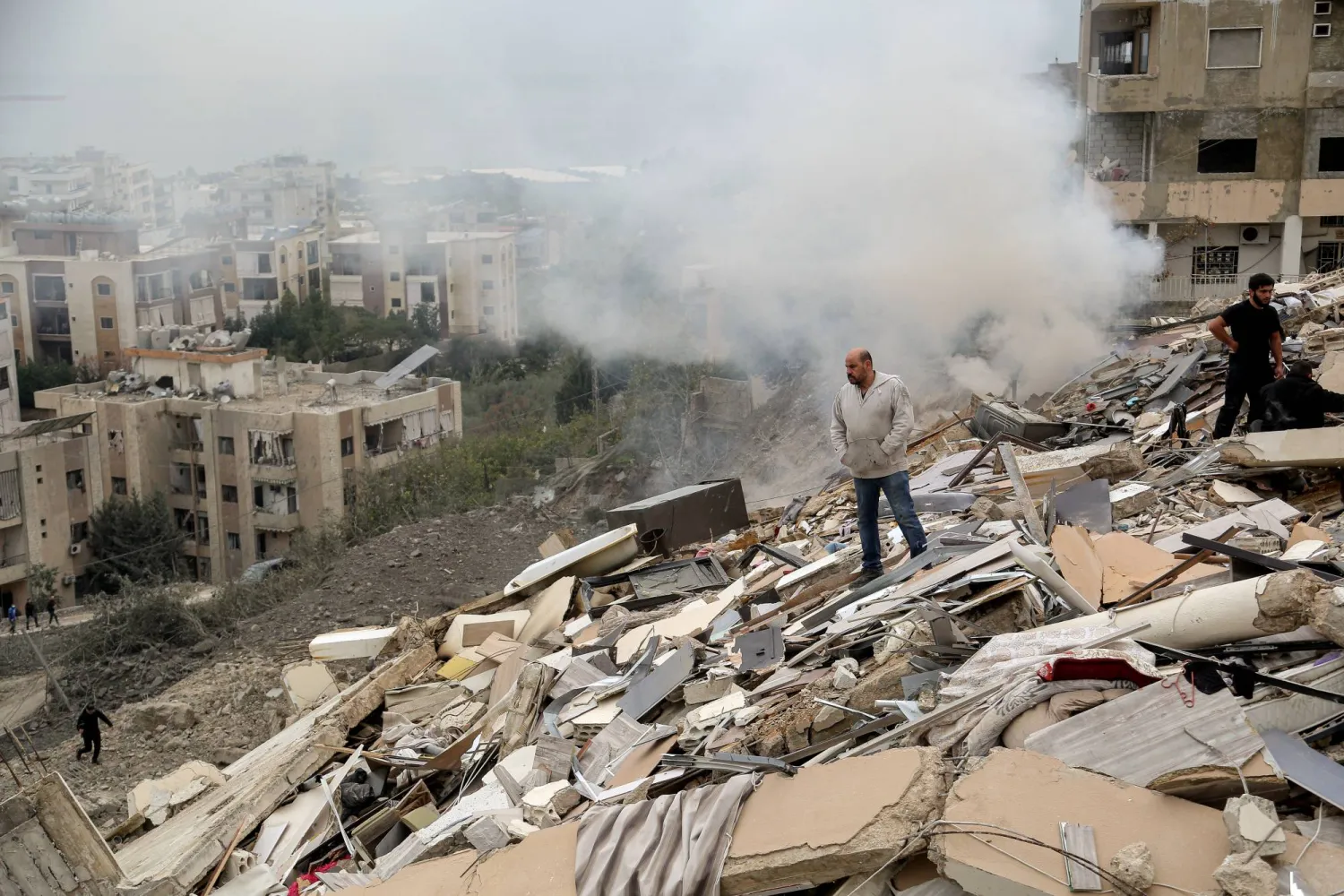



Lebanon Says Two Killed in Israeli Strike on Palestinian Refugee Camp

22 January 2026, Lebanon, Qnarit: People inspect the damage of a building that was destroyed by an Israeli air raid on the southern Lebanese village of Qnarit. (dpa)
TT

Lebanon Says Two Killed in Israeli Strike on Palestinian Refugee Camp

22 January 2026, Lebanon, Qnarit: People inspect the damage of a building that was destroyed by an Israeli air raid on the southern Lebanese village of Qnarit. (dpa)

Lebanon said an Israeli strike on the country's largest Palestinian refugee camp killed two people on Friday, with Israel's army saying it had targeted the Palestinian group Hamas. 

The official National News Agency said "an Israeli drone" targeted a neighborhood of the Ain al-Hilweh camp, which is located on the outskirts of the southern city of Sidon. 

Lebanon's health ministry said two people were killed in the raid. The NNA had earlier reported one dead and an unspecified number of wounded. 

An AFP correspondent saw smoke rising from a building in the densely populated camp as ambulances headed to the scene. 

The Israeli army said in a statement that its forces "struck a Hamas command center from which terrorists operated", calling activity there "a violation of the ceasefire understandings between Israel and Lebanon" and a threat to Israel. 

The Israeli military "is operating against the entrenchment" of the Palestinian group in Lebanon and will "continue to act decisively against Hamas terrorists wherever they operate", it added. 

Israel has kept up regular strikes on Lebanon despite a November 2024 ceasefire that sought to halt more than a year of hostilities with Hezbollah. 

Israel has also struck targets belonging to Hezbollah's Palestinian ally Hamas, including in a raid on Ain al-Hilweh last November that killed 13 people. 

The UN rights office had said 11 children were killed in that strike, which Israel said targeted a Hamas training compound, though the group denied it had military installations in Palestinian camps in Lebanon. 

In October 2023, Hezbollah began launching rockets at Israel in support of Hamas at the outset of the Gaza war, triggering hostilities that culminated in two months of all-out war between Israel and the Iran-backed Lebanese group. 

On Sunday, Lebanon said an Israeli strike near the Syrian border in the country's east killed four people, as Israel said it targeted operatives from Palestinian group Islamic Jihad. 


UN Says It Risks Halting Somalia Aid Due to Funding Cuts 

A Somali trader marks watermelons for sale at an open-air grocery market as Muslims start the fasting month of Ramadan, the holiest month in the Islamic calendar, within Bakara market in Mogadishu, Somalia, February 18, 2026. (Reuters)
TT

UN Says It Risks Halting Somalia Aid Due to Funding Cuts 

A Somali trader marks watermelons for sale at an open-air grocery market as Muslims start the fasting month of Ramadan, the holiest month in the Islamic calendar, within Bakara market in Mogadishu, Somalia, February 18, 2026. (Reuters)

The UN's World Food Program (WFP) warned Friday it would have to stop humanitarian assistance in Somalia by April if it did not receive new funding.

The Rome-based agency said it had already been forced to reduce the number of people receiving emergency food assistance from 2.2 million in early 2025 to just over 600,000 today.

"Without immediate funding, WFP will be forced to halt humanitarian assistance by April," it said in a statement.

In early January, the United States suspended aid to Somalia over reports of theft and government interference, following the destruction of a US-funded WFP warehouse in the capital Mogadishu's port.

The US announced a resumption of WFP food distribution on January 29.

However, all UN agencies have warned of serious funding shortfalls since Washington began slashing aid across the world following President Donald Trump's return to the White House last year.

"The situation is deteriorating at an alarming rate," said Ross Smith, WFP Director of Emergency Preparedness and Response, in Friday's statement.

"Families have lost everything, and many are already being pushed to the brink. Without immediate emergency food support, conditions will worsen quickly.

"We are at the cusp of a decisive moment; without urgent action, we may be unable to reach the most vulnerable in time, most of them women and children."

Some 4.4 million people in Somalia are facing crisis-levels of food insecurity, according to the WFP, the largest humanitarian agency in the country.

The Horn of Africa country has been plagued by conflict and also suffered two consecutive failed rainy seasons.


Hamas Says Path for Gaza Must Begin with End to ‘Aggression’ 

Makeshift tents of displaced Palestinian families among the ruins of their homes at sunset during the holy month of Ramadan in Jabaliya northern Gaza Strip on, 19 February 2026. (EPA)
TT

Hamas Says Path for Gaza Must Begin with End to ‘Aggression’ 

Makeshift tents of displaced Palestinian families among the ruins of their homes at sunset during the holy month of Ramadan in Jabaliya northern Gaza Strip on, 19 February 2026. (EPA)

Discussions on Gaza's future must begin with a total halt to Israeli "aggression", the Palestinian movement Hamas said after US President Donald Trump's Board of Peace met for the first time.

"Any political process or any arrangement under discussion concerning the Gaza Strip and the future of our Palestinian people must start with the total halt of aggression, the lifting of the blockade, and the guarantee of our people's legitimate national rights, first and foremost their right to freedom and self-determination," Hamas said in a statement Thursday.

Trump's board met for its inaugural session in Washington on Thursday, with a number of countries pledging money and personnel to rebuild the Palestinian territory, more than four months into a fragile ceasefire between Israel and Hamas.

Israeli Prime Minister Benjamin Netanyahu has insisted however that Hamas must disarm before any reconstruction begins.

"We agreed with our ally the US that there will be no reconstruction of Gaza before the demilitarization of Gaza," Netanyahu said.

The Israeli leader did not attend the Washington meeting but was represented by his foreign minister Gideon Saar.

Trump said several countries had pledged more than seven billion dollars to rebuild the territory.

Muslim-majority Indonesia will take a deputy commander role in a nascent International Stabilization Force, the unit's American chief Major General Jasper Jeffers said.

Trump, whose plan for Gaza was endorsed by the UN Security Council in November, also said five countries had committed to providing troops, including Morocco, Kazakhstan, Kosovo and Albania.