


Yemen Govt Warns Houthis Against Holding Country Hostage to Iran’s Agenda

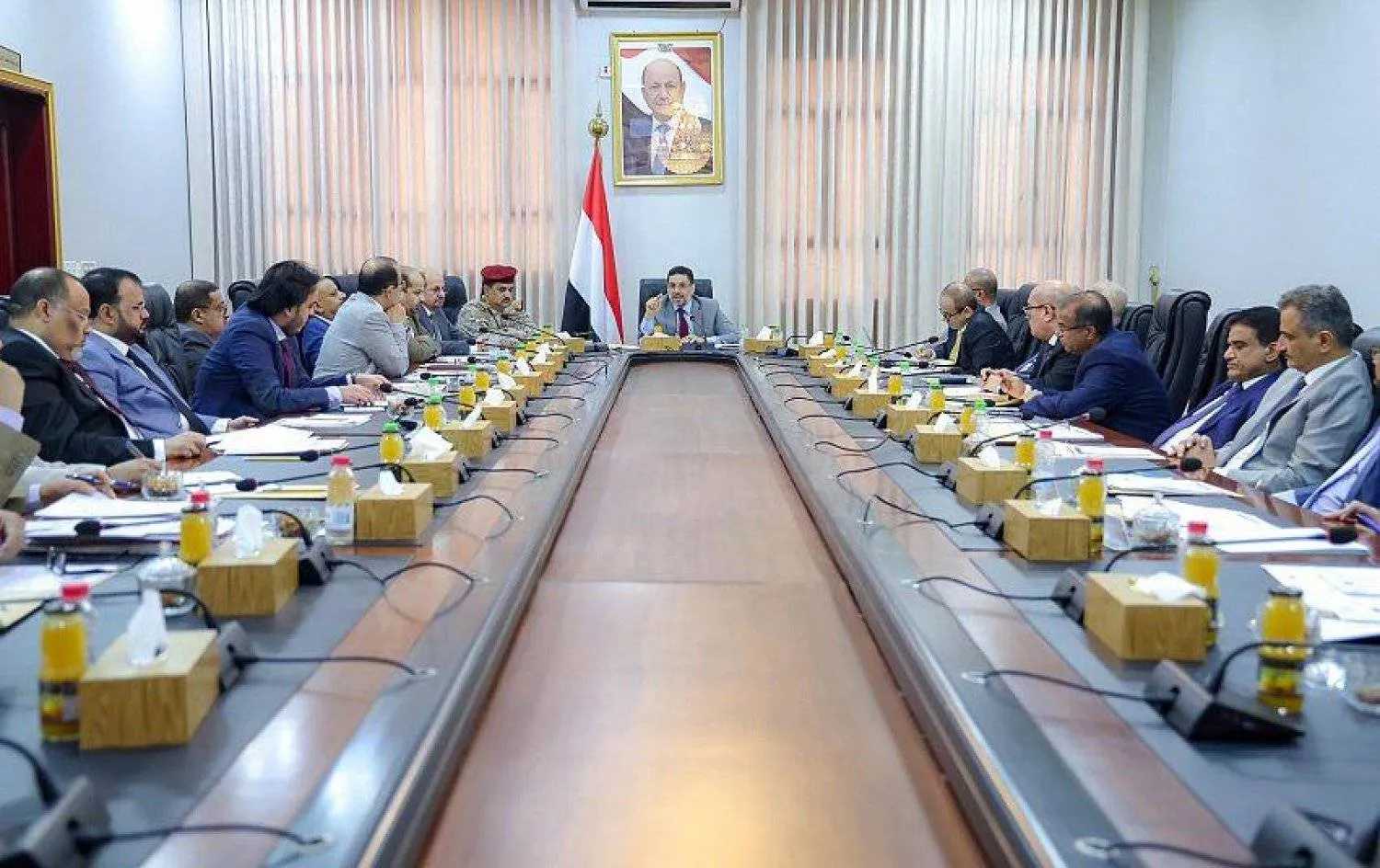
The government meets in Aden on Tuesday. (Saba news agency)
TT

Yemen Govt Warns Houthis Against Holding Country Hostage to Iran’s Agenda

The government meets in Aden on Tuesday. (Saba news agency)

The legitimate Yemeni government warned on Tuesday the Iran-backed Houthi militias against holding the country hostage to their reckless battles that serve Tehran’s agenda.

It called on them to positively approach peace efforts to stop the unrest in Yemen.

Prime Minister Ahmed Awad bin Mubarak chaired the cabinet meeting that was held in the interim capital Aden.

The government reiterated its strong condemnation of the Israeli attack on Hodeidah port and its violation of Yemen’s sovereignty. The strikes were in retaliation to Houthi attacks on Israel.

The ministers stressed their support for United Nations, regional and international efforts to launch a comprehensive political process that meets the aspirations of all Yemenis and leads to just comprehensive peace based on the three references and UN Security Council resolution 2216.

The cabinet called on the Houthis to return to reason, prioritize the interests of the people above all else, stop avoiding local and popular pressure, cease threats to carry out “catastrophic adventures” and stop exploiting the Palestinian conflict to further their agenda.

The cabinet approved a number of measures, including allowing the Aden Refinery Company to operate in Aden’s Free Zone.

It tasked the ministers of oil and minerals, finance, legal affairs and transportation, the governor of Aden and head of the Aden Free Zone with implementing the decision.

The cabinet reviewed various political, military, security and economic developments, stressing its commitment to serving the people.



Iraqi Government Seeks to Keep Country Out of Iran War Fallout

Al-Sudani chairs a meeting of the National Security Council (Prime Minister’s Office Media).
TT

Iraqi Government Seeks to Keep Country Out of Iran War Fallout

Al-Sudani chairs a meeting of the National Security Council (Prime Minister’s Office Media).

The government of outgoing Prime Minister Mohammed Shia Al-Sudani is working to distance Iraq from the escalating US-Israel war on Iran.

Tehran has responded to the military operation launched by the US and Israel with missile strikes on Gulf states and other locations, including Iraq, saying it is targeting American bases and interests.

Although Iraq has not been directly drawn into the conflict - unlike during the Iran-Iraq War (1980–1988), the 1990–1991 Gulf War, or the 2003 US-led invasion that toppled Saddam Hussein - fear is mounting as the country risks being caught between Iran and its local allies and the broader confrontation involving Washington and Tel Aviv.

There are also concerns that any disruption to Gulf shipping lanes could significantly curtail Iraq’s oil revenues.

Al-Sudani, who also serves as commander in chief of the armed forces, chaired on Monday an emergency meeting of the Ministerial Council for National Security, according to a statement from his office.

The premier instructed security agencies to prevent any actions that could undermine stability and to ensure that Iraq is not dragged into the conflict. Still, some observers say the government has been unable to stop missile attacks on Iraqi territory.

The government reiterated its commitment to protecting diplomatic missions and critical infrastructure, while affirming that freedom of expression and peaceful assembly remain constitutionally protected rights.

The statement stressed that security forces will continue safeguarding citizens, diplomatic facilities and public and private property, in line with national laws and international obligations.

The remarks appeared to reference attempts Sunday evening by groups linked to Iran-aligned armed factions to approach the US Embassy in Baghdad’s fortified Green Zone. Security forces stopped them from reaching the compound.

The council added that Iraq remains committed to preventing escalation and ensuring its territory is not used for external or internal conflicts, underscoring that decisions on national security and military action lie solely with the state and its constitutional institutions.

The council also reviewed the potential economic fallout of a prolonged and expanding conflict, particularly the risks associated with a possible closure of the Strait of Hormuz. The bulk of Iraq’s oil exports pass through the Gulf en route to the strategic waterway.

Given the country’s heavy dependence on oil income, any sustained disruption to maritime traffic would pose a serious threat to Iraq’s already fragile economy.


At Least 30,000 Displaced People in Shelters in Lebanon, Says UN Refugee Agency

Displaced residents from the southern suburbs sit along Corniche Al Manara in Beirut, Lebanon, 02 March 2026, after fleeing their homes following Israeli strikes. EPA/WAEL HAMZEH
TT

At Least 30,000 Displaced People in Shelters in Lebanon, Says UN Refugee Agency

Displaced residents from the southern suburbs sit along Corniche Al Manara in Beirut, Lebanon, 02 March 2026, after fleeing their homes following Israeli strikes. EPA/WAEL HAMZEH

At least 30,000 displaced people have sought protection in shelters in Lebanon since hostilities between Israel and ‌Hezbollah began ‌on Monday, ‌the United ⁠Nations refugee agency ⁠said on Tuesday.

"Conservative estimates suggest that nearly 30,000 people were ⁠hosted and ‌registered ‌at collective shelters," ‌said UNHCR spokesperson ‌Babar Baloch.

"Many more slept in their cars on ‌the side of roads or ⁠were still ⁠stuck in traffic jams on the roads," he added.

Israel launched more strikes on Hezbollah, the Iran-backed militia group. Explosions could be heard and smoke seen in a southern suburb of Beirut.

Israel also said its soldiers were “operating in southern Lebanon.”

Lebanon’s state-run National News Agency said the Lebanese army was evacuating some of its positions along the border.


Lebanese President Says Ban on Hezbollah’s Military Activity ‘Irreversible’

President Aoun meets with members of the Quintet at the presidential palace on Tuesday. (Lebanese Presidency)
TT

Lebanese President Says Ban on Hezbollah’s Military Activity ‘Irreversible’

President Aoun meets with members of the Quintet at the presidential palace on Tuesday. (Lebanese Presidency)

Lebanon's President Joseph Aoun said Tuesday that the decision to ban Hezbollah's military activities is "irreversible", as the Iran-backed movement claimed responsibility for new attacks targeting Israeli positions.

Speaking to members of the Quintet -- a committee made up of the French, US, Qatari, Saudi Arabian, and Egyptian ambassadors -- the president called the decision "final," after a Hezbollah statement on Monday night lambasted the state's "impotence in the face of the brutal Zionist enemy".

Aoun urged the Quintet members to "pressure Israel to stop its aggressions against Lebanon" as Israel continued launching intense strikes and authorized its troops to "take control of additional strategic positions in Lebanon".