


Iraqi Government Seeks to Keep Country Out of Iran War Fallout

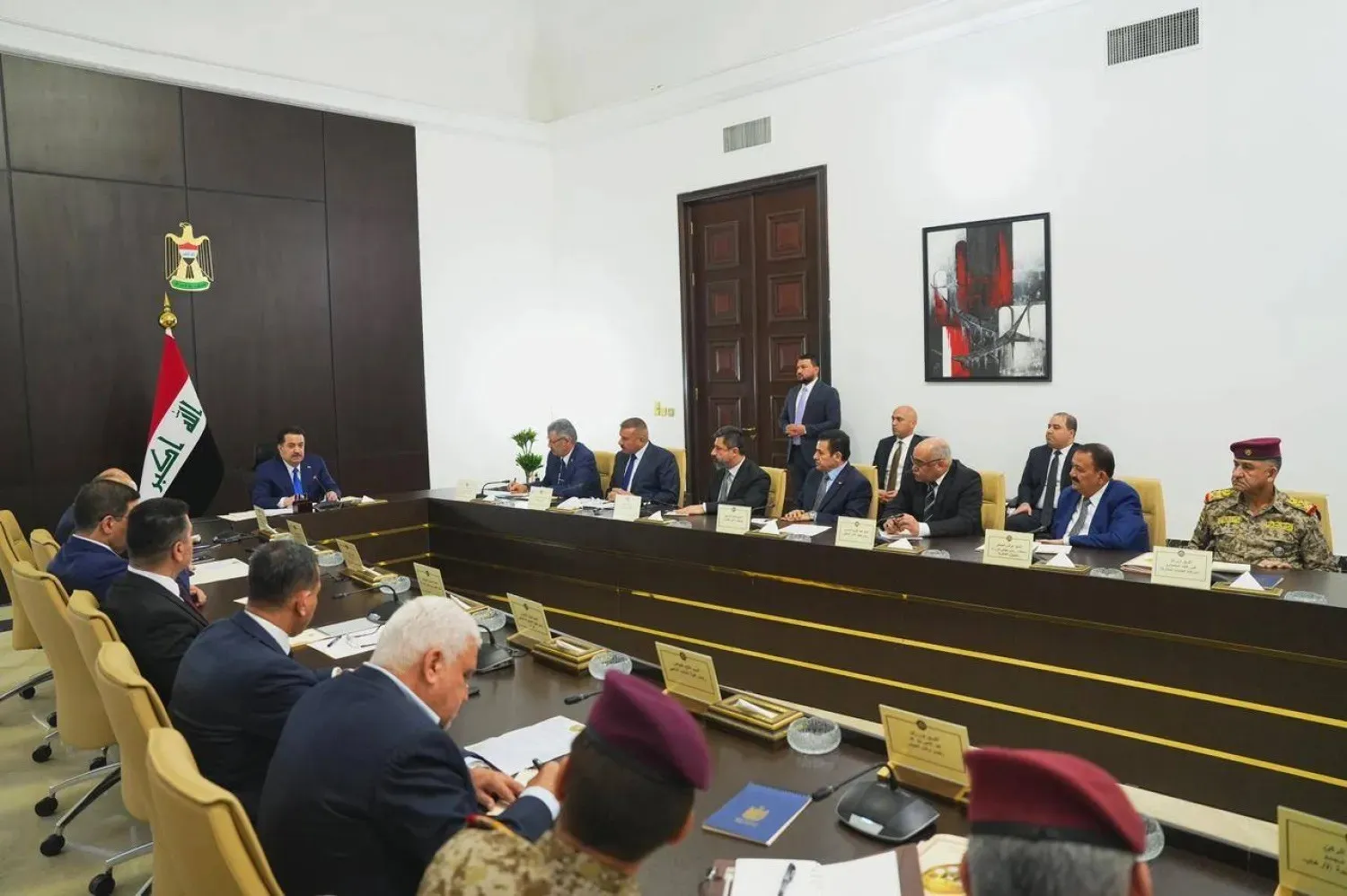
Al-Sudani chairs a meeting of the National Security Council (Prime Minister’s Office Media).
TT

Iraqi Government Seeks to Keep Country Out of Iran War Fallout

Al-Sudani chairs a meeting of the National Security Council (Prime Minister’s Office Media).

The government of outgoing Prime Minister Mohammed Shia Al-Sudani is working to distance Iraq from the escalating US-Israel war on Iran.

Tehran has responded to the military operation launched by the US and Israel with missile strikes on Gulf states and other locations, including Iraq, saying it is targeting American bases and interests.

Although Iraq has not been directly drawn into the conflict - unlike during the Iran-Iraq War (1980–1988), the 1990–1991 Gulf War, or the 2003 US-led invasion that toppled Saddam Hussein - fear is mounting as the country risks being caught between Iran and its local allies and the broader confrontation involving Washington and Tel Aviv.

There are also concerns that any disruption to Gulf shipping lanes could significantly curtail Iraq’s oil revenues.

Al-Sudani, who also serves as commander in chief of the armed forces, chaired on Monday an emergency meeting of the Ministerial Council for National Security, according to a statement from his office.

The premier instructed security agencies to prevent any actions that could undermine stability and to ensure that Iraq is not dragged into the conflict. Still, some observers say the government has been unable to stop missile attacks on Iraqi territory.

The government reiterated its commitment to protecting diplomatic missions and critical infrastructure, while affirming that freedom of expression and peaceful assembly remain constitutionally protected rights.

The statement stressed that security forces will continue safeguarding citizens, diplomatic facilities and public and private property, in line with national laws and international obligations.

The remarks appeared to reference attempts Sunday evening by groups linked to Iran-aligned armed factions to approach the US Embassy in Baghdad’s fortified Green Zone. Security forces stopped them from reaching the compound.

The council added that Iraq remains committed to preventing escalation and ensuring its territory is not used for external or internal conflicts, underscoring that decisions on national security and military action lie solely with the state and its constitutional institutions.

The council also reviewed the potential economic fallout of a prolonged and expanding conflict, particularly the risks associated with a possible closure of the Strait of Hormuz. The bulk of Iraq’s oil exports pass through the Gulf en route to the strategic waterway.

Given the country’s heavy dependence on oil income, any sustained disruption to maritime traffic would pose a serious threat to Iraq’s already fragile economy.



At Least 30,000 Displaced People in Shelters in Lebanon, Says UN Refugee Agency

Displaced residents from the southern suburbs sit along Corniche Al Manara in Beirut, Lebanon, 02 March 2026, after fleeing their homes following Israeli strikes. EPA/WAEL HAMZEH
TT

At Least 30,000 Displaced People in Shelters in Lebanon, Says UN Refugee Agency

Displaced residents from the southern suburbs sit along Corniche Al Manara in Beirut, Lebanon, 02 March 2026, after fleeing their homes following Israeli strikes. EPA/WAEL HAMZEH

At least 30,000 displaced people have sought protection in shelters in Lebanon since hostilities between Israel and ‌Hezbollah began ‌on Monday, ‌the United ⁠Nations refugee agency ⁠said on Tuesday.

"Conservative estimates suggest that nearly 30,000 people were ⁠hosted and ‌registered ‌at collective shelters," ‌said UNHCR spokesperson ‌Babar Baloch.

"Many more slept in their cars on ‌the side of roads or ⁠were still ⁠stuck in traffic jams on the roads," he added.

Israel launched more strikes on Hezbollah, the Iran-backed militia group. Explosions could be heard and smoke seen in a southern suburb of Beirut.

Israel also said its soldiers were “operating in southern Lebanon.”

Lebanon’s state-run National News Agency said the Lebanese army was evacuating some of its positions along the border.


Lebanese President Says Ban on Hezbollah’s Military Activity ‘Irreversible’

President Aoun meets with members of the Quintet at the presidential palace on Tuesday. (Lebanese Presidency)
TT

Lebanese President Says Ban on Hezbollah’s Military Activity ‘Irreversible’

President Aoun meets with members of the Quintet at the presidential palace on Tuesday. (Lebanese Presidency)

Lebanon's President Joseph Aoun said Tuesday that the decision to ban Hezbollah's military activities is "irreversible", as the Iran-backed movement claimed responsibility for new attacks targeting Israeli positions.

Speaking to members of the Quintet -- a committee made up of the French, US, Qatari, Saudi Arabian, and Egyptian ambassadors -- the president called the decision "final," after a Hezbollah statement on Monday night lambasted the state's "impotence in the face of the brutal Zionist enemy".

Aoun urged the Quintet members to "pressure Israel to stop its aggressions against Lebanon" as Israel continued launching intense strikes and authorized its troops to "take control of additional strategic positions in Lebanon".


Despite Keeping its Distance, Syria Still Feels the Fallout of the Iran War

02 March 2026, Syria, Ain Terma: People watch the damage after an intercepted missile fell in a residential building in Ain Tarma town. Photo: Moawia Atrash/dpa
TT

Despite Keeping its Distance, Syria Still Feels the Fallout of the Iran War

02 March 2026, Syria, Ain Terma: People watch the damage after an intercepted missile fell in a residential building in Ain Tarma town. Photo: Moawia Atrash/dpa

Syria’s efforts to remain largely outside the direct line of fire in the war between the United States and Israel on one side and Iran on the other have not spared it the consequences rippling across the region.

Missile debris has fallen on scattered parts of the country, gas and electricity shortages have resurfaced, border crossings with Lebanon have become crowded with Syrians returning home, and cargo shipments have been disrupted.

Long electricity outages, shortages of household cooking gas and rising prices have again cast a heavy shadow over daily life, only months after a period of relative improvement.

The Syrian Ministry of Energy said Monday that the reduction in electricity supply hours was due to a decline in natural gas volumes arriving through Jordan and allocated to operate power-generation stations. The ministry said the shortfall was tied to the current regional escalation, which has temporarily made it impossible to maintain gas flows under previous agreements.

In a statement published on its official channels, the ministry said technical teams are continuing to manage the electricity system using available domestic gas production. It added that rationing is being set according to available capacity to ensure grid stability and continued operation, while efforts continue to boost local gas output to support the power system and improve supply in the next phase.

Jordan Temporarily Halts Gas Deliveries

In what was described as an early direct reflection of the regional escalation, Jordan has temporarily halted gas deliveries to Syria, according to a report published Monday by the energy platform Al-Taqa.

Citing unnamed sources, the report said Israel’s cutoff of gas supplies to Jordan pushed Amman to prioritize domestic demand.

Syria relies in part on gas coming from Jordan to support electricity generation, amid weak local production and infrastructure worn down over recent years.

The Syrian government began receiving natural gas through Jordan on Jan. 8 at a rate of 4 million cubic meters per day under an agreement linked to the Arab Gas Pipeline. Damascus also signed an agreement with Jordan to supply Syria with about 140 million cubic feet per day in an effort to ease the country’s electricity crisis.

Missile Debris and Growing Caution

On Monday, authorities in Damascus said a transformer at the Al-Otaybah industrial substation in the Damascus countryside was knocked out of service after it was hit by falling missile debris resulting from the exchange of strikes between Israel and Iran.

Caution has spread across parts of rural Damascus and southern Syria after missile remnants fell over the past two days, injuring civilians. Local sources in Daraa province said schools were closed and residents were urged to limit movement and gatherings and to avoid unfamiliar objects.

Syrian Civil Defense teams responded Monday to an incident involving the fall of military objects in the village of Al-Futaih, in the Ain Al-Sharqiyah area of the Jableh countryside on Syria’s coast. The Ministry of Emergency Situations said the incident was linked to the ongoing regional developments and urged citizens to follow safety guidance.

Israeli Arrest and Crowded Border Crossings

Amid heightened tensions, Israel has continued violations inside Syrian territory, according to the report. Israeli forces detained a shepherd on Monday west of the village of Kudna in the southern Quneitra countryside.

The Syrian Arab News Agency, SANA, said “occupation forces escorted the young man into the occupied territories,” with no further information available on his fate.

As the escalation widens and Hezbollah in Lebanon comes under attack, Syrian-Lebanese border crossings have seen heavy movement, with large numbers of Syrians leaving Lebanon and returning to Syria.