Lebanese Red Cross Says Israeli Strike Killed 4 of its Medics, Lebanese Soldierhttps://english.aawsat.com/arab-world/5067318-lebanese-red-cross-says-israeli-strike-killed-4-its-medics-lebanese-soldier
Lebanese Red Cross Says Israeli Strike Killed 4 of its Medics, Lebanese Soldier
Smoke billows after Israeli Air Force airstrikes in southern Lebanon villages, amid cross-border hostilities between Hezbollah and Israel, as seen from Sasa, northern Israel, October 3, 2024. REUTERS/Jim Urquhart
Lebanese Red Cross Says Israeli Strike Killed 4 of its Medics, Lebanese Soldier
Smoke billows after Israeli Air Force airstrikes in southern Lebanon villages, amid cross-border hostilities between Hezbollah and Israel, as seen from Sasa, northern Israel, October 3, 2024. REUTERS/Jim Urquhart
The Lebanese Red Cross said Thursday that an Israeli strike killed four of its paramedics and a Lebanese army soldier as they were evacuating wounded people from the south.
It said the convoy near the village of Taybeh, which was accompanied by Lebanese troops, was targeted despite coordinating its movements with UN peacekeepers.
An escalation in the conflict between Israel and Hezbollah over the past two weeks has led to clashes between the two sides inside Lebanon.
Hezbollah began firing rockets into Israel at the start of the Gaza war in support of Hamas, causing the evacuation of tens of thousands of residents whom Israel says need to return home.
In Lebanon, nearly 1,900 people have been killed and more than 9,000 wounded in Lebanon in nearly a year of cross-border fighting, with most of the deaths occurring in the past two weeks, according to Lebanese government statistics.
More than a million Lebanese have been forced to flee their homes.
In a separate development, the Israeli military ordered the evacuation of villages and towns in southern Lebanon that are north of a United Nations-declared buffer zone established after the 2006 war. The warnings issued Thursday signaled a possible broadening of Israel’s incursion into southern Lebanon, which until now has been confined to areas close to the border.
At least eight Israeli soldiers were killed in clashes with Hezbollah in southern Lebanon, where Israel announced the start of what it says is a limited ground incursion earlier this week.
Iran Pledges to its Allies in Lebanon to Include Them in Any Possible Deal to End the Warhttps://english.aawsat.com/arab-world/5254453-iran-pledges-its-allies-lebanon-include-them-any-possible-deal-end-war
Iran Pledges to its Allies in Lebanon to Include Them in Any Possible Deal to End the War
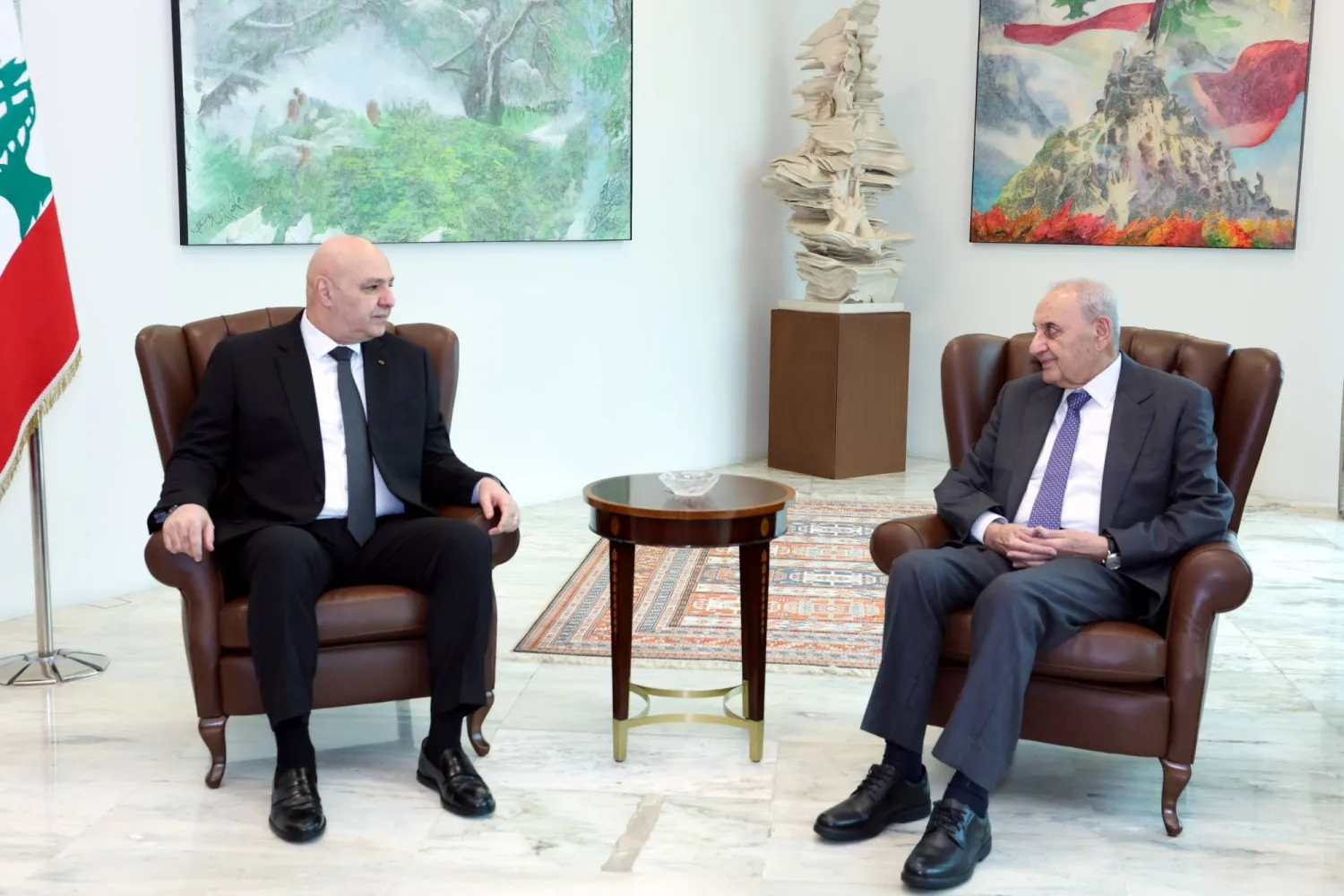
President Joseph Aoun meets with parliament Speaker Nabih Berri at the Baabda presidential palace. (Lebanese Presidency)
Widely informed Lebanese sources revealed to Asharq Al-Awsat that Iran has “clearly pledged” to leaderships in Beirut to include Lebanon in any possible deal that could end the war between it and the US and Israel.
The sources said Lebanese officials learned through non-diplomatic channels that Tehran informed a number of its allies in Lebanon that any agreement to end the war will “certainly include Lebanon.”
Lebanon fears that should the war end, Israel will shift all of its attention on the Lebanese front. The Israeli military’s recent maneuvers indicate that it may be planning to launch broader operations.
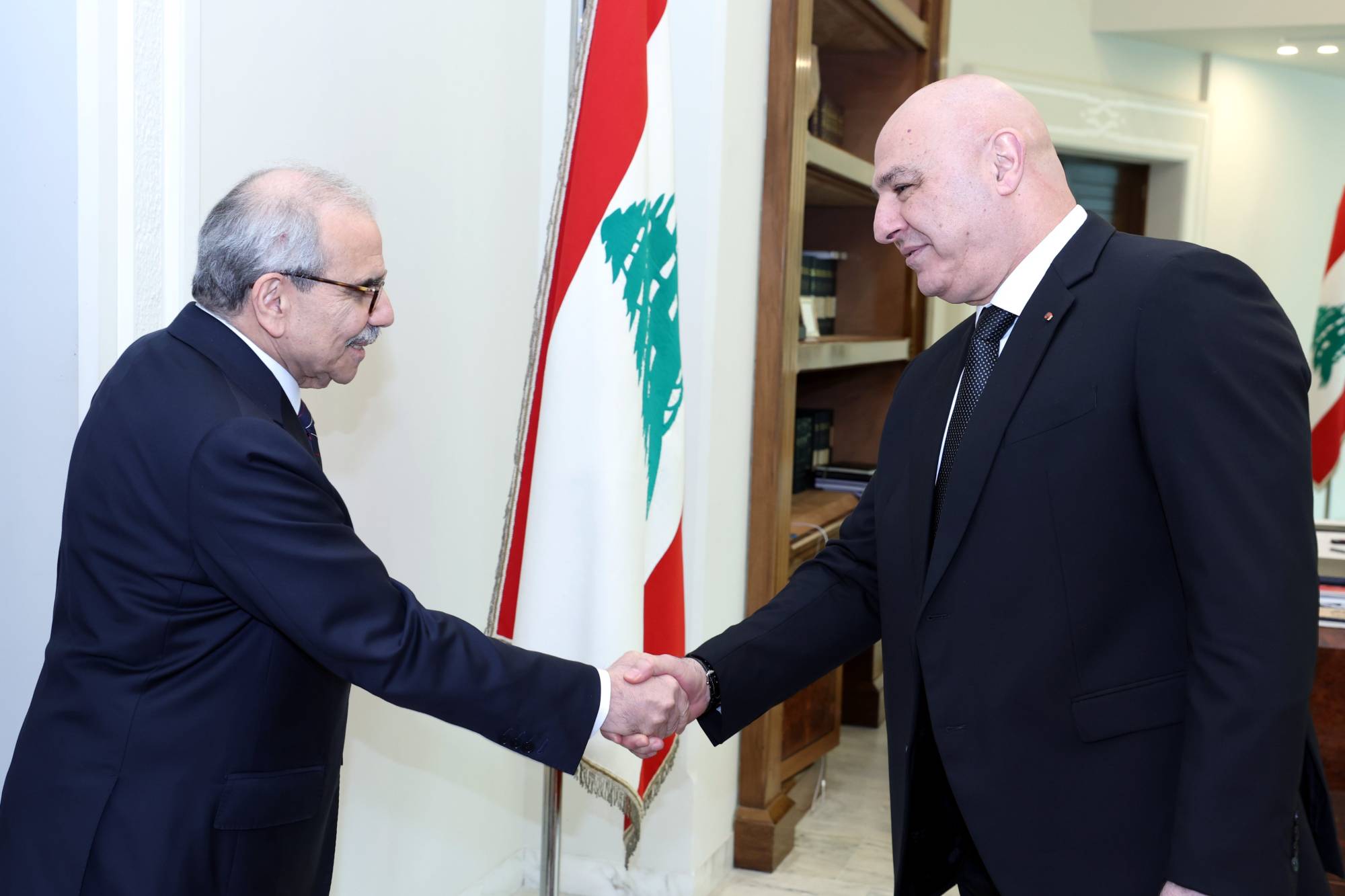
President Joseph Aoun, meanwhile, received parliament Speaker Nabih Berri, Prime Minister Nawaf Salam, Druze leader Walid Jumblatt and army commander Rodolphe Haykal in separate meetings at the Baabda presidential palace.
In a telephone call with Asharq Al-Awsat, Berri hoped that Iran and the US would reach a deal soon and that it would also lead to an end to Israel’s war on Lebanon.
President Joseph Aoun meets with Prime Minister Nawaf Salam at the Baabda presidential palace. (Lebanese Presidency)
Asked if Aoun had brought up with him the issue of naming a Shiite representative to the Lebanese delegation expected to hold negotiations with Israel, he replied: “I focused on the issues of the displaced that should be addressed through the utmost seriousness.”
He expressed his concern that “Israel may exploit the situation in order stir strife in Lebanon.”
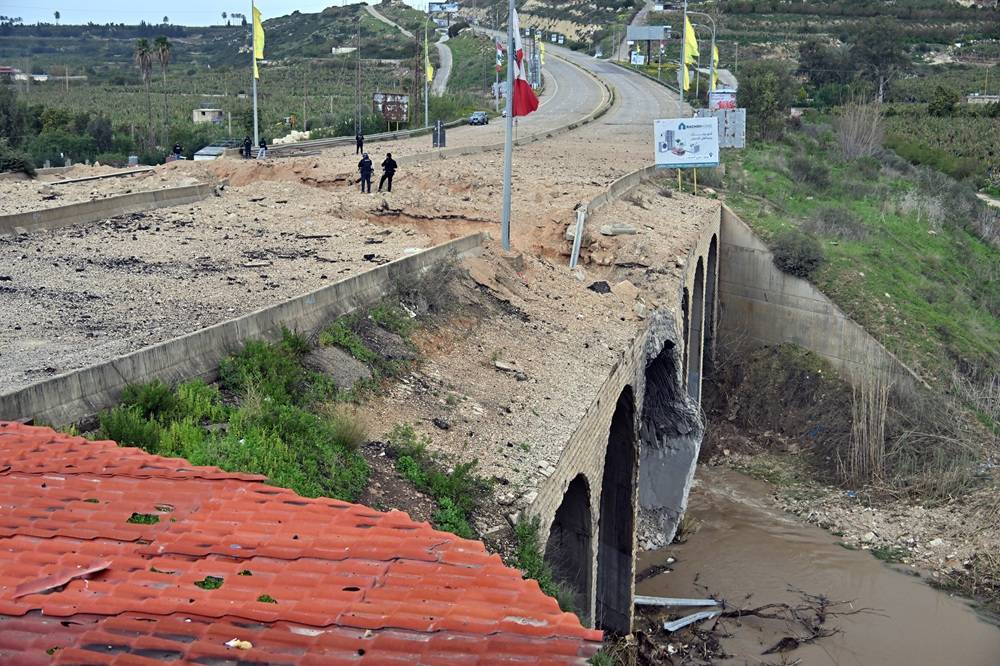
“Israel is bombing bridges in the South and we must not lose internal bridges of communications. This is what Israel is seeking,” he warned.
A statement from the presidency said Aoun and Berri discussed Israel’s targeting of bridges with the aim to cut off the South from the rest of Lebanon. They addressed the plight of the nearly 1 million displaced people.
They praised the Lebanese people for welcoming the displaced, underlining national unity and solidarity during the crisis and the importance of maintaining civil peace and avoiding rumors that aim to harm Lebanon.
Aoun then met with PM Salam, who told reporters at the presidential palace that he was in daily contact with the president. “We are working with everyone to end the war as soon as possible,” he added.
Damage at the site of an Israeli strike targeting the Qasmiyeh bridge near Tyre, southern Lebanon, 23 March 2026. (EPA)
After meeting with Aoun, Jumblatt condemned to reporters “accusations of treason” that have been directed against the president and prime minister given their willingness for Lebanon to hold negotiations with Israel.
“Negotiations are acceptable if they are held on declared foundations. The president's swearing in speech committed to the truce agreement, Taif Accord and international resolutions,” he went on to say.
“Negotiations are among the world’s legitimate means. We object to the rejection of the negotiations for the sake of rejecting them and for keeping Lebanon an open battlefield,” he stressed.
Aoun and Haykal discussed the security situation in the country, especially in the South amid the expected Israel escalation.
The president urged the army commander to bolster security measures throughout the country, especially in Beirut and to closely watch over the safety of displacement shelters.
UN Force Says HQ Struck in South Lebanonhttps://english.aawsat.com/arab-world/5254379-un-force-says-hq-struck-south-lebanon
United Nations peacekeepers with the UN Interim Force in Lebanon (UNIFIL) drive past a destroyed healthcare centre building in the aftermath of an Israeli strike in the southern Lebanese town of Burj Qalawiya on March 14, 2026. Photo by Kawnat HAJU / AFP)
United Nations peacekeepers with the UN Interim Force in Lebanon (UNIFIL) drive past a destroyed healthcare centre building in the aftermath of an Israeli strike in the southern Lebanese town of Burj Qalawiya on March 14, 2026. Photo by Kawnat HAJU / AFP)
The UN peacekeeping force in Lebanon (UNIFIL) announced Monday that its headquarters in Naqura had been hit by a projectile, probably launched by a "non-state actor", after Hezbollah declared it had targeted Israeli forces in the same town.
Since Saturday, the coastal town in Lebanon's far south on the border with Israel, has been one of the flashpoints between Hezbollah and the Israeli army, AFP reported.
"Just before noon today, a projectile hit a building inside our headquarters," UNIFIL said in a statement.
"Peacekeepers with expertise in explosive ordinance disposal are working to deal with it. We believe it was fired by a non-state actor."
UNIFIL's statement came after Hezbollah claimed at least two attacks on Monday against Israeli forces in Naqura.
The first, at 11:00 am (0900GMT), targeted "a gathering of Israeli enemy soldiers in the vicinity of the Naqura municipality building". and the second, at 1:00 pm, targeted a similar gathering "near the Naqura school".
After a November 2024 ceasefire to end a previous war with Hezbollah, Israel kept forces in five positions, including the village of Labbouneh, just three kilometres away from Naqura.
On Saturday, Hezbollah said its members had targeted Israeli soldiers along the border, including in Naqura.
In its Monday statement, UNIFIL said it had observed over the past 48 hours "intense gunfire and explosions" in and around Naqura, close to its headquarters.
"Bullets, fragments, and shrapnel have hit buildings and open areas inside our headquarters, putting peacekeepers at risk."
The force reminded "all actors of their responsibility to ensure the safety and security of peacekeepers".
"We reiterate that there is no military solution to this conflict and urge the actors to put down their weapons and commit to working toward a long-term solution, before more people get hurt."
Lebanon Says One Killed Near Beirut, as Israel Says Struck Iran Guards Memberhttps://english.aawsat.com/arab-world/5254375-lebanon-says-one-killed-near-beirut-israel-says-struck-iran-guards-member
A Middle East Airlines plane takes off from Rafik Hariri International Airport as smoke rises from the site of an Israeli airstrike in Dahiyeh, Beirut's southern suburbs, Lebanon, Tuesday, March 17, 2026. (AP Photo/Hassan Ammar)
Lebanon Says One Killed Near Beirut, as Israel Says Struck Iran Guards Member
A Middle East Airlines plane takes off from Rafik Hariri International Airport as smoke rises from the site of an Israeli airstrike in Dahiyeh, Beirut's southern suburbs, Lebanon, Tuesday, March 17, 2026. (AP Photo/Hassan Ammar)
An Israeli strike on Hazmieh east of Beirut killed at least one person, Lebanon's health ministry said, the second strike on the residential Christian area in the ongoing Israel-Hezbollah war, according to AFP.
The Israeli military said around the same time that it had "struck an IRGC Quds Force terrorist in Beirut", referring to the foreign operations arm of Iran's Revolutionary Guards.
Hazmieh, which is near Lebanon's presidential palace, hosts several foreign embassies.
لم تشترك بعد
انشئ حساباً خاصاً بك لتحصل على أخبار مخصصة لك ولتتمتع بخاصية حفظ المقالات وتتلقى نشراتنا البريدية المتنوعة