Sharaa’s Meeting with SDF Leadership Focused Solely on Military Matters

The Commander of the Syrian Democratic Forces, Mazloum Abdi, at a press conference following the opposition’s capture of Aleppo in early December 2024 (Asharq Al-Awsat). 
TT

Sharaa’s Meeting with SDF Leadership Focused Solely on Military Matters

The Commander of the Syrian Democratic Forces, Mazloum Abdi, at a press conference following the opposition’s capture of Aleppo in early December 2024 (Asharq Al-Awsat). 

A representative of the Syrian Democratic Council (SDC), the political wing of the Syrian Democratic Forces (SDF), stated that the recent meeting between the SDF leadership and the new Syrian administration in Damascus addressed only military issues. Bassem Ishak, head of the SDC’s Washington office, described the discussions as positive, focusing on operational coordination and shared concerns.
Since opposition forces entered Aleppo late last year, SDF leaders have maintained direct contact with Hayat Tahrir al-Sham (HTS) to protect Kurdish communities and other residents in areas like Tal Rifaat and the neighborhoods of Sheikh Maqsoud and Ashrafieh in Aleppo. Ishak emphasized that the coordination between the SDF and the “Operation Room to Deter Aggression” has been ongoing since December 8, covering military operations and field developments.
This meeting marked the first between SDF leaders and Ahmed Al-Sharaa since the ousting of Bashar Al-Assad. It comes amid continued clashes between Kurdish fighters and Turkish-backed factions in northern Syria, particularly around Ain al-Arab (Kobani) and Tal Rifaat, areas now under Turkish control.
Ishak clarified that the SDF had not attended a broader meeting between Al-Sharaa and opposition factions last year due to military circumstances but noted that this recent encounter was official and amicable, signaling progress in dialogue. He added that the green Syrian flag would soon be raised in all areas under SDF control.
The SDF, backed by the US and international coalition, continues to control significant territories in northern Syria, including parts of Raqqa, Hasakah, and Deir ez-Zor. Ishak expressed optimism about a unified Syrian flag flying across all regions, including those under Turkish occupation.



World Gave Israel ‘License to Torture Palestinians’, Says UN Expert

 United Nations (UN) special rapporteur on the occupied Palestinian territories Francesca Albanese presents her latest report before delegates at the UN Rights Council, in Geneva, on March 23, 2026. (AFP)
United Nations (UN) special rapporteur on the occupied Palestinian territories Francesca Albanese presents her latest report before delegates at the UN Rights Council, in Geneva, on March 23, 2026. (AFP)
TT

World Gave Israel ‘License to Torture Palestinians’, Says UN Expert

 United Nations (UN) special rapporteur on the occupied Palestinian territories Francesca Albanese presents her latest report before delegates at the UN Rights Council, in Geneva, on March 23, 2026. (AFP)
United Nations (UN) special rapporteur on the occupied Palestinian territories Francesca Albanese presents her latest report before delegates at the UN Rights Council, in Geneva, on March 23, 2026. (AFP)

The world has given Israel "a license to torture Palestinians", a UN expert said Monday, with life in the occupied territories "a continuum of physical and mental suffering".

Francesca Albanese, the UN's special rapporteur on the rights situation in the Palestinian territories occupied since 1967, said "torture has effectively become state policy" in Israel.

"Israel has effectively been given a license to torture Palestinians, because most of your governments, your ministers, have allowed it," she said, as she presented her latest report to the UN Human Rights Council.

Albanese has faced harsh criticism, allegations of anti-Semitism and demands for her removal, from Israel and some of its allies, over her relentless criticism and long-standing accusations of "genocide".

"Francesca Albanese is not a promoter of human rights; she is an agent of chaos... and any document she produces is nothing but a politically-charged, activist rant," Israel's mission in Geneva said in a statement Monday.

Albanese "advocates dangerous extremist narratives to undermine the very existence of the State of Israel", it said.

Albanese's report claimed Israel was systematically torturing Palestinians on a scale "that suggests collective vengeance and destructive intent".

"My report also shows that torture extends far beyond prison walls, in what can only be described as a torturous environment imposed by Israel across the entire occupied Palestinian territory," she told the Human Rights Council.

She said torture destroys the conditions that make life meaningful, stripping away human dignity, leaving empty shells behind.

"The testimonies that I and many others are documenting are not only tragic stories of suffering; they are evidence of atrocity crimes targeting the totality of the Palestinian people, across the totality of the occupied land, through a totality of criminal conduct," she said.

Albanese warned that the international response would be a test of countries' collective legal and moral responsibility.

"Disregard for international law will not stop in Palestine. It is already unfolding from Lebanon to Iran, across the Gulf countries, and in Venezuela. And if left unchecked, it will spread far beyond," she said.

Though appointed by the UN Human Rights Council, special rapporteurs are independent experts and do not speak on behalf of the United Nations itself.


Iran Pledges to its Allies in Lebanon to Include Them in Any Possible Deal to End the War

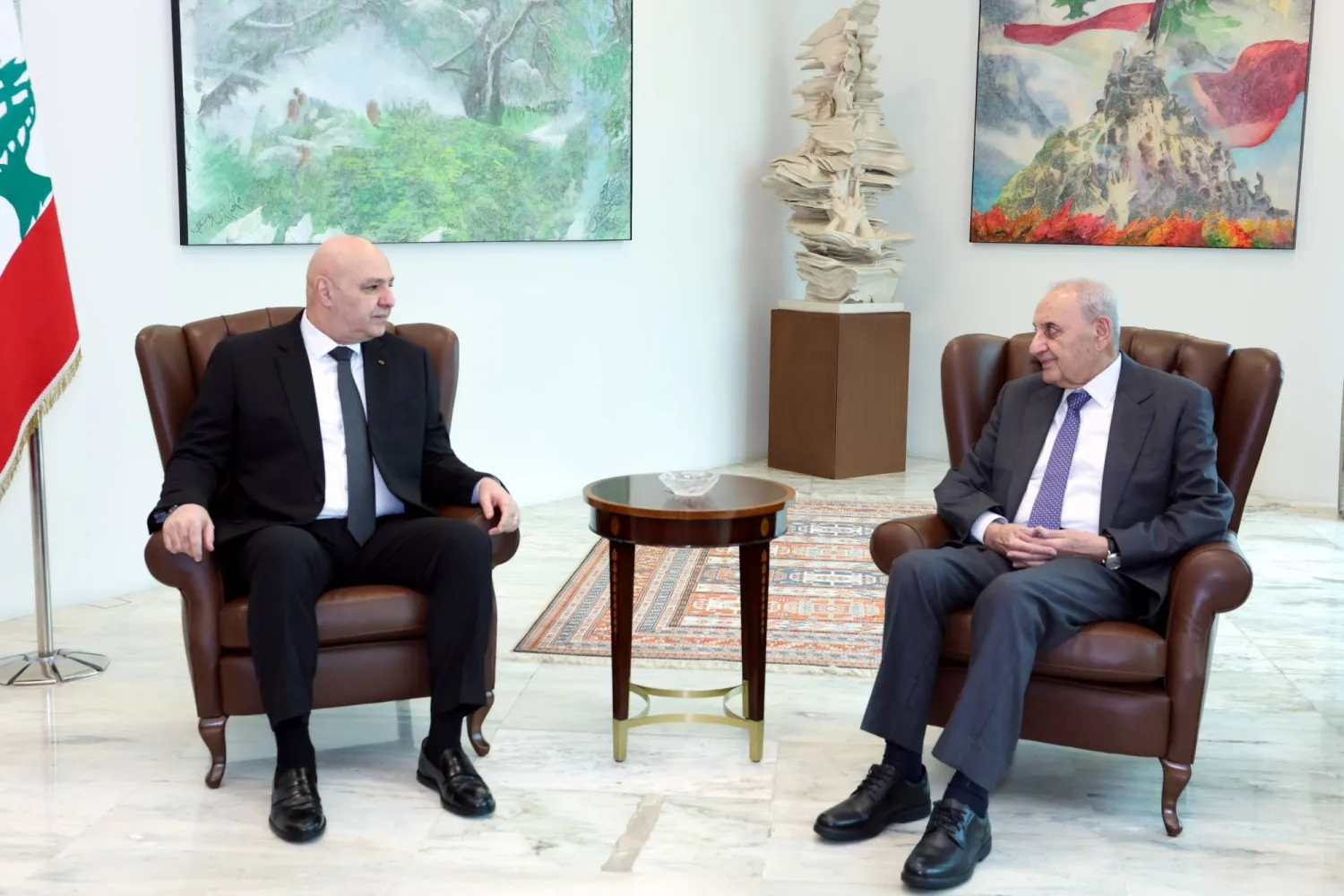
President Joseph Aoun meets with parliament Speaker Nabih Berri at the Baabda presidential palace. (Lebanese Presidency)
TT

Iran Pledges to its Allies in Lebanon to Include Them in Any Possible Deal to End the War

President Joseph Aoun meets with parliament Speaker Nabih Berri at the Baabda presidential palace. (Lebanese Presidency)

Widely informed Lebanese sources revealed to Asharq Al-Awsat that Iran has “clearly pledged” to leaderships in Beirut to include Lebanon in any possible deal that could end the war between it and the US and Israel.

The sources said Lebanese officials learned through non-diplomatic channels that Tehran informed a number of its allies in Lebanon that any agreement to end the war will “certainly include Lebanon.”

Lebanon fears that should the war end, Israel will shift all of its attention on the Lebanese front. The Israeli military’s recent maneuvers indicate that it may be planning to launch broader operations.

President Joseph Aoun, meanwhile, received parliament Speaker Nabih Berri, Prime Minister Nawaf Salam, Druze leader Walid Jumblatt and army commander Rodolphe Haykal in separate meetings at the Baabda presidential palace.

In a telephone call with Asharq Al-Awsat, Berri hoped that Iran and the US would reach a deal soon and that it would also lead to an end to Israel’s war on Lebanon.

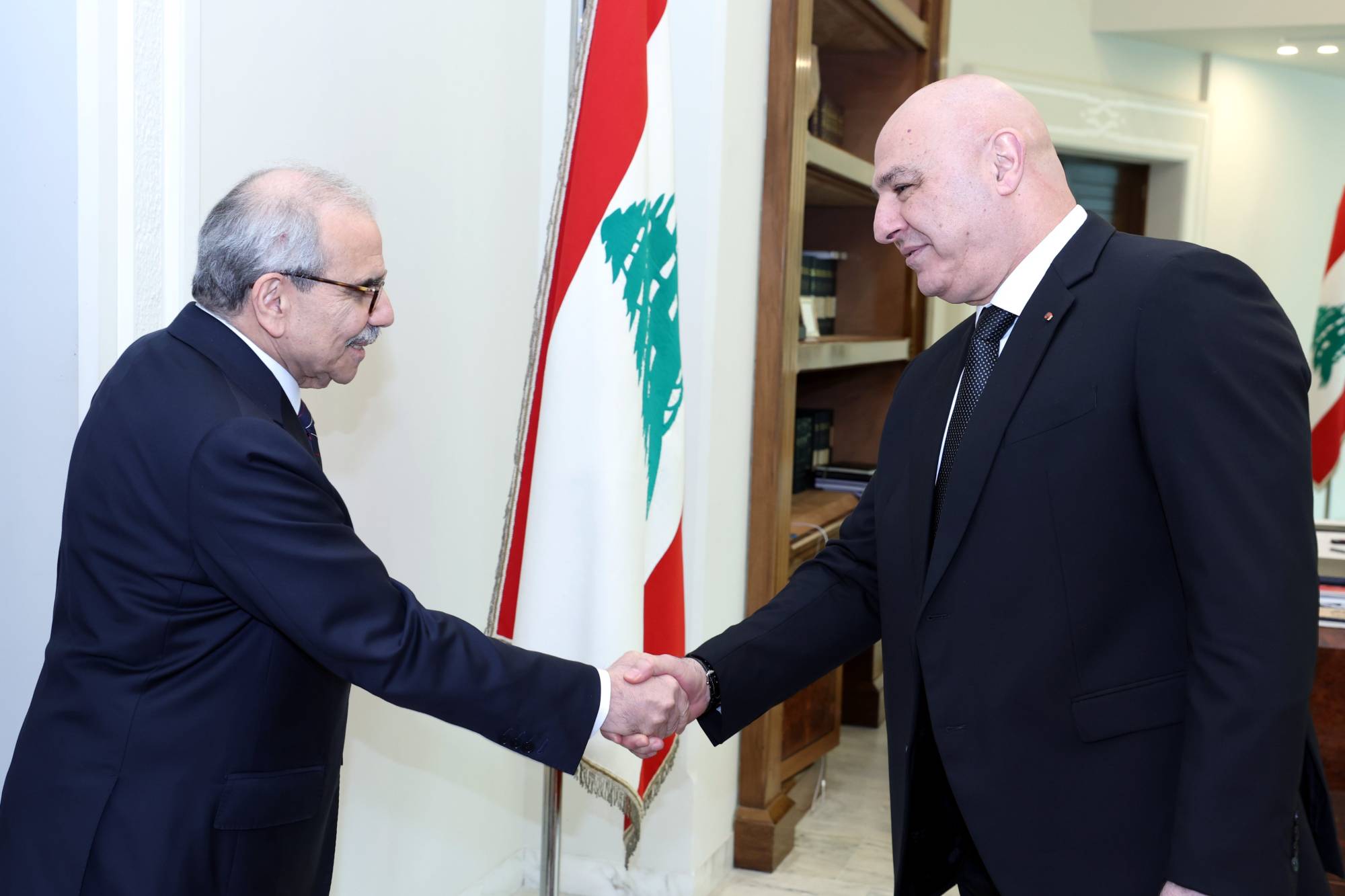
President Joseph Aoun meets with Prime Minister Nawaf Salam at the Baabda presidential palace. (Lebanese Presidency)

Asked if Aoun had brought up with him the issue of naming a Shiite representative to the Lebanese delegation expected to hold negotiations with Israel, he replied: “I focused on the issues of the displaced that should be addressed through the utmost seriousness.”

He expressed his concern that “Israel may exploit the situation in order stir strife in Lebanon.”

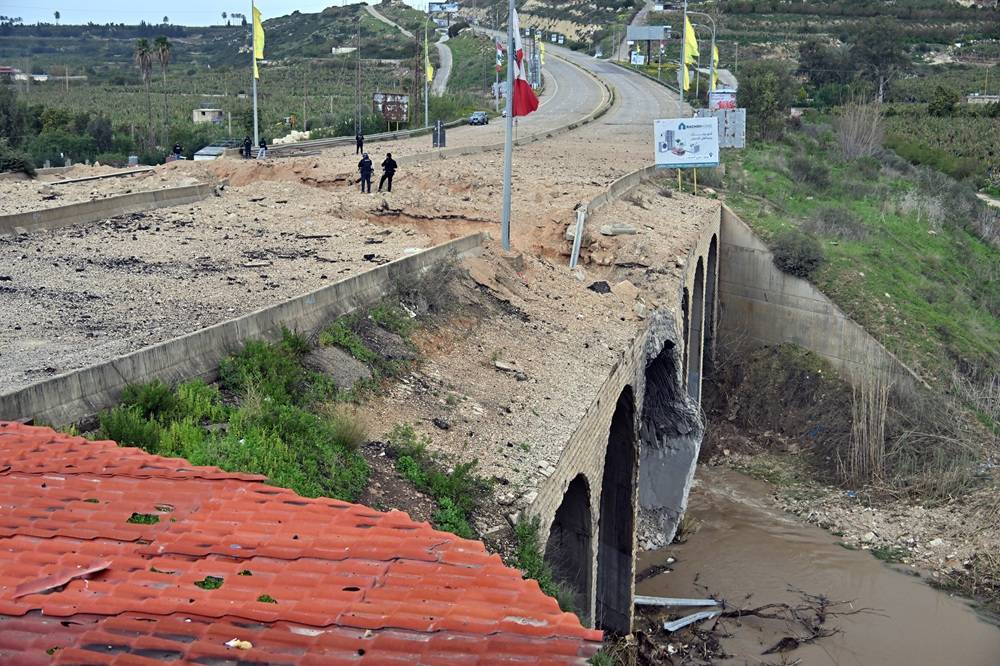
“Israel is bombing bridges in the South and we must not lose internal bridges of communications. This is what Israel is seeking,” he warned.

A statement from the presidency said Aoun and Berri discussed Israel’s targeting of bridges with the aim to cut off the South from the rest of Lebanon. They addressed the plight of the nearly 1 million displaced people.

They praised the Lebanese people for welcoming the displaced, underlining national unity and solidarity during the crisis and the importance of maintaining civil peace and avoiding rumors that aim to harm Lebanon.

Aoun then met with PM Salam, who told reporters at the presidential palace that he was in daily contact with the president. “We are working with everyone to end the war as soon as possible,” he added.

Damage at the site of an Israeli strike targeting the Qasmiyeh bridge near Tyre, southern Lebanon, 23 March 2026. (EPA)

After meeting with Aoun, Jumblatt condemned to reporters “accusations of treason” that have been directed against the president and prime minister given their willingness for Lebanon to hold negotiations with Israel.

“Negotiations are acceptable if they are held on declared foundations. The president's swearing in speech committed to the truce agreement, Taif Accord and international resolutions,” he went on to say.

“Negotiations are among the world’s legitimate means. We object to the rejection of the negotiations for the sake of rejecting them and for keeping Lebanon an open battlefield,” he stressed.

Aoun and Haykal discussed the security situation in the country, especially in the South amid the expected Israel escalation.

The president urged the army commander to bolster security measures throughout the country, especially in Beirut and to closely watch over the safety of displacement shelters.


UN Force Says HQ Struck in South Lebanon

United Nations peacekeepers with the UN Interim Force in Lebanon (UNIFIL) drive past a destroyed healthcare centre building in the aftermath of an Israeli strike in the southern Lebanese town of Burj Qalawiya on March 14, 2026. Photo by Kawnat HAJU / AFP)
TT

UN Force Says HQ Struck in South Lebanon

United Nations peacekeepers with the UN Interim Force in Lebanon (UNIFIL) drive past a destroyed healthcare centre building in the aftermath of an Israeli strike in the southern Lebanese town of Burj Qalawiya on March 14, 2026. Photo by Kawnat HAJU / AFP)

The UN peacekeeping force in Lebanon (UNIFIL) announced Monday that its headquarters in Naqura had been hit by a projectile, probably launched by a "non-state actor", after Hezbollah declared it had targeted Israeli forces in the same town.

Since Saturday, the coastal town in Lebanon's far south on the border with Israel, has been one of the flashpoints between Hezbollah and the Israeli army, AFP reported.

"Just before noon today, a projectile hit a building inside our headquarters," UNIFIL said in a statement.

"Peacekeepers with expertise in explosive ordinance disposal are working to deal with it. We believe it was fired by a non-state actor."

UNIFIL's statement came after Hezbollah claimed at least two attacks on Monday against Israeli forces in Naqura.

The first, at 11:00 am (0900GMT), targeted "a gathering of Israeli enemy soldiers in the vicinity of the Naqura municipality building". and the second, at 1:00 pm, targeted a similar gathering "near the Naqura school".

After a November 2024 ceasefire to end a previous war with Hezbollah, Israel kept forces in five positions, including the village of Labbouneh, just three kilometres away from Naqura.

On Saturday, Hezbollah said its members had targeted Israeli soldiers along the border, including in Naqura.

In its Monday statement, UNIFIL said it had observed over the past 48 hours "intense gunfire and explosions" in and around Naqura, close to its headquarters.

"Bullets, fragments, and shrapnel have hit buildings and open areas inside our headquarters, putting peacekeepers at risk."

The force reminded "all actors of their responsibility to ensure the safety and security of peacekeepers".

"We reiterate that there is no military solution to this conflict and urge the actors to put down their weapons and commit to working toward a long-term solution, before more people get hurt."