Five Killed in Israeli Strike on Southern Lebanon, Health Ministry Sayshttps://english.aawsat.com/arab-world/5099950-five-killed-israeli-strike-southern-lebanon-health-ministry-says
Five Killed in Israeli Strike on Southern Lebanon, Health Ministry Says
Smoke rises above south Lebanon following an Israeli strike amid cross-border hostilities between Hezbollah and Israeli forces, as seen from Israel's border with Lebanon in northern Israel, May 5, 2024. (Reuters)
TT
TT
Five Killed in Israeli Strike on Southern Lebanon, Health Ministry Says
Smoke rises above south Lebanon following an Israeli strike amid cross-border hostilities between Hezbollah and Israeli forces, as seen from Israel's border with Lebanon in northern Israel, May 5, 2024. (Reuters)
Five people were killed and four wounded in an Israeli strike on the town of Tayr Debba in southern Lebanon on Friday, the Lebanese health ministry said.
The Israeli military said it had conducted an airstrike on vehicles loaded with weapons used by Lebanon's Hezbollah movement in southern Lebanon.
The army said it "continues to be committed to the ceasefire understandings between Israel and Lebanon, is deployed in the southern Lebanon area, and will work to eliminate any threat to the State of Israel and its citizens".
Israel and Iran-backed Hezbollah agreed to a US-brokered 60-day ceasefire that calls for a phased Israeli military pullout after more than a year of war, in keeping with a 2006 UN Security Council resolution that ended their last major conflict.
Israel launched an offensive against Hezbollah in Lebanon last September, following nearly a year of cross-border hostilities ignited by the Gaza war, pounding wide areas of Lebanon from the air and sending troops into the south.
The conflict began when Hezbollah opened fire in solidarity with its Palestinian ally Hamas after Hamas launched the deadly Oct. 7, 2023 attack on southern Israel.
Khartoum Streets Bear Deep Scars as Sudan War Enters Fourth Yearhttps://english.aawsat.com/arab-world/5262511-khartoum-streets-bear-deep-scars-sudan-war-enters-fourth-year
Khartoum Streets Bear Deep Scars as Sudan War Enters Fourth Year
A street in Khartoum. (Asharq Al-Awsat)
Sudan’s war enters its fourth year on Wednesday after three years of bitter fighting that have reshaped life for millions, not only in casualty figures but in daily stories of loss, endurance, and shattered hopes for safety and stability.
The conflict, which erupted between the Sudanese army and the Rapid Support Forces on April 15, 2023, and continues across large parts of the country, has upended daily life, leaving behind fear, grief, and deep social scars.
In Khartoum, streets that once bustled with life are now eerily quiet. Burned buildings, cracked facades, and abandoned, rusting cars line roads where only a few people pass.
Near total paralysis
Across the capital, daily life has been severely disrupted. Markets that once drove economic activity are largely paralyzed, while disease spreads, electricity cuts stretch for hours, and prices surge. Those who remain survive on the bare minimum.
Entire neighborhoods reflect the scale of the crisis. Many homes stand empty after residents fled, while others lie in ruins. Schools and hospitals have been damaged, triggering a sharp decline in education and health care services.
Yet amid the devastation, small signs of resilience persist. Volunteers clean streets, reopen modest shops, and assist those in need, reflecting a determination to reclaim what remains.
Deferred dream
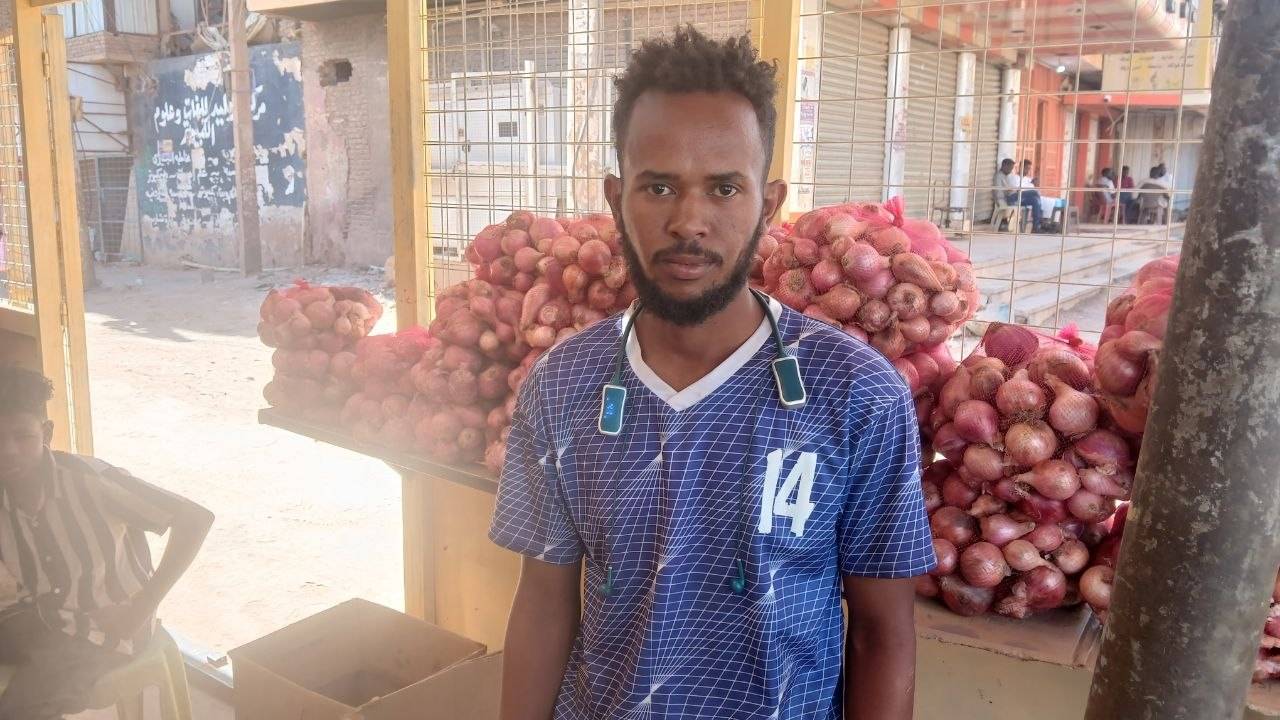
Ali al-Tayeb, a university student, once had a clear path: studying chemical engineering. The war abruptly derailed those plans.
He said panic in the early months forced him and his family to flee from White Nile state to Talodi in South Kordofan.
“The suffering was not just a geographical move; it was the collapse of an entire educational path because of the harsh economic conditions,” he said.
“Now I work as a salesman in a small shop after my studies stopped, and I live day by day, hoping that one day I will return to university.”
Awatif Abdelrahman, a tea seller, carries a deeper loss. Her son disappeared in the chaos after leaving to buy bread.
Her home in Omdurman’s Wad Nubawi district was shelled, forcing her to flee north to al-Thawra. When she returned months later, she found only rubble, her house destroyed and looted.
“All I want is for the war to end, and for my son to return safely,” she said.
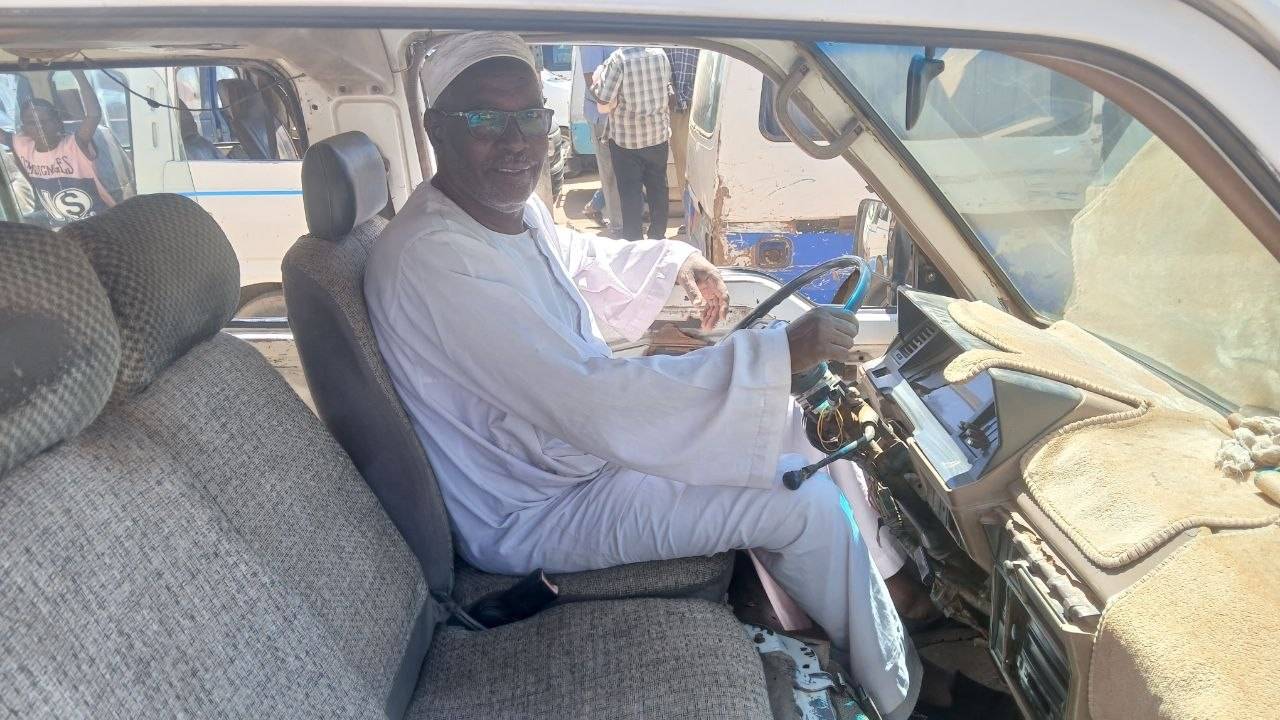
Public transport bus driver Magdi Khalifa, who lost loved ones during the war. (Asharq Al-Awsat)
Resilience and hope
Khartoum stands at a crossroads between a past marked by destruction and an uncertain future. Despite deep wounds, the city endures.
Public bus driver Magdi Khalifa lost not only his livelihood but also relatives and friends, some killed in the war, others due to the collapse of health care.
“They are unforgettable days of cruelty, and they have left their mark on every detail of our lives,” he said.
Elsewhere, butcher Mohamed Darwish is trying to rebuild after heavy financial losses forced him to start from scratch.
“We live on hope, and we only want a safe life without fear,” he said.
Their stories converge on one point: war not only takes lives, it erases stability, security, and the future itself, while exposing a fragile but persistent hope.
Rising hunger and poverty
Poverty has surged during the war, with 70% of the population now living below the poverty line, according to Luca Renda, the United Nations Development Program’s resident representative in Sudan, speaking to AFP.
Before the war, about 38% of the population lived below the poverty line; now the UNDP estimates that figure has reached around 70%,” said Renda, adding that one in four Sudanese lives on less than $2 a day.
In conflict zones such as Darfur and Kordofan, poverty rises to around 75%.
The World Food Program recently described Sudan as facing the world’s largest hunger crisis, with more than 19 million people experiencing acute food insecurity.
A UNDP report released Tuesday said average income has fallen to levels not seen since 1992, while extreme poverty has exceeded levels recorded in the 1980s.
After three years of this conflict, it’s not just that Sudan is facing a crisis, but that the international community is witnessing the systematic erosion of the future of an entire country, according to Renda.
These figures reflect families torn apart, children out of school, and livelihoods lost.
The war has killed tens of thousands and displaced at least 11 million people, creating the world’s largest hunger and displacement crisis.
An accurate death toll remains elusive due to limited information, communications blackouts, and restricted movement across a country where much of the infrastructure has been destroyed.
Engineering student Ali Al-Tayeb, whose education was disrupted by the war, now works as a salesman in a small shop. (Asharq Al-Awsat)
The missing
The International Committee of the Red Cross said at least 11,000 people have gone missing since the war began, highlighting deep psychological suffering among families.
The number of missing persons cases has risen by more than 40% over the past year alone.
These figures most likely represent only a fraction of the real number, and show the human cost of protracted conflicts, noted James Reynolds, the ICRC’s deputy director for Africa.
The ICRC added that 70 to 80% of health infrastructure in conflict areas is either out of service or severely lacking resources.
Berlin is hosting a donors conference on Wednesday aimed at making tangible progress toward ending the war and addressing urgent humanitarian needs, after similar meetings in London and Paris over the past two years failed to produce a diplomatic breakthrough.
For First Time in Two Months, 323 Trucks Enter Gaza in One Dayhttps://english.aawsat.com/arab-world/5262503-first-time-two-months-323-trucks-enter-gaza-one-day
A convoy carrying wounded Palestinians from Gaza for treatment through the Rafah border crossing between Gaza and Egypt, after it was reopened by Israel on Sunday for a limited number of people, rides through Khan Younis in the southern Gaza Strip, April 12, 2026. (Reuters)
For First Time in Two Months, 323 Trucks Enter Gaza in One Day
A convoy carrying wounded Palestinians from Gaza for treatment through the Rafah border crossing between Gaza and Egypt, after it was reopened by Israel on Sunday for a limited number of people, rides through Khan Younis in the southern Gaza Strip, April 12, 2026. (Reuters)
For the first time in two months, the Gaza Strip has seen a sharp increase in trucks carrying aid and commercial goods, alongside a rise in travelers crossing through the Rafah land crossing in both directions.
A total of 323 trucks entered Gaza on Monday, including 220 commercial shipments for the private sector and 103 aid trucks from international organizations.
Of these, 234 trucks came through the Kerem Shalom crossing in the far south, and 89 through the Zikim crossing in northern Gaza, which reopened on Sunday after 44 days.
Workers in Gaza’s civil and charitable sectors expect the Kissufim crossing, between northern Khan Younis and southern Deir al-Balah, to open on Sunday to further increase the flow of trucks.
A source in Gaza’s economy ministry said most of the incoming shipments were commercial goods, including food supplies carried on more than 270 trucks, along with shelter materials, relief items, consumer goods, household supplies, fuel, and telecommunications equipment.
“For the first time in about two months, this number of trucks has been allowed in,” the source told Asharq Al-Awsat, adding that fewer trucks had entered since the ceasefire took effect on October 10.
The ceasefire deal stipulates the entry of 600 trucks per day, but Hamas and UN bodies have accused Israel of allowing only limited numbers.
The source said most trucks entering since the ceasefire have carried commercial goods, while aid shipments from Arab, Islamic, and international donors, including UN agencies, have been more limited.
Gaza officials have been told that more trucks and goods could be allowed in to help ease prices.
Israel on Tuesday allowed 126 Palestinians, including 41 patients and 85 companions, to travel after coordination by the World Health Organization. About 18 foreign passport holders also left through the crossing in coordination with their countries.
Israel partially reopened the Rafah crossing under the ceasefire at the start of February, shut it again when the war with Iran began later that month, and reopened it on March 19.
Since the ceasefire, the number of people allowed to pass through Rafah has remained limited, occasionally reaching 100, with expectations that it could rise to 150 a day.
A Palestinian source in Gaza said the recent easing in truck entries and movement through Rafah followed an agreement reached by Gaza’s representative at the Board of Peace, Nickolay Mladenov, with Israel to push compliance with the ceasefire terms.
For now, only patients are allowed to travel through Rafah, but other categories, including students and stranded civilians, could be permitted within about two weeks.
Palestinian factions, led by Hamas, have called on Mladenov and mediators to press Israel to fully implement the first phase of the ceasefire before moving to the second. Contacts and meetings on the issue are ongoing in Cairo.
After Three Years of War, Sudan in Shambles as Donors Gather in Berlinhttps://english.aawsat.com/arab-world/5262491-after-three-years-war-sudan-shambles-donors-gather-berlin
A Sudanese man pulls a donkey cart filled with water for sale in Port Sudan on April 14, 2026. (AFP)
TT
TT
After Three Years of War, Sudan in Shambles as Donors Gather in Berlin
A Sudanese man pulls a donkey cart filled with water for sale in Port Sudan on April 14, 2026. (AFP)
The vast majority of Sudanese people have been plunged into poverty, with 11 million uprooted from their homes and nearly twice as many facing hunger as the war between the army and its paramilitary foes enters its fourth year.
On the third anniversary of the start of the grinding conflict on Wednesday, donors will gather in Berlin for an international conference aimed at reviving faltering peace talks and mobilizing aid for one of the world's worst humanitarian crises.
"People are exhausted," said Amgad Ahmed, 42, who has lived in Omdurman, Khartoum's twin city, throughout the conflict.
"Three years of war have worn people down. We have lost work, savings and any sense of stability," he told AFP.
The meeting in Berlin brings together governments, aid agencies and civil society groups, but excludes both the Sudanese army and the paramilitary Rapid Support Forces (RSF) -- the two sides fighting the conflict.
It follows similar conferences hosted by London and Paris over the past two years that failed to produce a diplomatic breakthrough.
The war between Sudan's army and the RSF has killed tens of thousands of people, sparking what German Chancellor Friedrich Merz called "the greatest humanitarian crisis of our time, which is not very often in the public eye".
Nearly 700 civilians have been killed in drone strikes since January, as attacks have escalated on both sides, particularly in the southern Kordofan region and Blue Nile State, according to the United Nations.
A semblance of normality, however, has taken root in the capital Khartoum since the army re-established control there last year.
In parts of the city, reconstruction has begun. Markets have reopened, traffic has returned to streets that were once largely empty, and national secondary school exams were held this week after nearly two years of widespread school closures.
According to the UN, around 1.7 million people have returned to the capital.
But danger still lurks among the soot-stained buildings, with authorities slowly working to clear tens of thousands of unexploded bombs left behind by the fighting.
- 'Heartbreaking' -
Al-Basheer Babker al-Basheer, 41, who visited Khartoum twice this year after three years away, said the city would need years to recover.
"I was happy to come back," he told AFP. "But when I went into the city center, it was heartbreaking."
"The road to the university where I studied is no longer the same. The walls are black," he said. "They are not the same places we used to go to."
Quad-led talks stalled after army chief Abdel Fattah al-Burhan accused the group in November of bias over Abu Dhabi's membership.
German Foreign Ministry spokeswoman Kathrin Deschauer said the Berlin conference would discuss how to "exert influence on the key actors".
"There are many external actors involved in this war," said Luca Renda, the UN Development Program's representative in Sudan.
"And as long as this continues, unfortunately, the chances of peace are very slim."
Beyond widespread infrastructure destruction, the war has pushed Sudan deeper into hunger and poverty, with humanitarian funding at just 16 percent of what is needed, Renda said.
Famine was declared last year in North Darfur capital el-Fashir and Kadugli, the capital of South Kordofan, with 20 additional areas at risk, the UN said.
African Union Commission Chairman Mahamoud Ali Youssouf, in Berlin for the meeting, voiced hope for a cessation of hostilities but acknowledged "we are not there yet".
"When the whole world is focusing on Iran and Ukraine and other crises, I think it is very much appreciated that Germany puts this agenda on the table so that we do not lose sight about the suffering of the people of the Sudan."
لم تشترك بعد
انشئ حساباً خاصاً بك لتحصل على أخبار مخصصة لك ولتتمتع بخاصية حفظ المقالات وتتلقى نشراتنا البريدية المتنوعة