Grundberg Hopes ‘Gaza Truce’ Will Revive the Peace Process in Yemen

Hans Grundberg, Special Envoy of the Secretary-General for Yemen, briefs on Wednesday the Security Council on the situation in Yemen (UN)
TT

Grundberg Hopes ‘Gaza Truce’ Will Revive the Peace Process in Yemen

Hans Grundberg, Special Envoy of the Secretary-General for Yemen, briefs on Wednesday the Security Council on the situation in Yemen (UN)

Hans Grundberg, the UN Special Envoy for Yemen, warned on Wednesday from the alarming escalation in Yemen that would have devastating humanitarian consequences for the Yemeni people.

In a briefing to the Security Council on the situation in the Middle East, Grundberg said a ceasefire in Gaza signals hope that a return to the peace process could materialize between the Yemeni government and Houthis.

The envoy’s briefing came after his talks with Yemeni, regional and international stakeholders across the region, during visits to Muscat, Sanaa, Tehran, and Riyadh to intensify engagements for a peaceful resolution to the conflict.

Grundberg has lately kicked off efforts to secure the release of all arbitrarily detained personnel from the United Nations, national and international organizations, diplomatic missions, and the private sector.

In his briefing, the envoy expressed concern over reports of a new wave of arbitrary detentions, which further exacerbates the suffering of families and undermines trust.

Grundberg mentioned the Houthi attacks on the ships in the Red Sea and said they hindered the prospects of peace.

He added that a ceasefire in Gaza signals hope that an opportunity to de-escalate could materialize.

The envoy said the escalating cycle of strikes and counterstrikes has hindered the prospects of peace and destabilized Yemen's economy, adding that the relative stability and improved security conditions for civilians that have existed since the 2022 truce could be lost.

In contrast to Grundberg's hopes for a revival of the peace process, many Yemenis fear the Houthis would ignite a new war against the Yemeni government, exploiting the popular sympathy with Palestine that has enabled the group to recruit tens of thousands over the past year.

In this regard, Grundberg said, “I am concerned that parties may reassess their options for peace and make miscalculations based on flawed assumptions.”

Escalation and Detainees

In his briefing, the envoy mentioned the damage caused by the Houthi attacks and the Israeli and Western strikes in Yemen.

“Recent Israeli airstrikes have damaged critical civilian infrastructure, including the port of Hodeidah and Sanaa International Airport,” he said, adding that the damage to the port and tugboats impacts the ability to unload humanitarian aid.

Grundberg said during his meetings in Sanaa, he again urged Houthis to immediately and unconditionally release all arbitrarily detained personnel from the United Nations, national and international organizations, diplomatic missions, and the private sector.

He further called on the Houthis to release the Galaxy Leader vessel and its 25-member crew, which have been unlawfully detained for over a year now.
He urged all parties to urgently take concrete steps towards achieving a nationwide ceasefire agreement in Yemen.

Elsewhere, Grundberg spoke about his office’s engagement in extensive dialogues with Yemeni parties at the technical level on economic and military issues.

“In our discussions, we explored how collaboration between the parties could unlock critical peace dividends. These include the unification of the central bank, the resumption of fossil fuel exports, and the full payment of public sector salaries,” he said.

Yemeni, US Statements

During Grundberg’s briefing, the representative of the United States, Dorothy Shea, said, “The time has come to respond to the growing global threats by holding Iran to account for enabling the Houthis long-range missile attacks on international shipping and Israel.”

She said the Houthis have expanded their campaign of detaining innocent Yemenis, targeting more former embassy staff simply trying to do their jobs.

She stressed the need to deprive the Houthis of illicit revenues that sustain their attacks and recognize the growing relationship between the Houthis and other terrorist groups like al-Shabaab.

Meanwhile, Abdullah Ali Fadhel Al-Saadi, Permanent Representative of Yemen to the United Nations, addresses the Security Council meeting on the situation in his country.

“The humanitarian and economic situation in Yemen is intolerable,” he said, adding that the government is eager to engage with all efforts to reach a political settlement.

Al-Saadi also called on the Security Council to assume its responsibilities and implement its decisions that end the Houthi coup based on agreed international references.


US Transfers ISIS Detainees from Syria to Iraq

 US soldiers at a military base north of Baghdad (Reuters – archive photo) 
 US soldiers at a military base north of Baghdad (Reuters – archive photo) 
TT

US Transfers ISIS Detainees from Syria to Iraq

 US soldiers at a military base north of Baghdad (Reuters – archive photo) 
 US soldiers at a military base north of Baghdad (Reuters – archive photo) 

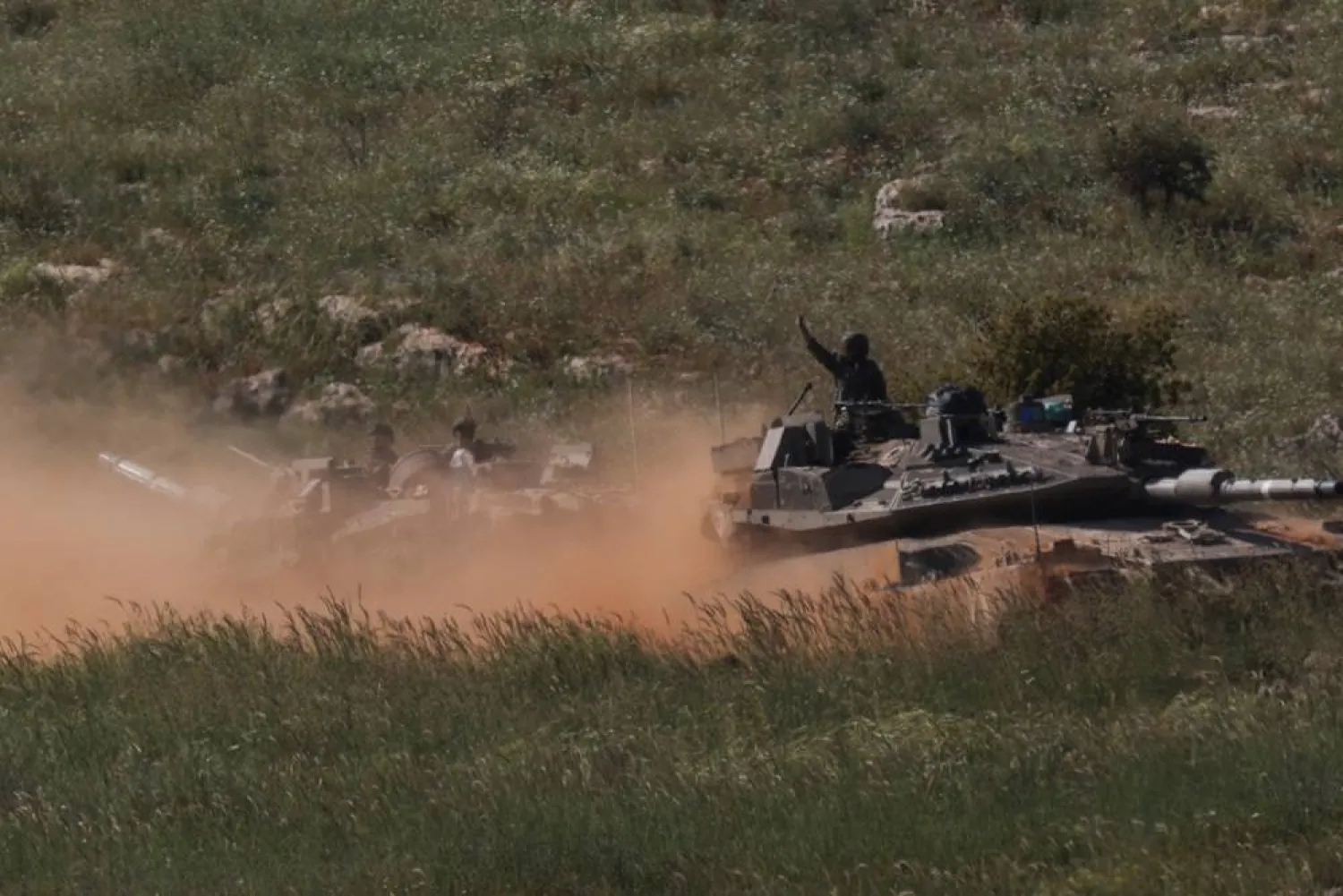
US Central Command has launched a new operation to transfer ISIS detainees from northeastern Syria to Iraq, aiming to ensure that they remain in secure detention facilities and to reduce the risk of instability.

The operation began with the transfer of 150 ISIS militants from a detention facility in Hasakah, Syria, to a secure site in Iraq. US officials say the number of detainees moved from Syria to Iraqi-controlled prisons could eventually reach about 7,000.

Admiral Brad Cooper, the head of US Central Command, said: “We are closely coordinating with regional partners, including the Iraqi government, and we sincerely appreciate their role in ensuring the enduring defeat of ISIS.

“Facilitating the orderly and secure transfer of ISIS detainees is critical to preventing a breakout that would pose a direct threat to the United States and regional security.”

According to Reuters, the move follows the rapid collapse of the Kurdish-led Syrian Democratic Forces in northeastern Syria, which raised doubts about the security of roughly a dozen prisons and detention camps previously guarded by the group.

US officials also discussed the situation with Syrian President Ahmed al-Sharaa, focusing on ongoing tensions in Syria, the need for government forces to respect ceasefire arrangements with the Syrian Democratic Forces, and support for the coordinated transfer of ISIS detainees to Iraq.

The US side outlined plans to relocate thousands of detainees in a controlled manner and urged all parties to avoid actions that could disrupt the process.

An Iraqi official told Asharq Al-Awsat that the transfer would help ease growing concerns about possible escapes. He added that holding the detainees in prisons supervised by the Iraqi government, in direct coordination with the United States, would significantly reduce the chances of ISIS rebuilding its capabilities.

Syrian media reported that security forces recently arrested 90 group members who had escaped from al-Shaddadi prison south of Hasakah. The Syrian army later announced it had taken control of the city, imposed a curfew, and launched operations to secure the area and capture fugitives.

Recent government advances, combined with what appears to be a reduction in US support for the SDF, mark the most significant shift in territorial control since the fall of Bashar al-Assad 13 months ago.

The United States said this week that the main objectives of its partnership with the SDF have largely been achieved after years of fighting ISIS.


Tunisia Flood Death Toll Rises to Five

 A man removes water from his flooded home in La Goulette, near the Tunisian capital Tunis. AFP 
 A man removes water from his flooded home in La Goulette, near the Tunisian capital Tunis. AFP 
TT

Tunisia Flood Death Toll Rises to Five

 A man removes water from his flooded home in La Goulette, near the Tunisian capital Tunis. AFP 
 A man removes water from his flooded home in La Goulette, near the Tunisian capital Tunis. AFP 

Authorities in Tunisia said flooding caused by three days of exceptional rainfall has killed five people, causing property damage in several provinces and leaving schools and businesses shut and transportation disrupted after parts of the country experienced their heaviest rainfall in years.

The death toll rose to five, Khalil Mechri, a civil defense spokesman told AFP. “Two people swept away by floodwaters, while a woman drowned in her home,” he said.

Mechri said since the flooding started, the emergency services pumped water from 466 inundated homes and have rescued 350 people trapped by floodwaters.

Tunisian media said four fishermen were missing on Wednesday. A fifth was rescued in Teboulba, south of Monastir, while authorities are searching for the remaining crew.

Mechri said while the bad weather was now less intense, “the level of alert remains high.”

President Kais Saied visited several affected areas on Tuesday, including Moknine and Teboulba, local media said.

Footage and videos widely circulated on social media showed significant flooding to homes and roads, with cars stranded in water, particularly in the capital, Tunis.

Authorities suspended classes on Wednesday in public and private schools and universities in 15 of the country's 24 governorates because of the weather. Transportation was also disrupted in several areas.

Abderazak Rahal, head of forecasting at the National Institute of Meteorology (INM), told AFP some Tunisian regions had not seen so much rain since 1950.

“We have recorded exceptional amounts of rainfall for the month of January,” Rahal said, with the regions of Monastir, Nabeul and greater Tunis the hardest hit.

The latest rainfall has proved record-breaking, but Tunisian streets often flood after heavy downpours, largely because of the state of the country's infrastructure.

Drainage and stormwater networks are often old and poorly maintained, particularly in rapidly expanding urban areas, with waste sometimes clogging the system.

Rapid urbanization of some areas has also led to less rainwater being absorbed into the ground, increasing runoff.

The dramatic deluge comes as Tunisia grapples with a seven-year drought, worsened by climate change and marked by a sharp decline in water reserves in dams nationwide.

In neighboring Algeria, several regions have also been hit by massive downpours and floods.

Algerian civil defense authorities said they had recovered the body of a man in his sixties who died in flooding in the northwestern province of Relizane.


Lebanon: Israel Launches New Phase of Escalation in the South

Lebanese residents flee after an Israeli air strike on the town of Qennarit in the South on Wednesday (AP). 
TT

Lebanon: Israel Launches New Phase of Escalation in the South

Lebanese residents flee after an Israeli air strike on the town of Qennarit in the South on Wednesday (AP). 

Israel has intensified its military campaign in areas north of the Litani River in South Lebanon over the past two weeks, carrying out air strikes at least twice a week—well above the tempo seen before the start of the year.

The intensified moves have been accompanied by near-daily surveillance and pursuit operations, signaling a sharper escalation as the Lebanese army prepares to launch the second phase of its plan to place weapons under state control north of the Litani.

After heavy strikes on Monday targeting areas north of the river, the Israeli army issued evacuation warnings on Wednesday afternoon for residents of five towns in southern Lebanon. The alerts came hours after Israeli strikes that killed two people, whom Israel said were Hezbollah members.

Local sources monitoring the developments told Asharq Al-Awsat that Israeli air raids now occur every two to three days — at least twice weekly — double the frequency recorded last year.

Previously, strikes were largely confined to areas south of the Litani and its banks at a rate of about once a week, often on Thursdays. The current campaign includes strikes on valleys and village outskirts, alongside repeated evacuation warnings in several towns north of the river. The warnings increasingly target large buildings and entire neighborhoods, with heavy munitions causing widespread damage to property and surrounding areas.

On Wednesday afternoon, the Israeli army issued evacuation orders in two phases for five villages north of the Litani, triggering the displacement of hundreds of residents. Israeli army Arabic-language spokesperson Avichay Adraee said the military would strike Hezbollah infrastructure to counter what he described as attempts to rebuild its activities in the region.

He identified targets in Jarjoua and Kfar Kila in Nabatieh district and Qennarit in Sidon district, about 40 kilometers from the border, and urged residents to evacuate immediately. After strikes destroyed the targeted buildings and damaged nearby structures, further evacuation orders were issued for Ansar and Zrariyeh, around 30 kilometers from the Israeli border.

The Lebanese army is expected next month to submit a plan to the government outlining mechanisms for disarming Hezbollah north of the Litani, following its announcement that it had dismantled the group’s weapons in border areas south of the river.

Earlier in January, the army said it had completed the first phase of the plan, aimed at placing weapons exclusively under state control, and asserted that it had established operational control over areas south of the Litani — roughly 30 kilometers from the Israeli border — except for territories still under Israeli occupation.

Israel has questioned the adequacy of these measures, describing them as insufficient. Under the ceasefire agreement, Israel was expected to withdraw from South Lebanon but has maintained its presence at five strategic positions, which Lebanon continues to demand it vacate.