


Lebanon Marks 20th Anniversary of Rafik Hariri’s Assassination amid Political Shifts

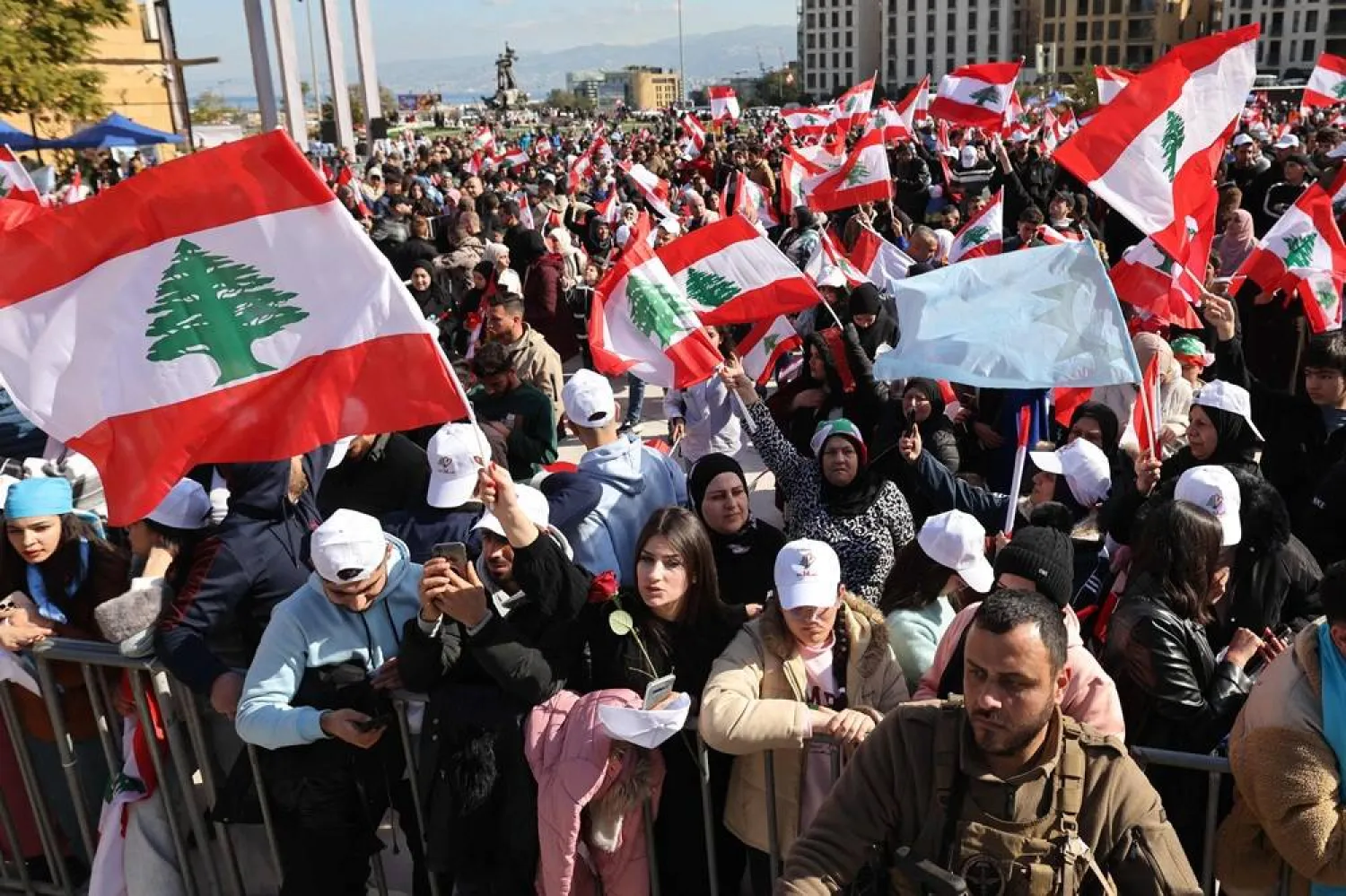
Lebanese gather in Downtown Beirut to mark the 20th anniversary of the assassination of Lebanon's former Premier Rafik Hariri, on February 14, 2025.  (AFP)
Lebanese gather in Downtown Beirut to mark the 20th anniversary of the assassination of Lebanon's former Premier Rafik Hariri, on February 14, 2025. (AFP)
TT

Lebanon Marks 20th Anniversary of Rafik Hariri’s Assassination amid Political Shifts

Lebanese gather in Downtown Beirut to mark the 20th anniversary of the assassination of Lebanon's former Premier Rafik Hariri, on February 14, 2025.  (AFP)
Lebanese gather in Downtown Beirut to mark the 20th anniversary of the assassination of Lebanon's former Premier Rafik Hariri, on February 14, 2025. (AFP)

Tens of thousands of supporters gathered in downtown Beirut on Friday to commemorate the 20th anniversary of former Lebanese Prime Minister Rafik Hariri’s assassination, which comes amid seismic regional political shifts.

The ousting of Bashar al-Assad in December after 54 years of family rule in Syria marked the fall of a government long accused of orchestrating Hariri’s assassination and other political killings in Lebanon.

Meanwhile, the Lebanese group Hezbollah — whose members were convicted by a UN-backed tribunal for their role in Hariri’s murder — now faces its own turning point following the assassination of its leader, Hassan Nasrallah, in an Israeli airstrike in September. Nasrallah’s funeral is set for February 23.

"This is the beginning of justice. If the justice of the earth did not serve us, no one escapes the justice of heaven," said Hariri’s son, former Lebanese Prime Minister Saad Hariri, as he addressed a huge crowd in the capital Beirut.

"After 20 years, Rafik Hariri’s project is continuing, and those who tried to kill the project, look where they are now," Saad added.

Prime Minister Nawaf Salam, appointed in early February, visited Hariri’s burial site earlier Friday.

"Today, we remember the legacy of the great martyr in serving Lebanon, preserving its national unity, and working for its prosperity," Salam wrote on X. "He was greatly respected in the Arab world and the world, leaving Lebanon with a remarkable moral and political legacy."

Lebanon’s President Joseph Aoun also paid tribute to Hariri, saying on X that Hariri's "national stances were a fundamental building block in strengthening national unity and protecting civil peace."

Hariri was killed on Feb. 14, 2005, when a massive bomb exploded near the St. Georges Hotel, a historic landmark on Beirut’s waterfront. The blast killed 21 other people and injured over 200.

In 2020, a UN-backed tribunal convicted one member of the Iran-backed Hezbollah group and acquitted three others of involvement in the assassination. The Special Tribunal for Lebanon said Salim Ayyash was guilty as a co-conspirator of five charges linked to his involvement in the suicide truck bombing.

None of the suspects was ever arrested or attended court to hear the verdicts.

The assassination of Hariri ignited the "Cedar Revolution," leading to massive protests against Syria’s nearly three-decade political hegemony and military presence in Lebanon, ultimately culminating in the withdrawal of Syrian troops in 2005. The assassination also intensified sectarian divisions within Lebanon and bolstered the political influence of Assad's ally, Hezbollah.

Hopes that Lebanon ‘would unite’  

Buses from across Lebanon arrived early, bringing supporters to downtown Beirut to commemorate the anniversary. Thousands of people filled the streets and waved Lebanese flags and the blue flag of Hariri's Future Movement to songs honoring Hariri's memory.

"After the Syrian and Iranian guardianship ended and the ousting of the Syrian regime, the Lebanese state alone rules us," Mohammad Kanaan told The Associated Press.

"In this square, you expelled Bashar Assad from Lebanon," Saad said during his speech. "And after twenty years of sectarian rule, detention and brutality, the heroic Syrian people rose up and expelled the criminal from Syria."

Another supporter, Ahmad Serhal, said he hoped that "Lebanon would unite" after the departure of Assad. "All the political shifts are for the good of this country. Lebanon is for all the Lebanese, we need to reach an agreement and unite."

"God took revenge upon those who assassinated president Rafik — from ousting Assad, from ousting the system that is allied with Iran," Ahmad Trab said. "We hope for a better future now with Syria."

Israeli withdrawal deadline looms  

The anniversary of Hariri’s death comes just four days before the deadline for Israeli troops to withdraw from southern Lebanon under a ceasefire agreement that ended a 14-month war with Hezbollah in late November. The ceasefire deal also stipulates that Hezbollah must end its military presence south of the Litani River, with the Lebanese Army and UN peacekeepers deploying in the vacated areas.

The pullout deadline, initially set for Jan. 26, was postponed to Feb. 18.

Parliament Speaker Nabih Berri said Lebanon "absolutely rejects" an Israeli proposal to keep troops in five strategic border points after the withdrawal. "It is the responsibility of the Americans to impose (the withdrawal), otherwise they will have caused the biggest setback for the government," he said.

Aoun has also insisted that Israel must adhere to the agreed-upon timeline. During his speech, Saad also emphasized the need for the Israeli army's withdrawal from Lebanon.

Saad addressed the people of southern and eastern Lebanon, regions largely supporters of and influenced by Hezbollah, urging them to seize Lebanon’s golden opportunity while dispelling any perception of being "a force of obstruction."

Renewed Arab engagement  

On Feb. 8, Lebanon formed a new government led by Salam, the first fully empowered administration since 2022. Salam, a former president of the International Court of Justice, was appointed following the election of Aoun in January. The 24-member cabinet includes a mix of technocrats and political figures, representing various sects, including Hezbollah’s allies.

Although Hezbollah did not formally endorse Salam’s appointment, the group negotiated during the government formation process.

The United States has expressed support for the new government, emphasizing the importance of stability and reforms, though opposing Hezbollah’s direct participation in the cabinet. Salam's government now faces Lebanon’s longstanding economic crisis and an urgent need to implement key financial reforms.

The political shift has reopened the door for renewed Arab countries that previously distanced themselves from Lebanon due to the growing influence of Iran and Hezbollah.

The countries are now reassessing their approach, with hopes of reintegrating Lebanon into the Arab fold.

Libya’s Ramadan Celebrations Tempered by Economic Woes

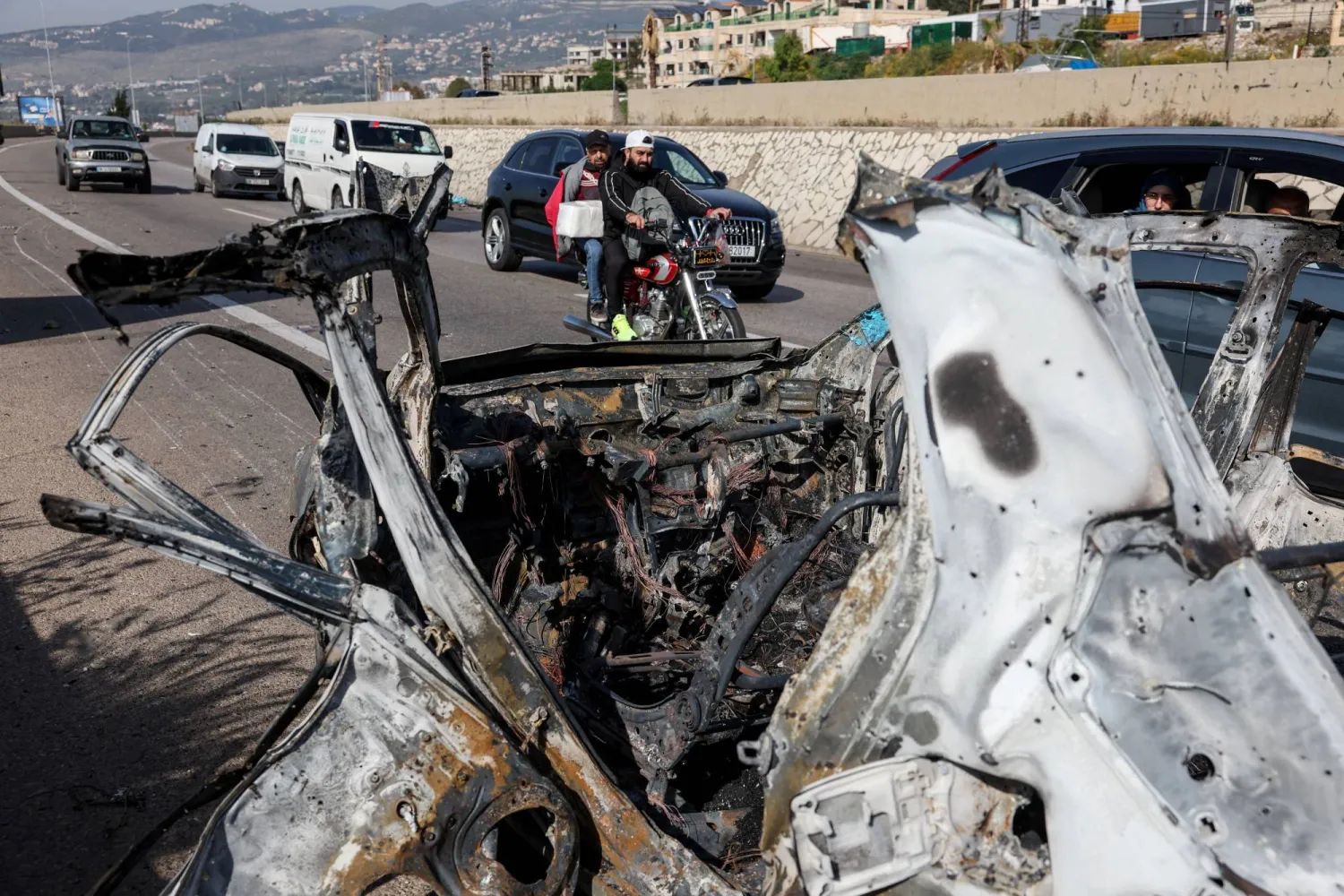
A family walks on their way to shop for Ramadan decorations ahead of the holy month of Ramadan in Benghazi, Libya, February 16, 2026. (Reuters)
TT

Libya’s Ramadan Celebrations Tempered by Economic Woes

A family walks on their way to shop for Ramadan decorations ahead of the holy month of Ramadan in Benghazi, Libya, February 16, 2026. (Reuters)

Libyans have been enjoying Ramadan with feasts and fireworks -- but soaring prices, a devalued currency and political divisions have left many with little to celebrate.

Fifteen years on from the fall of longtime leader Moammar al-Gaddafi, the country remains split between east and west, while shortages of goods, including fuel, disrupt daily life, despite Libya sitting atop vast oil and gas reserves.

During the holy month of Ramadan, shoppers stock up on treats, as families gather for lavish meals before and after the daytime fast that stretches from sunrise to sunset.

But this year supermarkets have been rationing their goods, while many petrol stations are short of gas. In the capital Tripoli, most ATMs were out of cash this week.

Firas Zreeg, 37, told AFP while weaving through a crowded supermarket that the economy was deteriorating, blaming currency speculators for the fall in the dinar, "which has negative repercussions on our daily lives".

The price of cooking oil has doubled in recent weeks, while meat and poultry prices rose by half.

Refills of gas cylinders, officially priced at 1.5 dinars ($0.24) but often unavailable through state-run distributors, now sell for 75 dinars ($11.85) on the black market and at times more.

- 'Burden on citizens' -

Libya has struggled to recover from the chaos that erupted following the 2011 uprising that toppled Gaddafi.

It remains divided between the Government of National Unity (GNU) based in Tripoli and an eastern administration backed by Libyan National Army (LNA) commander Khalifa Haftar.

The country has largely been stable in recent years although there have been bouts of deadly violence, including the killing of Gaddafi's son and heir apparent Seif al-Islam this month.

With security holding, many Libyans are more focused on their livelihoods.

Last month, the central bank in the western territory devalued the dinar -- the second time in less than a year -- by nearly 15 percent, "aimed at preserving financial and monetary stability and ensuring the sustainability of public resources".

In an address this week, GNU leader Abdulhamid Dbeibah acknowledged that the devaluation had once again "put the burden on citizens".

Hanna Tetteh, head of the United Nations Support Mission in Libya, warned on Wednesday that "poverty and pressure on society [are] increasing".

"The situation, in addition to the fragile security landscape, should be a matter for concern as such conditions can lead to unexpected political and security challenges," she told the UN Security Council.

Libya's other economic problems included the absence of a unified national budget, in light of its political divide, as well as uncoordinated public spending due to parallel state institutions, Tetteh said.

Revenues from the oil industry were also declining, she added, while the central bank has said public spending is growing at an unsustainable pace.

On Tuesday, Libya marked 15 years since the start of the uprising, with fireworks lighting up the sky in Tripoli, but for many Libyans life remains a struggle.

"Minor improvements in security were made over the past three years," Zreeg told AFP, but Libyans are still faced with huge economic challenges.


Libya PM Undergoes 'Successful' Treatment at Heart Hospital

Head of Libya's Government of National Unity (GNU) Abdulhamid Dbeibah. (GNU)
TT

Libya PM Undergoes 'Successful' Treatment at Heart Hospital

Head of Libya's Government of National Unity (GNU) Abdulhamid Dbeibah. (GNU)

Libya's Prime Minister Abdulhamid Dbeibah has undergone "successful" treatment at a heart hospital, his office said Saturday, but his specific ailment was not disclosed.

"I assure you that I am fine, by God's grace," said a statement posted on social media overnight.

The treatment was carried out at a facility in the northwestern Libyan city of Misrata on an undisclosed date, said AFP.

Dbeibah said he later travelled abroad for "additional medical checkups for reassurance", though this was not the primary reason for his trip.

Italian media outlets previously reported he had been admitted to a leading cardiac facility in Milan on Thursday for a general check-up.

"The matter is simply that I underwent some additional medical checkups for reassurance while I was abroad due to a prior external commitment," he said.

"The results confirmed the success of the treatment I received in Libya, praise be to God."

The prime minister leads a UN-recognized government based in Tripoli that controls western Libya, while the country's east is run by another administration backed by military strongman Khalifa Haftar.

Libya has remained divided since chaos erupted following the 2011 Arab Spring uprising that toppled longtime leader Muammar Gaddafi.


Eight Hezbollah Members Killed in Israel’s Friday Strikes on Lebanon

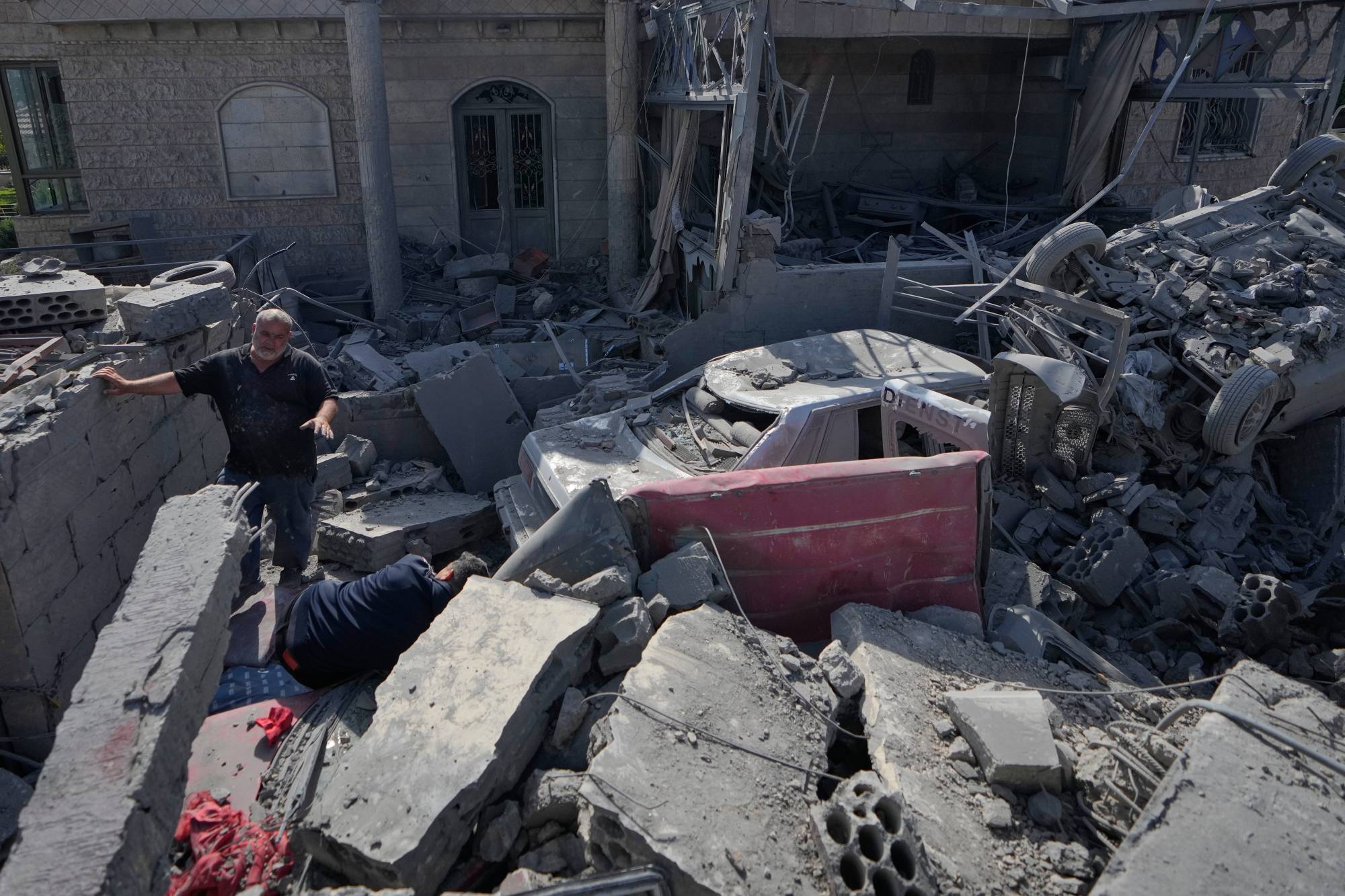
A bulldozer clears debris near heavily-damaged buildings in the village of Bednayel in Lebanon's eastern Bekaa Valley region on February 21, 2026, following Israeli strikes. (AFP)
TT

Eight Hezbollah Members Killed in Israel’s Friday Strikes on Lebanon

A bulldozer clears debris near heavily-damaged buildings in the village of Bednayel in Lebanon's eastern Bekaa Valley region on February 21, 2026, following Israeli strikes. (AFP)

Attacks carried out by Israel on Friday in eastern Lebanon killed eight members of Hezbollah, an official from the group told AFP on Saturday.

Lebanon's health ministry said Friday that a total of 10 people were killed in strikes that hit the eastern Bekaa region.

The Israeli military said it targeted "several terrorists of Hezbollah's missile array in three different command centers in the Baalbek area".

Lebanon's president on Saturday condemned the attacks, the latest despite a ceasefire with Hezbollah.

In a statement, Joseph Aoun called the attacks "a blatant act of aggression aimed at thwarting diplomatic efforts" by the United States and other nations to establish stability.

A lawmaker from Hezbollah called on Beirut to suspend meetings of a multinational committee tasked with monitoring the truce.

Washington is one of five members on the committee overseeing the ceasefire implemented in November 2024, with the body scheduled to meet again next week.

Israel has repeatedly bombed Lebanon despite the ceasefire, usually saying it is targeting Hezbollah but occasionally also the group's Palestinian ally Hamas.

The Friday attacks on southern and eastern Lebanon killed 12 people, according to the health ministry, 10 of them in the east of the country.

Israel's military said it struck "several terrorists of Hezbollah's missile array in three different command centers in the Baalbek area".

Hezbollah said a commander was killed in the raids. Its lawmaker Rami Abu Hamdan said on Saturday the group "will not accept the authorities acting as mere political analysts, dismissing these as Israeli strikes we have grown accustomed to before every meeting of the committee".

He called on Beirut to "suspend the committee's meetings until the enemy ceases its attacks".

Hezbollah, while weakened following war with Israel, remains a strong political force in Lebanon represented in parliament.

Lebanon's government last year committed to disarming the Iran-backed group, with the army saying last month it had completed the first phase of the plan covering the area near the Israeli border.

Israel, which accuses Hezbollah of rearming since the war, has called the Lebanese army's progress on disarming the group insufficient.
