Lebanon’s Finance Minister to Asharq Al-Awsat: Depositors’ Funds to Be Recovered in Three Phases

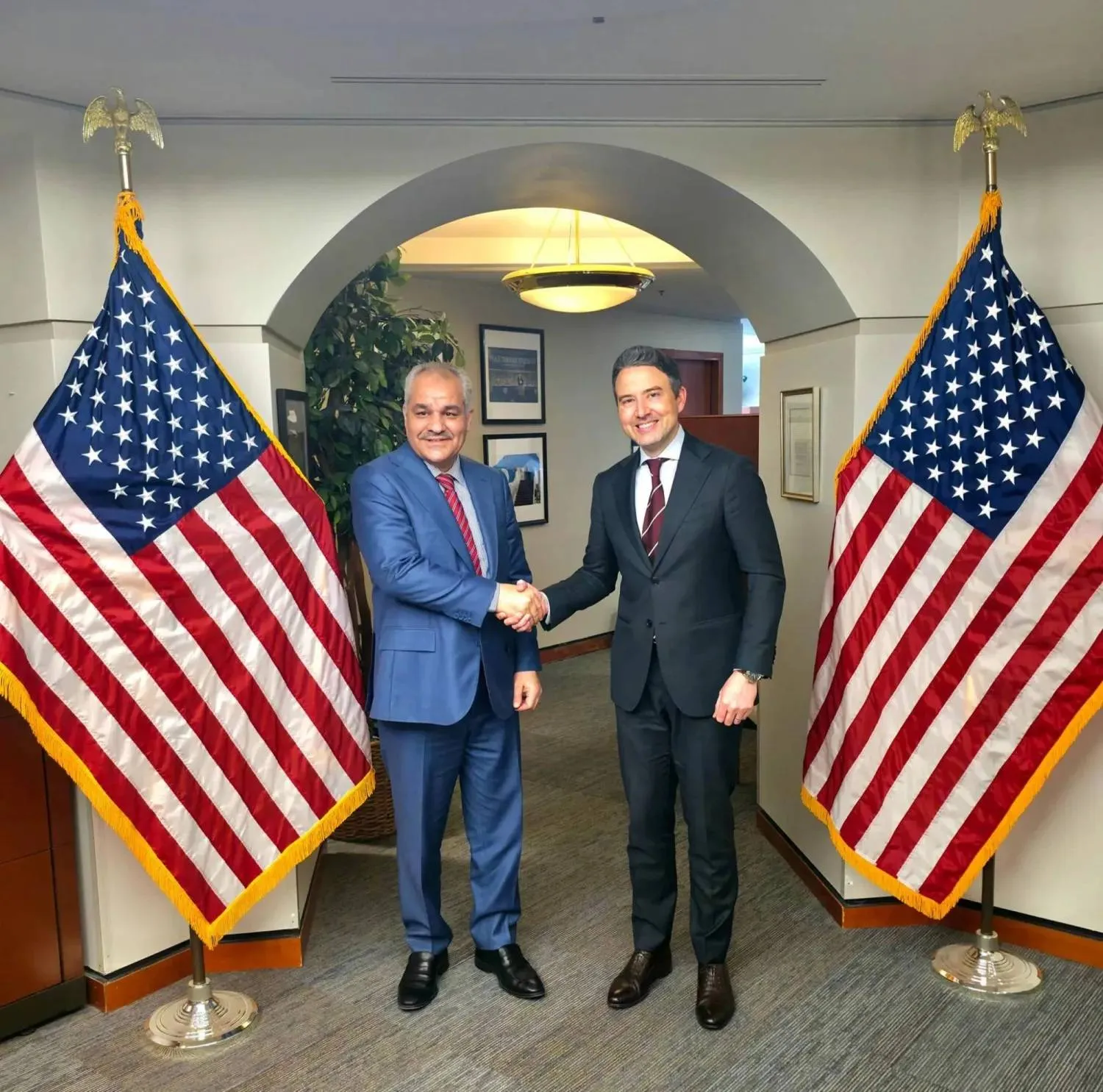
Lebanon's Finance Minister Yassin Jaber (REUTERS/Mohamed Azakir) 
TT

Lebanon’s Finance Minister to Asharq Al-Awsat: Depositors’ Funds to Be Recovered in Three Phases

Lebanon's Finance Minister Yassin Jaber (REUTERS/Mohamed Azakir) 

Yassin Jaber, Lebanon’s Finance Minister and head of the Lebanese delegation to the IMF and World Bank Spring Meetings in Washington, said that the recovery of depositors’ funds in Lebanese banks will take place in three consecutive phases.

Acknowledging US pressure to shut down the Al-Qard Al-Hassan Association affiliated with Hezbollah, Jaber emphasized the need for a defensive policy aimed at disarming militias. He also spoke of Lebanon’s “natural” return to the “Arab embrace,” describing relations with Arab states — particularly Saudi Arabia — as “excellent.

In an interview with Asharq Al-Awsat, Jaber described his meetings on the sidelines of the IMF and World Bank gatherings as “generally positive,” stressing the importance of the visit in helping to bridge the trust gap that had widened over the years between Lebanon and the international community, as well as with its Arab allies.

He noted that the meetings with IMF representatives included the presentation of “essential reforms” approved by the Lebanese government, emphasizing that these reforms were not being implemented to appease external parties but were necessary steps for the benefit of Lebanon itself and its people.

The minister explained that reforms in sectors like electricity are aimed at providing better services to Lebanese citizens, enabling them to pay lower bills and receive uninterrupted electricity supply, rather than relying on costly private generators.

Jaber considered the recent parliamentary vote to amend banking secrecy laws — passed by a majority of 87 votes — a clear vote of confidence in the government’s reform efforts. He also mentioned a new draft law for restructuring the banking sector, which has been referred to the parliamentary Finance Committee for expedited review before being presented to the general assembly.

Regarding the recovery of depositors’ funds, Jaber stressed that Lebanon’s current priorities are broad and simultaneous, encompassing agreements with the IMF and World Bank, addressing the issue of unpaid sovereign debt, banking sector reform, and returning funds to depositors.

He revealed that Lebanon’s new Central Bank Governor, Karim Saeed, is preparing a comprehensive plan to restructure banks and return depositors’ funds.

“No banking system worldwide can return all depositors’ money at once. Recovery will occur in phases, beginning with middle-income depositors — those with balances of $100,000 or less — who represent 84 percent of all depositors,” Jaber said, adding that larger deposits will be addressed subsequently, with amounts up to $500,000 or even $1 million, before moving to higher brackets. Although the plan will be presented in full, the payouts will be made gradually over time, he noted.

The Lebanese minister underlined the critical need for a functioning banking sector that is adequately capitalized and compliant with international standards. He explained that if certain banks fail to meet these requirements, they may be merged, either individually or through the consolidation of two or three banks to achieve stability. Jaber also warned that Lebanon’s inclusion on the Financial Action Task Force (FATF) gray list resulted from the country’s reliance on cash transactions, and that restoring trust in the banking sector and reducing cash-based activity are essential for Lebanon’s removal from the list.

In addressing the US call to shut down Al-Qard Al-Hassan, Jaber said the matter falls within the jurisdiction of the Central Bank Governor and not the Finance Ministry, noting that the authorities will observe developments closely.

Touching on Lebanon’s gold reserves, he said: “These assets bolster confidence in the Central Bank’s holdings and its future credibility.”

He lamented past policy errors under former Governor Riad Salameh, which, he said, will now be avoided. He also categorically ruled out any move to liquidate the gold reserves, explaining that such a decision is not within the authority of the Central Bank Governor, the finance minister, or even the government.

“Any move to sell gold would require a parliamentary decision, and at present, this issue is not under discussion,” the minister told Asharq Al-Awsat.

On the sensitive issue of Hezbollah’s arms, Jaber explained that the Lebanese Army is deployed in the South and is rigorously implementing United Nations Resolution 1701. He emphasized the importance of empowering the army with sufficient resources and proper organization to fulfill its duties.

“President Joseph Aoun, who handles this file with deep understanding gained from his years as an army commander, is managing the matter wisely,” he said. While there remains pressure, logistical and manpower challenges continue to hinder full deployment, with efforts underway to recruit thousands of additional troops, according to the minister.

Jaber noted that all political parties, including Hezbollah, have expressed respect for the army and a willingness to cooperate with it. He stressed that the President remains committed to developing a national defense strategy and will soon convene dialogue sessions to move this process forward, urging patience and time for these initiatives to materialize.

Turning to Lebanon’s relations with Saudi Arabia and the broader Arab world, Jaber stated: “It is natural for Lebanon to belong within the Arab fold,” citing the historic ties and the presence of hundreds of thousands of Lebanese expatriates in Saudi Arabia, the UAE, Kuwait, Qatar, and Iraq. He described the current relationships as “extremely positive,” saying: “Our hand is extended, and we are making every effort to maintain the best possible relations with our Arab brothers.”

He further praised Arab countries as Lebanon’s “big brothers,” expressing gratitude for their continued concern and support for Lebanon’s stability and prosperity. Jaber emphasized that no other country could have withstood the sequence of crises Lebanon has faced — including the 2019 financial collapse, the 2020 Beirut port explosion, the COVID-19 pandemic, a prolonged presidential vacuum, a paralyzed government, a suspended Parliament, and over a year of conflict.

The minister reminded Arab nations that Lebanon continues to host two million Syrian refugees, drawing a comparison by suggesting that if the United States hosted 120 million Mexicans for two years, it too would be overwhelmed. He concluded by calling on Lebanon’s Arab and international allies to stand by the country as it strives to implement genuine, structural reforms across all sectors.


In a First, Armed Gang in Gaza Forces Displacement of Residents

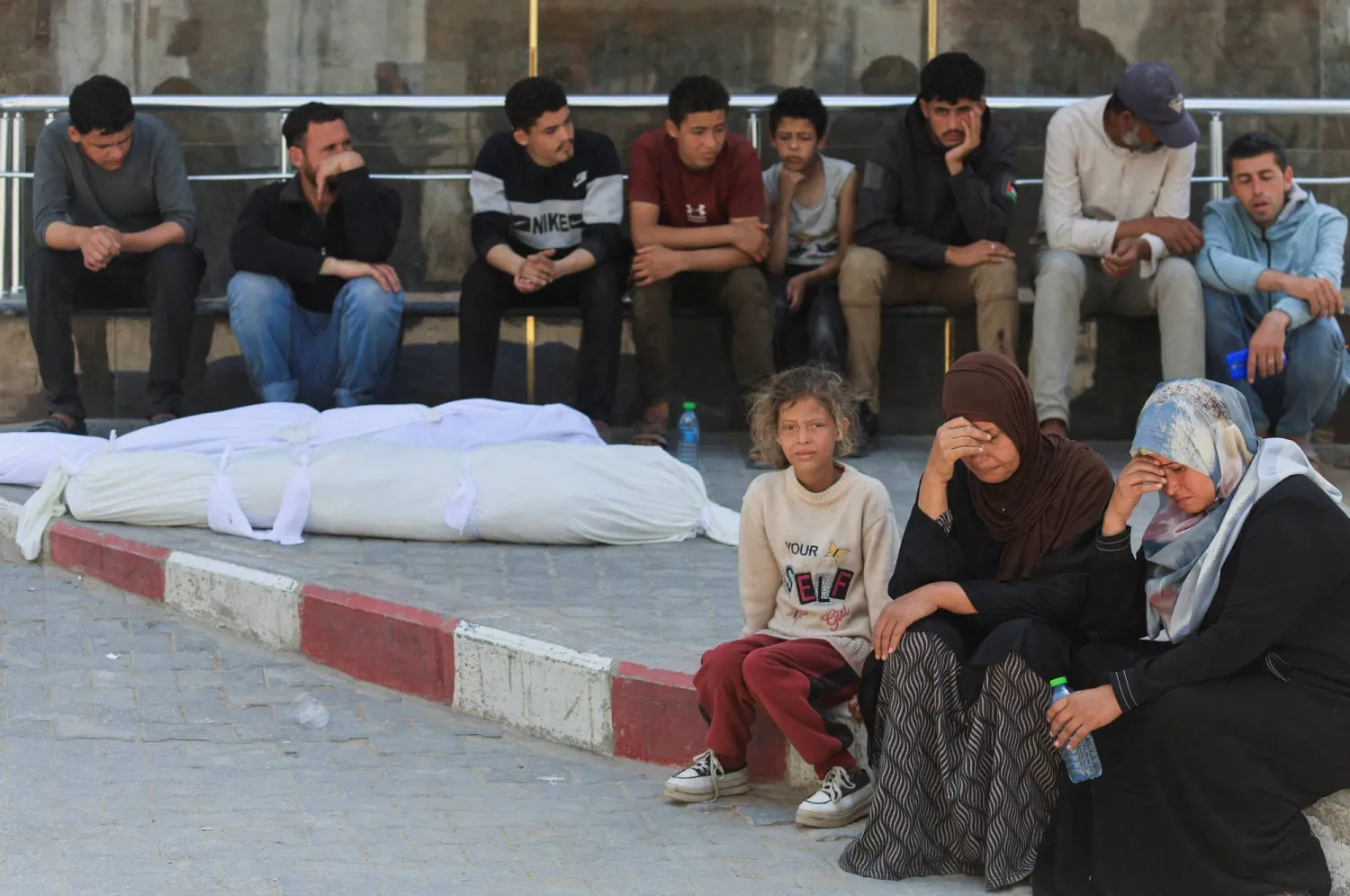
 A Palestinian woman receives donated food at a community kitchen in Deir al-Balah, central Gaza Strip, Thursday, Dec. 25, 2025. (AP)
A Palestinian woman receives donated food at a community kitchen in Deir al-Balah, central Gaza Strip, Thursday, Dec. 25, 2025. (AP)
TT

In a First, Armed Gang in Gaza Forces Displacement of Residents

 A Palestinian woman receives donated food at a community kitchen in Deir al-Balah, central Gaza Strip, Thursday, Dec. 25, 2025. (AP)
A Palestinian woman receives donated food at a community kitchen in Deir al-Balah, central Gaza Strip, Thursday, Dec. 25, 2025. (AP)

In an unprecedented development, an armed gang active in Gaza City forced inhabitants of residential bloc to evacuate their homes under threat of arms.

Field sources told Asharq Al-Awsat that identified the gang as the “Rami Halas Group”. At dawn on Thursday, its members opened fire in the air in the Hayy al-Tuffah neighborhood in eastern Gaza City. The area is located near Israel’s so-called yellow line that separates Hamas- and Israel-held parts of Gaza.

The gang members came back hours later at noon and demanded that the residents evacuate, giving them until sunset to comply and threatening to shoot anyone who doesn’t.

The sources said the gunmen did not directly approach any of the residents for fear of being attacked. They used loudspeakers to demand that they evacuate to areas a few hundred meters away, claiming these were Israeli orders.

Israeli forces are deployed some 150 meters from the area where the residents were located.

The residents, who had only just returned to their homes after the ceasefire, indeed started to evacuate towards western parts of Gaza City.

The sources said over 240 residents were forced to quit what remains of their damaged homes.

They revealed that Israeli forces had on Tuesday and Wednesday night dropped yellow barrels, devoid of explosives, in those regions. They did not ask residents to evacuate.

The sources said the gang made the evacuation order ahead of Israel’s plan to occupy the area, which had been previously declared as safe.

They accused Israeli forces of resorting to such tactics in recent weeks to further expand the yellow line border and occupy more areas in Gaza.


Syria Says Kills Senior ISIS Leader, Arrests Operative Near Damascus

A photo of a Public Security operation in Aleppo against an ISIS cell (File – Facebook)
TT

Syria Says Kills Senior ISIS Leader, Arrests Operative Near Damascus

A photo of a Public Security operation in Aleppo against an ISIS cell (File – Facebook)

Syrian authorities on Thursday said forces killed a senior leader in the ISIS group and arrested another operative in fresh operations near capital Damascus in coordination with the US-led coalition.

Syrian security and intelligence forces, working in coordination with the international coalition, conducted what the interior ministry described as a "precise security operation" in the Damascus countryside, AFP reported.

"The operation resulted in neutralising the terrorist Mohammad Shahada, known as 'Abu Omar Shaddad', who is considered one of the prominent ISIS leaders in Syria," it added.

"This operation comes as confirmation of the effectiveness of joint coordination between the national security agencies and international partners."

Later Thursday, the interior ministry said security forces "in joint coordination with international coalition forces" arrested "the leader of a terrorist cell affiliated with the ISIS organization" elsewhere near Damascus, seizing weapons and ammunition.

Late Wednesday, authorities said they captured Taha al-Zoubi, also known as Abu Omar Tabiya, an ISIS leader in the Damascus region, along with several of his men, also in a joint operation with the US-led coalition.

The interior ministry also said on Thursday that security forces had arrested three members of an ISIS-affiliated cell in Aleppo province.

A December 13 attack killed two US soldiers and an American civilian. Washington blamed the attack on a lone ISIS gunman in Syria's Palmyra.

In retaliation, US forces conducted strikes targeting scores of ISIS targets in Syria.

The strikes killed five members of the militant group, according to the Syrian Observatory for Human Rights.

In November, during a visit by interim President Ahmed al-Sharaa to Washington, Syria officially joined the US-led coalition against ISIS.


Israeli Settler Attack Injures Palestinian Baby, Five Arrested

Israeli settlers attacked farmers and volunteers harvesting olives on a Palestinian farm in Burin, near Nablus, on November 8, 2025. © Observers
TT

Israeli Settler Attack Injures Palestinian Baby, Five Arrested

Israeli settlers attacked farmers and volunteers harvesting olives on a Palestinian farm in Burin, near Nablus, on November 8, 2025. © Observers

Israeli security forces announced on Thursday the arrest of five Israeli settlers over their alleged involvement in an attack on a Palestinian home that injured a baby girl in the occupied West Bank.

The eight-month-old infant suffered "moderate injuries to the face and head" in the late Wednesday attack, according to the official Palestinian news agency Wafa.

It blamed the attack on "a group of armed settlers", accusing them of "throwing stones at homes and property" in the town of Sair, north of Hebron, AFP reported.

A statement from the Israeli police said that five suspects had been arrested for their "alleged involvement in serious, violent incidents in the village of Sair".

Israeli security forces had received reports of "stones being thrown by Israeli civilians toward a Palestinian home", adding a Palestinian girl was injured.

"The preliminary investigation determined the involvement of several suspects who came from a nearby outpost," the statement said, referring to Israeli settlements not officially recognized by Israeli authorities.

All Israeli settlements in the West Bank are considered illegal by the international community.

Some are also illegal under Israeli law, though many of those are later given official recognition.

Almost none of the perpetrators of previous attacks by settlers have been held to account by the Israeli authorities.

A Telegram group linked to the "Hilltop Youth", a movement of hardline settlers who advocate direct action against Palestinians, posted a video showing property damage in Sair.

More than 500,000 Israelis currently live in settlements in the West Bank, occupied since 1967, as do around three million Palestinians.

Violence involving settlers has risen in recent years, according to the United Nations, and October was the worst month since it began recording such incidents in 2006, with 264 attacks that caused casualties or property damage.

The violence in the West Bank, a territory occupied by Israel since 1967, has surged since Hamas' October 7, 2023 attack, which triggered the Gaza war.

Since the start of the war, Israeli troops and settlers have killed more than 1,000 Palestinians in the West Bank, including many militants as well as dozens of civilians, according to an AFP tally based on figures from the Palestinian health ministry.

According to official Israeli figures, at least 44 Israelis, both soldiers and civilians, have been killed in Palestinian attacks or Israeli military operations in the same period.