



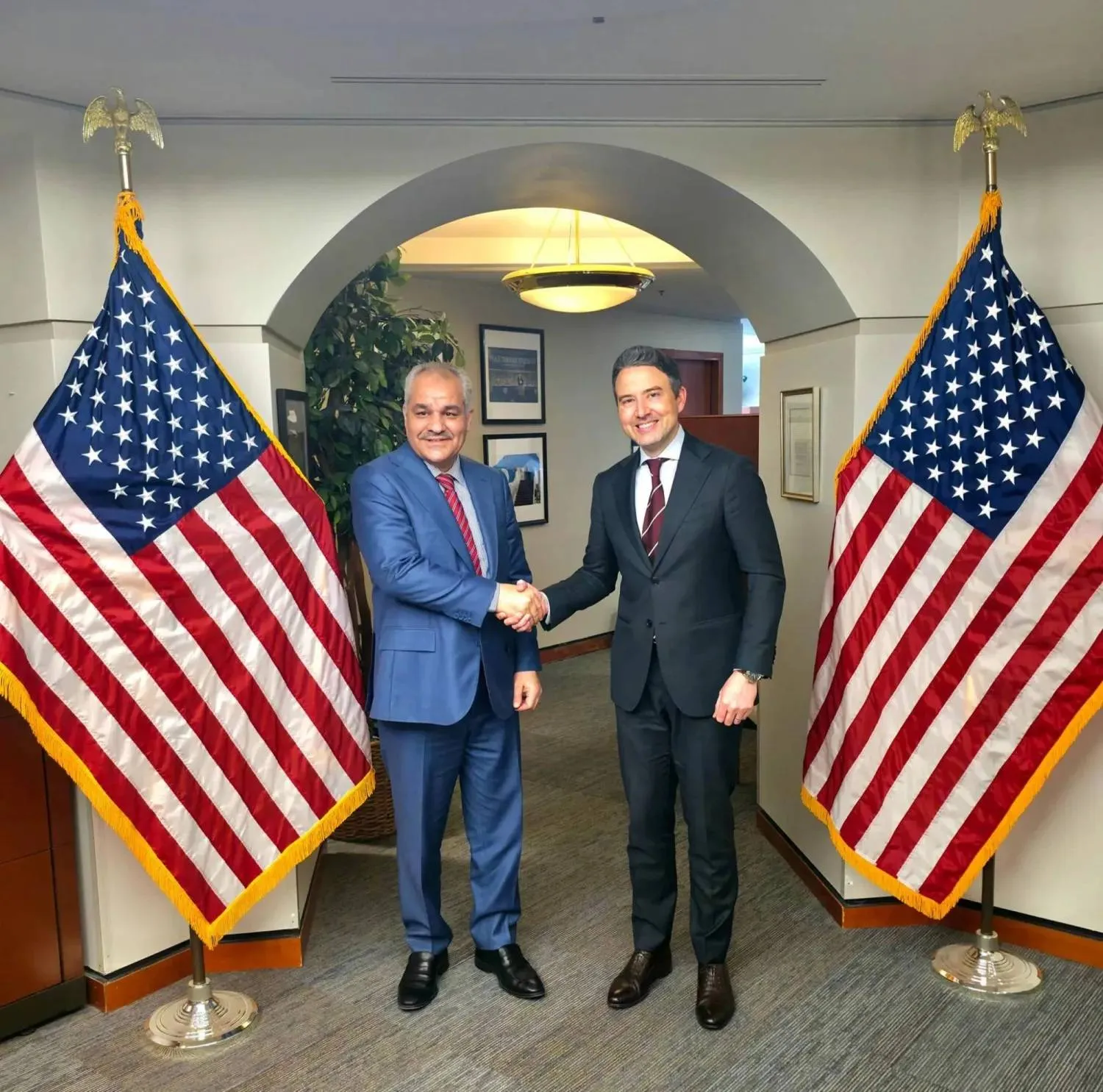

Anti-money laundering measures dominated talks in Washington between governor of the Central Bank of Libya Naji Issa and US officials, as prosecutors pursue corruption cases.
The central bank said Issa outlined efforts to strengthen anti-money laundering and counterterrorism financing systems, expand electronic payments, and introduce unconventional monetary tools in line with international standards, steps it said have boosted confidence among global financial institutions.
Late on Wednesday, the bank said Issa and his delegation met several officials, including Robert B. Thomson, Visa's vice chairman, in talks aimed at expanding electronic payment services and advancing financial inclusion in Libya, while tightening oversight of financial transactions in line with international standards.
Libya ranks among the world’s five most corrupt countries, according to recent estimates by Transparency International. The country fell to 177th out of 182 states in the 2025 Corruption Perceptions Index.
The central bank said Issa also attended a meeting of finance ministers and central bank governors from the Middle East, North Africa and Pakistan group, MENAP, with IMF Managing Director Kristalina Georgieva, on the sidelines of the 2026 Spring Meetings of the IMF and World Bank in Washington.
Discussions focused on slowing global growth, inflationary pressures, and challenges tied to commodity and energy prices.
The bank added that it received an official invitation from the US State Department and held a high-level meeting in Washington with Kyle Liston, a US State Department official. It quoted him as praising the governor and the bank’s board, calling their efforts “a model to be emulated in financial management despite compelling circumstances.”
Separately, Libya’s Anti-Financial Crimes, Money Laundering and Terrorism Financing Agency said it dismantled a local network and arrested five bank employees over embezzlement and manipulation of a customer account.
Investigators said the suspects abused their positions to load international cards with $12,000 and carry out transfers worth 63,000 dinars without the account holder’s knowledge, placing his name on suspicion lists. The official exchange rate is 6.33 dinars to the dollar.
The public prosecutor said electronic tracking and financial analysis linked the case to a wider network that used data from more than 200,000 people in an organized money-laundering scheme. The suspects were referred to the anti-corruption prosecution, and authorities said strict oversight would be enforced to protect the economy.
In a related ruling, the Tripoli Court of Appeal sentenced a former director of international marketing at the National Oil Corporation to 10 years in prison, fined him more than $1.825 billion, and permanently stripped him of his civil rights, after convicting him of serious violations in oil marketing and fuel supply.
The attorney general’s office said the case stems from charges that the official failed to collect payments for crude oil and petroleum products sold between 2010 and 2017, and approved contracts in 2013 to supply gasoline that did not meet Libyan standards.


