US State Department Approves $30 Million in Funding for Gaza Humanitarian Foundationhttps://english.aawsat.com/arab-world/5158749-us-state-department-approves-30-million-funding-gaza-humanitarian-foundation
US State Department Approves $30 Million in Funding for Gaza Humanitarian Foundation
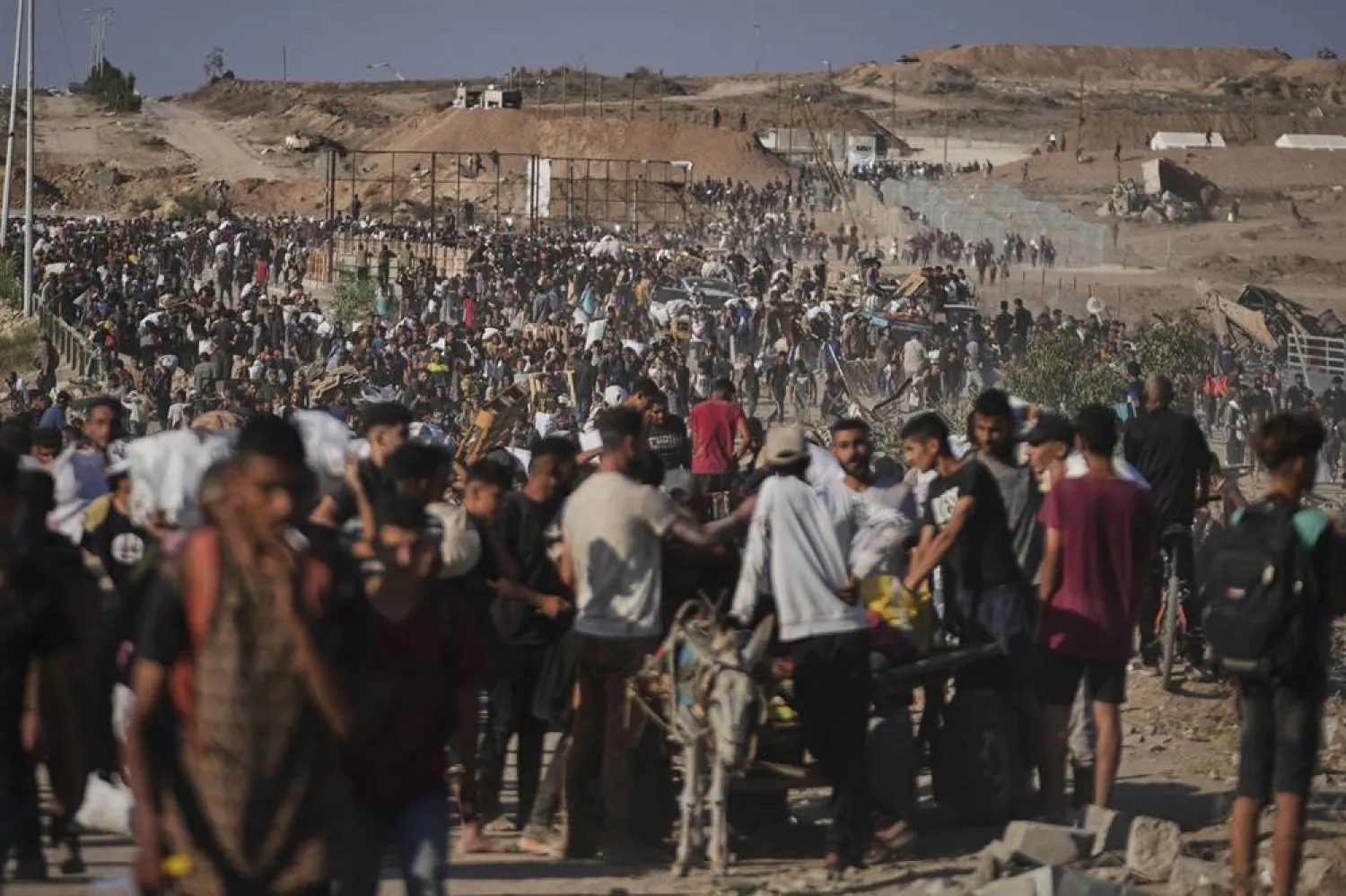
Palestinians carry humanitarian aid packages near the Gaza Humanitarian Foundation distribution center operated by the US-backed organization in Khan Younis, southern Gaza Strip, Thursday, June 26, 2025. (AP)
TT
TT
US State Department Approves $30 Million in Funding for Gaza Humanitarian Foundation
Palestinians carry humanitarian aid packages near the Gaza Humanitarian Foundation distribution center operated by the US-backed organization in Khan Younis, southern Gaza Strip, Thursday, June 26, 2025. (AP)
The US State Department has approved $30 million in funding for the Gaza Humanitarian Foundation, the State Department said on Thursday, calling on other countries to also support the controversial group delivering aid in war-torn Gaza.
"This support is simply the latest iteration of President Trump's and Secretary Rubio's pursuit of peace in the region," State Department deputy spokesperson Tommy Pigott told reporters at a regular news briefing.
Reuters was first to report the move earlier this week.
Washington has long backed the Gaza Humanitarian Foundation diplomatically, but this is the first known US government financial contribution to the organization, which uses private for-profit US military and logistics firms to transport aid into the Palestinian enclave for distribution at so-called secure sites.
Since Israel lifted an 11-week aid blockade on Gaza on May 19, allowing limited UN deliveries to resume, the United Nations says more than 400 Palestinians have been killed seeking aid from both the UN and GHF operations.
Earlier this month, GHF halted aid deliveries for a day as it pressed Israel to boost civilian safety near its distribution sites after dozens of Palestinians seeking aid were killed. It says there have been no incidents at its sites.
The foundation’s executive director, Johnnie Moore, an evangelical preacher who was a White House adviser in the first Trump administration, said in a post on X on Thursday that the group has delivered more than 46 million meals to Gazans since it began its operations in May.
Some US officials opposed giving any US funds to the foundation over concerns about violence near aid distribution sites, the GHF's inexperience and the involvement of the for-profit US logistics and private military firms, four sources told Reuters earlier this week.
The United States could approve additional monthly grants of $30 million for the GHF, two sources said, all of whom spoke on condition of anonymity.
In approving the US funding for the GHF, the sources said the State Department exempted the foundation, which has not publicly disclosed its finances, from an audit usually required for groups receiving USAID grants for the first time.
There is an acute shortage of food and other basic supplies after the nearly two-year military campaign by Israel that has displaced most of Gaza's two million inhabitants.
Israel Tests Nabatieh Defenses, Seeks to Isolate the City in South Lebanonhttps://english.aawsat.com/arab-world/5277854-israel-tests-nabatieh-defenses-seeks-isolate-city-south-lebanon
Israel Tests Nabatieh Defenses, Seeks to Isolate the City in South Lebanon
Smoke rises from Beaufort Castle following strikes, as seen from Marjayoun, southern Lebanon, May 27, 2026. REUTERS/Stringer
The Israeli army made on Wednesday further incursions around the southern Lebanese city of Nabatieh beyond the Israeli-declared "yellow line” while increasing airstrikes up to 20 kilometers from the border and forcing the full evacuation of towns around the city.
The advance followed Israeli threats to expand beyond the yellow line and coincided with what Israel’s Channel 14 described as the widespread, systematic destruction of more than 10,000 buildings in southern Lebanese border villages, about 70% of the structures Israel plans to demolish in the area.
“We are expanding our operations in Lebanon to deepen the scale of the damage we are inflicting on Hezbollah,” Israeli army Chief of Staff Eyal Zamir said on Wednesday.
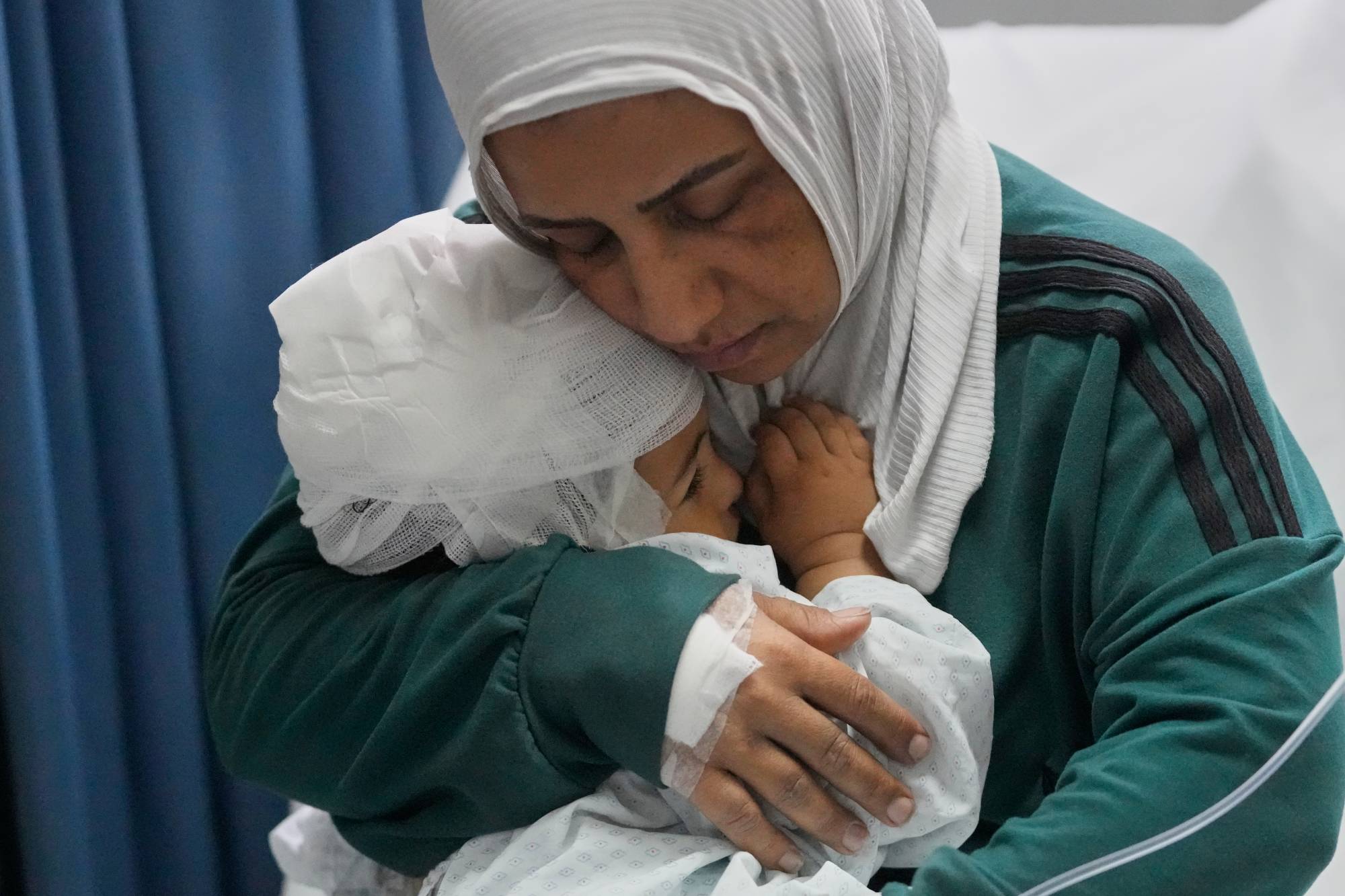
Hayat Al-Aqleh embraces her 18-month-old son Ali at Jabal Amel Hospital in the southern port city of Tyre, Lebanon, Wednesday, May 27, 2026, after he underwent head surgery for injuries sustained in an Israeli airstrike a day earlier in the village of Charnay near Tyre. (AP Photo/Mohammad Zaatari)
New push north of the river
Israeli forces entered eastern Zawtar, a town on the northern bank of the Litani, advancing on its outskirts as they sought to reach the strategic Beaufort Castle east of Nabatieh.
The castle overlooks, from the east, Lebanese towns under Israeli occupation, as well as northern Israeli settlements less than 10 kilometers away. Israel has placed the castle and the towns of Zawtar, Arnoun and Yohmor al-Shaqif within the yellow line, although they lie north of the Litani.
Local sources in southern Lebanon told Asharq Al-Awsat that Israeli forces sent unmanned vehicles deep into an area near Mayfadoun to probe defenses and reconnaissance capabilities.
They said the move pointed to attempts to push toward the hills south of Nabatieh, especially Mayfadoun and Shawkin, to isolate the city, which was placed under a full evacuation warning on Wednesday for a second day in a row.
The sources said airstrikes intensified on Beaufort Castle and nearby Yohmor, Kfar Tebnit and Arnoun, areas overlooking Nabatieh from the east.
The Israeli army gave no details on the fighting.
In a statement sent in response to a question from Agence France Presse and attributed to a military official, the army said it was operating in a targeted manner beyond the forward defense line to eliminate direct threats to the citizens of the State of Israel and to soldiers ... in accordance with directives from the political leadership.
Specific details regarding the locations of soldiers cannot be provided, the official said.
Clashes at point-blank range
In a statement Wednesday, Hezbollah said its fighters "clashed with the enemy forces at point-blank range" with light and medium weapons in the town of Zawtar al-Sharqiyah.
Since dawn on Tuesday, Hezbollah had said it targeted Israeli forces trying to enter the town with rocket-propelled grenades and explosive drones. It later said its fighters fired rockets and drones at Israeli forces on the town’s outskirts and near its entrance by the riverbed.
Al-Manar, Hezbollah’s television channel, said Israeli forces were moving along three axes on the outskirts of Zawtar al-Sharqiyah from the Hamra side. It said clashes were underway at three points, but denied that Israeli forces had advanced toward Mayfadoun or the inner neighborhoods of Zawtar al-Sharqiyah.
The town’s position north of the Litani gives it strategic significance due to its proximity to Nabatieh, southern Lebanon’s largest city. Israel accuses Hezbollah of violating the ceasefire.
Zawtar al-Sharqiyah lies next to the yellow line that the Israeli army drew last month in southern Lebanon. The line runs around 10 kilometers deep inside Lebanese territory and where residents have been warned not to return.
The advance into the town coincided with an Israeli army statement on Tuesday saying it was “operating in a targeted manner beyond the forward defense line to eliminate direct threats to the citizens of the State of Israel and to soldiers.”
Emptying Nabatieh’s surroundings
As it tries to advance, Israel is also working to isolate Nabatieh and its surroundings by expanding the fire-enforced buffer zone to nearly 20 kilometers from the border.
Field sources in southern Lebanon told Asharq Al-Awsat that the line of fire had been cleared to Doueir, where no one can now enter, including ambulances, which need permission from the so-called mechanism - an internationally brokered monitoring committee established to oversee the ceasefire - to access the town.
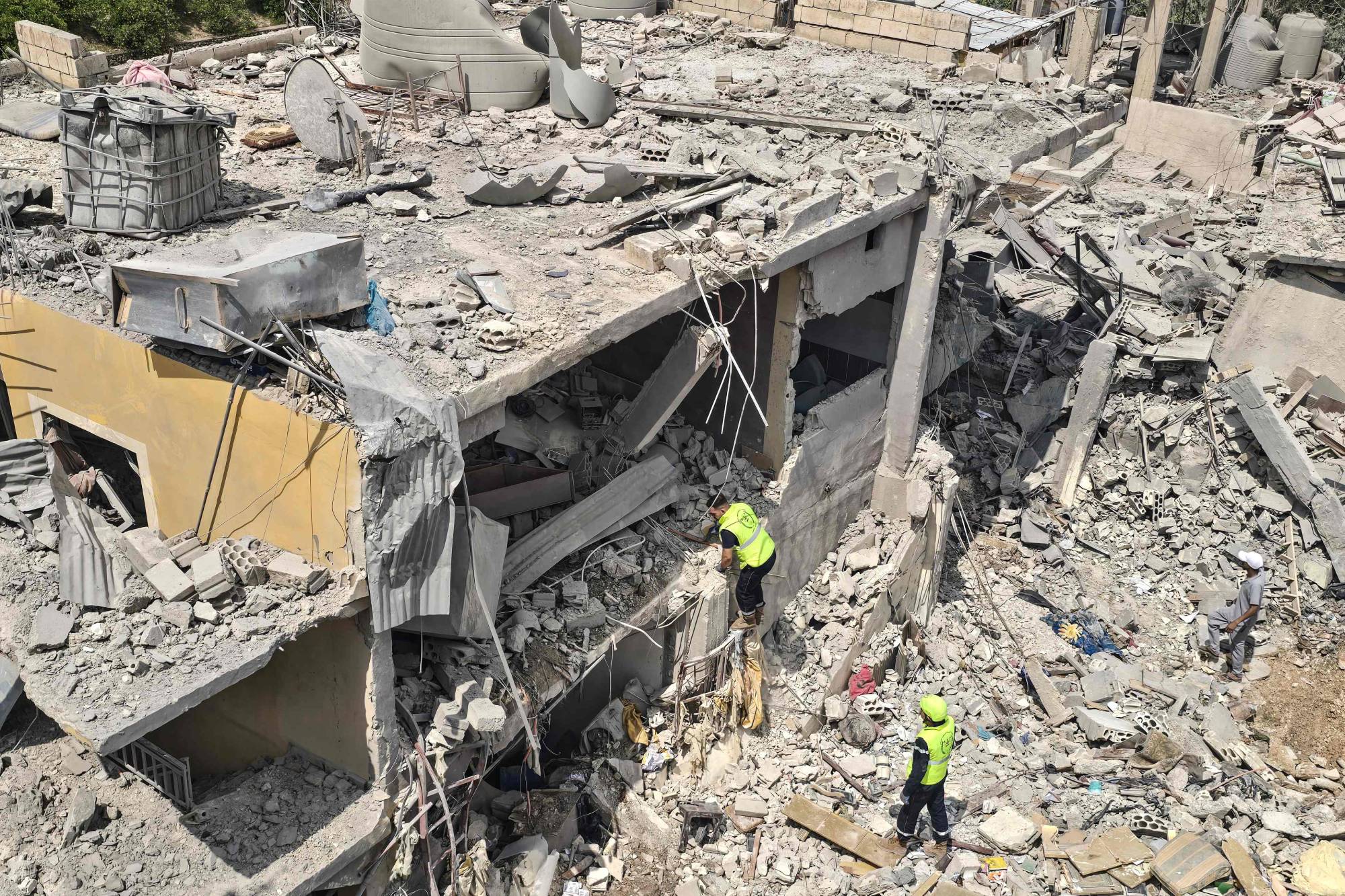
Civil defense members search for victims in the rubble of a residential building hit the previous day by an Israeli strike near the southern town of Burj al-Shamali, on the outskirts of Tyre, on May 27, 2026.(Photo by KAWNAT HAJU / AFP)
The sources said the evacuation sweep covered Doueir, Harouf, Jebchit, Zebdine, Toul, Kfar Jouz, Deir al-Zahrani, Habboush, Kfar Roummane, Mayfadoun and Shawkin. It also included towns north of the river, southwest of Nabatieh, overlooking the Litani’s bank.
The developments came hours after evacuation warnings on Tuesday covered about 50 Lebanese villages and towns, including all towns in the districts of Bint Jbeil, Marjayoun and Tyre, as well as a large part of the Nabatieh district.
The Israeli army carried out about 150 airstrikes on Tuesday, killing 31 people and wounding 40, according to Lebanon’s Health Ministry. The ministry said 14 people were killed in Burj al-Shamali near Tyre.
On Wednesday, the bombing expanded into the Zahrani district, hitting Tafahta, as well as large parts of villages around Nabatieh. Lebanon’s official National News Agency said a strike near Nabih Berri Governmental Hospital caused “major damage to hospital wards.”
Gaza Marks Third Eid Asking: What Joy Remains?https://english.aawsat.com/arab-world/5277847-gaza-marks-third-eid-asking-what-joy-remains
Palestinians wait to receive donated food at a distribution center in Khan Younis, Gaza Strip, Wednesday, May 27, 2026. (AP Photo/Abdel Kareem Hana)
For the third year in a row, Gaza residents marked Eid al-Adha with the same bitter question, “In what state have you returned, Eid?”
Joy was again absent from the Gaza Strip, replaced by fear over the security situation, assassinations, and Israeli escalation, as fighter jets flew heavily overhead and carried out strikes.
That mood shaped the first day of Eid al-Adha on Wednesday. Residents moved cautiously, and family visits were limited by fears of renewed Israeli bombardment, which had intensified on Tuesday, the Day of Arafat, killing more than 15 Palestinians.
The latest developments overshadowed the third consecutive Eid to pass under harsh conditions in Gaza, amid war and continued escalation following the ceasefire that took effect on Oct. 10, 2025.
Remote greetings
Nabil Tareq, 41, a Gaza resident from the Jabalia refugee camp in the north, who is displaced west of Gaza City, settled for calling his sister and cousins to greet them on Eid al-Adha.
He had decided not to travel to the central Gaza Strip because of the security situation and the sudden Israeli strikes Gaza has seen in recent days.
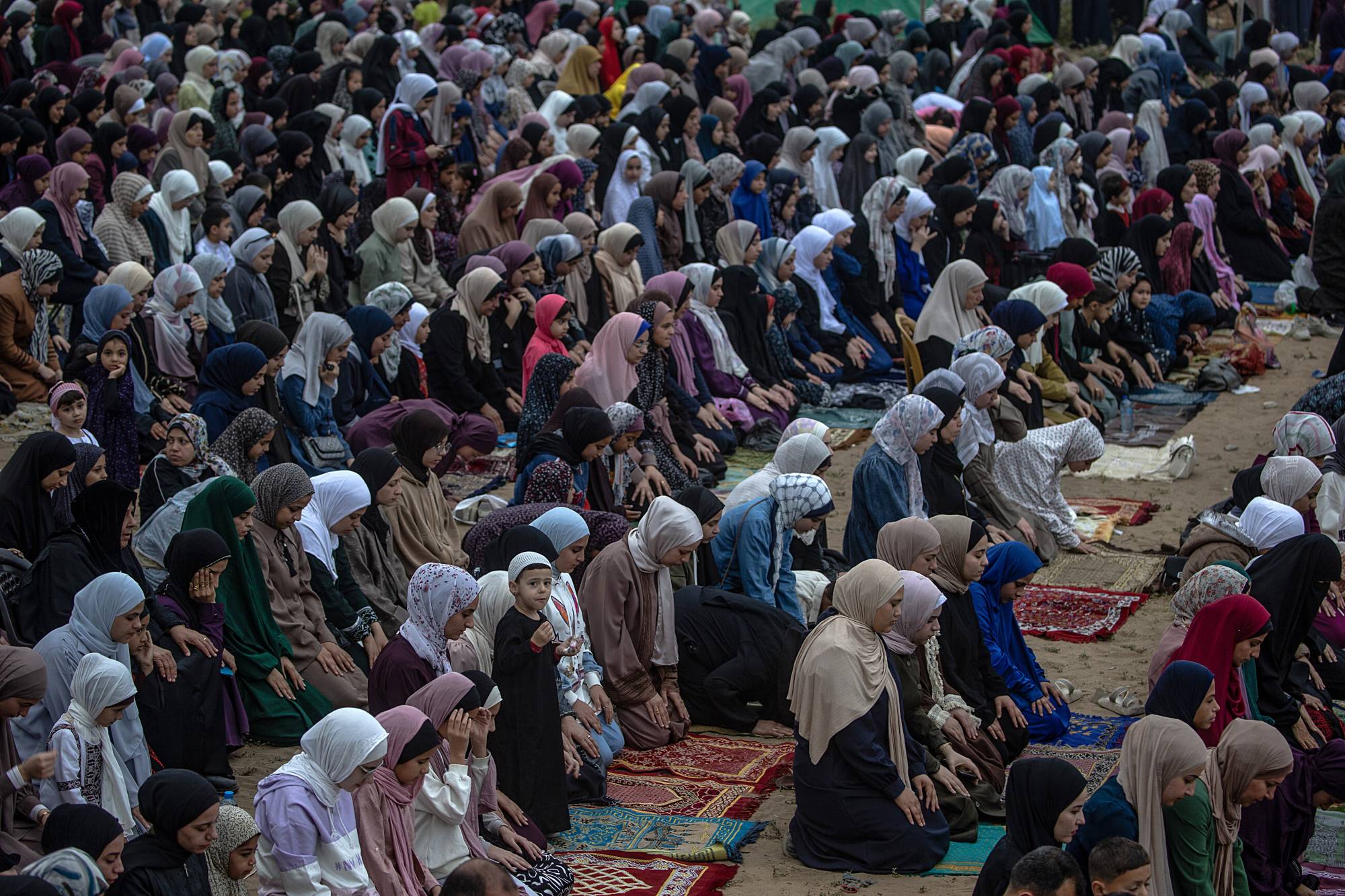
Internally displaced Palestinian women attend Eid al-Adha prayer in Gaza City, 27 May 2026. EPA/MOHAMMED SABER
Tareq told Asharq Al-Awsat that he only visited his brothers and relatives in western Gaza. The visit was brief, he said, so he could return to the tent where he is displaced and remain with his family, fearing for his life and theirs.
He said the security situation and the transport crisis kept him from visiting relatives in more distant areas.
Trying to adapt
Sama Hamdan, 23, from Gaza City and displaced to Nuseirat camp in the central Gaza Strip, traveled to her hometown in a rundown vehicle to see her uncles and greet them for Eid.
She was accompanied by her young brothers, who had been longing to play with their cousins.
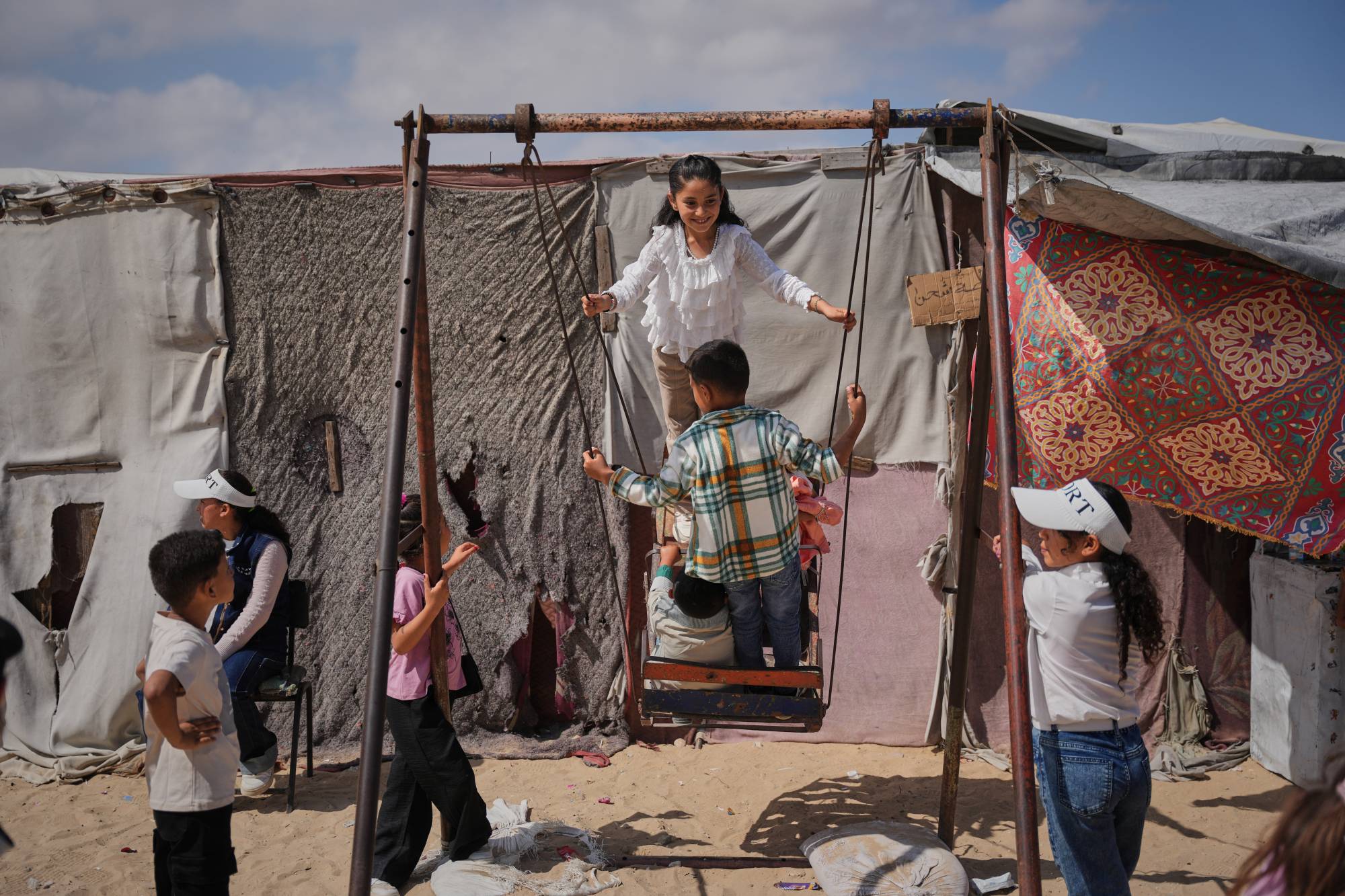
Displaced Palestinian children play on a swing at a tent camp during the Muslim holiday of Eid al-Adha in Khan Younis, southern Gaza Strip, Wednesday, May 27, 2026. (AP Photo/Abdel Kareem Hana)
Hamdan said she made the trip to ease the burden on her uncles, especially the elderly, amid Gaza’s harsh conditions, particularly the shortage of transport and high fares.
“Our lives have changed since the war, and no longer have meaning. All the conditions are discouraging and impose a state of despair on us, but we are trying to adapt to the new reality as much as possible despite the ongoing war by the occupation, which has not stopped bombing and destroying despite claims that there is a truce in Gaza,” Hamdan said.
An ongoing war
In a vehicle carrying several Gazans from the Rimal neighborhood to Sheikh Radwan in northern Gaza City, residents spoke of Israeli bombardment, the targeting of homes and the return of assassinations.
Saed Abu Safiya, 23, who started the conversation in the vehicle where Asharq Al-Awsat’s correspondent was present, said Israel would not halt its raids until Palestinian factions surrendered their weapons.
Salman Abu Khuwayter, a Gaza resident from Jabalia who is displaced in Sheikh Radwan, disagreed. He said the war would not stop even if Hamas and the factions handed over their weapons.
He said Israeli Prime Minister Benjamin Netanyahu and Israel aimed to displace Gaza’s population, pressure the factions and strip them not only of their weapons, but also eliminate all their members or move them out of the enclave.
Funerals on Eid
As family visits remained limited across Gaza, Palestinian families buried relatives killed in a series of strikes on Tuesday.
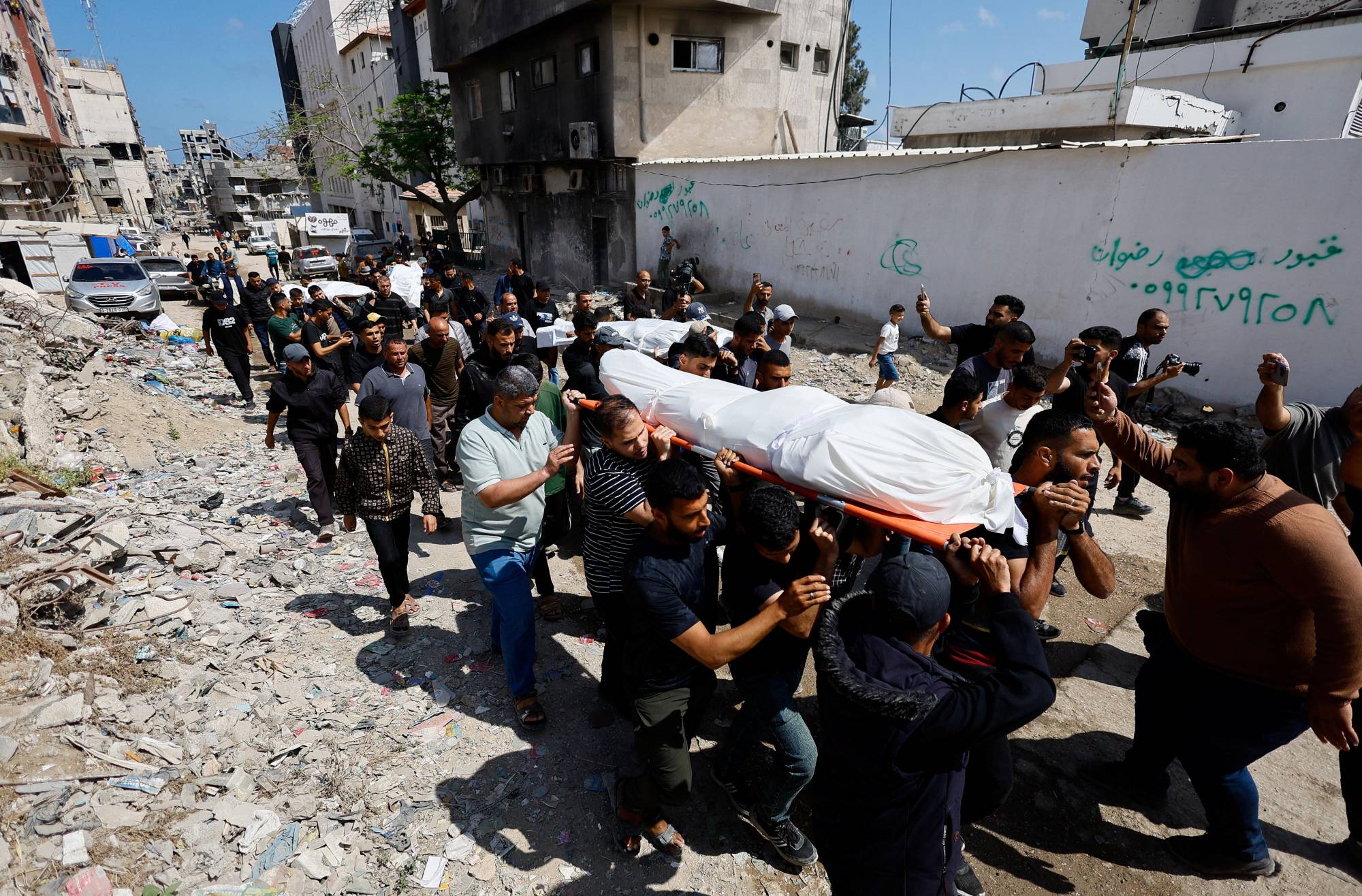
People carry bodies identified by mourners as Hamas' military wing commander Mohammad Odeh, who was killed in an Israeli strike on Tuesday, and his wife and children, during a funeral, in Gaza City, May 27, 2026. REUTERS/Mahmoud Issa
About 15 people were killed, including Mohammad Odeh, a commander in the Qassam Brigades, the armed wing of Hamas, his wife and three members of his family.
Grief marked the funerals held across southern, central and northern Gaza. Crowds joined processions that set out from different hospitals across the enclave.
At Odeh’s funeral, mourners chanted angry slogans demanding revenge for him and for all those killed in the escalating Israeli attacks on Gaza.
The number of Palestinian victims since the ceasefire has risen to more than 910.
The first day of Eid al-Adha was not quiet. Drones, warplanes, and helicopters kept flying over different parts of the enclave.
Explosions were heard in Khan Younis in southern Gaza and were later found to have been caused by mock raids off the city’s coast.
Shortly before Wednesday afternoon, a drone struck three Palestinians, wounding them. One injury was described as serious.
UN Raises Alarm over Israel's Killings of Gazans Near Armistice Linehttps://english.aawsat.com/arab-world/5277825-un-raises-alarm-over-israels-killings-gazans-near-armistice-line
People carry bodies identified by mourners as Hamas' military wing commander Mohammad Odeh, who was killed in an Israeli strike on Tuesday, and his wife and children, during a funeral, in Gaza City, May 27, 2026. REUTERS/Mahmoud Issa
UN Raises Alarm over Israel's Killings of Gazans Near Armistice Line
People carry bodies identified by mourners as Hamas' military wing commander Mohammad Odeh, who was killed in an Israeli strike on Tuesday, and his wife and children, during a funeral, in Gaza City, May 27, 2026. REUTERS/Mahmoud Issa
About a third of Palestinians killed by Israel since an October truce were in areas near the military's armistice line with Hamas, raising concerns that troops may be shooting at civilians merely for approaching the area, the UN human rights office said.
The office said such actions would constitute unlawful killings and thus war crimes. Israel's military, which says fire by its troops near the armistice line aims to thwart militant threats, did not immediately provide comment on the allegations.
Israel has demarcated its armistice boundary with Hamas since the truce with a "yellow line" marked on the ground with spaced out concrete blocks. Israeli troops remain deployed to its east, with Hamas in control in a coastal strip of land. But the military has frequently shifted those blocks deeper into Hamas-controlled territory, and Israeli maps show a widened restricted zone of military control now covers nearly two-thirds of Gaza. Israel's expanding zone of control has stirred fears among displaced Palestinians living in tent encampments and bombed out homes near the yellow line that they may be deemed military targets, as the population is squeezed into an even smaller area.
UN SAYS KILLINGS MAY BE UNLAWFUL
The UN data, shared exclusively with Reuters, includes 453 verified killings since the ceasefire through to February 5. Of those, 152 Palestinians - comprising 102 men, 15 women, 24 boys and 11 girls - were near the boundary, it said. "The available information raises serious concerns that the Israeli army is shooting at and killing presumed civilians simply on the basis of their proximity to the so-called yellow line, which would amount to unlawful killings and thus war crimes," said Ajith Sunghay, head of the UN Human Rights Office in the occupied Palestinian territory, calling the pattern alarming.
"Civilians do not appear to have posed any risk to the life of the Israeli military, including some cases in which they appear to have been shot while carrying out daily activities or having approached or crossed Israel's so-called yellow line," he said.
The boundary location was often not clear to Palestinians, he added. "Nobody clearly knows exactly where it starts, where it ends, and how it moves, and when it moves." Israeli officials describe the territory they've seized in Gaza, Syria and Lebanon as "buffer zones" that can stave off potential militant attacks following the October 7, 2023 Hamas-led assault that set off the Gaza war. The ceasefire brokered by US President Donald Trump has failed to halt Israeli attacks in Gaza, and Israel has continued to target Hamas leaders, killing two in the past two weeks. Overall, some 900 Palestinians have been killed in Israeli strikes since the truce, Gaza health authorities say, without giving a breakdown by location.
لم تشترك بعد
انشئ حساباً خاصاً بك لتحصل على أخبار مخصصة لك ولتتمتع بخاصية حفظ المقالات وتتلقى نشراتنا البريدية المتنوعة