
Lebanese Parties Warn Against Hezbollah Keeping Light Weapons

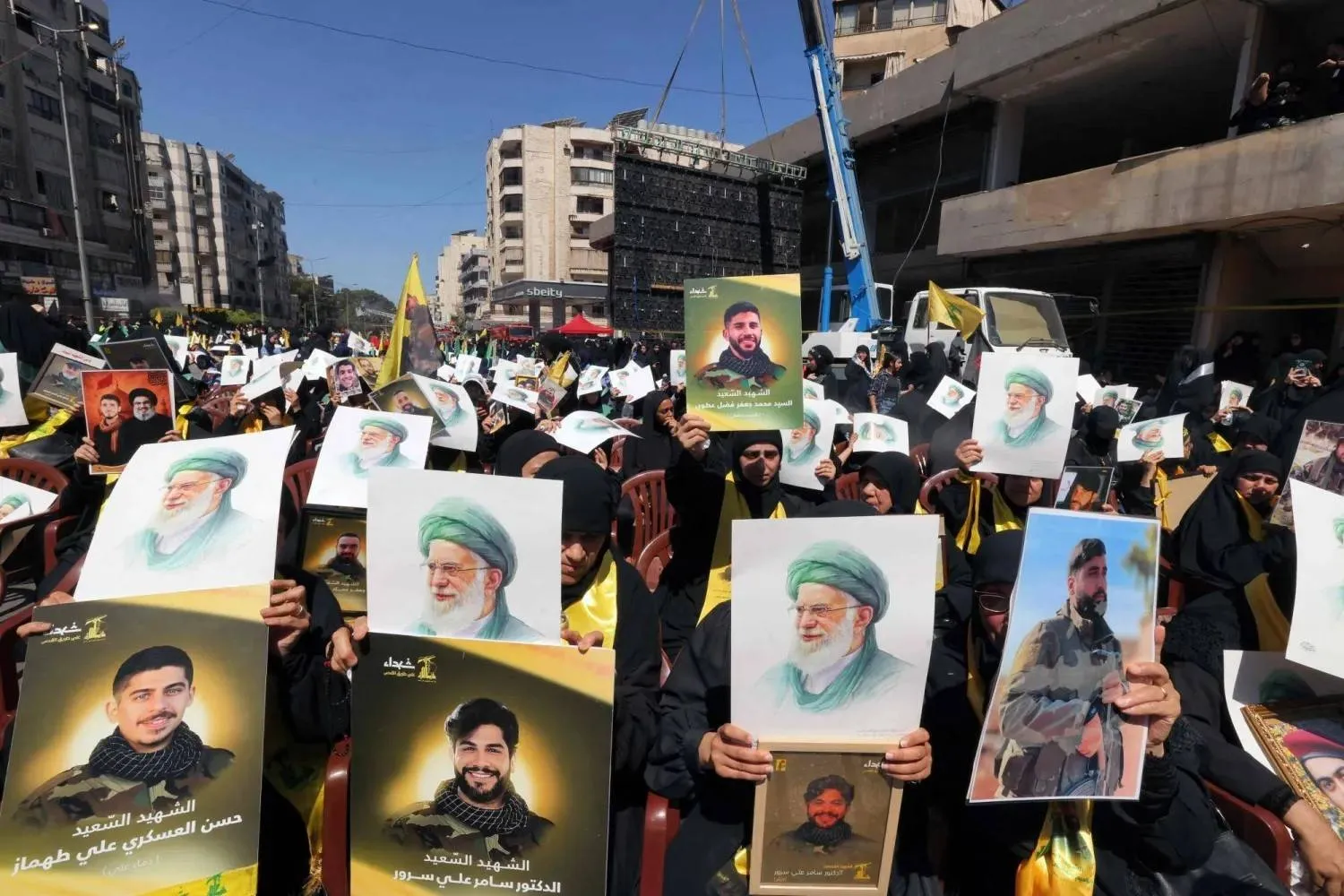
Lebanese Shiite mourners gathered on Monday in Beirut’s southern suburbs to mark Ashura in a ceremony organized by Hezbollah (AFP)
TT

Lebanese Parties Warn Against Hezbollah Keeping Light Weapons

Lebanese Shiite mourners gathered on Monday in Beirut’s southern suburbs to mark Ashura in a ceremony organized by Hezbollah (AFP)

A recent proposal circulating in Lebanon that would allow Hezbollah to retain its light weapons while surrendering heavy and medium arms has triggered widespread political backlash, with critics warning it poses a grave threat to state sovereignty and public safety.

The suggestion, floated amid long-running debate over the group’s arsenal, argues that other political parties and armed groups also possess light weapons for various reasons. But key political factions have rejected the idea outright, citing Lebanon’s bloody past and the potential for renewed violence.

Opponents of the proposal have pointed to the events of May 7, 2008, when Hezbollah fighters overran parts of Beirut and Mount Lebanon in a show of military force, underscoring the dangers of allowing any non-state group to keep arms.

“Classifying weapons as heavy, medium or light is useless,” said Kataeb Party leader Sami Gemayel in a post on X. “If heavy arms threaten Lebanon’s regional security, light weapons are even more dangerous to the foundations of the state.”

Gemayel reiterated that only the Lebanese army and legitimate security forces should bear arms, calling for the country to be entirely free of weapons held by non-state actors.

MP Ghada Ayoub, of the Lebanese Forces-led "Strong Republic" bloc, echoed that view, insisting the state must assert full sovereignty over all Lebanese territory and outlaw any form of armed presence outside the official security apparatus.

“There is only one armed group operating outside the state, and that is Hezbollah,” Ayoub told Asharq al-Awsat. “It must become a purely political party and clearly, unequivocally declare an end to its military activity.”

Ayoub also criticized recent remarks by Hezbollah Deputy Secretary-General Sheikh Naim Qassem, who vowed the group’s “resistance” would continue “without asking anyone’s permission.”

“The Lebanese state is responsible for enforcing a monopoly on the use of arms,” she said. “It must stop playing the role of a mediator or hiding behind the fear of war and internal strife. Time is not on Lebanon’s side.”

Ahmad Al-Kheir, a lawmaker with the “National Moderation” bloc, dismissed the proposal as “stillborn,” warning that light weapons have already been used to intimidate citizens and skew political dynamics.

“We saw yesterday how light arms were paraded through Beirut’s streets in a blatant attempt at provocation and coercion,” he said. “This is the real danger - using these weapons as leverage in political life, as we saw in the May 7 events and the occupation of downtown Beirut.”

“No one in Lebanon will accept this,” Al-Kheir added.

Additionally, critics warn that allowing any non-state entity to retain weapons threatens state authority and risks further destabilizing the country.

Al-Kheir urged Hezbollah and any other party in possession of light weapons to hand them over to the state, citing the recent example set by former Progressive Socialist Party (PSP) leader Walid Jumblatt.

“Jumblatt announced that his party had surrendered its weapons weeks ago. This is the model to follow,” he told Asharq al-Awsat.

MP Waddah Al-Sadek, of the Change Coalition, said he had no objection to a phased disarmament process that begins with heavy and medium weapons, followed by light arms. He dismissed fears of civil war, saying only one side is armed.

“Armed conflict requires two sides. The army will not engage in internal fighting,” he said. “This talk of civil war is just fear-mongering unless Hezbollah resorts again to something like the May 7 scenario to avoid disarming.”

Al-Sadek stressed that Lebanon’s response to the US proposal - reportedly outlining phased disarmament - will be critical. “Does anyone really have an alternative to engaging with this proposal?” he asked.

Deputy head of the Free Patriotic Movement, Naji Hayek, said all weapons must be handed over, rejecting the idea that civilians or political groups should be allowed to keep light arms for self-defense.

“This theory no longer holds,” Hayek told Asharq al-Awsat, adding that training camps used to militarize society should be shut down. “Light and medium weapons are not only with Hezbollah - they exist with other parties that have military structures, and these too must be dismantled.”

Political analyst Qassem Qassir, who is close to Hezbollah’s thinking, said there is no internal consensus, nor any agreement with Hezbollah, to give up its heavy and medium arms while retaining light weapons.

“The party insists the issue is still the Israeli occupation and ongoing aggression,” he said. “For Hezbollah, no discussion on disarmament is possible until those threats end.”

Qassir warned that if a political solution to the weapons issue is not reached, “we will inevitably face military risks and internal conflict.”

Jumblatt announced in late June that his party had handed over its remaining weapons, including light and medium arms that were gradually accumulated after the May 7 clashes in 2008 during a period of heightened tension with Hezbollah.

He said the weapons had been centrally stored and fully turned over to the Lebanese state.


Israeli Settler Kills 16-Year-Old Palestinian in West Bank, Mayor Says

Friends and family gather around the body of Ammar Yasser Sabbah, 16, ahead of his funeral at a morgue in Bethlehem on December 16, 2025, after he was killed by Israeli forces in the town of Tuqu’, east of Bethlehem during a military raid the day before. (AFP)
TT

Israeli Settler Kills 16-Year-Old Palestinian in West Bank, Mayor Says

Friends and family gather around the body of Ammar Yasser Sabbah, 16, ahead of his funeral at a morgue in Bethlehem on December 16, 2025, after he was killed by Israeli forces in the town of Tuqu’, east of Bethlehem during a military raid the day before. (AFP)

An Israeli settler shot dead a 16-year-old Palestinian in Tuqu' on Tuesday after the funeral of another teenager, the town's mayor said.

Violence has escalated in the West Bank since the beginning of the war in Gaza in October 2023. Attacks by Israeli settlers against Palestinians in the West Bank have increased sharply, with the UN reporting the highest number of attacks on record in October.

The Israeli military did not immediately respond to a request for comment on Muheeb Jibril's death on Tuesday.

"Today, after the funeral of 16-year-old Ammar Sabah, who was killed yesterday by the Israeli army in the town center, a number of youths were gathered by the main street when a settler shot 16-year-old Muheeb Jibril in the head," Tuqu' Mayor Mohammed al-Badan told Reuters by telephone.

Israeli forces killed Sabah on Monday during a military raid on the town, the Palestinian health ministry said. The military said the incident was under review. It said rocks were thrown at soldiers who used riot dispersal means and later responded with fire.

The West Bank is home to 2.7 million Palestinians who have limited self-rule under Israeli military occupation. Hundreds of thousands of Israelis have settled there.

Most world powers deem Israel's settlements, on land it captured in a 1967 war, illegal, and numerous UN Security Council resolutions have called on Israel to halt all settlement activity.

Israel denies the illegality of the settlements, citing biblical and historical connections to the land.


Family of Bondi Hero in Syria Says His Home Country Is Proud of Him

 Uncle and cousin of Ahmed al-Ahmed, both named Mohammed al-Ahmed, look at the footage of Ahmed al-Ahmed, the bystander who disarmed a gunman during a shooting at a Hanukkah event at Sydney's Bondi Beach, in the town of Nayrab in the northwestern province of Idlib, Syria, December 16, 2025. (Reuters)
Uncle and cousin of Ahmed al-Ahmed, both named Mohammed al-Ahmed, look at the footage of Ahmed al-Ahmed, the bystander who disarmed a gunman during a shooting at a Hanukkah event at Sydney's Bondi Beach, in the town of Nayrab in the northwestern province of Idlib, Syria, December 16, 2025. (Reuters)
TT

Family of Bondi Hero in Syria Says His Home Country Is Proud of Him

 Uncle and cousin of Ahmed al-Ahmed, both named Mohammed al-Ahmed, look at the footage of Ahmed al-Ahmed, the bystander who disarmed a gunman during a shooting at a Hanukkah event at Sydney's Bondi Beach, in the town of Nayrab in the northwestern province of Idlib, Syria, December 16, 2025. (Reuters)
Uncle and cousin of Ahmed al-Ahmed, both named Mohammed al-Ahmed, look at the footage of Ahmed al-Ahmed, the bystander who disarmed a gunman during a shooting at a Hanukkah event at Sydney's Bondi Beach, in the town of Nayrab in the northwestern province of Idlib, Syria, December 16, 2025. (Reuters)

As Australia's worst mass shooting in nearly 30 years unfolded, a Sydney shop owner was captured on camera charging at one of the gunmen and disarming him. Halfway around the world in Syria, a group of men watching the footage recognized a familiar face.

Ahmed al-Ahmed, 43, left his hometown in Syria's northwest province of Idlib nearly 20 years ago to seek work in Australia. On Sunday, he was wounded after wrestling a rifle away from a man attacking a Jewish holiday event at Sydney's Bondi Beach, in which 15 people were killed.

SYRIA IS 'PROUD OF HIM'

His uncle, Mohammed al-Ahmed, recognized him from footage circulating online.

"We learned through social media. I called his father and he told me that it was Ahmed. Ahmed is a hero, we're proud of him. Syria in general is proud of him," the uncle told Reuters.

The family hails from the town of Nayrab, which was bombed heavily during Syria's nearly 14-year war, which ended when longtime leader Bashar al-Assad was ousted in an opposition offensive launched from Idlib last year.

Ahmed said his nephew left Syria in 2006 after completing a degree at Aleppo University. He hasn't been back since.

"Since he was young, he was gallant and a hero," his uncle said, describing him as a happy and passionate person.

"He acted impulsively without thinking who the people were that were being killed - without knowing their religion, if they were Muslim or Christian or Jewish. That's what made him jump up and carry out this heroic act."

'PEACEMAKERS, NOT WARMONGERERS'

Ahmed, who now holds Australian citizenship and has two daughters, remains in a Sydney hospital with gunshot wounds. He has been hailed as a hero around the world, including by US President Donald Trump.

A GoFundMe campaign set up for him has raised more than A$2.2 million ($1.5 million).

Back at home, the Ahmed family home remains in ruins. Piles of smashed cinderblocks ring the concrete carcass of the two-storey house, whose walls are punctured by shelling.

"This is Ahmed's father's home. It got destroyed during the war. Bombing, bombing from planes, missiles - every type of weapon," Ahmed's cousin, who is also named Mohammad al-Ahmed, told Reuters.

He said his cousin "was the reason that many innocent people who did nothing wrong were saved."

"He will prove to the world that Muslims are peacemakers, not warmongers," said Ahmed.


Barrack Presses Netanyahu to Accept a Turkish Role in Gaza

Photo of the meeting between the US Special Envoy to Syria, Tom Barrack, and Israeli Prime Minister Benjamin Netanyahu on Monday (Israeli Government). 
TT

Barrack Presses Netanyahu to Accept a Turkish Role in Gaza

Photo of the meeting between the US Special Envoy to Syria, Tom Barrack, and Israeli Prime Minister Benjamin Netanyahu on Monday (Israeli Government). 

Hebrew-language media reported that Israeli Prime Minister Benjamin Netanyahu met on Monday in Jerusalem with US envoy Tom Barrack, amid what were described as unusually blunt private messages from the administration of President Donald Trump ahead of a planned US–Israel summit later this month in Florida.

According to the reports, the talks focused on three files: Gaza, Syria and Netanyahu’s expected meeting with Trump.

On Gaza, Israeli daily Yedioth Ahronoth said Barrack sought to allay Netanyahu’s concerns about a Turkish role in any international force deployed to the enclave during a prospective second phase of a fragile ceasefire that began in October. Barrack, the paper reported, argued that Türkiye has the greatest leverage over Hamas and is best placed to persuade the group to disarm.

The newspaper said Barrack reminded Netanyahu that Ankara had endorsed the Trump administration’s ceasefire framework for Gaza and had pledged, on Hamas’s behalf, to provisions related to weapons handover. He reportedly said that Turkish participation would also encourage other hesitant countries to join an international force.

According to Yedioth Ahronoth, Barrack warned that excluding Türkiye would cause those states to step back, adding that Trump would not allow the initiative to fail. Netanyahu’s public statements questioning whether Hamas would ever relinquish its weapons — and his assertion that only Israel could enforce that outcome — were described by Barrack as “unacceptable” and as jeopardizing the plan.

Israel’s Channel 12 also reported that the White House delivered a “private and sharp” message to Netanyahu, asserting that the killing of a senior Hamas military figure, Raed Saad, constituted a breach of the ceasefire brokered with Trump’s mediation.

The channel cited growing tension between the Trump administration and Netanyahu’s government over moving to the deal’s second phase and over Israel’s broader regional policies.

Two US officials were quoted as saying that Secretary of State Marco Rubio, White House envoy Steve Witkoff, and Jared Kushner, the president’s son-in-law, were “deeply frustrated” with Netanyahu’s conduct.

One senior US official was quoted as telling Israeli media that the message to Netanyahu was explicit: if he chose to damage his own credibility, that was his decision, “but we will not allow you to damage President Trump’s reputation after he mediated the Gaza agreement.”

US officials were also cited as expressing rising concern over settler violence against Palestinians in the West Bank and what they termed Israeli “provocations” that undermine Washington’s efforts to expand the Abraham Accords. The United States, one official said, was not asking Israel to compromise its security, but to avoid steps perceived in the Arab world as inflammatory.

On Syria, Israeli assessments quoted in the press said Barrack outlined US “red lines,” stressing Trump’s desire to see stability there and warning that frequent Israeli operations could risk destabilizing the country. Reports added that Washington favors reaching a security understanding and wants to avoid actions it views as undermining the Syrian leadership.

Regarding Lebanon, Trump was said to support continued pressure on Hezbollah through limited operations, while opposing a broader escalation.

Despite recent criticism by Netanyahu of Barrack — including remarks questioning his impartiality — the envoy’s visit went ahead. Columnist Nahum Barnea wrote in Yedioth Ahronoth that US officials increasingly believe Netanyahu is not serious about advancing Trump’s peace plan and is intent on prolonging the war, language he said has sparked intense anger inside the White House.

Israeli analysts suggested Netanyahu is unlikely to reject all US requests outright, instead seeking partial accommodation to ensure a successful meeting with Trump on December 29. Yet, in a show of independence, Israeli forces reportedly carried out an airstrike in Syria shortly before Barrack arrived.

Netanyahu also announced a trilateral summit with Greece and Cyprus, a move widely interpreted in Israel as a political signal directed at Türkiye.

At the close of the meeting, Barrack was quoted as saying the talks were a “constructive dialogue aimed at achieving regional peace and stability.”