



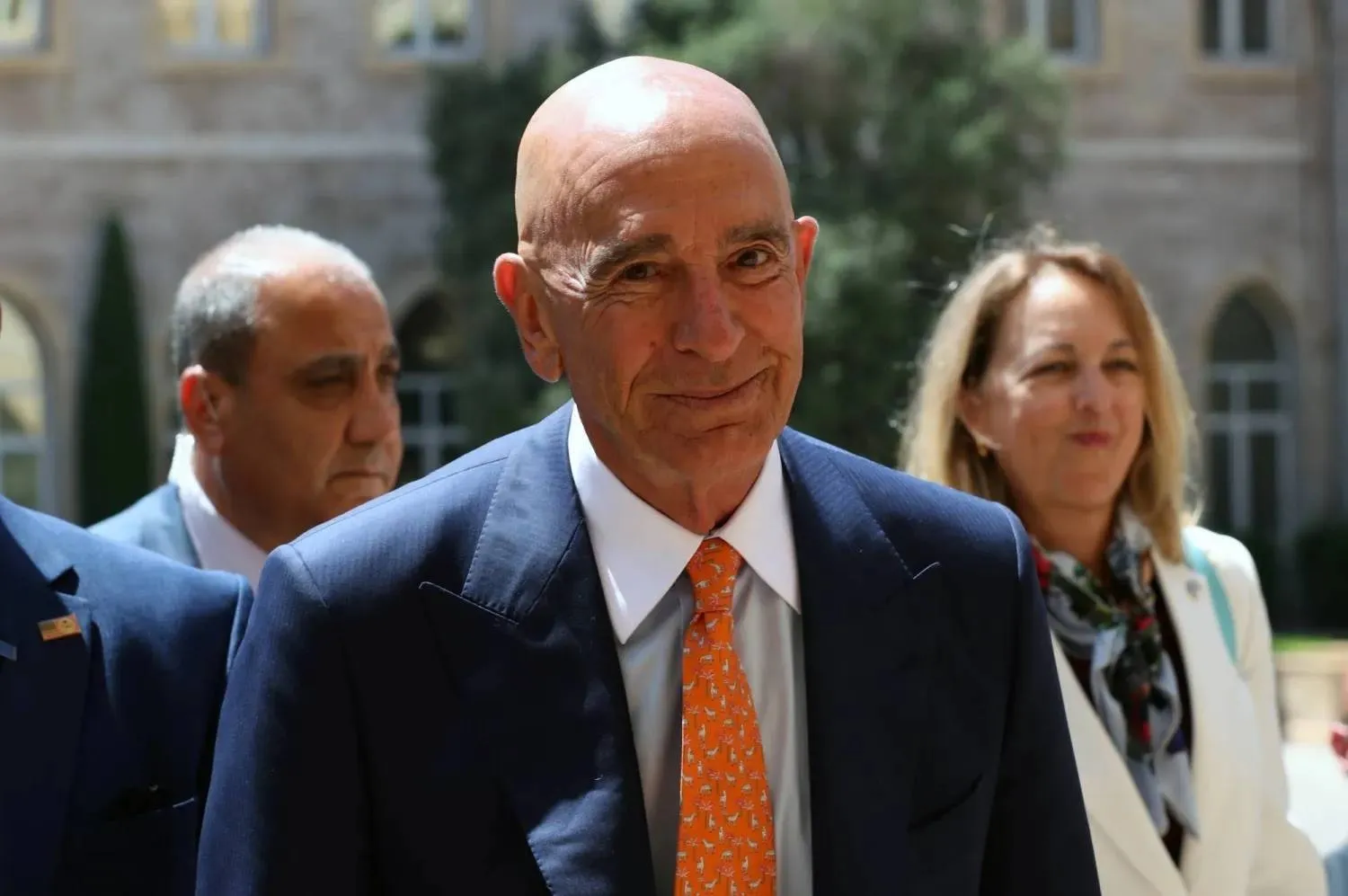

Tensions are surfacing between Hezbollah and the Lebanese state over a US-backed proposal that calls for exclusive control of weapons by Lebanon’s official security institutions. While the government is reportedly open to constructive dialogue with Washington’s envoy, Thomas Barrack, Hezbollah has set new preconditions that effectively stall any immediate progress.
In a speech Friday evening, Hezbollah Deputy Secretary-General Sheikh Naim Qassem framed the US initiative as an “existential threat,” declaring that the group would not engage in discussions on national defense until such a threat is “removed.” Qassem cited three dangers facing Lebanon: Israel along the southern border, extremist factions in the east, and what he called American efforts to “control” Lebanon politically and militarily.
His remarks come just days before Barrack is expected to return to Beirut for a third visit. US officials are awaiting a formal response to a proposal delivered last week, which urges Lebanon to adopt a clear timetable, ending by December, for implementing exclusive state control of all armed forces.
Government sources say a committee representing President Joseph Aoun, Speaker Nabih Berri, and Prime Minister Nawaf Salam has made significant progress in drafting Lebanon’s reply. That response is expected to reflect a more flexible stance than Hezbollah’s, possibly committing to a phased process to bring all arms under state control, without directly confronting the group.
While Hezbollah has previously hinted at a willingness to hand over its heavy weapons - such as precision missiles and drones - it now insists that Israel must first meet a series of demands. These include withdrawal from five contested points in southern Lebanon, the release of Lebanese detainees, an end to airspace violations, and the start of reconstruction efforts in war-hit areas.
Meanwhile, opposition figures, particularly from the Lebanese Forces party, say Hezbollah is using the rhetoric of “resistance” to maintain its military grip. A party source told Asharq Al-Awsat that Hezbollah’s real aim is to keep its weapons while offering limited gestures, such as withdrawing from areas south of the Litani River - an approach rejected by both the Lebanese government and Washington.
The source warned that failure to engage with the current diplomatic opening could expose Lebanon to renewed violence, noting that Hezbollah has already missed previous opportunities for de-escalation. “The risk isn’t just political, it’s national,” the source said.


