



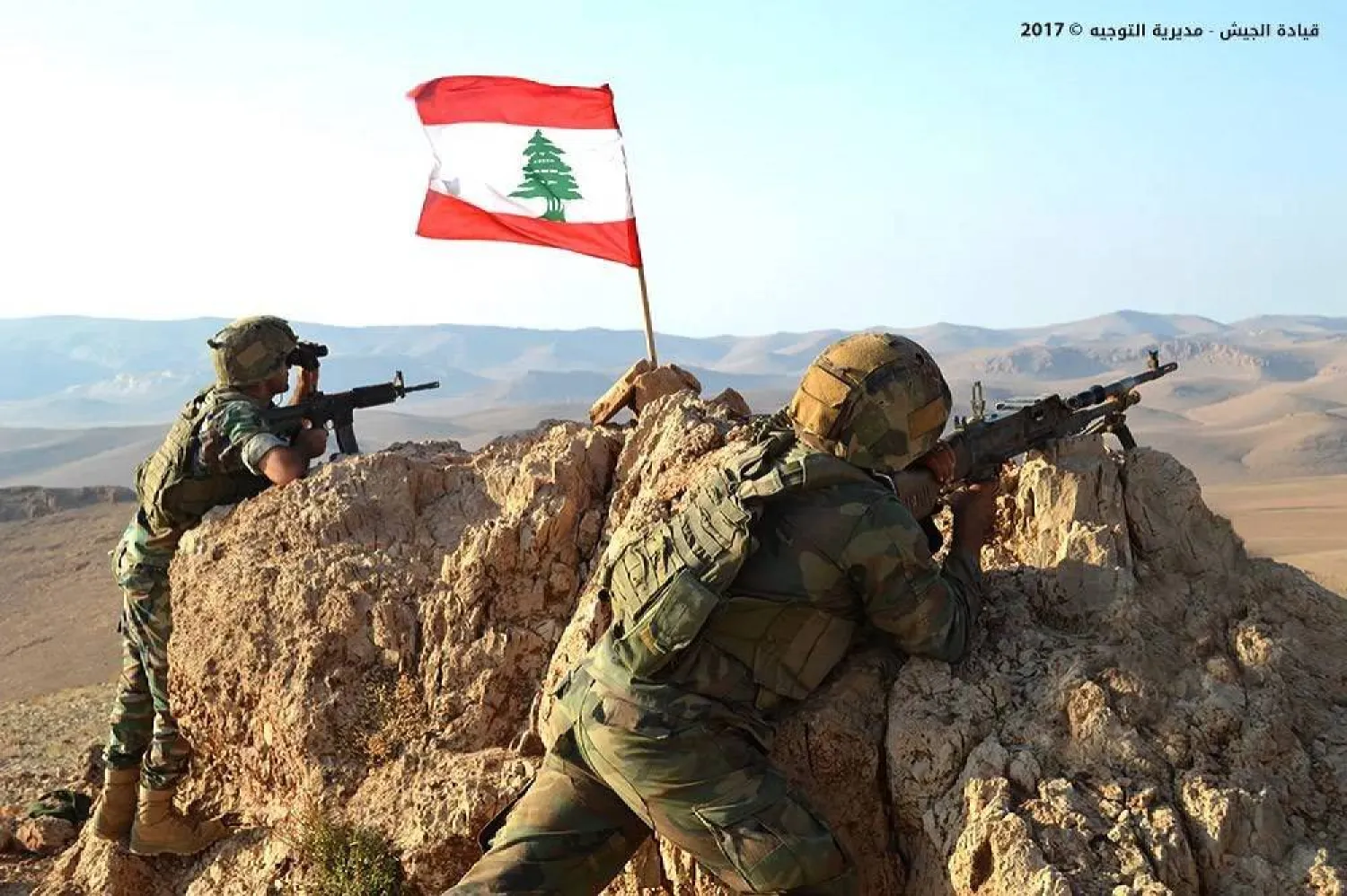

Tensions have been high along the Lebanese-Syrian border amid reports of forces being amassed in both countries.
Stoking the tensions were Lebanese media circulating a document from the Army Command that spoke of extremists gathering along the Syrian side of the border.
Dated August 10, the document said the extremists were planning on kidnapping Lebanese soldiers in the Bekaa and North to later swap them for Islamists held in Lebanese jails.
Security sources confirmed to Asharq Al-Awsat the authenticity of the document.
The document also showed that army units and military intelligence were requested to take extra precautions and bolster security, especially at night, and to report any suspicious activity on either side of the border.
At the same time the document was released, rumors emerged that the Lebanese air forces had breached Syrian skies to detect suspicious movement, sparking tensions with Syria.
The Army Command was quick to dismiss the claims, saying they were “baseless” and that “military units were monitoring the situation at the border and taking the necessary measures to secure and protect them.”
“Coordination is ongoing with the Syrian authorities to follow up on any development,” it stressed in a statement.
It called against circulating false news and to only resort to official military statements to obtain accurate information.
Hezbollah benefits
Lebanon’s former Internal Security Forces chief MP Ashraf Rifi also dismissed claims about security threats from Syria, saying that Hezbollah would gain the most from such rumors to justify holding on to its weapons.
The Lebanese government had earlier this month agreed to the disarmament of all armed groups in Lebanon in an attempt to impose state monopoly over weapons.
Rifi told Asharq Al-Awsat that Hezbollah is “adopting Israeli claims that Syria wants to annex parts of Lebanon in return for Syria abandoning the Golan Heights to Israel.”
“Hezbollah has an interest in supporting claims about threats from the east to strike fears in Christians and other segments of society and convince them that it should maintain its weapons arsenal so that it can confront the imminent danger from Syria,” he explained.
“The new Syrian regime has been very clear; it has openly said that it recognizes Lebanon as an independent state and that it was ready to demarcate the border and secure it to prevent any breach that threatens Lebanon and its people,” Rifi stressed.
Alert level raised
Lebanese military units and security forces deployed along the border have raised their alert level, especially in wake of the violence that erupted in Syria’s predominantly Druze southern province of Sweida in recent months.
Calls had been made in Lebanon to send fighters to support the various rival parties there.
A Lebanese security source acknowledged the tensions along the border, but said they have been exaggerated.
It told Asharq Al-Awsat that the army is on alert and deploying patrols to prevent any breach from either side of the border.
Contacts are ongoing on a daily basis between the neighbors to tackle any development, it stressed.
The Syrian side of the border has also been on alert since the ouster of Bashar al-Assad's regime in December and the announcement that dozens of its members had fled to Lebanon.
Syria’s new rulers have accused Hezbollah of sheltering them in Lebanon and being involved in the Syria coastal clashes earlier this year that pit remnants of the regime against the new authorities in a failed coup attempt.
Lebanese former minister Wiam Wahhab also declared the establishment of a military unit that was ready to go to Sweida to fight. Concerns have been high in Lebanon that the violence there could spread to its own territories, forcing Hezbollah and clans in the Bekaa to go on alert.
The security source acknowledged that military and security units were deployed along the border with Syria, including fighters from the Hayat Tahrir al-Sham group and official security forces.
Rallying Shiites
Clashes had erupted on the Lebanese-Syrian border in late June leaving casualties and injuries from both sides. Fighters from the Hayat Tahrir al-Sham managed to enter the town of Hosh al-Sayyed in the Lebanese Bekaa and expel Hezbollah fighters there. The army soon intervened and forced the Syrians out.
Residents of border areas fear a repeat of the violence amid unconfirmed reports that groups loyal to Maher al-Assad, Bashar’s brother, were working in coordination with Hezbollah to spark a confrontation with the Syrian army.
Security and military expert Khalil al-Helo said: “At the moment, the conditions on the ground indicate that Syria has no intention of opening a front with Lebanon.”
“The Syrian state is too preoccupied with its own internal affairs and in preventing tensions from erupting, such as the unrest in Sweida,” he told Asharq Al-Awsat.
“It is focused on reconstruction and attracting investments, especially after the US lifted its sanctions and Saudi investors became involved in Syria,” he added.
Hezbollah has warned of “an impending danger from Syria in an attempt to rally its Shiite supporters and respond to internal and external pressure for it to disarm,” he said.
The Iran-backed party will use the alleged foreign danger “as an excuse to maintain its weapons so that it can use them against the threat from Syria,” he went on to say.
However, all studies and circumstances on the ground do not back up claims of this threat or that the situation on the border was ready to explode, Helo said.
“The escalation only benefits Hezbollah, and it is using it to rally support for keeping its weapons,” he remarked.


