


‘Shiite Duo’ in Lebanon Retracts Call for Protests against Govt Decisions

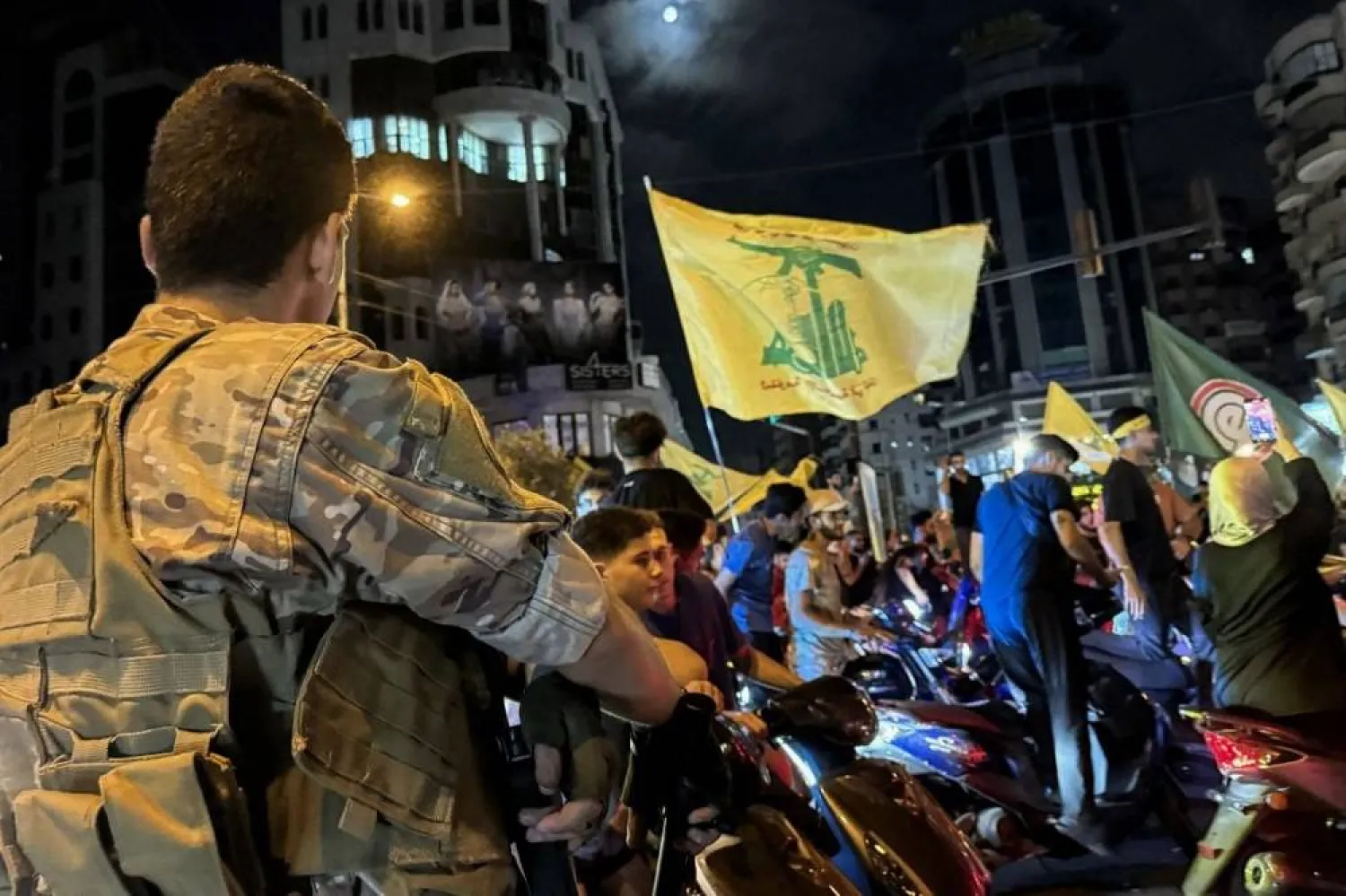
Soldiers deployed in the southern suburbs of Beirut during a Hezbollah convoy, on Aug. 7, 2025. (AFP)
TT

‘Shiite Duo’ in Lebanon Retracts Call for Protests against Govt Decisions

Soldiers deployed in the southern suburbs of Beirut during a Hezbollah convoy, on Aug. 7, 2025. (AFP)

The “Shiite duo” of Hezbollah and Amal retracted a call for streets protests against the Lebanese government’s decisions to impose state monopoly over weapons, which effectively calls for the disarmament of all armed groups, including Hezbollah.

The allies had called for a “major national stand” on Wednesday in protest against the government’s decision earlier this month but soon postponed it out of a sense of “national responsibly” given the circumstances the country is going through.

They also delayed it at the behest of “national authorities that are keen on unity and stability” and to give way for “deep and constructive dialogue over fateful issues facing our nation.”

The postponement reflects the state of “disarray” within the duo. Asharq Al-Awsat learned that Amal leader and parliament Speaker Nabih Berri is not keen on taking to the street, while the leadership of Iran-backed Hezbollah believes “the time is right for it.”

Berri is hoping to avoid a clash with the government, which had tasked the army with submitting a plan over the monopoly of arms before the end of the month. The cabinet will meet on September 2 to follow up on the issue.

Hezbollah MPs have remained insistent on the government to go back on its decision. Meanwhile, deputy commander of the Quds Force for Iranian Coordination Brigadier General Iraj Masjedi declared on Monday that the disarmament of Hezbollah was a “American -Zionist plot that will never be implemented.”

Pressure from Berri

Parliamentary sources from Berri’s Development and Liberation bloc told Asharq Al-Awsat that the speaker was always against street action to protest the government’s decision and he intervened to stop Wednesday’s rally.

Bloc MP Qassem Hashem said the protest was postponed because US special envoy Tom Barrack was visiting Lebanon and because the duo wanted to avoid a “fifth column intervening in the rally to stir unrest.”

He told Asharq Al-Awsat that the protest call “reflects a certain segment’s rejection” of the government’s decisions.

At the moment, “everyone is awaiting the Israeli response to the American proposals and the government session on September 2 before making any move,” he revealed.

Director of the Institute for Near East and Gulf Military Analysis (INEGMA) Dr. Riad Kahwaji said that Hezbollah and Amal have had divergent stances ever since the government took the disarmament decision.

In remarks to Asharq Al-Awsat, he noted that Hezbollah has leaned towards escalation and organizing motorcycle convoys, while Amal has said that it was not involved in any of these actions.

It had also said that it opposed Hezbollah’s threat of civil war when its leader Sheikh Naim Qassem warned that there can be “no life in Lebanon” without the party should the government go ahead with the disarmament.

Finance Minister Yassine Jaber, who is associated with Amal, later backed the government’s decision, sparking Hezbollah’s ire.

Kahwaji added: “Berri is evidently still against taking to the streets because the situation could spiral out of control” at a time when Israel is still carrying out attacks against Lebanon.

“Resorting to the streets is illogical and would put the Shiites in Lebanon in danger,” he said.


Int’l Momentum Builds for Paris Conference to Support Lebanese Army, Enforce Arms Monopoly

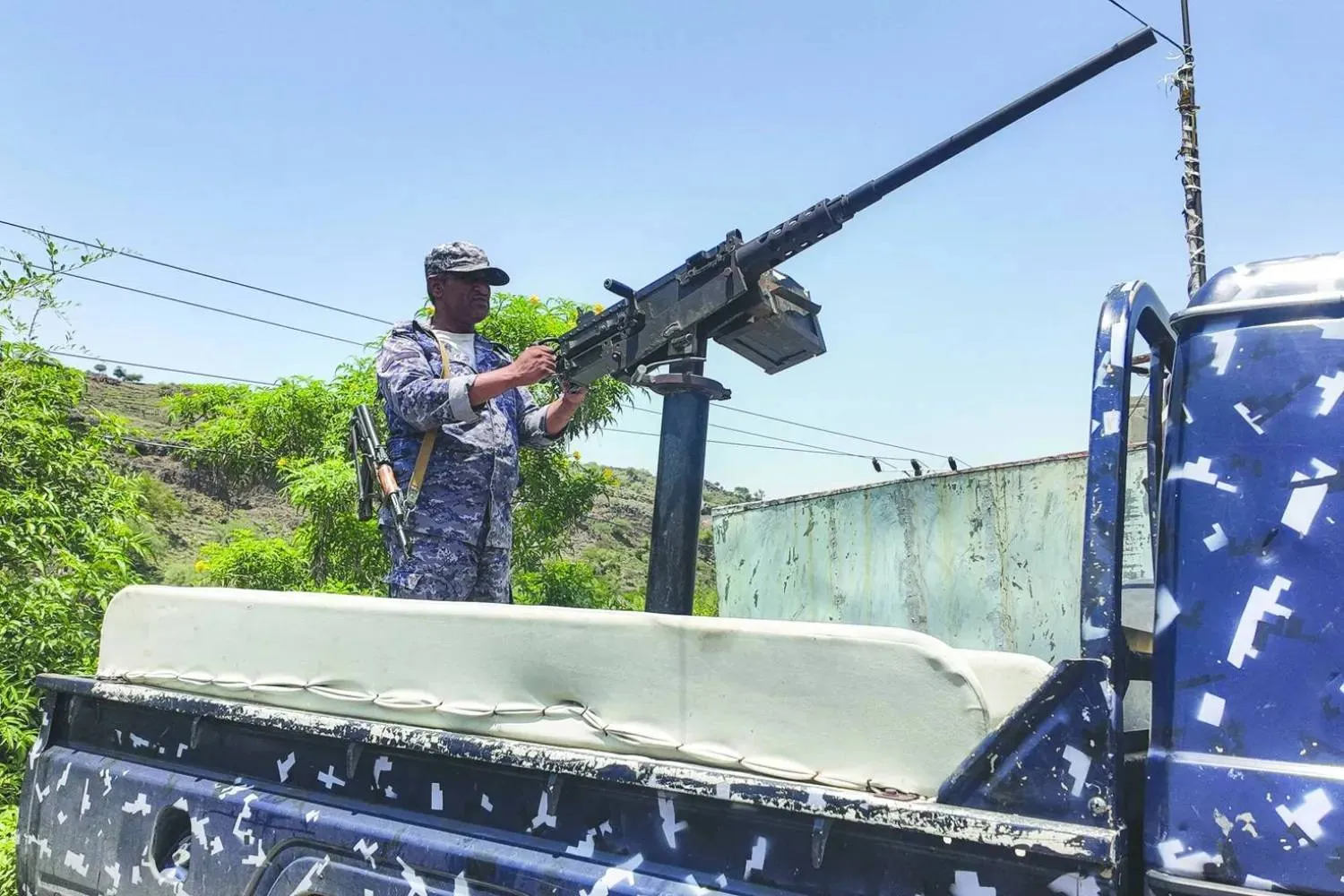
Lebanese President Joseph Aoun chairs a meeting with representatives of the “Quintet” at the Presidential Palace in Beirut (AFP). 
TT

Int’l Momentum Builds for Paris Conference to Support Lebanese Army, Enforce Arms Monopoly

Lebanese President Joseph Aoun chairs a meeting with representatives of the “Quintet” at the Presidential Palace in Beirut (AFP). 

The announcement of a conference to support the Lebanese Army, scheduled to be held in Paris on March 5, has gathered notable international momentum, bolstered by the backing of the so-called “Quintet” comprising Saudi Arabia, the United States, France, Egypt, and Qatar.

The conference is widely seen as part of a broader effort to strengthen the army’s ability to carry out its mandate, particularly enforcing the state’s exclusive control over weapons and dismantling Hezbollah’s military infrastructure.

The announcement came amid intensified Arab and international diplomatic engagement with Beirut, after Lebanon pledged last week to move to the second phase of its plan to confine weapons to official state institutions.

The government tasked the Lebanese Army with drafting an implementation plan by early February.

Lebanese ministerial sources following the issue told Asharq Al-Awsat that the diplomatic backing “has given the announcement strong momentum and significantly improved the conference’s prospects for success.”

Following a meeting at the presidential palace between President Joseph Aoun, Saudi Foreign Ministry adviser Prince Yazid bin Farhan, and French envoy and former foreign minister Jean-Yves Le Drian, and attended by several ambassadors, including that of the United States, presidential spokesperson Najat Charafeddine said the talks focused on preparations for a conference to support the Lebanese Army and Internal Security Forces.

She announced that the conference would be held in Paris on March 5 and opened by French President Emmanuel Macron, adding that participants agreed to step up contacts to ensure the widest possible participation.

In the run-up to the conference, meetings are expected between the Lebanese Army command and donor countries to assess needs and requirements. The sources noted that discussions in Baabda also addressed Lebanon’s plan to implement the arms monopoly. Representatives of countries supporting Lebanon urged authorities to accelerate the plan’s various stages.

Paris had previously hosted a meeting on December 18 attended by Army Commander Rodolphe Haykal and envoys from Saudi Arabia and the United States, focusing on ways to support the army and verify progress on the ground in dismantling Hezbollah’s weapons.

Since the government approved the arms-monopoly plan last August, Lebanon has received promises of an international support conference amid severe shortages in equipment, manpower, and technical capabilities.

Lebanon’s plan faces two principal obstacles: the limited capabilities of the Lebanese Army and Hezbollah’s refusal to relinquish its weapons.

While the Paris conference aims to address the army’s resource constraints, ministerial sources said Hezbollah’s rejection would not affect international support, stressing that assistance “is not conditional on the party’s cooperation,” though cooperation would increase donor enthusiasm.

According to official statements, the Baabda meeting was attended by the US ambassador, the ambassadors of Saudi Arabia, Egypt, Qatar, and France, as well as a Qatari assistant foreign minister.

Le Drian later met Prime Minister Nawaf Salam to brief him on preparations for the Paris conference and reaffirm France’s support for financial reform legislation and the restoration of deposits.

He also met Speaker of Parliament Nabih Berri, who praised French and international efforts to support Lebanon and its army, reaffirmed Lebanon’s commitment to Resolution 1701, and warned against continued Israeli violations of Lebanese sovereignty and the ongoing occupation of parts of southern Lebanon.


Ali Shaath Appointed Head of Gaza Administration Committee: What Do We Know About Him?

Palestinian Ali Shaath, the leading candidate for the chairmanship of the Gaza Administration Committee (photo released by his family). 
TT

Ali Shaath Appointed Head of Gaza Administration Committee: What Do We Know About Him?

Palestinian Ali Shaath, the leading candidate for the chairmanship of the Gaza Administration Committee (photo released by his family). 

Mediators from Egypt, Qatar, and Türkiye announced on Wednesday the formation of a Palestinian technocratic committee to administer the Gaza Strip, headed by Ali Shaath. The move follows changes to the committee’s membership and broader political maneuvering that point to an imminent transfer of governance from Hamas.

Earlier on Wednesday, US Special Envoy Steve Witkoff announced the launch of “Phase Two of President Donald Trump’s 20-point plan to end the conflict in Gaza,” saying it marks a shift “from a ceasefire to disarmament, technocratic governance, and reconstruction.”

The plan calls for the establishment of a technocratic body to oversee governmental and civilian affairs in Gaza as an alternative to Hamas rule.

While several well-known figures had previously been mentioned as potential leaders, Gaza residents and observers were surprised by the emergence of new names. Among those reported by Asharq Al-Awsat on Tuesday evening was Ali Shaath, who has since emerged as the leading candidate to chair the committee.

Who Is Ali Shaath?

Ali Shaath was born in 1958 in Khan Younis, southern Gaza, into a prominent Palestinian family and large clan with a long record of national and political engagement. Many members of his family are affiliated with Fatah.

He earned a bachelor’s degree in civil engineering from Ain Shams University in Cairo in 1982, a master’s degree in 1986, and a PhD in civil engineering from Queen’s University in the United Kingdom in 1989, specializing in infrastructure planning and urban development.

Shaath has held several senior posts within the Palestinian Authority and is widely regarded as a technical expert rather than a political figure. Early in the Authority’s formation, he served as deputy to then–Minister of Planning and International Cooperation Nabil Shaath, helping draft strategic development plans for a future Palestinian state.

He later served as undersecretary at the Ministry of Transport, overseeing major infrastructure and road projects. He went on to lead the Palestinian Industrial Estates and Free Zones Authority, chair the Palestinian Housing Council, head the Palestinian Ports Authority, and advise the Palestinian Economic Council for Development and Reconstruction (PECDAR). Most recently, despite retirement, he served as an adviser to the Ministry of Housing and Public Works.

Politically, Shaath participated in final-status negotiation committees in 2005 and contributed as a technical expert on border and maritime access issues. His background in economic development and postwar reconstruction appears to have positioned him to lead the technocratic committee.

Sources close to the Shaath family told Asharq Al-Awsat that he has lived in the West Bank for years, including before the Gaza war, and has consistently avoided factional politics, focusing instead on technical and professional roles.


Israel Seeks to Cement Status Quo of Its New Occupation in Syria

Members of Israel’s special reserve unit “Alpine Mountains” during training on Mount Hermon in Syria (Israeli army) 
TT

Israel Seeks to Cement Status Quo of Its New Occupation in Syria

Members of Israel’s special reserve unit “Alpine Mountains” during training on Mount Hermon in Syria (Israeli army) 

A senior Israeli official has acknowledged that disagreements with Syria remain “very deep,” dismissing what the United States has described as a positive atmosphere surrounding negotiations. “The reality is quite different,” the official said.

The remarks indicate that Israel intends to preserve the current situation created by its recent occupation of Syrian territory and rejects any withdrawal, not only from Mount Hermon but also from the nine positions it established following the collapse of Bashar al-Assad’s regime.

Israel has reportedly set far-reaching conditions in return, including barring Syria from deploying anti-aircraft missiles.

According to a report by Maariv political correspondent Anna Barsky, intensive talks held in Paris over two days last week, involving representatives from Israel, Syria, and the United States, produced only a limited outcome.

The discussions resulted in an agreement to establish a coordination mechanism aimed at preventing field-level friction, to be managed with active US involvement, but fell short of any broader political or security breakthrough.

Barsky wrote that there is currently no possibility of reaching a security agreement between Israel and Syria. While she cited Syria’s demand for an Israeli withdrawal from Syrian Mount Hermon as the main obstacle, the report suggests that Israel’s own demands are the primary factor blocking progress.

According to the senior official, Israel’s conditions include maintaining the new reality that emerged after Assad’s downfall in December 2024. This includes areas formerly designated as a UN-monitored buffer zone, an additional strip deeper along the border covering about 450 square kilometers, and all the peaks of Mount Hermon.

Israel is also seeking to strip the Syrian army of what it defines as strategic weapons, including advanced anti-aircraft systems or any arms that could disrupt the existing military balance. In addition, it demands that no foreign forces be present in Syria if they could restrict the Israeli army’s freedom of movement, specifically Russian or Turkish forces.

The report noted that the US administration, while pressing both sides to advance toward security understandings, supports Israeli demands it considers essential to Israel’s security, particularly remaining on Mount Hermon, though Washington is expected to propose compromise arrangements.

At the same time, Barsky reported growing concern in Tel Aviv over a parallel Syrian track: efforts by Damascus to coordinate with Moscow to redeploy Russian military forces in Syria, especially in the south.

Israel views such a move as a direct threat to its operational freedom and has worked to thwart initiatives aimed at restoring a Russian presence there. According to Maariv, Israel has conveyed a firm message to Damascus, Moscow, and Washington that it will not tolerate Russian forces in southern Syria.

The newspaper linked this stance to past experience, noting that while Russia maintained two main bases in Syria - Hmeimim Air Base and the naval facility in Tartus - it also deployed military police and observation posts near the disengagement zone in the south. Israel believes a return to that model would impose new operational constraints and alter the rules of engagement.

Although Russia’s footprint in Syria shrank after Assad’s fall, Israeli assessments suggest Moscow is seeking, in coordination with Syria’s new authorities, to rebuild its influence despite its preoccupation with the war in Ukraine.

The report said that both Moscow and Damascus view a Russian presence in southern Syria as strategically valuable, particularly as a means of constraining Israel.
