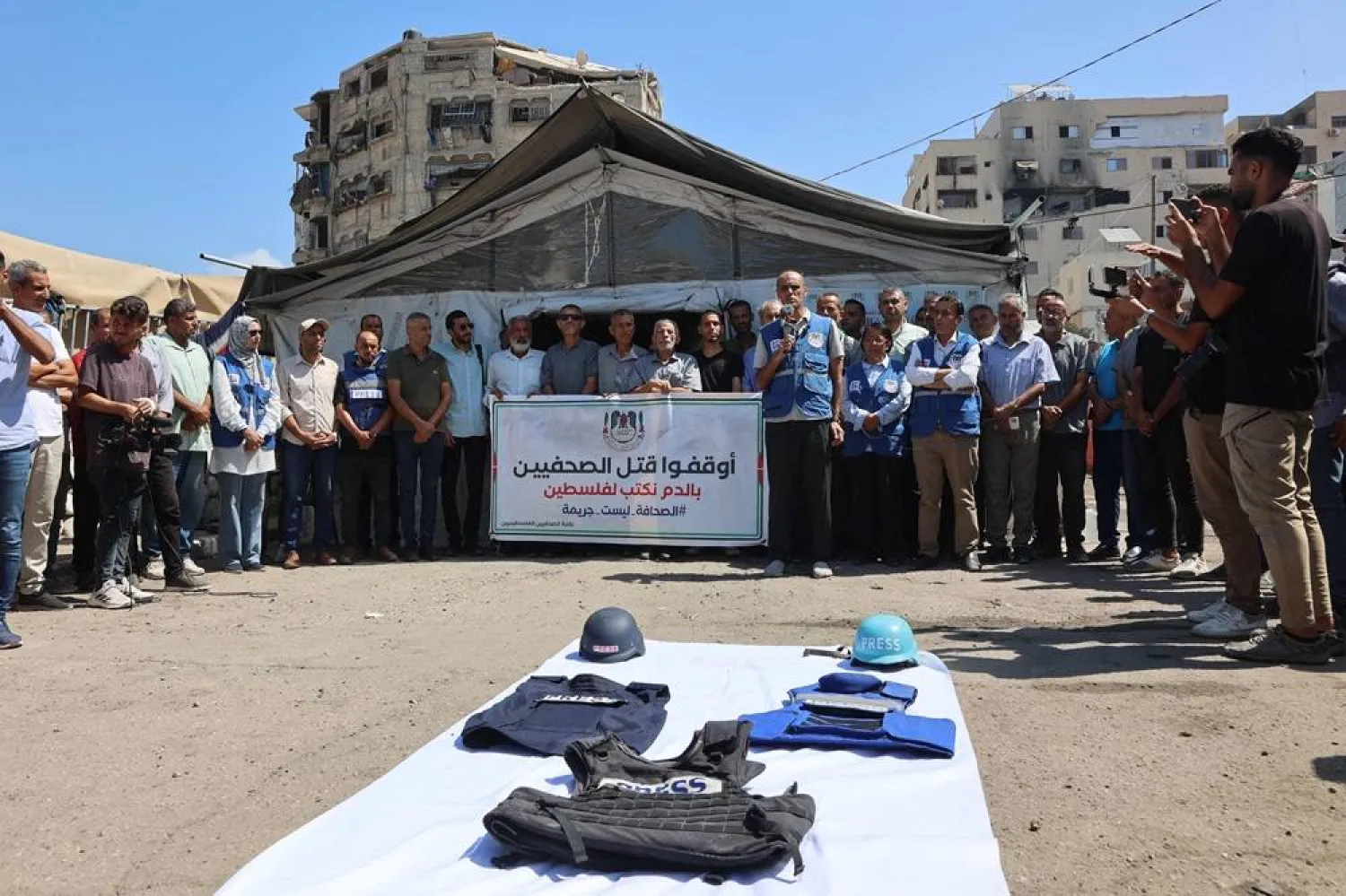

A deadly Israeli strike on a Gaza hospital that killed 20 people, including five journalists, was targeting what the military believed was a Hamas surveillance camera, as well as people identified as fighters, the Israeli military said Tuesday.
The military issued the statement as part of its initial inquiry into the attack, which Israeli Prime Minister Benjamin Netanyahu called a “tragic mishap."
The military said the back-to-back strikes on southern Gaza’s largest hospital were ordered because soldiers believed fighters were using the camera to observe Israeli forces and because Israel has long believed Hamas and other armed groups are present at hospitals.
The military’s chief of general staff acknowledged several “gaps” in the investigation so far, including the kind of ammunition used to take out the camera.
The initial investigation’s findings emerged Tuesday as a surge of outrage and unanswered questions mounted, after international leaders and rights groups condemned the strikes.
Earlier Tuesday, protesters in Israel torched tires, blocked highways and clamored for a ceasefire that would free hostages still in Gaza, even as Israeli leaders moved forward with plans for an offensive which they argue is needed to defeat Hamas.
Meanwhile, Palestinians in Gaza braced for the expanded offensive against a backdrop of displacement, destruction and parts of the territory plunging into famine. The deadly strikes a day earlier killed medics and journalists.
Netanyahu was expected to convene a security cabinet meeting later Tuesday. However, the government said the meeting will not include discussion of ceasefire talks, according to an official with knowledge of the situation. The official, who spoke on the condition of anonymity because they were not authorized to speak on the matter, said there was a delegation from Egypt in Israel on Monday and they discussed the negotiations.
Netanyahu has said that Israel will launch an expanded offensive in Gaza City while simultaneously pursuing a ceasefire, though Israel has yet to send a negotiating team to discuss a proposal on the table. Netanyahu has said the offensive is the best way to weaken Hamas and return hostages, but hostage families and their supporters have pushed back.
Israeli strikes continue
Calls for a ceasefire continued a day after the hospital strikes that killed at least the journalists and 15 others.
The strike, among the deadliest of the war against both journalists and hospitals, sparked shock and outrage among press freedom advocates and Palestinians, who mourned the dead at funerals on Monday.
It was swiftly condemned across the globe. Netanyahu called it a “tragic mishap” and said the military would investigate.
Most of those killed died after rushing to the scene of the first blast, only to be hit by a second strike — an attack captured on television by several networks.
The strike happened as Israel prepared to expand its offensive into densely populated areas of northern Gaza. Israel's military wants people in hospitals, displacement camps and Gaza City neighborhoods to evacuate southward to so-called safe zones so it can destroy Hamas and prevent attacks like the Oct. 7, 2023, assault that killed about 1,200 people and triggered the war.
A day after the strike, Israeli strikes killed at least 16 Palestinians on Tuesday, hospitals said.
Officials from Nasser Hospital, Shifa Hospital and Gaza City's Sheikh Radwan clinic reported that among the 16 were families, women and children.
Gaza's Health Ministry also said on Tuesday that three more adults died of causes related to malnutrition and starvation, bringing the malnutrition-related death toll to 186 since late June, when the ministry started to count fatalities among this age category. The toll includes 117 children since the start of the war.
Israel’s military offensive has killed 62,819, according to Gaza’s Health Ministry, which does not say how many were fighters or civilians but says around half were women and children. The ministry is part of the Hamas-run government and staffed by medical professionals. The UN and independent experts consider it the most reliable source on war casualties. Israel disputes its figures but has not provided its own.