Two Killed after Bridge Collapses in Iraq

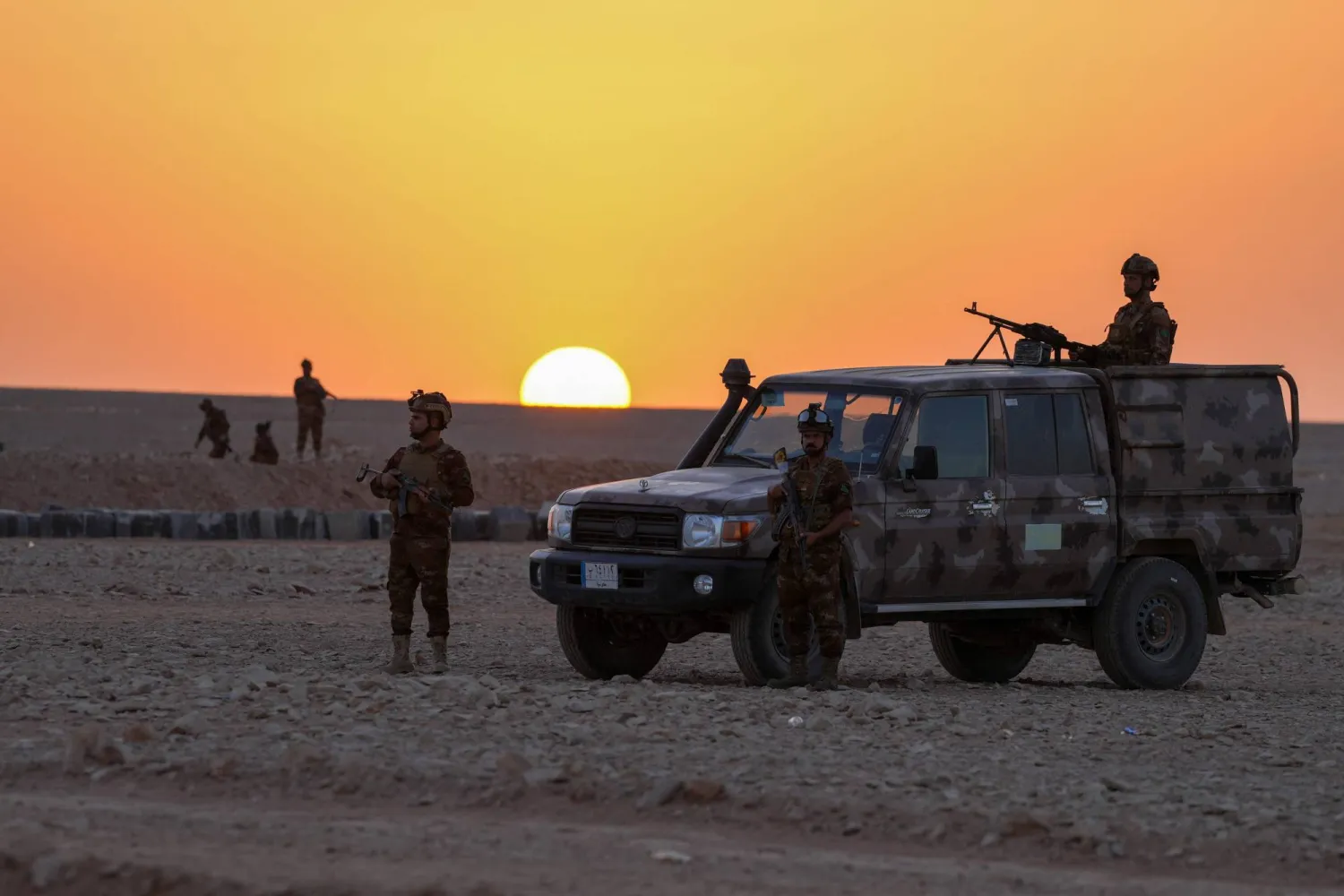
Iraqi army troops are seen on patrol on September 2, 2025. (Photo by Qassem al-KAABI / AFP)
TT

Two Killed after Bridge Collapses in Iraq

Iraqi army troops are seen on patrol on September 2, 2025. (Photo by Qassem al-KAABI / AFP)

Two people were killed and several injured when a section of a bridge under construction collapsed in southern Iraq, local authorities said Sunday.

The collapse took place late Saturday, with the rescue operation lasting more than 13 hours.

An AFP photographer reported that rescue workers labored until morning to free those trapped in their vehicles under the twisted wreckage of the bridge on the main Karbala-Baghdad road.

Karbala's civil defense agency said they had "rescued seven people and recovered two bodies" from under the collapsed structure.

A health official in Karbala told AFP late Saturday that at least six people were injured, some of them from Syria and Afghanistan.

All the injured were transported to the nearest hospital in Karbala, where Shiite pilgrims from other countries often travel to visit holy shrines.

The health official, speaking on condition of anonymity, said that the "pillars of the bridge collapsed while several vehicles were passing underneath it.”


Iraqi Parliament Elects Nizar Amedi as Country’s New President

 The entrance of the Iraqi parliament building during a parliamentary session in Baghdad, Iraq, April 11, 2026. (Reuters)
The entrance of the Iraqi parliament building during a parliamentary session in Baghdad, Iraq, April 11, 2026. (Reuters)
TT

Iraqi Parliament Elects Nizar Amedi as Country’s New President

 The entrance of the Iraqi parliament building during a parliamentary session in Baghdad, Iraq, April 11, 2026. (Reuters)
The entrance of the Iraqi parliament building during a parliamentary session in Baghdad, Iraq, April 11, 2026. (Reuters)

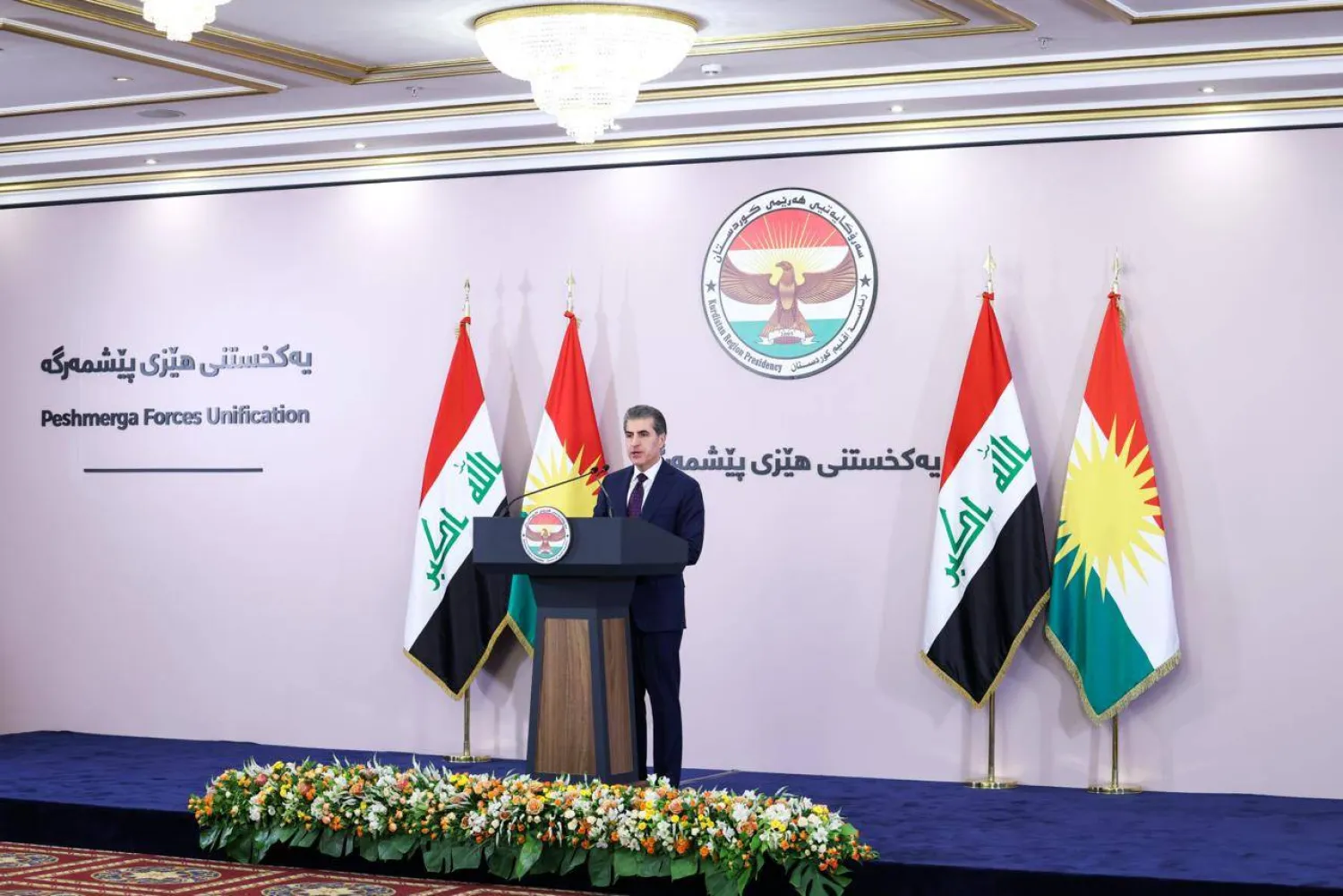
The Iraqi parliament on Saturday elected Kurdish politician Nizar Amedi as the country's new president, a largely ceremonial role, following a parliamentary election last November.

Amedi, 58, is a former environment minister and has headed the political office of the Patriotic Union of Kurdistan (PUK) in Baghdad since 2024.

Iraq is now ‌due to ‌choose a prime minister, ‌a closely-watched ⁠and sensitive pick.

US ⁠President Donald Trump threatened in January to withdraw Washington's support for Iraq, a major oil producer, if former Prime Minister Nouri al-Maliki was designated to form a cabinet.

The pro-Iran Coordination Framework coalition that holds a parliamentary majority has ‌nominated Iran-backed Maliki, alarming Washington, which along ‌with Israel waged a six-week war with ‌Iran until a ceasefire was announced on Tuesday.

Senior US and Iranian officials were meeting in Islamabad on Saturday in ‌the highest-level talks between Washington and Tehran in half a century ⁠in ⁠an effort to end the war.

In Iraq, which has long trodden a tightrope between Iran and the US, its closest allies, the prime minister wields significant power.

Under Iraq's sectarian power-sharing system, the prime minister must be a Shiite, the parliamentary speaker a Sunni, and the president a Kurd.


Syria Says Busts Hezbollah-Linked Cell Planning Attack on ‘Religious Figure’

This handout picture released by the official Syrian Arab News Agency (SANA) on March 8, 2025, shows Syrian forces manning a checkpoint in the coastal city of Latakia. (SANA/AFP)
TT

Syria Says Busts Hezbollah-Linked Cell Planning Attack on ‘Religious Figure’

This handout picture released by the official Syrian Arab News Agency (SANA) on March 8, 2025, shows Syrian forces manning a checkpoint in the coastal city of Latakia. (SANA/AFP)

Syria's interior ministry said Saturday that five people had been arrested over a plot to attack an unidentified religious figure in Damascus, alleging the cell was linked to the Lebanese armed group Hezbollah.

In a statement, the ministry said security forces observed a woman as she attempted to "plant an explosive device in front of the house of a religious figure" near a church in Damascus's Bab Touma area.

Security forces intervened and dismantled the device, arresting all five members of the cell, the statement said.

"Preliminary investigations revealed the cell's link to Lebanon's Hezbollah, and that its members received specialized military training abroad," the statement added.

Since March 2, Hezbollah has been battling Israel after drawing Lebanon into the Middle East war with rocket fire at Israel in support of its backer Iran.

The group played a key role in Syria's civil war, fighting alongside the forces of now ousted leader Bashar al-Assad.

Under Assad, Syria was part of Iran's "axis of resistance" against Israel and enabled the transfer of weapons and money from Iran to Hezbollah.

Syria's new authorities have rejected Iranian influence and are hostile to the Lebanese group and its sponsor.

In February, Syria said it had dismantled a cell responsible for recent attacks targeting Damascus's Mazzeh district, saying the weapons came from Hezbollah, which denied any involvement.


Libya Signs First Unified State Budget in More Than a Decade

A view of the Central Bank of Libya in Tripoli, Libya, August 26, 2024. (Reuters)
TT

Libya Signs First Unified State Budget in More Than a Decade

A view of the Central Bank of Libya in Tripoli, Libya, August 26, 2024. (Reuters)

Libya's two rival legislative bodies have approved the country's first unified state budget in more than a decade, its central bank said in a statement on Saturday.

The oil-producing North African country has been divided since a 2014 civil war that spawned two administrations in the west and east. Its last unified national budget was agreed in 2013.

Abduljalel Shawesh, a representative of the High State Council in Tripoli, told Reuters by phone that the two rival legislative chambers had agreed on 190 billion Libyan dinars for the budget ($29.95 billion).

The ‌central bank said ‌the approval of the budget by the two rival legislative ‌chambers ⁠could help strengthen ⁠financial stability, marking an important move toward ending years of financial division.

"This is a clear declaration that Libya is capable of overcoming its differences when a unified vision for its future is forged," said central bank Governor Naji Issa, who supervised the signing ceremony at the bank's headquarters in Tripoli.

The two legislative chambers are the eastern-based House of Representatives (HoR) that was elected in 2014 and the High Council of State (HSC) in the west, which was formed ⁠as part of a 2015 political agreement and whose members were ‌drawn from a parliament elected in 2012.

The agreement ‌to approve the budget was signed in Tripoli by Essa Aribi, a representative of the Benghazi-based ‌HoR, and Shawesh, representing HSC.

Osama Hamad, who heads a parallel government allied to ‌HoR in the east, said in a statement the agreement represented a cornerstone for launching balanced development programs throughout the country, "ensuring a fair distribution of resources."

The Government of National Unity in Tripoli will be responsible for salaries, operational spending, and subsidies, while a committee from all parties would discuss ‌priorities for implementation of development projects in the budget under the auspices of the central bank, Shawesh said.

The HoR is expected to ⁠put forward legislation ⁠for the budget, he said.

He also said there was an agreement to allocate 12 billion dinars to state oil firm National Oil Corporation. Libya's economy relies on oil for more than 95% of its economic output.

Shawesh said 40 billion dinars would be allocated to development projects, about 37 billion for subsidies, 73 billion for salaries, about 18 billion for family allowances, and 10 billion for operational spending.

Massad Boulos, the US Senior Adviser for Arab and African Affairs, said in post on X that he congratulated Libya on signing the agreement "after months of US facilitation as part of a broader roadmap toward peace and national unification."

He said the new budget would support development projects nationwide and ensure financing for the National Oil Corporation so that it can increase energy production and revenues.