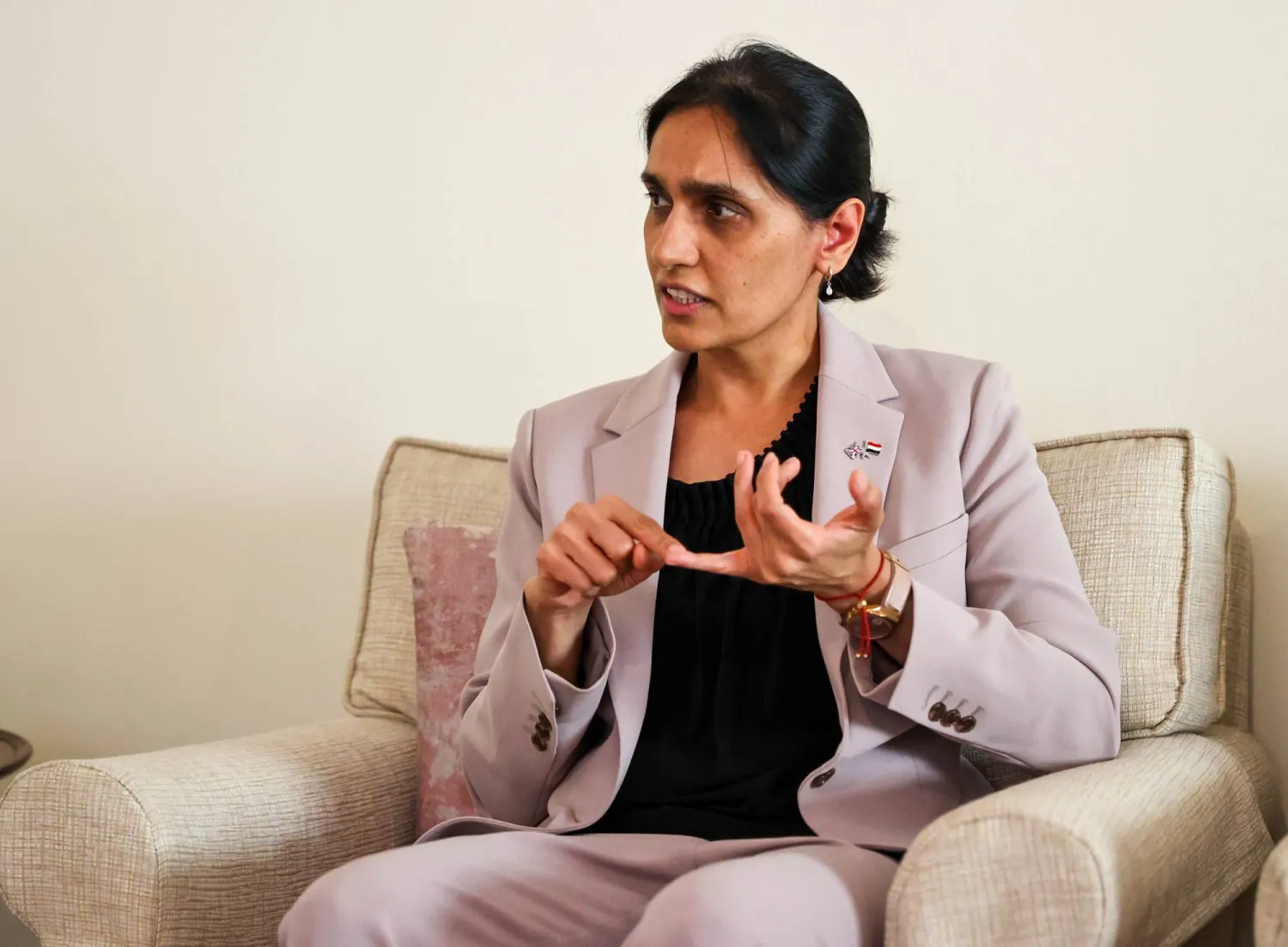

Britain’s Ambassador to Yemen Abda Sharif said political cohesion remains critical for the country’s legitimate government, warning that any divisions within the leadership would only serve the interests of the Iran-aligned Houthis.
Unity and cohesion are indispensable, Sharif told Asharq Al-Awsat in an interview. Any split in the leadership benefits only those who do not put Yemen’s interests first.
Her comments came amid renewed scrutiny of the Presidential Leadership Council following decisions by its member Aidarous al-Zubaidi.
No new Security Council resolutions
Sharif dismissed reports that the UN Security Council was preparing fresh resolutions on Yemen, stressing that London – the penholder on the file – had no current plans in that direction.
The council meets monthly to review Yemen. The UN envoy and senior UN officials provide briefings that allow the council to assess developments, said Sharif.
When conditions are appropriate for a new resolution, Sharif affirmed that leadership and support will be offered, but this is not under consideration now.
She added that Britain bears responsibility for keeping international attention on Yemen and ensuring sustained support.
Economic relief, but reforms still needed
Sharif said the recent rise in the value of the Yemeni rial offered tangible relief to households in a country heavily dependent on imports of fuel, food and medicine.
This improvement is a vital step that has given families breathing space, she said.
The government and central bank worked to address long-standing pressures on the currency and have made progress.
But she cautioned that stability remains fragile. The IMF has been clear: long-term recovery requires further difficult reforms, backed by international partners, she said.
Call for pressure on Iran
Sharif urged stronger international pressure on Tehran to curb its role in Yemen’s war.
The UK maintains diplomatic ties with Iran, but we have been clear its destabilizing activities must stop, she said. Continued weapons supplies to the Houthis undermine Yemen’s security and the stability of the region.
She pointed to recent interceptions of Iranian arms shipments by Yemeni government forces, including the National Resistance, calling them evidence of ongoing violations.
Partnership with Saudi Arabia
Sharif described British-Saudi cooperation on Yemen as very strong and close, highlighting regular coordination with Saudi envoy Mohammed al-Jaber.
The British diplomat said that envoy al-Jaber is held in high regard and is deeply experienced on Yemen.
Together, they have launched joint initiatives, including responses to cholera, and on Tuesday we will co-host the Yemen Maritime Security Partnership conference in Riyadh, revealed Sharif.
The event, which will include the Yemeni government and representatives from more than 40 countries, is expected to focus on strengthening support for the coast guard.
Yemen’s coast guards are on the frontlines, protecting national interests and coastal livelihoods while intercepting threats. Sharif said she wanted to see them backed politically and financially.
UN envoy praised, Houthis blamed
Sharif praised UN Special Envoy Hans Grundberg for doing a very good job in extremely difficult circumstances, noting that his work has kept the Security Council’s permanent members aligned on Yemen despite regional escalations.
But she said Houthi actions, including attacks on shipping in the Red Sea, were blocking political progress.
The Houthis have continued their threats and attacks, sinking vessels, killing and injuring innocent crews, and even boasting on social media about new weapons, she said. All this while Yemen sinks deeper into economic hardship and food insecurity.
Yemen is now the third most food-insecure country in the world after Gaza and Sudan, she said, citing UN warnings of famine hotspots. Yet the Houthis respond with more harassment of UN staff trying to help the most vulnerable, she added.
Sharif said a political settlement remains the only path to lasting peace. She hoped Houthis would reconsider, for the sake of Yemen’s stability and the welfare of its people.