
Israel’s Gaza City Demolitions Fan Fears of Permanent Removal of Palestinians

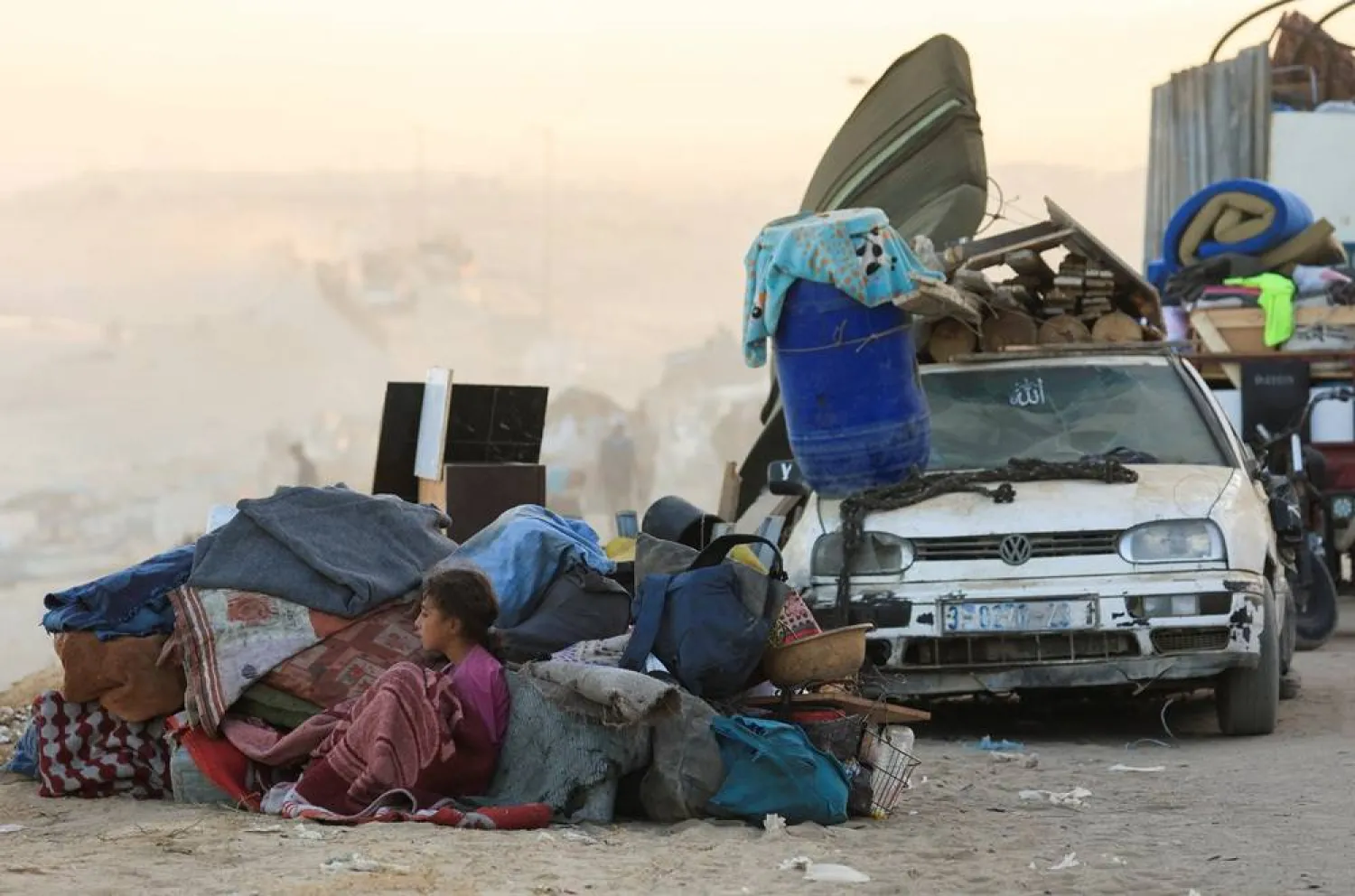
 A displaced Palestinian girl, fleeing northern Gaza due to an Israeli military operation, sits next to belongings as people move southwards after Israeli forces ordered residents of Gaza City to evacuate to the south, in the central Gaza Strip, September 20, 2025. (Reuters)
A displaced Palestinian girl, fleeing northern Gaza due to an Israeli military operation, sits next to belongings as people move southwards after Israeli forces ordered residents of Gaza City to evacuate to the south, in the central Gaza Strip, September 20, 2025. (Reuters)
TT

Israel’s Gaza City Demolitions Fan Fears of Permanent Removal of Palestinians

 A displaced Palestinian girl, fleeing northern Gaza due to an Israeli military operation, sits next to belongings as people move southwards after Israeli forces ordered residents of Gaza City to evacuate to the south, in the central Gaza Strip, September 20, 2025. (Reuters)
A displaced Palestinian girl, fleeing northern Gaza due to an Israeli military operation, sits next to belongings as people move southwards after Israeli forces ordered residents of Gaza City to evacuate to the south, in the central Gaza Strip, September 20, 2025. (Reuters)

For a decade, Palestinian bank worker Shady Salama Al-Rayyes paid into a $93,000 mortgage on his flat in a tall, modern block in one of Gaza City's prime neighborhoods. Now, he and his family are destitute, after fleeing an Israeli demolition strike that collapsed the building in a cloud of black smoke and dust.

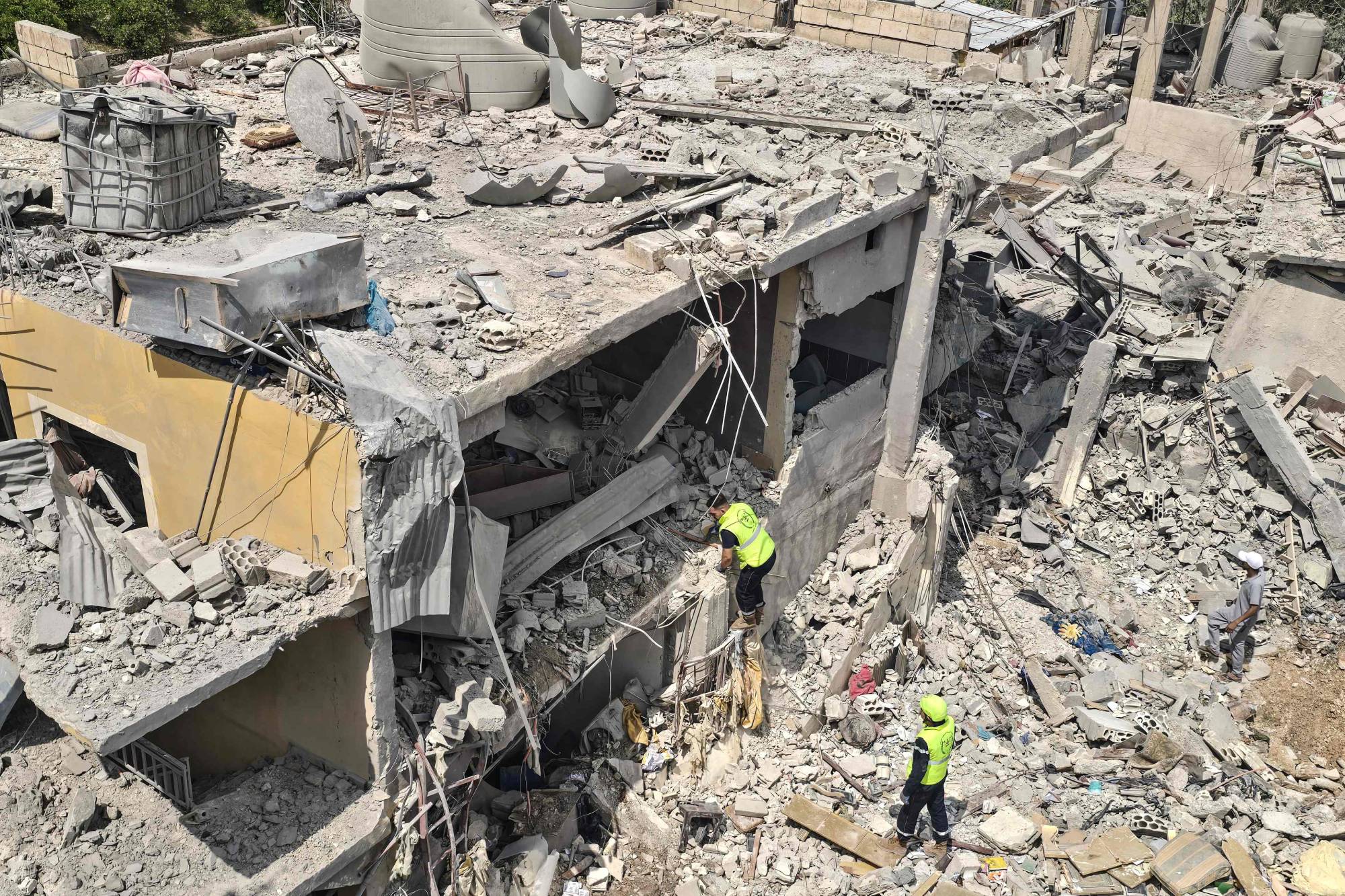
The September 5 attack on the 15-storey Mushtaha Tower marked the start of an intensified Israeli military demolition campaign targeting high-rise buildings ahead of a ground assault towards the heart of the densely populated city, which started this week.

Over the past two weeks, Israel's armed forces say they have demolished up to 20 Gaza City tower blocks they say are used by Hamas. Prime Minister Benjamin Netanyahu said 50 "terrorist towers" had been demolished.

The campaign has made hundreds of people homeless. In a similar time frame, Israeli forces have flattened areas in the city's Zeitoun, Tuffah, Shejaia and Sheikh al-Radwan neighborhoods, among others, ten residents told Reuters. The damage since August to scores of buildings in Sheikh al-Radwan is visible in satellite imagery reviewed by the news agency.

Al-Rayyes said he feared the destruction was aimed at permanently clearing the population from Gaza City, a view shared by the UN Human Rights Office (OHCHR). Its spokesperson Thameen Al-Kheetan said in a statement that such a deliberate effort to relocate the population would be tantamount to ethnic cleansing.

"I never thought I would leave Gaza City, but the explosions are non-stop," Al-Rayyes said on Wednesday. "I can't risk the safety of my children, so I am packing up and will leave for the south."

Al-Rayyes vowed, however, never to leave Gaza entirely.

Israel's finance minister Bezalel Smotrich said in May that most of Gaza would soon be "totally destroyed" and the population confined to a narrow strip of land near the border with Egypt.

Israel, which has called for all of Gaza City's civilian residents to leave during the offensive, last week closed a crossing into northern Gaza, further limiting scarce food supplies.

In response to questions for this story, Israel's military spokesperson Lieutenant-Colonel Nadav Shoshani said "there's no strategy to flatten Gaza." He said the military's aim was to destroy Hamas and bring hostages home.

Tall buildings were used by Hamas to observe and attack Israeli forces, he said, adding that the group used civilians as human shields and also put booby-traps in buildings. Israeli soldiers are regularly killed by IEDs in Gaza.

Hamas has denied using residential towers to attack Israeli forces.

The goals of the Israel's military and its politicians are not always aligned, two Israeli security sources told Reuters, with one citing ideas such as clearing Palestinians from areas of Gaza for future redevelopment as diverging from military goals. Israel's Prime Minister's Office did not immediately respond to a request for comment.

The offensive is the latest phase in Israel's war in Gaza, which has killed more than 65,000 Palestinians, spread famine and displaced most of the population, in many cases multiple times, since Hamas led attacks in Israel on Oct. 7 2023, killing 1,200 and taking 251 hostages. A total of 48 of the hostages remain in Gaza, and around 20 are thought to be alive.

Last week a UN inquiry found Israel had committed genocide in Gaza. Israel called the finding biased and "scandalous." UN experts say destruction of civilian housing and infrastructure can amount to a war crime.

Israeli spokesperson Shoshani said the buildings were legitimate military targets approved by an intelligence officer and a legal officer.

'PANIC, FEAR' AFTER EVACUATION ORDER

Before the war, Mushtaha Tower was popular with Gaza City's professional class and students drawn to its ocean views and convenient location near a public park and two universities.

It originally housed about 50 families, but that number had tripled in recent months as people took in relatives displaced from other parts of Gaza, said Al-Rayyes.

Scores of tents housing more displaced families had spread around the tower's base. Upper floors of the building had been damaged by previous strikes.

On the morning of September 5, a neighbor got a call from an Israeli army officer instructing him to spread the word to evacuate the building within minutes or they were "going to bring it down on our heads," Al-Rayyes said.

Reuters could not independently verify his account of the evacuation order. It is consistent with accounts of residents of other buildings ahead of Israeli strikes. Shoshani said the military gave residents time to evacuate and ensured civilians had left before hitting the buildings.

"Panic, fear, confusion, loss, despair, and pain overwhelmed all of us. I saw people running on our bare feet; some didn't even take their mobile phones or documents. I didn't take passports or identity cards," said Al-Rayyes, who had once hoped to pay off his mortgage by this year.

"We carried nothing with us, my wife and my two children, Adam, 9, and Shahd, 11, climbed down the stairs and ran away."

Video filmed by Reuters shows what happened next. From the air, two projectiles exploded almost simultaneously into the base of the tower, demolishing it in around six seconds. Dust smoke and debris billowed over the streets and tents of displaced people, who scattered, running and screaming.

In response to a question from Reuters, the Israeli military said Hamas had "underground infrastructure" beneath Mushtaha Tower that it used to attack Israeli troops. The military declined a request to provide evidence.

In a response to Reuters on Wednesday, the UN's OHCHR said the Israeli military had also not provided evidence to demonstrate other buildings described as terrorist infrastructure were valid military targets.

Al-Rayyes, who headed the building's residents' association, said the tactic of demolition "makes no sense," even if there was a Hamas presence, which he denied.

"They could have dealt with it in a way that doesn't even scratch people, not to destroy a 16-floor building," he said, using a different count of its height.

After a couple of weeks with family in the city's Sabra district, Al-Rayyes has left, like hundreds of thousands of other residents of the city since August, and was setting up a tent in central Gaza's Deir Al-Balah on Thursday.

MILITARY DEMOLISHES HOMES IN GAZA CITY OUTSKIRTS

In preparation for the ground assault, in recent weeks, up to a dozen homes have been destroyed daily in Zeitoun, Tuffah, and Shejaia, the residents Reuters spoke to said.

Amjad Al-Shawa, head of the Palestinian Local NGOs Network, estimated over 65% of buildings and homes in Gaza City had been destroyed or heavily damaged during the war. Extensive damage to suburban areas in recent weeks is visible in satellite images of several neighborhoods.

The Conflict Location and Event Data (ACLED) a non-profit organization that gathers data on conflicts around the world, documented over 170 demolition incidents carried out by Israel's armed forces in Gaza City since early August, mainly through controlled explosions in eastern areas as well as Zeitoun and Sabra.

"The pace and extent of demolitions appear more extensive than in previous periods," ACLED's Senior Middle East analyst Ameneh Mehvar told Reuters. By comparison, she said fewer than 160 such demolitions were recorded in Gaza City during the first 15 months of the war.

The residents who spoke to Reuters also reported Israeli forces had blown up remotely driven vehicles laden with explosives in the Sheikh Radwan and Tel Al-Hawa neighborhoods, destroying many houses in the past two weeks.

Shoshani, the military spokesperson, confirmed the use of ground-based explosives against buildings identified as military targets. He said he did not have information about explosive-laden vehicles specifically.

The UN's OHCHR said it had documented controlled demolition of residential infrastructure, saying some entire neighborhoods were destroyed.

Even before the current offensive on Gaza City, almost 80% of buildings in Gaza - roughly 247,195 structures - had been damaged or destroyed since the war started, according to the latest data from the United Nations Satellite Centre, gathered in July. This included 213 hospitals and 1,029 schools.

Bushra Khalidi, who leads policy on Gaza at Oxfam, said tower blocks were one of the last forms of shelter, and warned that pushing people out would "exponentially" worsen overcrowding in the south.

Tareq Abdel-Al, a 23-year-old student of finance from Sabra, was hesitant to leave his home with his extended family despite weeks of bombardment in the area, exhausted from being ordered to evacuate so many times in the war, he said. They left on the morning of August 19 only after houses neighboring their 3-storey home were demolished.

Just 12 hours later, an Israeli strike destroyed the family home, he said.

"Should we have stayed, we might have been killed that night," Abdel-Al told Reuters by phone from Nuseirat camp in central Gaza, describing extensive damage to the whole street.

"They destroyed our hope of returning," he said.


Video Shows Fires in Palestinian Village in West Bank During Israeli Settler Attack

 People stand in an area with destroyed vehicles and a structure, which Palestinians say were burned by Israeli settlers on Saturday, in the Palestinian town of Mikhmas, near Ramallah in the Israeli-occupied West Bank, January 18, 2026. (Reuters)
People stand in an area with destroyed vehicles and a structure, which Palestinians say were burned by Israeli settlers on Saturday, in the Palestinian town of Mikhmas, near Ramallah in the Israeli-occupied West Bank, January 18, 2026. (Reuters)
TT

Video Shows Fires in Palestinian Village in West Bank During Israeli Settler Attack

 People stand in an area with destroyed vehicles and a structure, which Palestinians say were burned by Israeli settlers on Saturday, in the Palestinian town of Mikhmas, near Ramallah in the Israeli-occupied West Bank, January 18, 2026. (Reuters)
People stand in an area with destroyed vehicles and a structure, which Palestinians say were burned by Israeli settlers on Saturday, in the Palestinian town of Mikhmas, near Ramallah in the Israeli-occupied West Bank, January 18, 2026. (Reuters)

Israeli settlers rampaged through a Palestinian village in the West Bank, setting fire to a series of structures, according to security camera footage obtained by The Associated Press on Sunday, in an overnight onslaught that has become a common phenomenon in the occupied territory.

In the video, time-stamped at around 10 p.m. Saturday, several structures in the village go up in flames as the sound of gunfire, screaming and barking echoes in the background. At one point in the video, the fires grow so large that they illuminate the bands of settlers, dressed in black, pacing freely through the village.

Also Sunday, at least four more countries said they had been invited to join US President Donald Trump’s Board of Peace, the international body expected to oversee his Gaza ceasefire plan and perhaps other conflict resolutions.

Meanwhile, an Israeli Cabinet minister said that he'd ordered officials to disconnect the water and electricity for facilities of the UN Relief and Works Agency for Palestinian Refugees, or UNRWA. It's the latest action in Israel’s long-running campaign to shut down the agency. UNRWA fears the shutdown could hamper its work in east Jerusalem.

Settler attack video

The footage obtained by the AP showed the moment dozens of settlers descended on the small Bedouin hamlet of Khirbet al-Sidra, north of Jerusalem, attacking Palestinians and international activists and burning cars and homes, according to the Palestinian Authority's Jerusalem governate, which monitors Palestinian affairs in the area.

In a statement, it said that eight homes and at least two cars were burned in the attack.

Israel’s military said that soldiers dispatched to the village found an Israeli vehicle with clubs inside. It said that Palestinians, Israelis and foreign nationals were injured, and troops were searching the area to make arrests. As of Sunday afternoon, no arrests had been reported.

It marked the latest assault in the tense territory as settler violence spikes in recent months.

Around 500,000 Israelis have settled in the West Bank since Israel captured the territory, along with east Jerusalem and the Gaza Strip, in the 1967 Mideast war. Their presence is viewed by most of the international community as illegal and a major obstacle to peace.

The Palestinians seek all three areas for a future state. Israel has sought to play down the violence as the work of a small, radical minority. But Israel's far-right government, dominated by settlers and their supporters, has done little to stop the attacks.

Board of Peace invites

Jordan, Greece, Cyprus and Pakistan on Sunday announced that they had received invitations to Trump's Board of Peace. Albania, Egypt, Paraguay, Argentina and Türkiye have already said they were invited.

The board, made up of world leaders, was initially seen as a mechanism focused on ending the Israel-Hamas war in Gaza. It's now taking shape with ambitions to have a far broader mandate to address other global crises, potentially rivaling the United Nations.

The US hasn't yet announced the official list of members. In letters sent Friday to various world leaders inviting them to be “founding members” of the board, Trump says the body would “embark on a bold new approach to resolving global conflict.”

Israel moves against UNRWA

Israeli Energy Minister Eli Cohen said on X Sunday he'd issued formal notices to disconnect water and electricity from facilities belonging to UNRWA.

The UN agency said on X that the shutdown could take effect within two weeks. It comes after Israel's parliament in December passed a bill to cut the supply of electricity and water to the facilities.

The earlier ban already closed many of UNRWA’s services in east Jerusalem, though it continues to operate a vocational training center in east Jerusalem.

The agency provides aid and services, including health and education, to around 2.5 million Palestinian refugees in Gaza and the occupied West Bank and east Jerusalem, as well as 3 million more in Syria, Jordan and Lebanon.

Earlier last year, Israel banned the agency from operating on its territory. The ban followed months of attacks on the agency by Israel, which says it's deeply infiltrated by Hamas. UNRWA rejects that accusation.


Iraq Announces Complete Withdrawal of US-Led Coalition from Federal Territory

 US forces at the Taji camp, north of Baghdad. (AFP file)
US forces at the Taji camp, north of Baghdad. (AFP file)
TT

Iraq Announces Complete Withdrawal of US-Led Coalition from Federal Territory

 US forces at the Taji camp, north of Baghdad. (AFP file)
US forces at the Taji camp, north of Baghdad. (AFP file)

Iraq said on Sunday US-led coalition forces had finished withdrawing from bases within the country's federal territory, which excludes the autonomous northern Kurdistan region.

"We announce today... the completion of the evacuation of all military bases and leadership headquarters in the official federal areas of Iraq of advisers" of the US-led coalition, the military committee tasked with overseeing the end of the coalition's mission said.

With the withdrawal, "these sites come under the full control of Iraqi security forces", it said in the statement, adding that they would transition to "the stage of bilateral security relations with the United States".

The vast majority of coalition forces had withdrawn from Iraqi bases under a 2024 deal between Baghdad and Washington outlining the end of the mission in Iraq by the end of 2025 and by September 2026 in the Kurdistan region.

US and allied troops had been deployed to Iraq and Syria since 2014 to fight the ISIS group, which had seized large swathes of both countries.

The group was territorially defeated in Iraq in 2017 and in Syria in 2019, but continues to operate sleeper cells.

The vast majority of coalition troops withdrew from Iraq over previous stages, with only advisers remaining in the country.

The military committee on Sunday said Iraqi forces were now "fully capable of preventing the reappearance of ISIS in Iraq and its infiltration across borders".

"Coordination with the international coalition will continue with regards to completely eliminating ISIS's presence in Syria," it added.

It pointed to "the coalition's role in Iraq offering cross-border logistical support for operations in Syria, through their presence at an airbase in Erbil", the capital of Iraq's Kurdistan region.

In December, two US soldiers and a civilian interpreter were killed in Syria in an attack blamed on ISIS, sparking fears of a resurgence in the country.

The statement added that anti-ISIS operations would be coordinated with the coalition through the Ain al-Assad base in Anbar province in western Iraq.

ISIS attacks in Iraq have massively declined in recent years, but the group maintains a presence in the country's mountainous areas.

A UN Security Council report in August said: "In Iraq, the group has focused on rebuilding networks along the Syrian border and restoring capacity in the Badia region."


Jordan Says King Abdullah Received Invitation to Join Gaza Peace Board

Palestinian girls walk past the rubble of residential buildings destroyed during the war, in Gaza City, January 16, 2026. REUTERS/Dawoud Abu Alkas
TT

Jordan Says King Abdullah Received Invitation to Join Gaza Peace Board

Palestinian girls walk past the rubble of residential buildings destroyed during the war, in Gaza City, January 16, 2026. REUTERS/Dawoud Abu Alkas

Jordan's foreign ministry said on Sunday that King Abdullah received an invitation from ‌US President ‌Donald ‌Trump ⁠to join ‌the so-called "Board of Peace" for Gaza.

The foreign ministry said it was ⁠currently reviewing ‌related documents ‍within ‍the country's ‍internal legal procedures.

The board is set to supervise the temporary governance of Gaza, ⁠which has been under a shaky ceasefire since October.

On Friday, the White House announced some members of a so-called "Board of Peace" that is to supervise the temporary governance of Gaza, which has been under a fragile ceasefire since October.

The names include US Secretary of State Marco Rubio, President Donald Trump's special envoy Steve Witkoff, former British Prime Minister Tony Blair and Trump's son-in-law, Jared Kushner. Trump is the chair of the board, according to a plan his White House unveiled in October.

The White House did not detail the responsibilities of each member of the "founding Executive board." The names do not include any Palestinians. The White House said ⁠more members will be announced over the coming weeks.

The board will also include private equity executive and billionaire ‌Marc Rowan, World Bank President Ajay Banga and Robert Gabriel, ‍a Trump adviser, the White House ‍said, adding that Nickolay Mladenov, a former UN Middle East envoy, will be the ‍high representative for Gaza.

Army Major General Jasper Jeffers, a US special operations commander, was appointed commander of the International Stabilization Force, the White House said. A UN Security Council resolution, adopted in mid-November, authorized the board and countries working with it to establish that force in Gaza.

The White House also named an 11-member "Gaza Executive Board" that will include Turkish Foreign Minister Hakan Fidan, the UN special coordinator for the Middle East ⁠peace process, Sigrid Kaag, the United Arab Emirates minister for international cooperation, Reem Al-Hashimy, and Israeli-Cypriot billionaire Yakir Gabay, along with some members of the executive board.

This additional board will support Mladenov's office and the Palestinian technocratic body, whose details were announced this week, the White House said.