


Ahmed Ali Saleh Launches First Public Attack on Yemen's Houthis

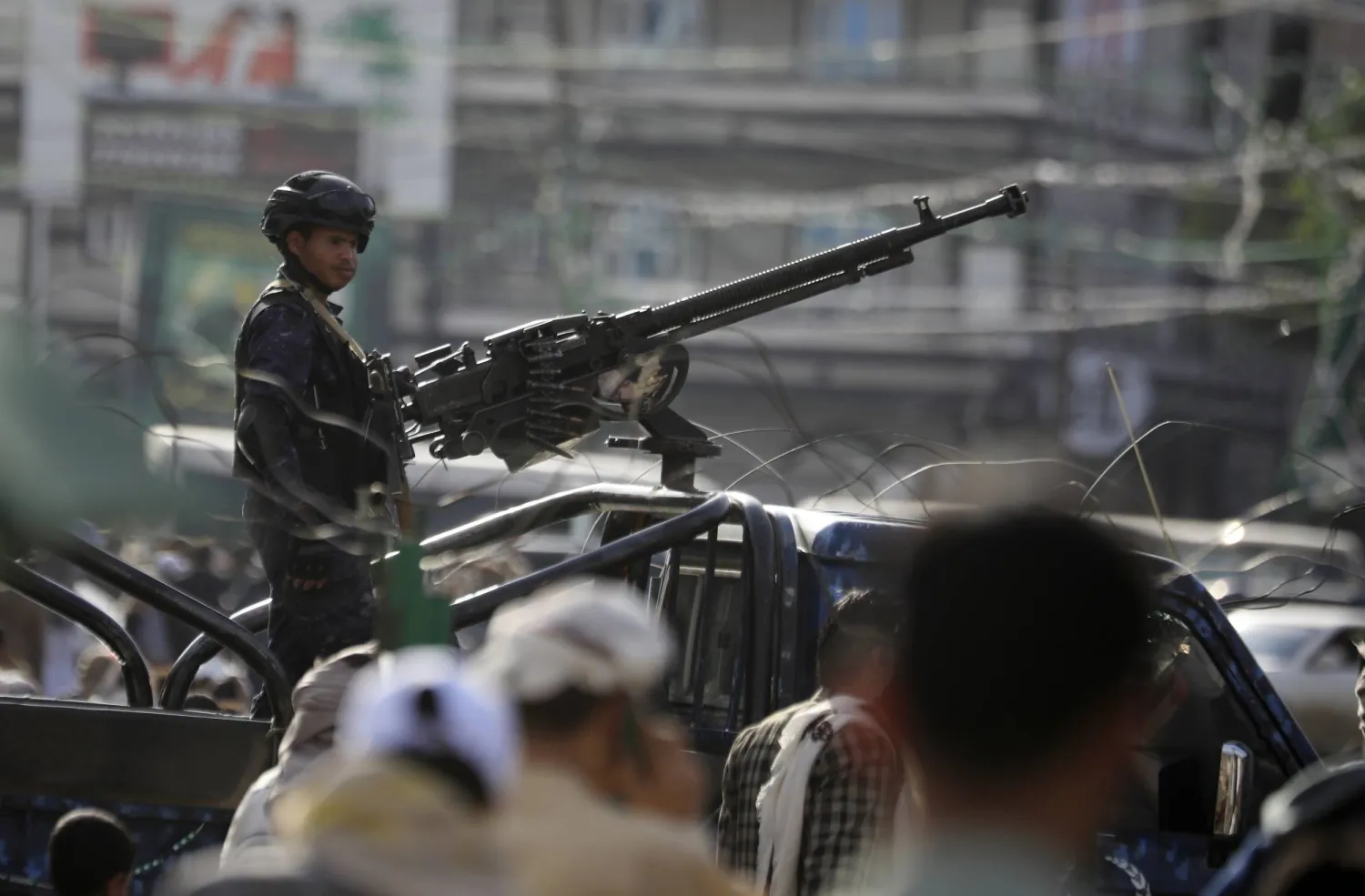
A Houthi militiaman mans a machine gun on a pick-up truck while on patrol in Sanaa, Yemen, 26 September 2025. EPA/YAHYA ARHAB
TT

Ahmed Ali Saleh Launches First Public Attack on Yemen's Houthis

A Houthi militiaman mans a machine gun on a pick-up truck while on patrol in Sanaa, Yemen, 26 September 2025. EPA/YAHYA ARHAB

Ahmed Ali Abdullah Saleh, the son of Yemen’s late president, launched his first public diatribe against the Houthi militias on Friday, ending years of silence since his father was killed in 2017.

Speaking on the 63rd anniversary of Yemen’s Sept. 26 revolution, which toppled the imamate in the north in 1962, Saleh branded the Houthis as heirs of the “backward clerical rule” and vowed their defeat, saying Yemenis who overthrew the imamate could do so again to “regain freedom and dignity.”

His fiery remarks, broadcast by his Yemen Today TV channel, came weeks after a Houthi court sentenced him to death, confiscated his assets and forced the group’s loyalists inside the General People’s Congress party (GPC) in Sanaa to strip him of his post as deputy party leader.

Analysts said the moves underscored the Houthis’ unease over his symbolic weight inside the party his father founded, and may have prompted his public challenge.

In his speech, Saleh evoked both the Sept. 26 revolution and the December 2017 uprising led by his father against the Houthis, portraying them as one continuous struggle. He called for a “national rescue project” to unite anti-Houthi forces, transcending political divisions that he said had allowed the group to consolidate power.

The address also carried regional messages. Saleh thanked Saudi Arabia, the United Arab Emirates, Egypt and Oman for supporting Yemen in its “darkest times,” stressing that the country could not rise in isolation from its Arab neighbors and allies.

Since the Houthis killed former president Ali Abdullah Saleh in December 2017, the group has kept GPC under the nominal leadership of Sadeq Abu Rass, whom party members and critics say lacks real authority and has been sidelined, even as Houthis accuse him and others of plotting against them.



Israel Says No Restriction on Troops ‘Eliminating Threats’ in Lebanon

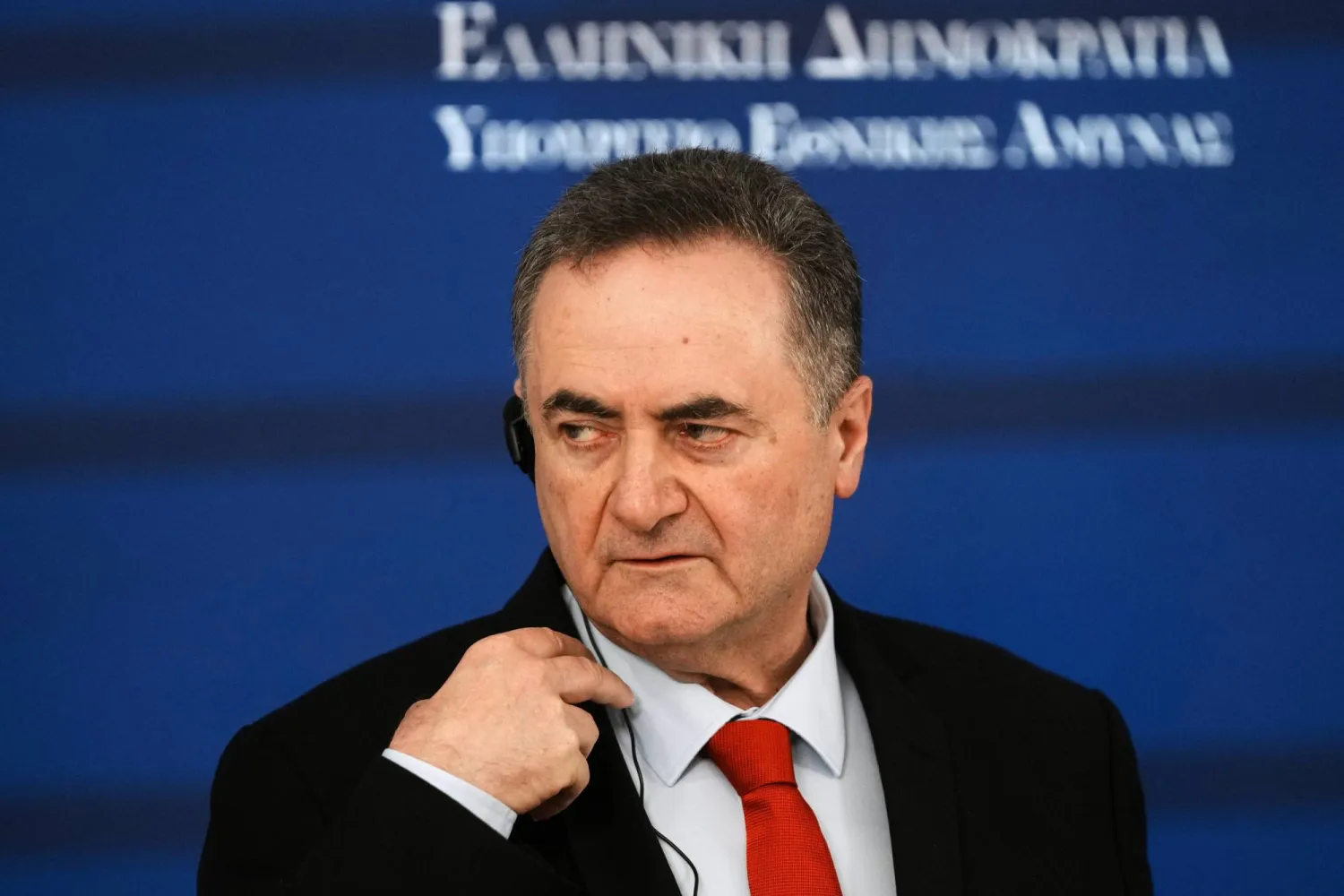
FILE -Israeli Defense Minister Israel Katz makes statements with his Greek counterpart Nikos Dendias after their meeting in Athens, Greece, Tuesday, Jan. 20, 2026. (AP Photo/Thanassis Stavrakis, File)
TT

Israel Says No Restriction on Troops ‘Eliminating Threats’ in Lebanon

FILE -Israeli Defense Minister Israel Katz makes statements with his Greek counterpart Nikos Dendias after their meeting in Athens, Greece, Tuesday, Jan. 20, 2026. (AP Photo/Thanassis Stavrakis, File)

Israel's defense minister said Sunday that Israeli forces had standing orders to act against any threat they encountered inside Lebanon, insisting that troops would remain in the so-called security zone established within Lebanese territory. 

"There has never been, and there is currently no restriction on Israeli soldiers in Lebanon from acting to eliminate threats... As Prime Minister Benjamin Netanyahu and I have made clear: Israel will not withdraw from the security zone in Lebanon," Israel Katz said in a statement, referring to an area extending roughly 10 kilometers (six miles) into Lebanese territory that Israel is occupying. 

Katz's remarks came shortly after Iran warned that it would not enter talks on a broader agreement with Washington unless the war in Lebanon comes to an end. 

Israeli ‌strikes killed ‌at least ‌20 people in Lebanon on Saturday, Lebanon's state ‌news agency NNA reported, a ⁠day ⁠after a ceasefire with Iran-backed Hezbollah took effect after months of escalating violence.


Iran Says Lebanon Conflict 'Main Topic' in US Talks

Smoke billows from southern Lebanon following an Israeli strike, as seen from Nabatieh, Lebanon, June 20, 2026. REUTERS/Stringer
TT

Iran Says Lebanon Conflict 'Main Topic' in US Talks

Smoke billows from southern Lebanon following an Israeli strike, as seen from Nabatieh, Lebanon, June 20, 2026. REUTERS/Stringer

Iran said on Sunday that the ongoing conflict in Lebanon between Israel and militant group Hezbollah will top the agenda in talks with the United States in Switzerland, as well as issues such as frozen Iranian funds and the sale of the country's oil.

"The Zionist regime continues to violate its commitment in Lebanon, this issue will be the main topic of discussion in today's talks," foreign ministry spokesman Esmaeil Baqaei said in a video shared by IRNA state news agency.

Tehran said on Thursday it had signed a deal with Washington to end months of hostilities that began on February 28 following US-Israeli attacks on Iran.

Under the agreement, the Israel-Hezbollah conflict in Lebanon was also due to stop, said AFP.

Iran's military announced on Saturday that it has closed the Strait of Hormuz again over ongoing Israeli attacks in Lebanon.

But there were no reports of fresh strikes in Lebanon after Saturday evening and Baqaei said since Saturday "a fragile cessation (in Lebanon) has been established".

He added that Tehran would also pursue the issue of its frozen and inaccessible funds during the talks.

"The issue of making available Iran's frozen or restricted assets, as well as the discussion related to issuing the necessary licenses for the sale of Iranian oil, will also be on the agenda," he said from Switzerland.

Iran has not officially disclosed the value of its frozen assets, though media reports have estimated them at more than $100 billion, largely frozen since the 1979 Iranian Revolution that toppled the US-backed shah.

According to Baqaei, the Iranian delegation will meet the US delegation in a "quadrilateral meeting" that will also include mediators Pakistan and Qatar.


UN Security Council Warns of 'Imminent Risk of Mass Atrocities' in Sudan

A child looks at Sudanese women lining up to receive aid at the Al-Afad camp for displaced people in the town of Al-Dabba, northern Sudan, on November 15, 2025. (Photo by Ebrahim HAMID / AFP)
TT

UN Security Council Warns of 'Imminent Risk of Mass Atrocities' in Sudan

A child looks at Sudanese women lining up to receive aid at the Al-Afad camp for displaced people in the town of Al-Dabba, northern Sudan, on November 15, 2025. (Photo by Ebrahim HAMID / AFP)

The United Nations Security Council said Saturday it is concerned over the "imminent risk of mass atrocities" in Sudan as it called on paramilitary forces encircling El-Obeid to back down.

The majority-Muslim southern city, in the Kordofan region, has been under siege for several months by the Rapid Support Forces (RSF), which has been at war with the regular army since April 2023.

"The members of the Security Council expressed concern at the imminent risk of mass atrocities and demanded the RSF immediately halt its assault on El-Obeid," the Security Council said in a statement.

"Council members called on the parties to the conflict to immediately halt the fighting."

The UN has voiced fears that there could be a repeat of the atrocities committed during the October 2025 assault on the city of El-Fasher, which it said bore "hallmarks of genocide."

The UN said Friday that Pekka Haavisto, the secretary-general's special envoy for Sudan, had called rebel paramilitary forces chief Mohamed Hamdan Daglo to urge him not to attack El-Obeid.

Haavisto "underscored the need to urgently de-escalate the situation in El-Obeid and avoid any actions that may further worsen the already dire humanitarian situation and put civilian lives further at risk," said Stephane Dujarric, spokesman for UN Secretary-General Antonio Guterres.

The official said aid workers were "preparing for the potential movements of large numbers of people" fleeing the city, and that "our humanitarian colleagues are doing the responsible thing, which is getting ready for the worst while hoping for the best."

Dujarric said Haavisto was also talking to countries with influence over the warring parties to encourage dialogue and prevent the assault.

The conflict in Sudan has killed tens of thousands of people and forced more than 11 million from their homes, creating what the UN describes as the world's largest displacement and hunger crises.