



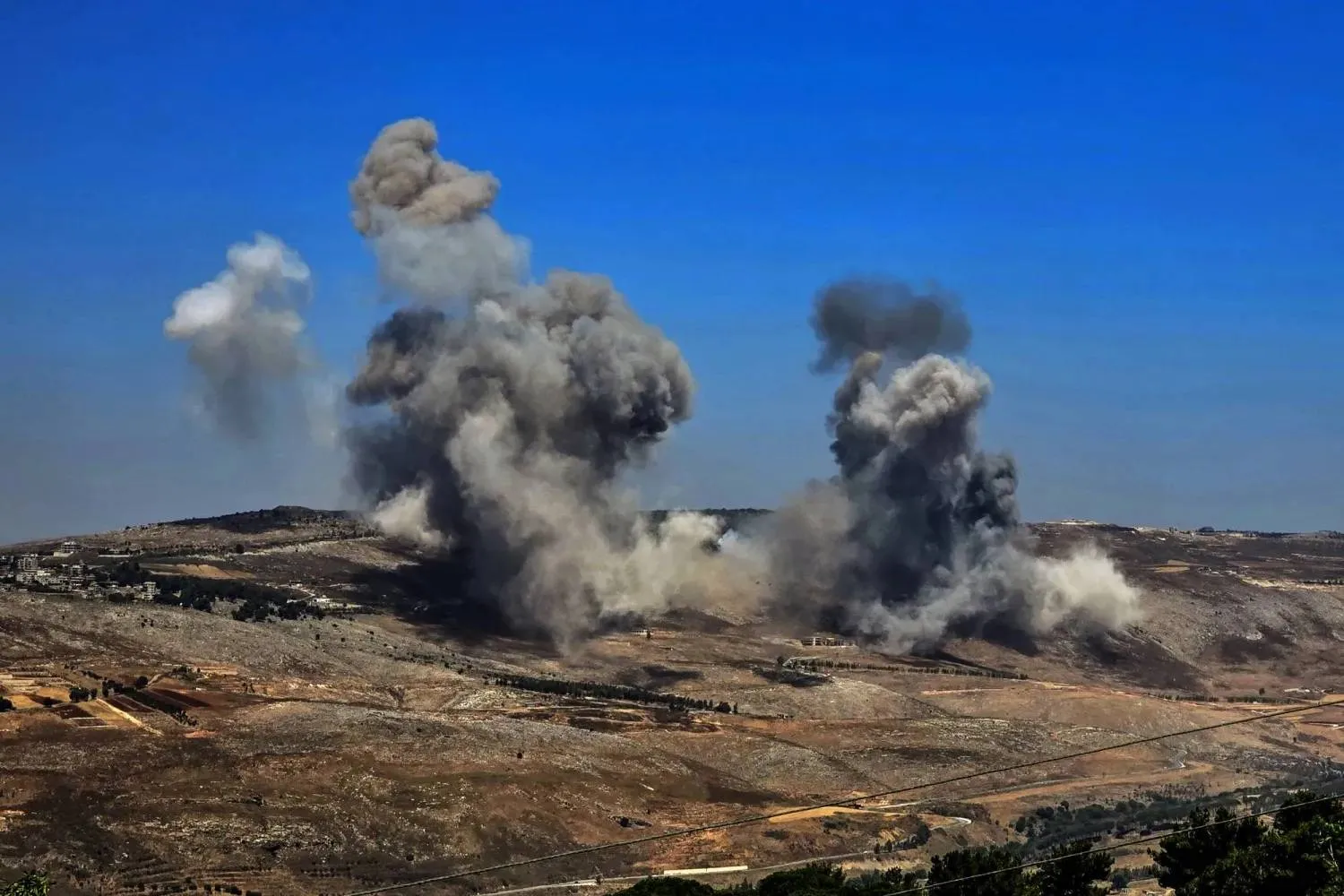

Israel’s attacks on Lebanon are no longer measured only by rubble or the number of buildings destroyed. What residents now describe is a sustained “spectacle of terror”: constant drone patrols, leaflets and warnings dropped over border villages, and sudden strikes in the dead of night or on religious holidays.
The aim, locals and psychologists say, appears to go beyond hitting specific targets, it is to turn time itself into a weapon, forcing civilians to live in a state of stifling, anticipatory fear.
Dawn firebelt around Nabatieh
In the same policy pattern, the woods of Ali al-Taher above Nabatieh al-Fawqa became a belt of fire on Friday morning when Israeli raids near Jabal al-Shaqif produced massive blasts that ignited fires and damaged homes and shops.
Low-flying drones and the dropping of stun devices heightened panic, leaving residents disoriented and extending fear into the minutiae of everyday life.
“ The sound of aircraft is terrifying, and once the strikes begin you know immediately the blow is coming. The sound alone plants fear,” said Rasha, from Kafr Rumman in the Nabatieh district, speaking to Asharq Al-Awsat.
She said the attacks leave people “living in permanent terror even after they stop,” adding: “That jolt never leaves us — every strike leaves a mark and deepens our insecurity.”
Warning then strike: Sept. 18
The night of Sept. 18 was an intense example of the pressure tactic: Israel issued urgent warnings to the towns of Mais al-Jabal, Kafr Tibnit and Dibin and provided maps of buildings it said were at risk.
Minutes separated the alerts from strikes on houses, prompting the mass displacement of thousands. In that dynamic, the warning itself becomes part of the punishment, cementing terror into the collective consciousness.
Holidays as targets — the southern suburbs
The deliberate timing is clearest in the southern suburbs of Beirut. At dawn on Eid al-Fitr, an Israeli strike hit a Hezbollah official in one neighborhood, turning a moment of celebration into a bloody scene that terrified residents.
Weeks later, on Eid al-Adha, urgent warnings preceded an assault that struck eight buildings at once. The chants of takbir mixed with the sound of explosions as religious observance became a trigger for flight and displacement.
By targeting holiday moments, strikes are aimed at the communal moment itself, a time of spiritual and family significance.
Psychological dimension
“The spectacle imposed by Israel is not new to the southerners’ consciousness, but it takes a different form now — programmed terror through drones and airstrikes,” said psychologist Dr. Daoud Faraj.
Speaking to Asharq Al-Awsat, he said that where village life in the 1990s was shaped by a visible military presence, today that presence has been replaced by a technological war machine — drones that never leave the southern skies and have become a constant source of anxiety.
Faraj said the deliberate timing of strikes — at dawn or on holidays — is intended to produce a collective psychological shock.
“The aim is not only military,” he said.
“It is strategic on a psychological level: to create the sense that death can arrive at any moment, that daily life can collapse in a second.”
He warned the tactic produces “fatalistic resignation. People no longer experience fear as a natural urge to flee; they pass a threshold into passive waiting — awaiting death or disaster — which is the most dangerous legacy of war because it paralyzes rational thought and decision-making.”
Faraj added that the predominantly Shiite communities being targeted face the spectacle directly: those with means move to safer areas, while the poor are forced to remain in danger, confronting their fate daily with a numbed consciousness.
Military angle
“The escalation is not simply a choice of timing,” said retired Brig. Gen. Khaled Hamadeh.
“The strikes are tied to located targets, and also to the state’s failure to fulfil its commitments,” he told Asharq Al-Awsat.
He described the escalation as an instrument of pressure meant to force the implementation of a unilateral arms plan.


