
The Houthi group has intensified weeks-long campaigns of arrests and enforced disappearances targeting civilians in areas under its control, Yemeni sources said, as reports emerged of mass burials of unidentified bodies, raising fears of extrajudicial executions inside detention centers.
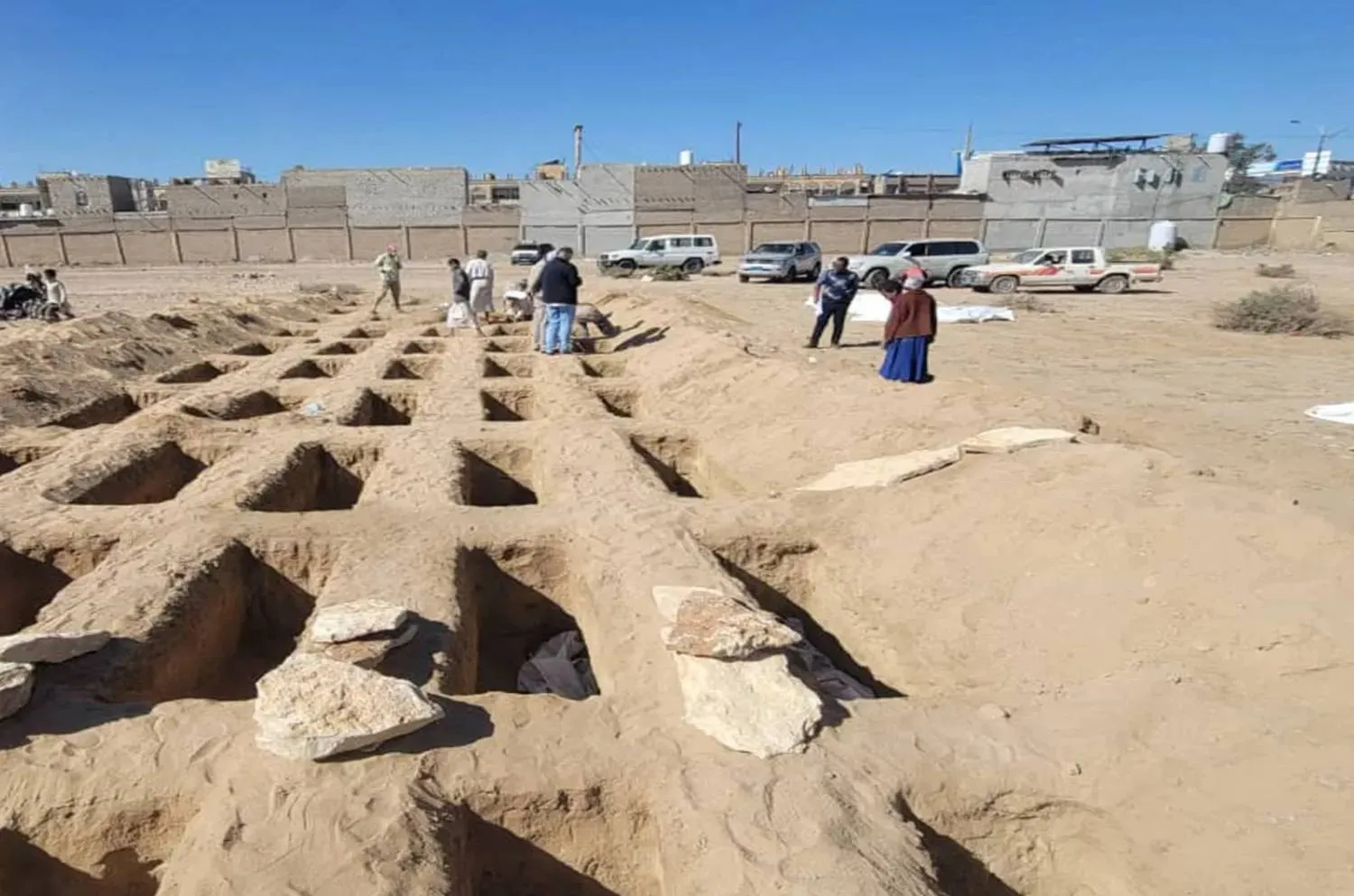
The sources said the Houthis recently buried around 13 bodies in a mass grave in al-Jawf province, far from the oversight of the International Committee of the Red Cross or judicial authorities, noting that the corpses had been held for months in the freezer of the state-run Al-Hazm Hospital.
The burials come as hundreds of families in al-Jawf continue searching for children abducted months or even years ago, amid Houthi refusals to disclose their status. Relatives suspect the bodies may belong to detainees who died under torture or were executed in internal purges.
Earlier, in early September, the Houthis reported burying more than 320 bodies in Sanaa and Amran provinces, including 126 in Sanaa and 194 in Amran, claiming the remains were unidentified. Activists and lawyers, however, said most were likely detainees, forcibly disappeared individuals, or Houthi fighters killed on the frontlines whose identities were never verified.
In Amran, local sources said senior Houthi leaders directly oversaw the burial of 194 bodies in mass graves, without notifying prosecutors or security agencies under Houthi control, and entirely excluding the Red Cross from the process.
Yemeni rights activists condemned the burials, saying that Houthi actions represent a complex humanitarian crime.
Rising Enforced Disappearances
The burials in al-Jawf, Sanaa, and Amran coincide with tightened Houthi security measures to prevent celebrations of the “26 September Revolution,” amid an unprecedented spike in kidnappings and enforced disappearances.
A rights report by the Monitoring and Documentation Unit at the Capital Media Center said the Houthis committed more than 182 violations across Sanaa and several provinces in August alone, including killings, injuries, arrests, abductions, and enforced disappearances.
During the same period, the group reportedly abducted around 100 members and leaders of the General People’s Congress party (Sanaa faction), as well as a senior official from the Socialist Baath Party.
The Houthis also raided offices of international organizations, abducting 11 UN staffers and six former local employees.
Commercial sectors were not spared, the report added, documenting 12 raids targeting traders and residents in the capital, alongside four incidents of intimidation against women and children.
These developments come amid widespread criticism of the international community, which has largely remained silent, while civilians in Houthi-held areas face heightened security repression, absence of justice, and deteriorating humanitarian conditions.