Lebanese are watching closely to see how Hezbollah will respond if US President Donald Trump follows through on his threat to launch a "devastating" military strike against Iran after the US midterm elections.
The question is whether the Lebanese group will honor its pledge not to intervene in support of Tehran this time or repeat what happened last March, when it fired six rockets at Israel in retaliation for the assassination of Iranian Supreme Leader Ali Khamenei, despite having previously assured Parliament Speaker Nabih Berri that it would stay out of the conflict.
Hezbollah Will Not Intervene to Support Iran
Asharq Al-Awsat has learned that Hezbollah has once again informed Berri that it will not intervene in support of Iran if war breaks out. Berri subsequently conveyed this assurance to President Joseph Aoun.
Iranian Deputy Foreign Minister Saeed Khatibzadeh also told a group of lawmakers aligned with the Shiite duo during his recent visit to Beirut that Tehran would not ask Hezbollah to intervene if the United States attacked Iran in accordance with Trump's threat.
He said Iran was capable of defending itself and had "made considerable progress in preparing to prevent the attack from achieving its objectives."
Lebanese parliamentary sources told Asharq Al-Awsat that Khatibzadeh "was clear that Iran would not seek Hezbollah's assistance given the imbalance of power between the group and Israel, since its intervention would not change the course of the confrontation."
The sources said Khatibzadeh told the lawmakers that Iran understood the delicate situation in Lebanon and had no intention of asking Hezbollah to involve itself in an unequal confrontation.
They pointed to a US warning conveyed to Aoun during a telephone call with Secretary of State Marco Rubio, which the Lebanese president subsequently relayed to Berri and Prime Minister Nawaf Salam.
The sources said Hezbollah could not afford the consequences of a backlash from its own support base, prompting it to exercise caution and align itself with Berri's position.
The group would be unable to absorb another wave of displacement resulting from Israeli Defense Minister Israel Katz's threat to expand the security zone in southern Lebanon, potentially extending attacks to Beirut's southern suburbs and displacing approximately one million Shiites.
Hezbollah is already struggling to accommodate displaced residents, providing financial assistance to ease the pressures they face.
The sources stressed that the broader Shiite community would not remain silent if Hezbollah decided to intervene for a second time in support of Iran, as it did last March in violation of its pledge to Berri.
That reversal embarrassed Berri in his dealings with Aoun and Salam, after he had assured both leaders that Hezbollah would not intervene.
Berri had based those assurances on a message from Hezbollah Secretary-General Naim Qassem, conveyed through regular communication between Qassem's political aide, Hussein Khalil, and Berri's political adviser, MP Ali Hassan Khalil.
Intervention Would Trigger a Crisis Within the Shiite Duo
The sources said Qassem's failure to honor his commitment not to intervene had created a crisis of confidence within the Shiite duo, the alliance between Hezbollah and Berri's Amal Movement.
The dispute became public and raised legitimate questions about who actually makes decisions within Hezbollah and whether the Iranian Revolutionary Guard Corps holds the ultimate authority, given its influence inside the group.
They noted that Hezbollah's leadership had initially informed the relevant parties, particularly Berri, that the group had nothing to do with the rocket launches.
However, it refrained from issuing a public statement to that effect, which could have enabled Washington to intervene with Israel to prevent a retaliatory response.
The sources added that although Hezbollah's leadership had avoided issuing a statement, Berri was surprised when the group's military media office released an announcement claiming responsibility for the rockets in retaliation for Israel's assassination of the elder Khamenei.
Israel subsequently expanded its occupation to include territory south of the Litani River, extending toward Beaufort Castle and the surrounding towns.
No Direct Communication Between Berri and Qassem
The sources also reflected on Berri's remarks that his relationship with Hezbollah had been closer under its former secretary-general, Hassan Nasrallah, and that there was neither an older nor a younger brother in the relationship.
They said Berri had maintained direct communication with Nasrallah, who possessed the ability to intervene with Iran's leadership and secure a response to Berri's concerns about developments in Lebanon and the regional axis of resistance.
The sources explained that Lebanon's current security conditions, particularly the increasing number of Israeli assassinations targeting Hezbollah's political and military leaders, do not permit direct communication between Berri and Qassem.
Instead, communication takes place daily through their respective aides.
This has prevented the relationship from developing the level of personal political chemistry needed to contain emerging disagreements, unlike the relationship that existed between Berri and Nasrallah.
Political Coexistence Within the Shiite Duo
According to the sources, relations between the two pillars of the Shiite duo are governed by a form of political coexistence, or cohabitation, in which both sides maintain their differences while seeking to prevent clashes between their supporters, although such confrontations have occasionally occurred.
The sources said Berri's remarks about his relationship with Hezbollah were also directed at other political forces, encouraging them to meet him halfway rather than treating the Shiite duo as a single political party with which compromise is impossible.
They quoted Berri as telling visitors that Lebanon currently faces two enemies: Israeli occupation and sectarianism.
This, they said, explains his continued emphasis on strengthening domestic stability, avoiding inflammatory rhetoric, preventing divisions among Lebanese communities and addressing the public in a moderate tone.
Berri opposes attempts by political factions to score points against the Shiite duo under the pretext that settling political scores with the alliance is necessary.
Visitors quoted him as saying that resisting Israeli occupation, which could be prolonged, requires all parties to meet halfway and focus on strengthening the domestic front by prioritizing national unity.
That, he argued, requires everyone to move away from the sectarian rhetoric that dominates political discourse.
According to the sources, Berri differs from Hezbollah in both words and actions.
He serves as a political pillar supporting the government's survival and continuity and has not hesitated to intervene when necessary to preserve civil peace, which he considers a red line, alongside the military institution.
This explains his insistence on rejecting the use of street protests to bring down the government, as well as his efforts to encourage Hezbollah to engage in dialogue with Aoun.
Although Berri does not support direct negotiations with Israel, the sources said his position differs from that of his ally in several respects.
Beyond maintaining communication with Aoun and Salam, he rejects threats and accusations of treason.
He has also criticized Hezbollah for failing to respond to calls to withdraw from the Ali al-Taher hills to facilitate the deployment of the Lebanese army.
Other differences include Berri's opposition to Hezbollah's military intervention in support of Gaza and Iran, his support for ministers affiliated with his movement who endorsed the principle of exclusive state control over weapons, and his backing of the ban on Hezbollah's military and security wing.
His parliamentary bloc also voted to grant the government confidence for a third time, unlike Hezbollah lawmakers, who withdrew from the session.
The sources expressed surprise that other political forces had not shown greater openness toward Berri.
They questioned with whom a political settlement could be reached, should conditions eventually allow one to emerge, if Berri continued to be included in the political campaigns directed against Hezbollah.
They argued that engaging with Berri was more necessary than ever, particularly because direct channels of communication with Hezbollah remain severed.
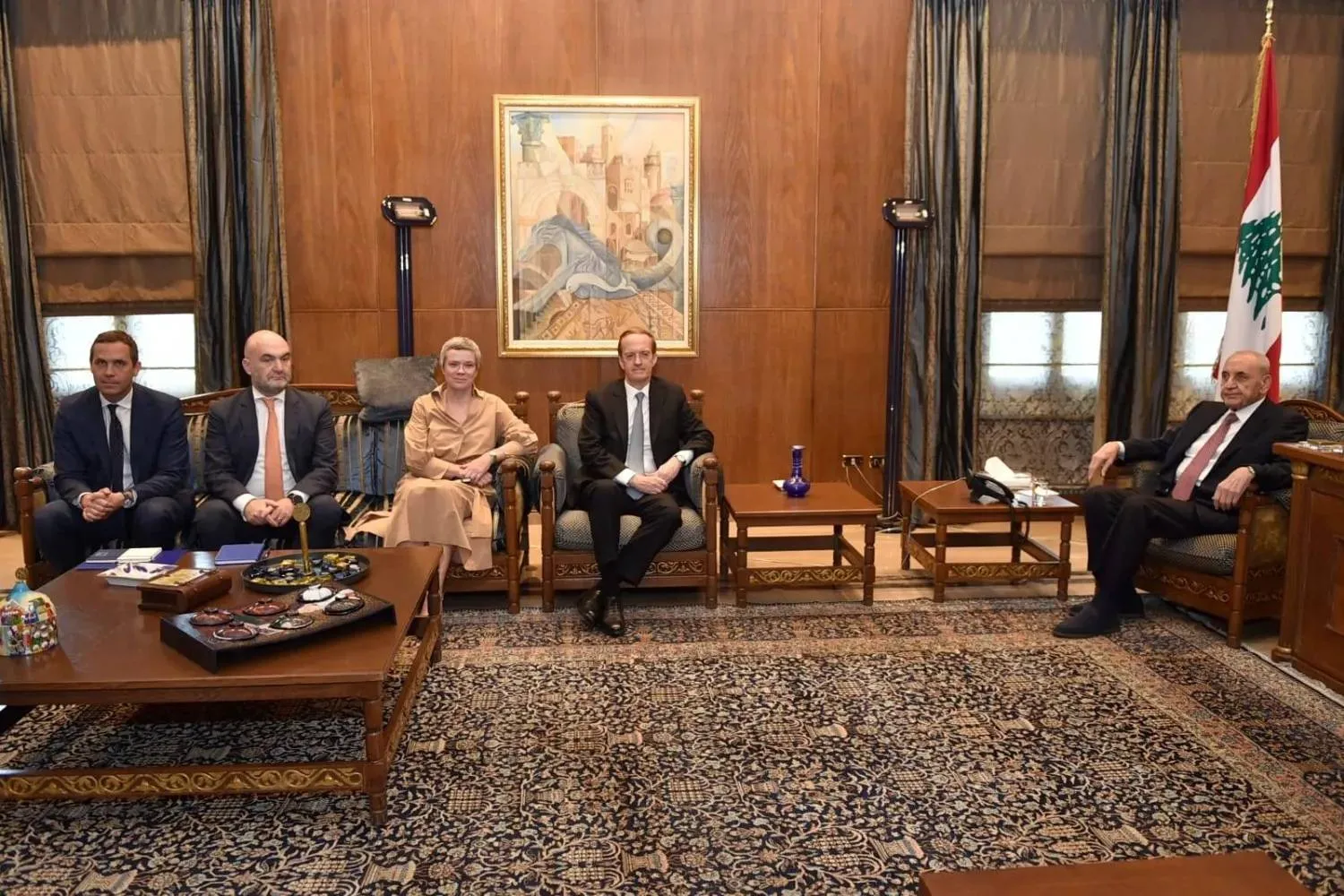
This explains why Arab and foreign envoys visiting Beirut continue to meet him.
It is not because Berri carries a mandate from Hezbollah, which sometimes disregards his commitments, but because of his position within Lebanon's political system and his considerable influence within the Shiite political landscape.
His approach to major issues on Lebanon's political agenda often differs from Hezbollah's.
The latest example was his intervention to prevent an internal government crisis over whether explosives seized in Dahr al-Baydar should be referred to the Judicial Council before investigations were completed.
Berri and his lawmakers refrained from taking a position on the matter out of consideration for Hezbollah.
The question remains: Will Hezbollah honor its pledge this time, or will it once again intervene in support of Iran under pressure from the Iranian Revolutionary Guard Corps?