Int’l Human Rights Monitor Warns of Cholera Outbreak in Yemenhttps://english.aawsat.com/arab-world/5201224-int%E2%80%99l-human-rights-monitor-warns-cholera-outbreak-yemen
Int’l Human Rights Monitor Warns of Cholera Outbreak in Yemen
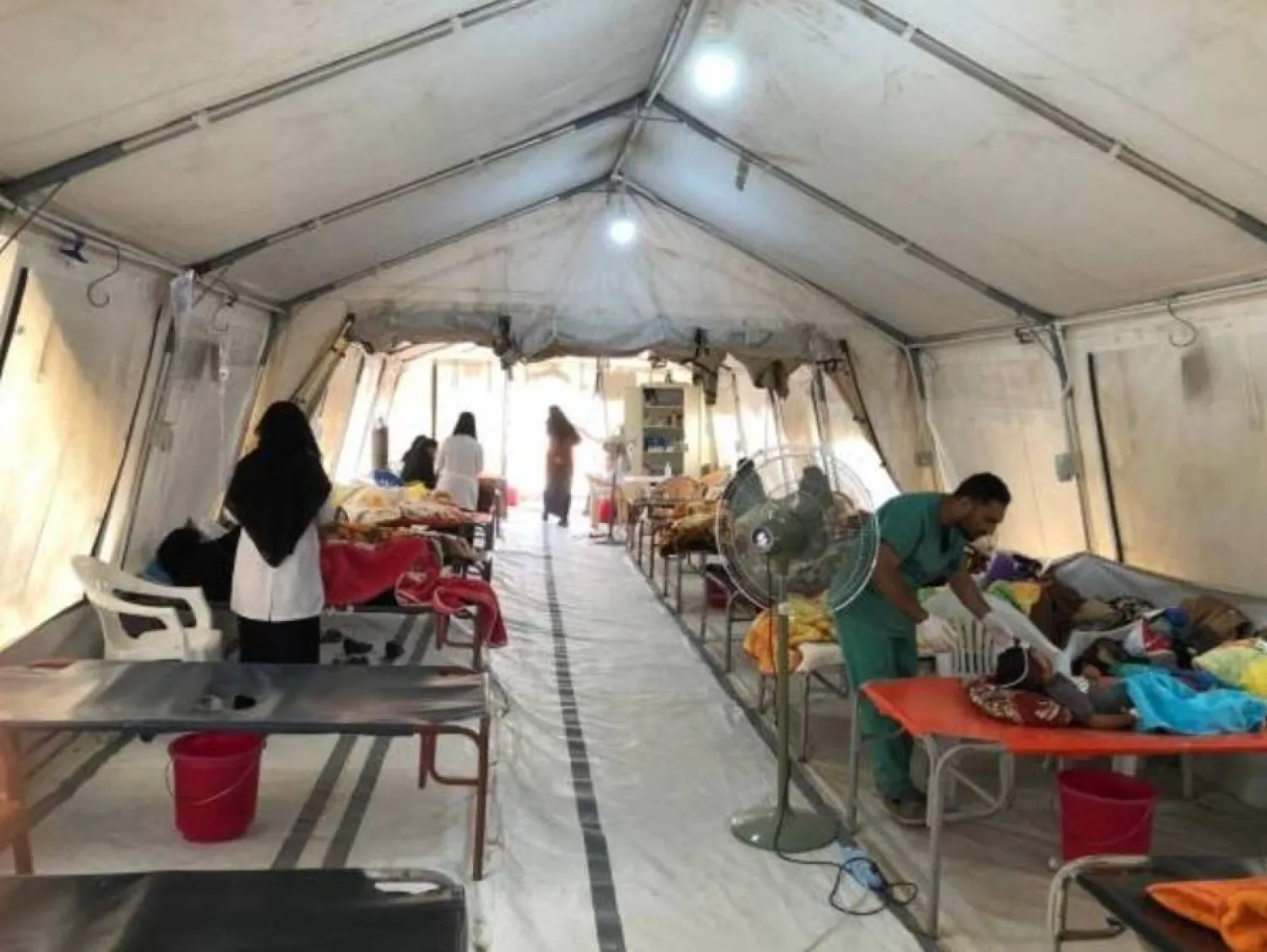
Patients recieve treatment at a hospital in Yemen. Photo: MSF
The Euro-Med Human Rights Monitor has said that between March 2024 and August 2025, Yemen recorded about 332,000 suspected cholera cases and 1,073 related deaths, ranking third globally in infections.
In its latest report, it said that the cholera outbreak has become endemic in Yemen due to its extensive spread, high infection and death rates, and failure to address root causes.
“Between 2017 and 2020, Yemen suffered the largest cholera outbreak in modern history, and new cases are still recorded daily, further straining an already collapsed health system amid dwindling international funding and fragile water and sanitation infrastructure,” it noted.
The report added that the outbreak “stems directly from the collapse of water and sanitation networks, poor waste management, and obstruction of medical teams and supplies.”
“The de facto authorities and parties in Yemen” are responsible for maintaining, repairing, and protecting these networks and ensuring access to safe water and sanitation services, it stated.
According to the Monitor, the most vulnerable groups, particularly children and women, bear the greatest burden of humanitarian crises, including cholera outbreaks.
“Tens of thousands of Yemeni children contract acute diarrhea caused by cholera each year, leading to dehydration, severe malnutrition, and life-threatening illness. Severe overcrowding in displacement camps, poor hygiene and sanitation, and limited access to safe water make these camps ideal environments for the rapid spread of the disease among vulnerable groups,” it said.
It added that available data on the outbreak likely understate the true scale of the crisis.
“Actual infections and deaths are believed to be much higher due to weak surveillance systems, limited healthcare coverage, and many families’ reluctance to report cases because of the difficulty in accessing medical facilities. These factors make accurately assessing the epidemic’s scope extremely difficult,” said the report.
The Yemen Humanitarian Needs and Response Plan (HNRP) faces a severe funding shortfall exceeding 80 percent, caused by several donor countries and entities failing to honor their financial pledges, it added.
By September this year, only 474 million dollars of the 2.48 billion required had been disbursed. “This shortfall has weakened cholera control programs and disrupted many preventive and treatment activities, despite the significant efforts of local and international health organizations to protect millions of Yemenis from the epidemic.”
The Monitor called on states to honor their pledges.
Baghdad Sends Team to Saudi Arabia, UAE to Trace Attackshttps://english.aawsat.com/arab-world/5275826-baghdad-sends-team-saudi-arabia-uae-trace-attacks
Baghdad Sends Team to Saudi Arabia, UAE to Trace Attacks
Iraqi Prime Minister Ali al-Zaidi (AFP)
A senior Iraqi security team will soon travel to Saudi Arabia and the United Arab Emirates to request intelligence on the trajectory and launch sites of attacks that targeted the two countries, an Iraqi government official said on Thursday, as part of an ongoing investigation.
The Iraqi official, who asked not to be identified because he was not authorized to speak publicly, said the Ministerial Council for National Security, at its latest meeting chaired by Prime Minister and Commander in Chief of the Armed Forces Ali al-Zaidi, approved the formation of an investigative committee into the attacks, including two teams, one of which will travel to Saudi Arabia and the UAE.
The Iraqi government said on Wednesday it would take “all measures against those involved” if it was proven that Iraqi territory had been used as a launchpad for attacks targeting Saudi Arabia and the UAE.
It said a special committee had been formed to coordinate with the relevant authorities in both countries and to follow up on the ongoing investigations.
The Iraqi official told Asharq Al-Awsat that the investigative team would use evidence and radar maps to track the parties involved.
“The investigative committee will submit its final report to Prime Minister Ali al-Zaidi as soon as it completes its work,” they said.
Earlier, Sabah al-Numan, spokesman for the Commander in Chief of the Armed Forces, said in a statement that the Ministerial Council for National Security had discussed the continuing investigations into the attacks that targeted Saudi Arabia and the UAE.
He said a special committee had been formed to contact officials in the two countries, and that the prime minister had ordered that all measures be taken against those involved if it was proven that Iraqi territory had been used as a launchpad for the attacks.
Separately, the Coordination Framework alliance said in a statement late on Wednesday that it rejected any attack or aggression targeting neighboring or Arab countries, stressing “the importance of respecting the sovereignty of states and sparing the region further tension.”
It also called on security agencies to complete the ongoing investigations and take the necessary measures to protect Iraq’s security and sovereignty.
The UAE demanded that the Iraqi government urgently and unconditionally prevent “all hostile acts” emanating from its territory, following a drone attack that targeted the Barakah nuclear power plant.
Saudi Arabia condemned the attack on the UAE “in the strongest terms,” saying it categorically rejected attacks that threaten the region’s security and stability.
The Saudi Foreign Ministry stressed the Kingdom’s full solidarity with the UAE and its support for all measures taken by Abu Dhabi to preserve its sovereignty, security and territorial integrity.
On the security front, Iraq’s Counter Terrorism Service announced the opening of an intelligence coordination center within the Counter Terrorism Forces Command, in a move it said was aimed at strengthening the agency’s intelligence capabilities and unifying efforts among different intelligence units.
The Counter Terrorism Service said in a statement that its chief, Staff Lieutenant General Karim al-Tamimi, visited the headquarters of the Counter Terrorism Forces Command and opened the intelligence coordination center.
It said the center aimed to strengthen and unify intelligence efforts, increase the intelligence capabilities of the agency’s personnel, and enhance coordination and cooperation among different intelligence units.
Hezbollah Shifts Fight to Counter Israeli Expansion Attemptshttps://english.aawsat.com/arab-world/5275822-hezbollah-shifts-fight-counter-israeli-expansion-attempts
Officials carry the bodies of victims killed in the Israeli strike on the southern village of Deir Qanoun al-Nahr, outside Jabal Amel Hospital in the Tyre area of south Lebanon, before the bodies were transferred to their hometown for burial, as security conditions prevented families from holding the farewell ceremony in the village, on May 21, 2026. (Photo by KAWANT HAJU / AFP)
Hezbollah Shifts Fight to Counter Israeli Expansion Attempts
Officials carry the bodies of victims killed in the Israeli strike on the southern village of Deir Qanoun al-Nahr, outside Jabal Amel Hospital in the Tyre area of south Lebanon, before the bodies were transferred to their hometown for burial, as security conditions prevented families from holding the farewell ceremony in the village, on May 21, 2026. (Photo by KAWANT HAJU / AFP)
Hezbollah sent a message to Arab and other embassies in Lebanon on Thursday, setting out its demands to their governments: an end to assassinations, the withdrawal of Israeli forces from Lebanese territory, the return of residents to their villages, and the release of detainees held by Israel.
It said the issue of its weapons should be addressed through “internal dialogue.”
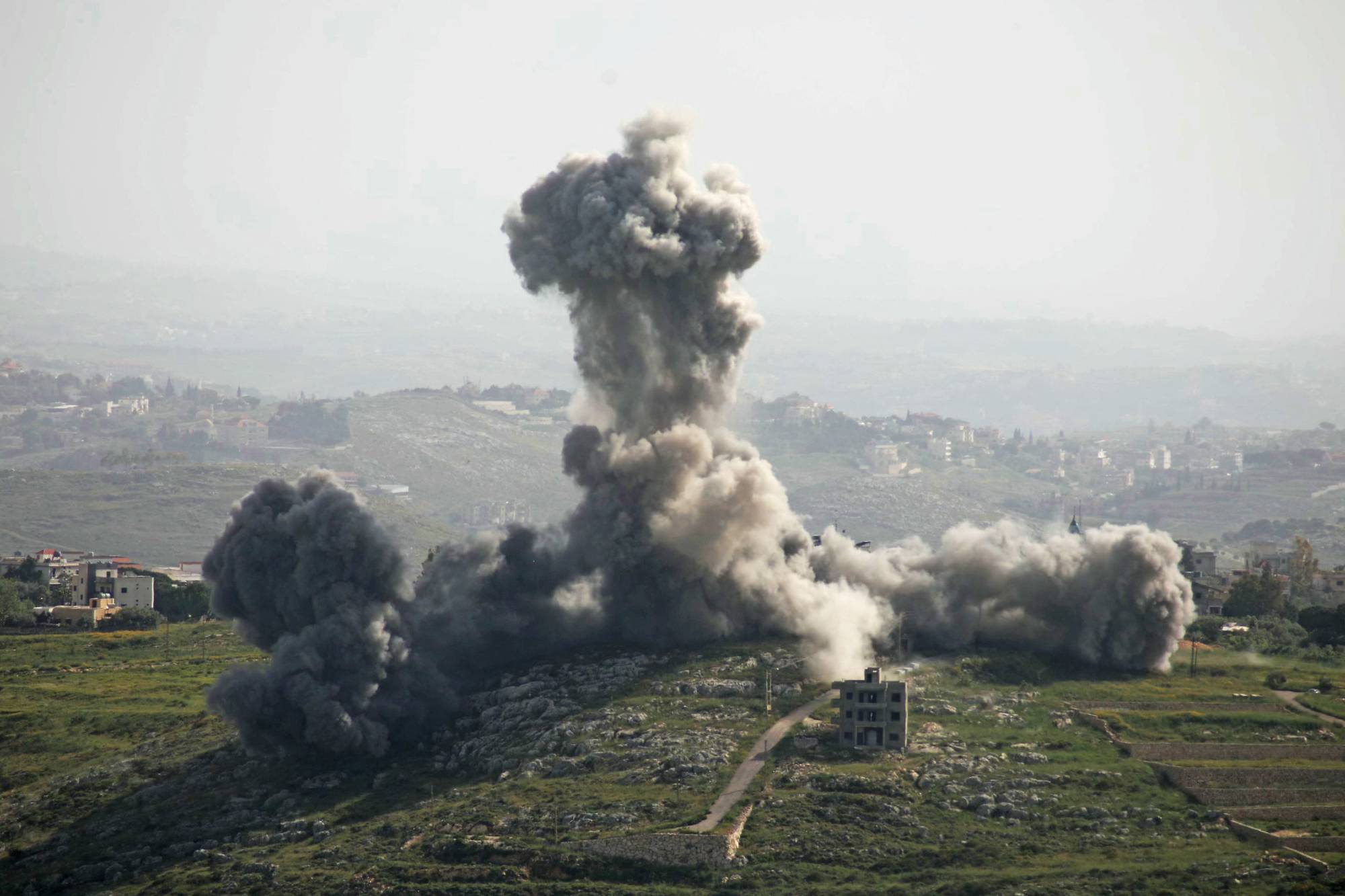
The move came as military operations continued in south Lebanon, including an explosion in one village on the third line from the Israeli border, while Hezbollah focused on countering what it sees as Israeli attempts to expand deeper into Lebanese territory.
Hezbollah is trying to prevent any further Israeli advance in south Lebanon aimed at tightening control over villages within or around the “yellow line.” Security sources in the south told Asharq Al-Awsat the group’s pressure is concentrated on likely points of new incursions, especially around Zawtar in the eastern sector on the Litani River bank.
They said Israeli forces were trying to push through those vulnerable areas toward Lebanon’s interior, whether in Zawtar or Hadatha.
Israeli forces advanced on Wednesday into the eastern neighborhood of Hadatha, a town on the third line of border villages. Hezbollah said it had confronted the advance from several directions.
Local sources said later on Wednesday that Israeli forces carried out an explosion in the eastern neighborhood, alongside heavy air and artillery strikes on the town.
The advance began from Rshaf, a town on the second line of border villages. Rshaf is adjacent to Debel, a Christian town, many of whose residents have been displaced to the Christian towns of Rmeish and Ain Ebel, while others fled to areas deeper inside Lebanon during the third week of the expanded war.
Security sources in South Lebanon said Hezbollah intensified its operations in the area to prevent Israeli forces from entering Hadatha and seizing it.
They said the group had “concentrated its military weight in that area, in the face of an Israeli military weight focused on the same area to advance inland.”
The intensity was reflected in Hezbollah statements announcing rocket salvos and suicide drone attacks on gatherings of Israeli army vehicles and soldiers in Debel and Rshaf, as well as attacks around Hadatha “with attack drones and heavy rocket salvos in repeated waves.”
On the Israeli side, the Hebrew website Walla reported that Colonel Meir Biderman, commander of the 401st Brigade, was wounded in a Hezbollah attack in Debel.
It quoted a military source as saying Biderman “entered a building in south Lebanon that was known to be protected in order to sleep there, then came under attack by a drone.”
The source said the brigade commander was seriously wounded when the drone exploded.
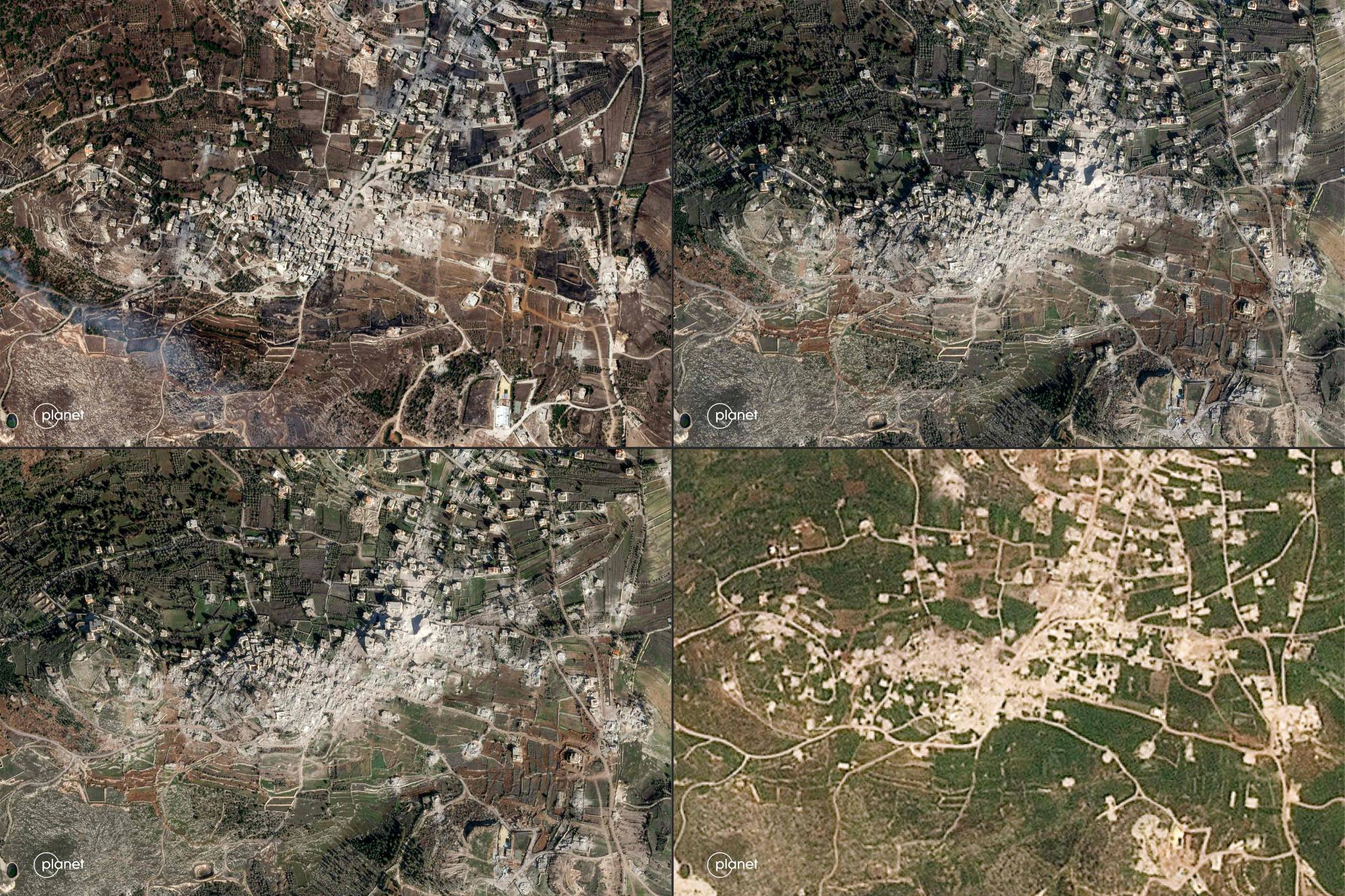
(COMBO) This combination of handout satellite images taken by Planet Labs PBC shows views of the village of Yaroun in southern Lebanon close to the border with Israel on (top L to R followed by bottom L to R) October 5, 2024; January 10, 2025; January 30, 2025; and on May 2, 2026. (Photo by 2026 Planet Labs PBC / AFP)
3,089 killed
Air and artillery strikes continued inside Lebanon. The Health Ministry said 3,089 people had been killed and 9,397 wounded from March 2 to May 21.
The escalation also continued on the ground. An Israeli drone struck a motorcycle in Froun, killing its driver. Artillery fire hit Kfar Dounin, Baraachit, Mansouri, Beit Yahoun and Touline. Israeli warplanes struck Ghandouriyeh.
Israeli warplanes also raided the outskirts of Touline and the road between Toura and Jennata in the Tyre district.
An Israeli drone dropped sound bombs near farmers in Haniyeh, south of Tyre, without causing casualties.
Smoke rises from the site of an Israeli airstrike that targeted the southern Lebanese village of Deir El Zahrani on May 13, 2026. (Photo by Kawnat HAJU / AFP)
Hezbollah turns to Western and Arab states
Against that backdrop, Hezbollah, through its parliamentary Loyalty to the Resistance bloc, turned to foreign and Arab diplomatic missions in Beirut. The message addressed governments on the situation in the south and sought to justify the fighting there.
In a memo explaining the field situation during the 15 months before it joined Iran’s support war, the bloc said political and diplomatic efforts “did not lead to a halt to these Israeli crimes against our country.”
It said the Lebanese government had failed to compel “the occupying entity” and the sponsors of the agreement to implement it, while the committee tasked with applying the agreement, “the mechanism,” had deliberately failed to do its job, worsening the suffering of the Lebanese people.
The bloc said: “Our demand as Lebanese, and the demand of everyone keen on the sovereignty, independence and freedom of their country, is to stop all forms of aggression against our national sovereignty by air, land and sea, to halt hostile actions, including the assassination of citizens and the targeting of civilian infrastructure, homes and public and private institutions, the withdrawal of the Israeli enemy army from our land to the internationally recognized borders, the return of residents to their villages and their reconstruction, and the release of detainees from occupation prisons.”
It added: “As for other issues linked to protecting Lebanon, they are a Lebanese matter that can be addressed through internal dialogue leading to the completion of a national security strategy to which all Lebanese commit,” a reference to Hezbollah’s disarmament.
Building Collapse Kills 11 People in Morocco's Fezhttps://english.aawsat.com/arab-world/5275747-building-collapse-kills-11-people-moroccos-fez
Building Collapse Kills 11 People in Morocco's Fez
The Moroccan flag is seen in front of a destroyed building following the devastating earthquake in Marrakesh last month. (Reuters)
Eleven people were killed and six others injured when a four-storey building collapsed overnight in the Moroccan city of Fez, about 200 kilometres (124 miles) east of Rabat, state-owned broadcaster 2M said on Thursday.
Authorities said a search for others who might still be buried was ongoing. Media showed footage of rescuers and residents digging through the rubble, Reuters reported.
An investigation has been launched into the incident, and residents of adjacent buildings were asked to evacuate as a precaution against potential further collapses, authorities said.
Fez, a former capital dating back to the eighth century and the country's third-most-populous city, has seen similar incidents in recent months, including one in December when two buildings collapsed, killing at least 22 people.
In 2010, the collapse of a minaret in the historic northern city of Meknes killed 41 people.
Adib Ben Ibrahim, housing secretary of state, said last year that approximately 38,800 buildings across the country had been classified as being at risk of collapse.
لم تشترك بعد
انشئ حساباً خاصاً بك لتحصل على أخبار مخصصة لك ولتتمتع بخاصية حفظ المقالات وتتلقى نشراتنا البريدية المتنوعة