
Armed clashes erupted in the western Libyan city of Misrata and continued into the early hours of Friday, in the latest episode of the city’s long-running struggle for security dominance among rival factions.
It was the first time since the overthrow of late president Muammar Gaddafi in 2011 that Misrata, Libya’s third-largest city, had witnessed fighting between its own armed groups.
The clashes broke out south of the city, between two factions loyal to the Tripoli-based Government of National Unity (GNU), led by Prime Minister Abdulhamid al-Dbeibah.
The rival groups were the “Joint Operations Force” and the “24th Infantry Battalion” commanded by Najib Ghabaq, along with affiliated units. The fighting was reportedly triggered by disputes over control of local security zones.
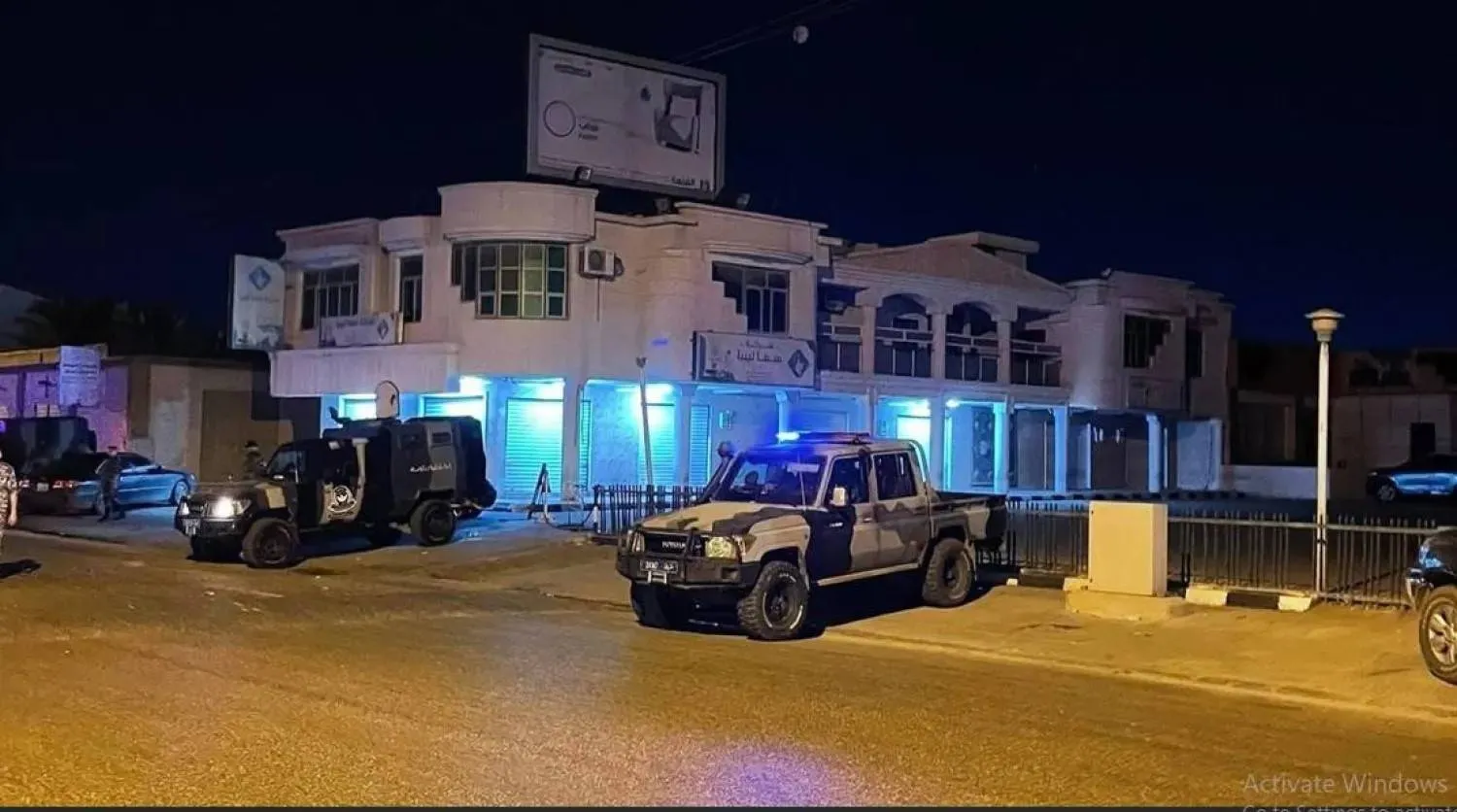
Videos circulated on social media showed exchanges of gunfire across southern Misrata before the fighting spread toward the airport road in the al-Ghiran district, forcing authorities to suspend flights and close the airport.
Witnesses reported a large deployment of vehicles mounted with heavy weapons belonging to the 24th Infantry Battalion along the airport road, while the Joint Operations Force gathered dozens of armed vehicles on Tripoli Street in central Misrata.
Political activist Abdelhamid Suleiman Khudr, one of the leaders of the “Misrata Movement,” described the sudden escalation between the two factions as “something unseen since 2011,” saying it had terrified residents.
Khudr said the intensity of the fighting was “indescribable,” citing the widespread use of medium and light weapons and rocket-propelled grenades that reached areas near the city’s Oncology Hospital.
He urged Misrata’s security services to intervene immediately to stop the fighting and called on residents to protest, demanding the removal of all armed groups from the city.
Eyewitnesses said Ghabaq’s men had recently been setting up random checkpoints and stopping citizens “without legal authority.” The latest confrontation, they added, was sparked after members of the 24th Infantry Battalion detained and assaulted an officer from the Joint Operations Force, igniting the standoff.
Armored units from the Joint Operations Force then advanced to confront Ghabaq’s battalion, which was backed by fighters from al-Ghiran. The clashes left at least four civilians wounded, who were taken to hospital, though no official casualty figures had been released by Friday afternoon.
Misrata, located about 200 km (125 miles) east of Tripoli, is home to some of the country’s most powerful armed formations, which have played a key role in supporting Dbeibah against the “Special Deterrence Force” led by Abdulrauf Kara.
Calm returned to the city by Friday morning after the intervention of the 111th Brigade, the Special Missions Directorate, and the 63rd Infantry Brigade, which managed to contain the fighting. However, many residents continued to demand “a lasting solution to remove all armed groups from Misrata.”
The GNU has remained silent over the incident. A military source in western Libya told Asharq Al-Awsat that the situation was now under control following the intervention of government security units, adding that “an urgent investigation will be launched to prevent similar incidents.”
Armed clashes between militias are common in western Libya, driven by persistent rivalries over territorial control and influence.
The fighting coincided with the fifth anniversary of the ceasefire agreement between eastern and western Libya. The country’s Joint Military Commission (5+5) reiterated its commitment to disbanding all armed formations and militias nationwide.
The issue of militias remains one of the most pressing challenges for the executive authorities in Tripoli.
According to a military source, the GNU continues to seek ways to dismantle these groups and integrate them into state institutions. But political observers say Dbeibah’s government has struggled to address the crisis, given its dependence on some of the same armed factions to maintain power.