


Sudan's RSF Says Arrests Fighters Accused of Abuses in El-Fasher

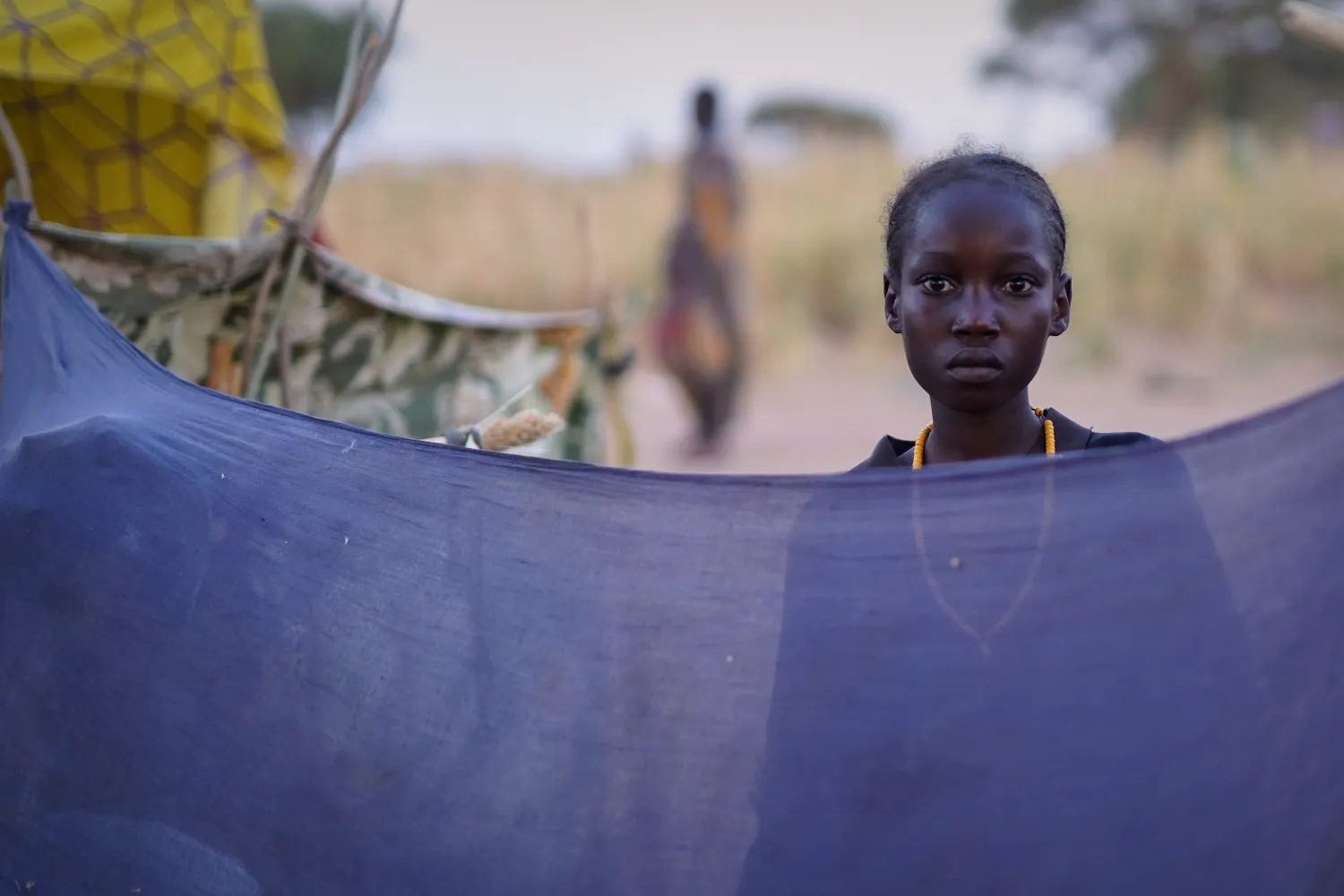
This photo released by UNICEF shows a woman from el-Fasher at a displacement camp where residents sought refuge from fighting between government forces and the RSF, in Tawila, Darfur region, Sudan, Wednesday Oct. 29, 2025. (Mohammed Jammal/UNICEF via AP)
TT

Sudan's RSF Says Arrests Fighters Accused of Abuses in El-Fasher

This photo released by UNICEF shows a woman from el-Fasher at a displacement camp where residents sought refuge from fighting between government forces and the RSF, in Tawila, Darfur region, Sudan, Wednesday Oct. 29, 2025. (Mohammed Jammal/UNICEF via AP)

Sudan's paramilitary Rapid Support Forces said they had arrested several fighters accused of committing abuses during the capture of the city of El-Fasher, as the United Nations said "horror is continuing" in the Darfur region.

The RSF, at war with the army since April 2023, seized El-Fasher -- the army's last stronghold in Darfur -- on Sunday after an 18-month siege.

In a statement late Thursday, the RSF said it had detained several fighters accused of "violations that occurred during the liberation" of the city, including one known as Abu Lulu who appeared in multiple videos on his TikTok committing summary executions.

In one clip verified by AFP, he is seen shooting unarmed men at close range. Another shows him standing among armed men near dozens of bodies and burnt vehicles.

A third video shows Abu Lulu attempting to coerce captives into praising army chief Abdel Fattah al-Burhan.

When they refused, he executed them, saying, "When we came here, we had two choices: death or victory."

The RSF released a video appearing to show Abu Lulu behind bars in what they claimed to be a North Darfur prison. It said "legal committees" had begun investigations "in preparation for bringing them (the fighters) to justice".

The group also affirmed its adherence to "the law, rules of conduct and military discipline during wartime".

El-Fasher has been cut off from all communications since its fall, but survivors who reached the nearby town of Tawila told AFP of mass killings, children shot before their parents and civilians beaten and robbed as they fled.

Emtithal Mahmoud, a US-based Sudanese poet from El-Fasher, said she recognized her cousin, Nadifa, in a video shared by RSF accounts, lying dead on the ground.

Since Sunday, videos circulating online have shown men in RSF uniforms carrying out summary executions around the city.

More than 36,000 people have fled El-Fasher since Sunday, according to the UN's migration agency, while the fate of about 177,000 civilians still trapped in the city remains unknown.

'Horror is continuing'

UN humanitarian chief Tom Fletcher told the Security Council on Thursday there were "credible reports of widespread executions" after the RSF entered El-Fasher.

"We cannot hear the screams, but... the horror is continuing," he said, describing rapes, mutilations and killings with impunity.

Fletcher said the RSF claimed to be investigating, but questioned its commitment amidst "appalling news" from North Darfur.

RSF leader Mohamed Hamdan Daglo had earlier vowed accountability for "anyone who has made a mistake", while an RSF-led coalition alleged many videos were "fabricated" by army-linked outlets.

Satellite imagery analyzed by Yale's Humanitarian Research Lab showed clusters in the city "consistent with adult human bodies", and "discoloration" that may indicate "pools of blood", its director told AFP.

The RSF -- descended from the Janjaweed militias accused of atrocities in Darfur two decades ago -- and the army both face war crimes accusations.

The US has previously determined the RSF committed genocide in Darfur.

El-Fasher's fall gives the RSF full control over all five state capitals in Darfur, effectively splitting Sudan along an east-west axis.

The RSF is now entrenched in Darfur with a self-declared rival government and is pushing into the neighboring Kordofan region, where the UN says similar atrocities have occurred.

The army holds Sudan's north, east and center.

Peace efforts led by Washington and regional powers have so far failed.



Syria, Lebanon Test Ties Amid Regional Escalation

Lebanese President Joseph Aoun meets with Syrian President Ahmed al-Sharaa during the Arab Summit in Egypt, March 4, 2025 (AP)
TT

Syria, Lebanon Test Ties Amid Regional Escalation

Lebanese President Joseph Aoun meets with Syrian President Ahmed al-Sharaa during the Arab Summit in Egypt, March 4, 2025 (AP)

Before a March 10 phone call between Syrian President Ahmed al-Sharaa and Lebanese President Joseph Aoun to discuss regional developments and their impact on the security and stability of both countries and the wider region, it appeared the two leaders had not been in direct contact since each assumed the presidency a little over a year ago.

In the days before speaking with Aoun, al-Sharaa contacted several Lebanese political figures. On March 6, he spoke with Prime Minister Nawaf Salam and former Progressive Socialist Party leader Walid Jumblatt. On March 8, he called Kataeb Party leader MP Sami Gemayel.

During those calls, al-Sharaa expressed “solidarity with the Lebanese people in these difficult circumstances Lebanon is going through.”

He said the reinforcement of the Syrian military presence along the Syrian-Lebanese border on March 3 was intended solely to strengthen border control and safeguard Syria’s internal security. He described the steps as similar to measures taken along the Syrian-Iraqi border.

The contacts came against the backdrop of war in the region and broader regional developments, and included discussions on the future of Syrian-Lebanese relations. Al-Sharaa stressed the importance of continued coordination between the two countries.

According to the Kataeb Party’s official website, the call between al-Sharaa and Gemayel took place in a positive atmosphere and included discussion of opening a new chapter in bilateral relations.

Al-Sharaa said ties between Syria and Lebanon should rest on “mutual respect between the two states,” alongside stronger economic cooperation and integration that serves the interests of both peoples.

However, the two days following the March 8 call triggered speculation that relations between the two countries were strained because of current and past issues.

Al-Sharaa moved to dispel that speculation with a direct call to Aoun. The following day, French President Emmanuel Macron said he had spoken with both leaders and welcomed the dialogue, saying “the coordination launched by the Lebanese and Syrian leaderships is important” and that France would continue to support it.

Overall, the contacts have raised cautious optimism about neighborly relations at a sensitive moment.

Asharq Al-Awsat asked Syrian analysts how they see relations between the two countries evolving in the near term amid ongoing regional developments.

Foundations of the relationship

Bassam Barabandi, a Syrian analyst and former diplomat based in Washington, said Damascus approaches relations with Lebanon on several foundations.

First is non-interference in Lebanon’s internal politics. Second is border security, particularly preventing Hezbollah from operating inside Syria or transferring weapons through Syrian territory, as well as halting drug smuggling through Syria, which requires direct cooperation with Lebanon.

Third is the issue of Syrians held in Lebanese prisons, which he said is under discussion.

Barabandi said contacts between the two sides, including the call between al-Sharaa and Aoun, produced understandings on several issues, notably mutual non-interference in internal affairs and handling files related to Syrian fugitives in Lebanon and Syrian refugees.

He noted that Lebanon’s political system requires engagement with multiple actors, since the president is only one part of a broader governing structure. Communicating Syrian assurances or positions, therefore, requires outreach to different political leaders.

In that context, al-Sharaa contacted Gemayel to thank him for efforts aimed at accelerating solutions for Syrians detained in Lebanon, and in recognition of his political weight among Christians.

The Syrian president also contacted Jumblatt, Lebanon’s top Druze leader.

Further contacts with other figures could follow if needed, Barabandi said.

He added that the Syrian government supports steps taken by the Lebanese government regarding Hezbollah, particularly efforts related to disarming the group.

Expanding dialogue

Jumaa Mohammed Laheeb, director of research and studies at the Syrian Future Movement, said the current dynamic between Damascus and Beirut reflects a dual reality: relatively advanced security and political coordination alongside political uncertainty.

That uncertainty is most evident in sensitive files, particularly those related to detainees, he said. In that context, al-Sharaa’s call with Salam can be understood.

Laheeb said the call and Syria’s expression of support for Lebanon amid the regional escalation focused on two main issues: border control and reassuring the Lebanese government that Syrian military deployments aim to strengthen control within Syrian territory rather than stoke tensions in Lebanon.

Such communication reflects effective operational channels between the two governments, particularly after understandings reached in recent years on smuggling and border crossings. But those channels alone cannot resolve politically and historically sensitive files such as detainees and the missing, he said.

Laheeb said the Lebanese presidency sits at the center of complex domestic balances involving Hezbollah’s influence, as well as Christian, Sunni and Druze segments.

Al-Sharaa’s initial reluctance to call Aoun directly — while opening communication with figures such as Jumblatt and Gemayel — reflects a Syrian effort to broaden the range of Lebanese actors it engages with.

Damascus appears to be seeking greater regional legitimacy by opening dialogue with forces opposed to Hezbollah’s dominance, he said. But key decisions on issues such as detainees, refugees and border security still pass through domestic circles in which Hezbollah retains considerable influence.

The detainee file, he said, remains a bargaining chip rather than a purely humanitarian priority, leading to delays and partial solutions rather than a comprehensive settlement.

Testing relations with Damascus

Syrian researcher Ahmad Abazid said Damascus does not want to become involved in the current war or intervene militarily against Hezbollah. However, he said the Syrian government has, from the outset, made support for the Lebanese state a cornerstone of its relationship with Lebanon, alongside what he described as genuine hostility toward Hezbollah.

For that reason, he said, it is natural for Damascus to support Aoun’s initiative to disarm the group.

At the same time, Abazid argued Hezbollah would be the weaker side in any confrontation with the new Syrian army. The history of relations between the group and Syrian opposition would likely push many fighters to confront Hezbollah if such a battle emerged, he said.

He also pointed to rising tensions. Hezbollah said Syrian territory had been used as the launch point for a second Israeli operation in the Lebanese town of Nabi Sheet in the Bekaa Valley. Shortly afterward, the Syrian army said Hezbollah had fired artillery shells at the Sarghaya region in western Syria.

Abazid said the escalation could reflect two possible dynamics. One is an Iranian attempt to spread instability across the region during the current war to increase pressure on all sides, particularly Arab states.

The other is that Hezbollah feels threatened by the Syrian side, especially as Lebanese actors have refrained from launching military initiatives against the group and after remarks by US envoy Tom Barrack suggesting possible Syrian intervention in Lebanon.


Iraq PM Vows to Prevent Attacks After French Soldier Killed

Iraqi Prime Minister Mohammed Shia al-Sudani attends an event in Baghdad, Iraq, Jan. 9, 2024. (Reuters)
TT

Iraq PM Vows to Prevent Attacks After French Soldier Killed

Iraqi Prime Minister Mohammed Shia al-Sudani attends an event in Baghdad, Iraq, Jan. 9, 2024. (Reuters)

Iraq's Prime Minister Mohammed Shia al-Sudani vowed on Friday to prevent attacks after the killing of a French soldier in an attack in the autonomous Kurdistan region.

Sudani expressed his "solidarity" with France in a phone call with French President Emmanuel Macron.

He said that "the necessary measures will be taken to prevent the recurrence of such incidents", and an investigation will be conducted into the attack.

The president of Iraq's Kurdistan region Nechirvan Barzani, in a call with Macron, also expressed his condolences and called for the Iraqi government to "set limits on outlaw groups".


Report: Lebanon’s Offer for Direct Talks with Israel Falls on Deaf Ears

A fireball erupts from the site of an Israeli airstrike that targeted a building in the southern Lebanese village of Abbasiyeh on March 13, 2026. (AFP)
TT

Report: Lebanon’s Offer for Direct Talks with Israel Falls on Deaf Ears

A fireball erupts from the site of an Israeli airstrike that targeted a building in the southern Lebanese village of Abbasiyeh on March 13, 2026. (AFP)

Israel has rebuffed a historic offer of direct talks from Lebanon, deeming it too little too late from a government that shares its goal of disarming Hezbollah but cannot act against the heavily armed Lebanese group without risking a civil war.

Lebanese President Joseph Aoun expressed the state's willingness to begin direct negotiations with Israel this week, seeking to secure an end to the conflict that erupted on March 2 when Hezbollah entered the regional war in support of its patron Iran.

Two sources familiar with Aoun's position said he has begun appointing a negotiating delegation and in some private meetings, he went as far as to say he was ready to move toward normalizing ties.

"Everything is on the table," a third source familiar with his position told Reuters, when asked about normalization.

The Lebanese state's stance reflects unprecedented levels of domestic opposition to Hezbollah's status as an armed group: the government last week banned the group from military activities.

But with Hezbollah still wielding a powerful arsenal and backed by a significant portion of Lebanon's Shiite community, carrying out the order ‌is easier said than ‌done for a fragile Lebanese state now facing one of its most precarious moments since the 1975-90 ‌civil ⁠war.

On Friday, Aoun ⁠told United Nations Secretary-General Antonio Guterres that he had not received a response to his offer, according to a statement from the presidency.

LEBANON SEEN AS LACKING CREDIBILITY

Just a few years ago, such an offer from a Lebanese president would have been a major diplomatic overture - and a chance for the United States to claim success in ending nearly 80 years of hostilities between the two countries.

But Aoun's proposal generated little interest from either Israeli or US officials, according to the two sources, a Lebanese official and two foreign officials.

The sources all said Lebanon's inability to rein in Hezbollah over the last year and prevent the group's March 2 attack left Beirut with little credibility and nothing tangible to offer at a negotiating table.

Israel's Foreign ⁠Minister Gideon Saar told the Times of Israel this week that his country was ready for ‌dialogue with the Lebanese government to normalize ties.

"But the current problem is that dialogue with ‌the Lebanese government cannot stop the fire from Lebanese territory," he said.

Israel's ambassador to the United Nations Danny Danon told the UN Security Council this week ‌that Israel could not negotiate with Lebanon "while rockets are flying into our northern border."

"The time has come to decide: will Lebanon stick ‌to declarations or actually act?" he said.

Lebanon's presidency, Israel's foreign ministry and the office of Israeli Prime Minister Benjamin Netanyahu did not immediately respond to requests for comment.

A State Department spokesperson said the US government regularly communicates with its Lebanese counterparts and does not comment on private diplomatic communications.

US SEES WINDOW AS CLOSED, OFFICIAL SAYS

Over the last year, Lebanese authorities have been treading carefully to confiscate the group's weapons in the country's south.

The moves would have previously been unimaginable, ‌when Hezbollah was at the zenith of its power and exercised immense sway over Lebanon's multi-sectarian political system.

The measures have had mixed results.

Hezbollah was still able to spend months re-arming, even stationing new ⁠rockets in southern Lebanon as the ⁠Lebanese army said it had secured full operational control of the area.

After the new war started, Lebanese authorities detained around 50 people for carrying arms without a license in southern Lebanon and near Beirut, Lebanese security sources told Reuters, saying the detained men were suspected of being Hezbollah members.

But several were swiftly released after paying a small fine, the sources said.

When Lebanon tried to reach out to US officials this week to make the offer on negotiations, they were rebuffed, a Lebanese official said.

"They said that 2025 was our window to confront Hezbollah and we didn't, so there's nothing they can do now," the official said.

Three people familiar with US policymaking on the Middle East told Reuters that Washington also had little bandwidth to deal with Lebanon given its current war on Iran and was allowing Israel to deal with Lebanon as it saw fit.

WAR WITH ISRAEL, OR WAR AT HOME

Israel still wants to see Lebanese troops dismantle Hezbollah's rocket and drone launch sites and seize the group's weapons, Danon told the Security Council.

The army has avoided directly confronting Hezbollah, worried about inflaming tensions with the Shiite community and fracturing the army, which split during Lebanon's 15-year civil war.

"That is the problem: Lebanon cannot deliver. And I understand that. This is a multi-sectarian society and Lebanon cannot afford to declare war on a community," the Carnegie Middle East Center's Michael Young told Reuters.