
Iraqi Authorities Make Late Admission of Makeshift Israeli Base in Desert

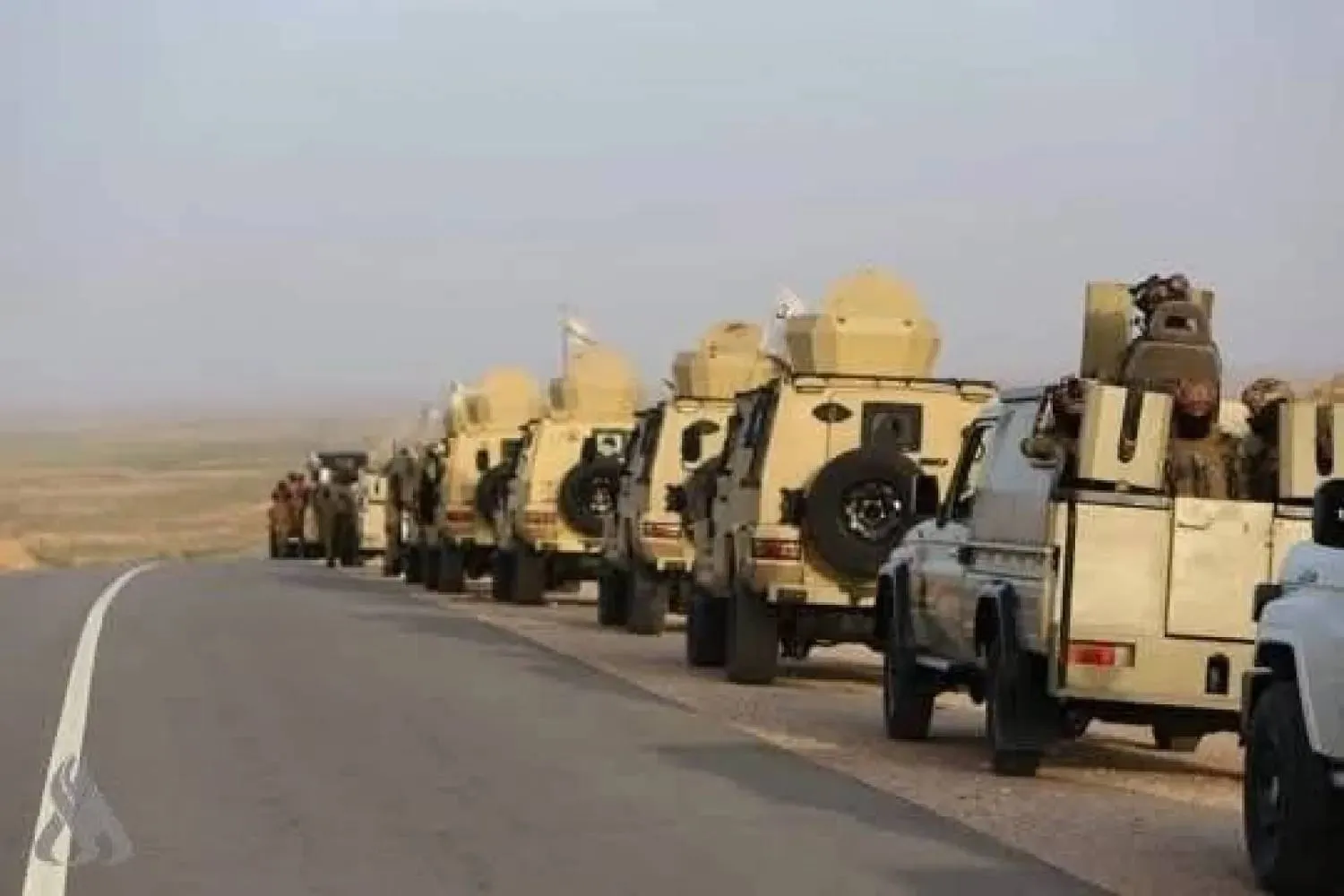
Iraq’s Popular Mobilization Forces are seen during their operation in the Karbala desert on May 12, 2026. (PMF)
TT

Iraqi Authorities Make Late Admission of Makeshift Israeli Base in Desert

Iraq’s Popular Mobilization Forces are seen during their operation in the Karbala desert on May 12, 2026. (PMF)

Iraqi authorities are still trying to contain the embarrassment caused by reports that an Israeli force was stationed in a desert area between Najaf and Karbala in early March, taking what observers describe as belated security measures while issuing conflicting accounts of the incident.

The Wall Street Journal reported on Saturday that Israel had set up a secret makeshift military base in the Iraqi desert to support its war against Iran, which began on Feb. 28, 2026.

Citing US officials, the newspaper said Israel built the site to support its air campaign against Iran and carried out airstrikes on Iraqi forces that nearly uncovered it early in the war.

On Tuesday, Iraqi army Chief of Staff General Abdul Amir Rashid Yarallah arrived in the Al-Nukhaib district of Karbala with a senior military delegation to review security conditions.

The Defense Ministry said the visit was aimed at following up on security preparations and assessing the latest developments in the area.

The statements by security bodies and officials appeared increasingly contradictory. On Tuesday, Karbala Operations Commander Ali al-Hashemi acknowledged that an Israeli force had been present inside Iraqi territory in early March.

Media outlets quoted Hashemi as saying the force in the Najaf desert in March was Israeli and “did not remain for more than 48 hours.”

Tahseen al-Khafaji, the Defense Ministry’s media director, said the “unknown force” had been carrying American weapons and had been in the area for only a few hours. He denied that it had set up a military base.

‘Imposing sovereignty’

In a related move, the Popular Mobilization Forces announced on Tuesday the launch of an operation to “impose sovereignty” the Najaf and Karbala desert. The operation was ordered by the commander-in-chief of the armed forces and is being supervised by Yarallah, according to a statement.

Ali al-Hamdani, commander of the PMF’s Middle Euphrates operations, said the operation began along four axes in the Najaf and Karbala desert to secure the road linking the city of Karbala to Al-Nukhaib.

He said the forces were conducting search-and-comb operations as deep as 70 kilometers, under strict military plans and with a high level of professionalism.

Denial

Iraq’s Joint Operations Command on Monday denied the presence of any unauthorized bases or forces on Iraqi territory.

“We are closely following statements and reports about the presence of unauthorized bases and forces on Iraqi territory, specifically in the Karbala desert east of Al-Nukhaib and Najaf,” it said.

It said the issue stemmed from an incident on March 5 when Iraqi security forces from Karbala and Najaf moved into the area and clashed with unknown, unauthorized detachments backed at the time by aircraft.

One Iraqi security fighter was killed, two others were wounded, and a vehicle was disabled.

It said its units and commands, under the direction and planning of the Joint Operations Command, were continuing regular searches of all sectors, especially desert areas, up to Iraq’s international borders. It stressed that no unauthorized bases or forces had been present since the March incident.

Criticism

The revelation that an Israeli force had been present on Iraqi territory triggered criticism of the government and security leadership.

The Joint Operations Command said some parties were trying to exploit the incident politically and were making “one-upmanship” statements without knowing the facts.

It said such statements harmed Iraq’s reputation and that of its security leadership, which “confirms, indeed asserts,” that there are currently no unauthorized forces or bases on Iraqi territory.

Former Prime Minister Mustafa al-Kadhimi sharply criticized authorities on Monday over the breach.

“A state in whose name slogans of sovereignty and security preservation are raised must not be surprised by incidents of this scale on its territory, nor should it be run according to the logic of media images and propaganda victories. Reality reveals a dangerous fragility in control, decision-making, and oversight,” Kadhimi said in a post on X.

He said Iraq’s protection cannot be secured through speeches or political promotion campaigns, but by building a state that owns its decision, imposes its authority over all its territory, subjects weapons to the law, and prevents the country from becoming an open arena for settling regional and international conflicts.


Israel Restricts Movement in Three Christian Towns in Southern Lebanon

Civilians from Christian villages in southern Lebanon travel south along the coastal road in a convoy, as an Israeli flag is seen at the entrance to Naqoura in July 2026. (File photo/AFP)
TT

Israel Restricts Movement in Three Christian Towns in Southern Lebanon

Civilians from Christian villages in southern Lebanon travel south along the coastal road in a convoy, as an Israeli flag is seen at the entrance to Naqoura in July 2026. (File photo/AFP)

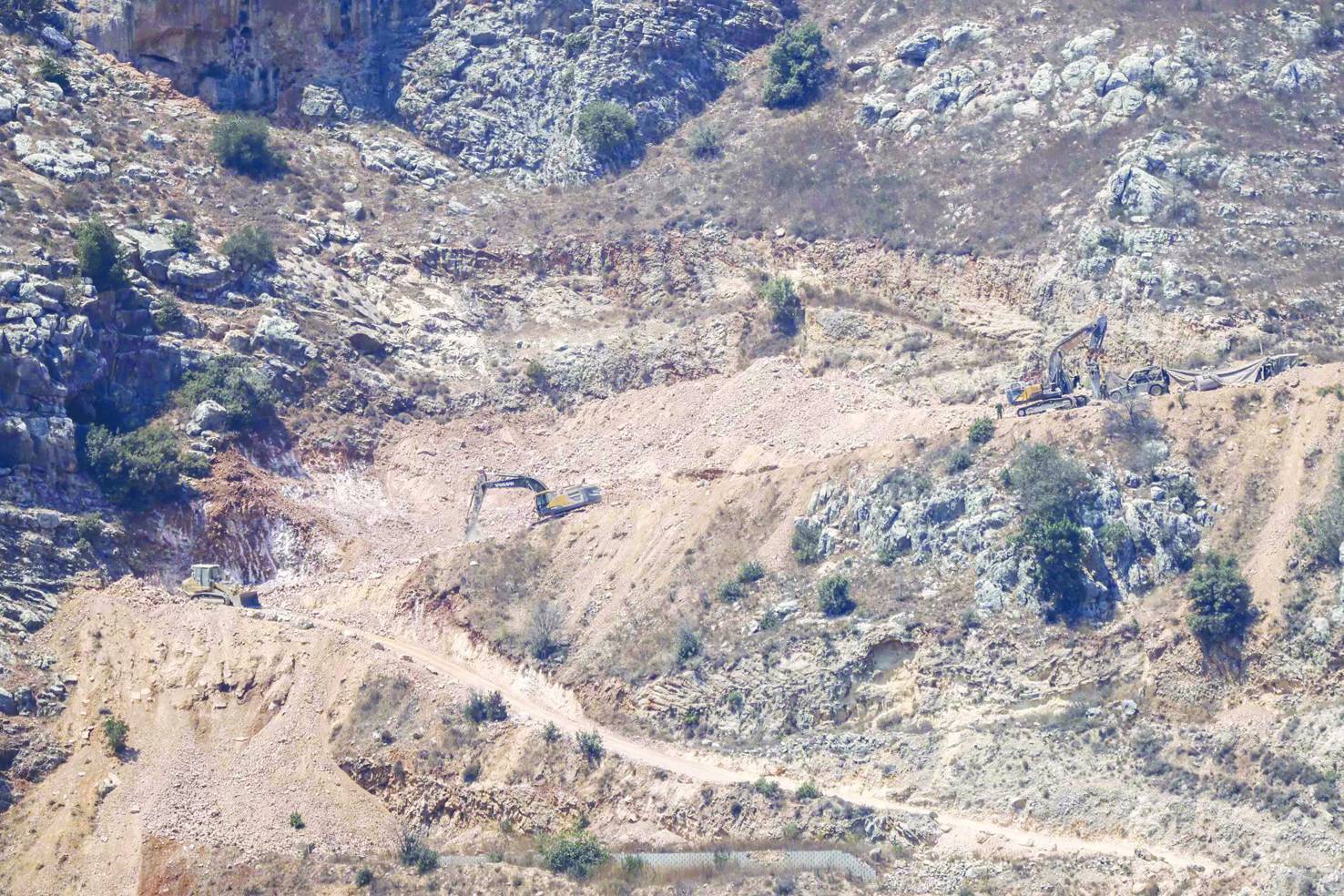
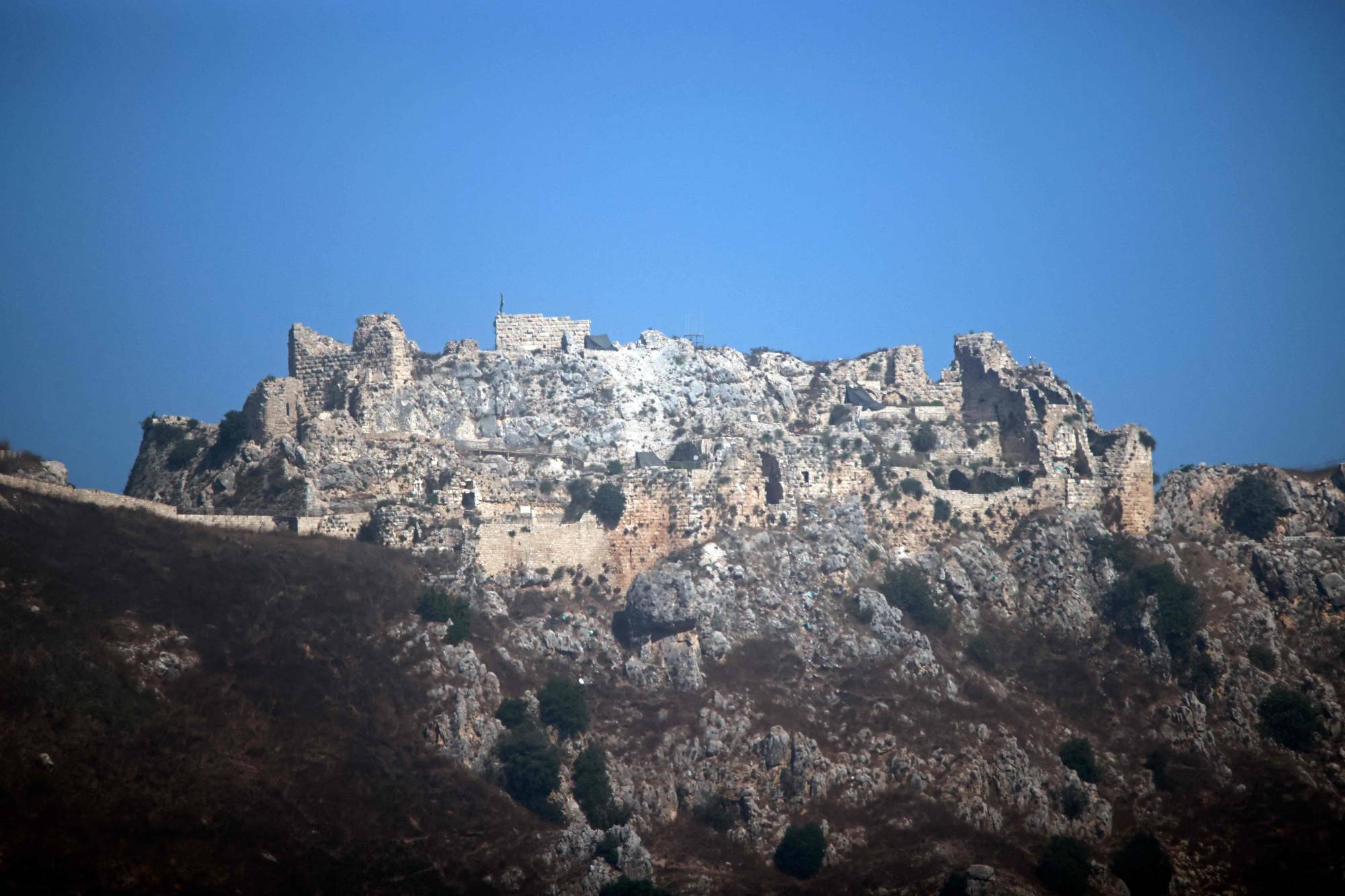
The Israeli military has restricted movement in and out of three beseigned Christian towns in southern Lebanon, forcing residents to travel in prearranged convoys along a single route through Naqoura.

Residents must register their vehicles and submit travelers’ details before entering or leaving Rmeish, Debel and Ain Ebel in the Bint Jbeil district.

People remain in the three towns despite being encircled by Israeli forces occupying every neighboring community. Relief and medical supplies arrive from elsewhere in Lebanon in convoys escorted by the United Nations Interim Force in Lebanon (UNIFIL).

Local sources in Rmeish told Asharq Al-Awsat that no vehicle may travel alone. At least one convoy of several cars or buses leaves one of the three towns each day.

The Lebanese army and UNIFIL organize the convoys, which must take the coastal road south of Tyre to Naqoura before heading to the Christian towns in Bint Jbeil.

The army escorts them as far as Qlayleh, about 15 km from the Israeli border. UNIFIL vehicles then accompany them to their villages.

Travelers must register their vehicles and provide UNIFIL with their personal details in advance. Their identities are checked and their vehicles searched as part of coordination with Israeli forces to allow them to pass, the sources said.

The restrictions have prompted the Vatican, through its ambassador to Lebanon, to ask the United States to intervene to prevent Israel from limiting the movement of residents of the Christian villages, Asharq Al-Awsat learned.

Marjayoun villages spared restrictions

The measures apply only to Christian villages in Bint Jbeil district and do not extend to those in Marjayoun district.

Residents and visitors can travel freely between Qlayaa, Jdeidet Marjayoun, Burj al-Mulouk and Deir Mimas and out of the towns, local sources in Qlayaa told Asharq Al-Awsat.

They use a route through the Western Bekaa in eastern Lebanon toward Hasbaya and then take the Ibl al-Saqi-Dibbin-Marjayoun road.

Residents continue to visit the towns as usual, but the communities are barred from hosting people displaced from nearby villages and towns. Journalists visiting the area are also prohibited from photographing the nearby town of Khiam, the sources said.

Israeli forces stationed in Kfar Kila and Tall al-Nahhas erected an earth mound on Tuesday near the Deir Mimas-Burj al-Mulouk-Kfar Kila junction, toward Tall al-Nahhas. It lies about 150 meters from inhabited homes in Burj al-Mulouk.

The forces built another earth mound near the Deir Mimas-Burj al-Mulouk-Houra junction.

More than 5,000 properties destroyed in Mais al-Jabal

Meanwhile, the Israeli military has continued bulldozing towns inside the “yellow line” and systematically destroying the homes still standing there.

In recent days, trucks carrying crates filled with explosives have traveled alongside Israeli patrols, a senior security source told Asharq Al-Awsat.

The crates are unloaded, and the explosives are placed around homes in occupied towns after they are looted, ahead of their demolition, the source said.

The same method was used in the border town of Mais al-Jabal, the largest town in Marjayoun district, where Israeli forces have continued destroying homes.

“Only dozens of housing units remain in Mais al-Jabal after more than 5,000 homes and commercial properties were destroyed,” the source said.

The latest demolition targeted a school complex consisting of prefabricated buildings that the Iraqi government had helped provide. The complex stood on the town’s outskirts, near Doubiyeh Castle and the road linking the area to Shaqra. Nearby homes were also destroyed.

The Israeli military also brought in specialized equipment to pulverize concrete into material resembling soil, making it easier for groups brought in for that purpose to remove reinforcing steel from destroyed buildings and transport it into Israel, the source said.

Before dawn on Tuesday, an Israeli force advanced toward Tallat al-Sawwan in Mayfadoun, an area inside the yellow line, and took up positions in a house.

Israeli military vehicles also moved from Hadatha into Haris in Bint Jbeil district and fired machine guns toward the town’s outskirts.

Lebanon’s state-run National News Agency said Israeli forces had stepped up attacks on villages in the western sector of Tyre district.

Aircraft carried out two strikes on Mansouri and another on Wadi Hassan in Tayr Harfa, as large-scale demolitions took place in Mansouri and Majdal Zoun, the agency said.

Israeli artillery also shelled Ainata and Beit Lif in Bint Jbeil district. Warplanes struck Mansouri and Wadi Hassan on the outskirts of Tayr Harfa, southeast of Tyre.


Gaza Parents Urged to Stop Kids Flying Kites After Israel Warning to Hamas

Palestinians make a kite at a tent camp sheltering displaced people in Gaza City, August 25, 2026. (Reuters)
TT

Gaza Parents Urged to Stop Kids Flying Kites After Israel Warning to Hamas

Palestinians make a kite at a tent camp sheltering displaced people in Gaza City, August 25, 2026. (Reuters)

Gaza parents have been warned to stop their children flying kites in the war-ravaged enclave, after Israel threatened a forceful response if the Hamas group revives a tactic of launching incendiary kites over the border.

The popular committees, comprising representatives of local non-government organizations and charities that run Gaza displacement camps and shelters, issued the warning in a statement late on Monday.

The announcement was coordinated with Hamas authorities, a source in the movement ‌said.

"We are ‌working tirelessly on the ground and doing everything possible ‌to ⁠stop this practice, ⁠not to restrict the childhood of our children, who have already been deprived of the most basic rights to play and live in safety, but to protect their innocent lives," the statement said.

In 2018, Gazans sent incendiary balloons and kites over the border, causing fires across hundreds of acres of open fields and farmlands, in what they said was in protest at the ⁠Israeli blockade of the Hamas-controlled enclave.

KITES SCARE ISRAELI VILLAGERS

In ‌the past month, several kites that ‌were not reported to be carrying incendiary materials were spotted drifting from Gaza into Israel, ‌alarming Israelis who live in the nearby villages which came under ‌attack by Hamas in the October 7, 2023 assault that sparked the Gaza war.

On Sunday, Israeli Prime Minister Benjamin Netanyahu warned Hamas that unless that stopped immediately, "those responsible" for launching kites, balloons or drones toward Israel would be targets of assassination and ‌that areas from which they are sent will be ordered to evacuate.

Umm Mohammed, a mother from Gaza ⁠City who spoke ⁠with Reuters over a chat app, said she was worried her son could be hurt.

"Every summer, my kid, Ahmed, 10, and the kids in the street fly those kites to entertain themselves, but I will not allow him to, not anymore," she said.

A senior Israeli defense official said that Hamas was trying to provoke Israel by encouraging Gazans to fly kites across the border.

A Hamas official told Reuters the group has complained to ceasefire mediators that "Israel was making fake pretexts to continue the war on Gaza."

Israel complained to US President Donald Trump's Board of Peace, which oversees the implementation of the 2025 Gaza ceasefire deal, about the kites, according to a second Israeli official.


Strikes in Gaza Kill 4, Including 2 Children, a Week After US Asked Israel to Curb Attacks

A Palestinian inspects the old Abu Salim mosque a day after it was hit by an Israeli airstrike in Deir al-Balah in the central Gaza Strip on August 25, 2026. (AFP)
TT

Strikes in Gaza Kill 4, Including 2 Children, a Week After US Asked Israel to Curb Attacks

A Palestinian inspects the old Abu Salim mosque a day after it was hit by an Israeli airstrike in Deir al-Balah in the central Gaza Strip on August 25, 2026. (AFP)

Palestinian residents of war-battered Gaza fled homes and businesses as Israeli strikes and tank fire killed at least four people Monday, including two children, hospital officials said, a week after a US delegation asked Israel to draw down attacks.

After evacuation warnings by Israel's military, a strike hit a building in the Bureij refugee camp in central Gaza. One family was unable to flee and a 4-year-old child was killed, according to Awda Hospital, where he was taken. His mother and sister were wounded. There was no Israeli military comment.

Israeli strikes hit three other buildings across the territory after residents said they received evacuation warnings. Some people sprinted away, with mothers carrying children, while others moved amid the rubble in wheelchairs or with canes.

Smoke rose over the already devastated landscape.

Israel's military said it carried out strikes in the Shati refugee camp in Gaza City and in Deir al-Balah after issuing warnings, targeting what it described as two Hamas weapons storage facilities inside mosques. The military did not provide evidence but said the facilities contained dozens of “Kalashnikov rifles, magazines and additional military equipment.”

An earlier Israeli strike on a tent in Deir al-Balah killed a man, according to Al-Aqsa Hospital, where his body was taken. Israel’s military said it killed a militant affiliated with Hamas’ special forces unit.

A man was killed and five others were wounded in an Israeli strike in Khan Younis in southern Gaza, according to Nasser Hospital, which received the casualties.

And Israeli tank fire hit an area east of Khan Younis, killing a 10-year-old girl, according to the hospital, where her body was taken.

Israel's military did not immediately comment on the strike in Khan Younis and said it was not aware of the incident with the child.

Israel has continued to carry out targeted killings in the week since a US delegation met with Prime Minister Benjamin Netanyahu in an effort to push last year's ceasefire deal forward.

US negotiator Jared Kushner asked Netanyahu to draw down Israel’s attacks in Gaza, a person familiar with the meeting said last week, speaking on condition of anonymity because they weren’t authorized to brief journalists.

Israel has announced strikes on six of the seven days since that meeting.

While the heaviest fighting in Gaza has subsided since the ceasefire took hold in October, Israeli airstrikes have killed at least 1,288 Palestinians, according to Gaza's health ministry. The ministry, part of the Hamas-led government, maintains detailed casualty records that are seen as generally reliable by UN agencies and independent experts. It does not give a breakdown of civilians and fighters.

Gunmen have carried out shooting attacks on Israeli troops, and Israel says its strikes are in response to that and other ceasefire violations. Five Israeli soldiers have been killed since the ceasefire.

Palestinian officials have reported strikes on homes and police stations, and Hamas has claimed that attacks are designed to destabilize Gaza and prevent progress on the ceasefire's next steps, which include demilitarizing and reconstructing the territory and the deployment of an international stabilization force.

Israel warns against kites sent from Gaza

In the period before the Hamas-led Oct. 7, 2023, attack on southern Israel that sparked the war, burning kites and balloons were sent from Gaza into Israel, causing fires and other damage.

Now Israeli officials are expressing concern after several kites were found in a kibbutz near Gaza. No weapons or dangerous materials were attached.

Netanyahu and Defense Minister Israel Katz in a statement Sunday threatened to ramp up strikes on Gaza unless Hamas ensures the kites stop flying toward Israel.

Hamas spokesperson Hazem Qassem has called the kites “essentially children’s toys” and accused Israel of using them as “an attempt to justify the continuation of aggression and violations against our people.”

The Oct. 7 attack killed some 1,200 people and saw 251 taken hostage. All hostages or their remains were later released. Israel’s retaliatory offensive in Gaza has killed more than 73,422 Palestinians, according to Gaza’s health ministry.