
Türkiye, Muslim Allies Say Palestinian Self-rule Key to Gaza Future

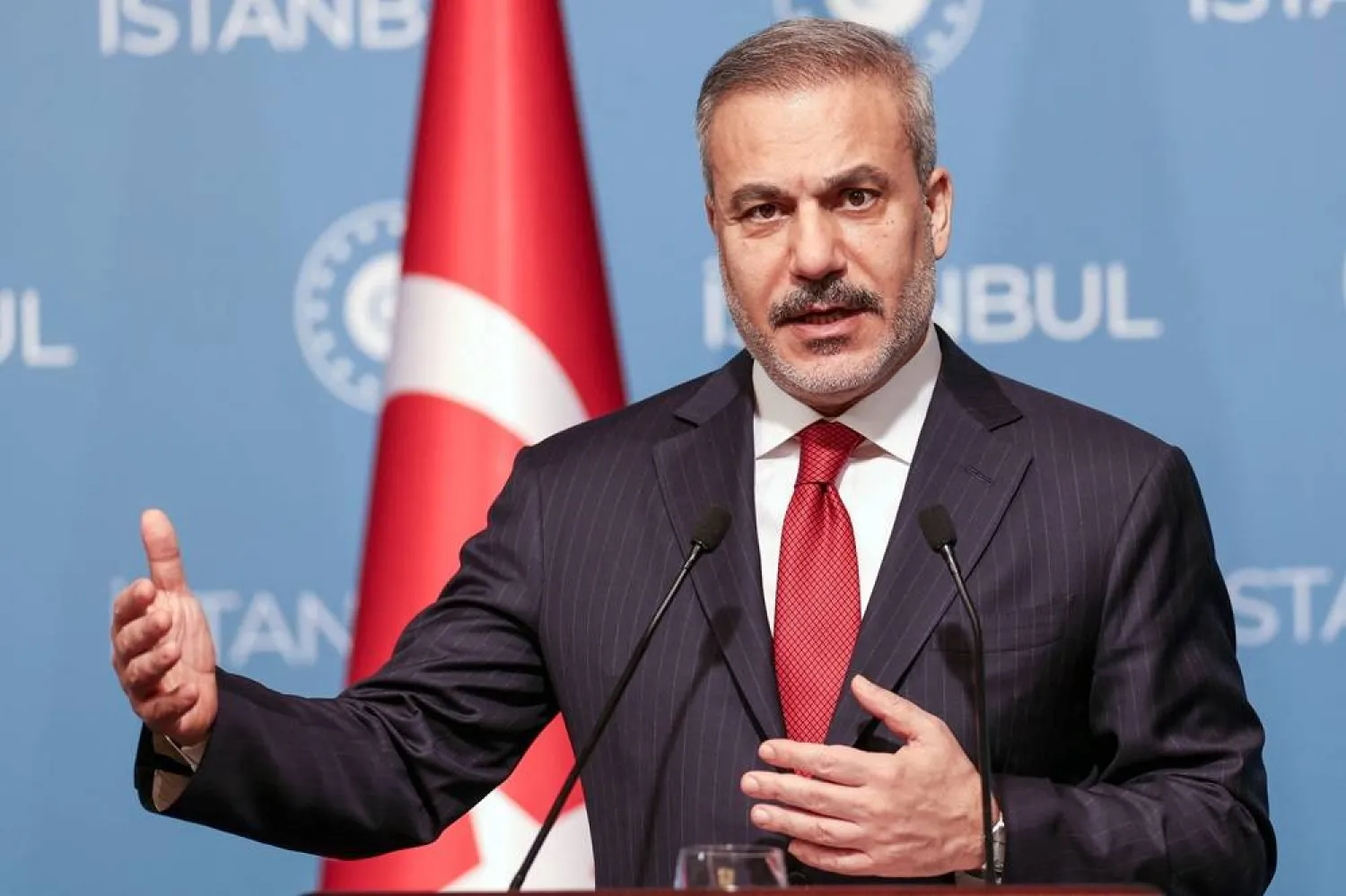
Turkish Foreign Minister Hakan Fidan speaks during a press conference after a ministerial meeting on Gaza, in Istanbul, Türkiye, November 3, 2025. (Reuters)
TT

Türkiye, Muslim Allies Say Palestinian Self-rule Key to Gaza Future

Turkish Foreign Minister Hakan Fidan speaks during a press conference after a ministerial meeting on Gaza, in Istanbul, Türkiye, November 3, 2025. (Reuters)

Gaza's future must be Palestinian-led and avoid any new system of tutelage, Türkiye and six of its top Muslim allies said Monday after talks in Istanbul.  

Türkiye, which played a central role in forging the now shaky three-week-old ceasefire, is pushing for Muslim nations to bring their influence to bear on the reconstruction of the embattled territory.  

"Our principle is that Palestinians should govern the Palestinians and ensure their own security, the international community should support this in the best possible way -- diplomatically, institutionally and economically," Türkiye’s Foreign Minister Hakan Fidan said after the talks.  

"Nobody wants to see a new system of tutelage emerge," he told a news conference. 

Brokered by US President Donald Trump, the October 10 ceasefire, which halted two years of continuous bloodshed, has been tested by fresh Israeli strikes and claims of Palestinian attacks on Israeli soldiers.  

The talks involved top diplomats from Saudi Arabia, Qatar, the United Arab Emirates, Jordan, Pakistan and Indonesia.  

All of them were called to a meeting with Trump in September on the margins of the United Nations General Assembly, just days before he unveiled his plan to end the Gaza war. 

"We've now reached an extremely critical stage: we do not want the genocide in Gaza to resume," Fidan added, saying all seven nations supported plans for the Palestinians to take control of Gaza's security and governance.  

Fidan, who held talks at the weekend with a Hamas delegation led by its chief negotiator Khalil al-Hayya, said the movement was "ready to hand Gaza to a committee of Palestinians".  

He also expressed hope that reconciliation efforts between Hamas and the rival West Bank-based Palestinian Authority, "will bear fruit as soon as possible," saying inter-Palestinian unity would "strengthen Palestine's representation in the international community".  

Earlier, President Recep Tayyip Erdogan said Hamas was "determined to adhere to the (truce) agreement" and urged Muslim states to play "a leading role" in Gaza's recovery.  

"We believe the reconstruction plan prepared by the Arab League and the OIC (Organization of Islamic Cooperation) should be implemented immediately," he said of the plan unveiled in March. 

Türkiye has been instrumental in backing Hamas, whose October 7, 2023 attack on Israel sparked the war in Gaza. 

Fidan said it was crucial that the emerging International Stabilization Force that will monitor the Gaza ceasefire under Trump's plan, have a "mandate defined by a UN Security Council resolution and a framework for legitimacy".  

Washington is currently working with Arab and international partners to decide on the composition of the force, with Türkiye hoping to play a role, despite fierce opposition from Israel.  

"The countries we've spoken with say they will decide whether to send troops based on ... the ISF's mandate and authority," Fidan said.  

"First, a general consensus needs to be reached on a draft, then it needs to be approved by the members of the Security Council.  

"And it needs to be free from vetoes by any of the permanent (UNSC) members," he said of a blocking move frequently used by key Israel ally Washington. 

Israel has long viewed Türkiye’s diplomatic overtures with suspicion over Ankara's close ties with Hamas and adamantly opposes it joining the task force that is meant to take over after Israeli troops withdraw from Gaza.  

A Turkish disaster relief team, sent to help efforts to recover the remains of those trapped under the rubble, including Israeli hostages seized by Hamas, has been stuck at the border because of Israel's refusal to let them in, according to Ankara. 


Civilians Pay a Heavy Price as War in Lebanon Drives Death, Displacement, UN Says

Smoke rises from the site of an Israeli airstrike that targeted an area in Beirut's southern suburbs on March 17, 2026. (AFP)
TT

Civilians Pay a Heavy Price as War in Lebanon Drives Death, Displacement, UN Says

Smoke rises from the site of an Israeli airstrike that targeted an area in Beirut's southern suburbs on March 17, 2026. (AFP)

Civilians are paying a heavy price as the war in Lebanon continues to expand, driving death, injuries and displacement the United Nations said on Tuesday.

"Displacement is increasing incredibly quickly. Right ‌now, hundreds of ‌thousands of people ‌left ⁠their homes. Many ⁠leaving with very little, just the clothes they were wearing," said the UN Humanitarian Coordinator Imran Riza.

Lebanon was sucked ⁠into the war in ‌the ‌Middle East on March 2 when ‌Hezbollah opened fire at ‌Israel, saying it aimed to avenge the killing of Iran's supreme leader. Israel has responded ‌with an offensive that has killed more ⁠than ⁠800 people in Lebanon and forced more than 800,000 from their homes.

Almost a fifth of people living in Lebanon are now registered as displaced, according to Lebanese government figures, with displacement set to increase, the UN said.

Israeli air strikes on residential buildings in Lebanon raise concerns under international law, the human ‌rights ‌office said ‌on ⁠Tuesday said.

"Israeli air ⁠strikes have destroyed entire residential buildings in dense ⁠urban environments with ‌multiple ‌members of the ‌same family, ‌including women and children often killed together," ‌UN human rights office spokesperson ⁠Thameen Al-Kheetan ⁠told reporters in Geneva.

"Such attacks raise concerns under international humanitarian law," he added.


Lebanese Army Says One Soldier Killed, Four Wounded in Israeli Strike

 17 March 2026, Lebanon, Khiam: Smoke rises over Khiam, a southern Lebanese village roughly 6 km from the Israeli border, after Hezbollah missile strikes targeted advancing Israeli troops. (dpa)
17 March 2026, Lebanon, Khiam: Smoke rises over Khiam, a southern Lebanese village roughly 6 km from the Israeli border, after Hezbollah missile strikes targeted advancing Israeli troops. (dpa)
TT

Lebanese Army Says One Soldier Killed, Four Wounded in Israeli Strike

 17 March 2026, Lebanon, Khiam: Smoke rises over Khiam, a southern Lebanese village roughly 6 km from the Israeli border, after Hezbollah missile strikes targeted advancing Israeli troops. (dpa)
17 March 2026, Lebanon, Khiam: Smoke rises over Khiam, a southern Lebanese village roughly 6 km from the Israeli border, after Hezbollah missile strikes targeted advancing Israeli troops. (dpa)

One Lebanese soldier was killed and four were wounded in an Israeli airstrike in the city of Nabatieh in southern Lebanon, the Lebanese army said on Tuesday, amid escalating hostilities between Israel and Iran-backed armed group Hezbollah. 

The soldiers were struck while travelling by car and motorcycle and were taken to ‌hospital, the army ‌said in a post on ‌X, ⁠adding in a ⁠subsequent statement that one of the wounded had died of his injuries. 

The Israeli military said it was aware of reports that Lebanese soldiers were wounded in a strike in southern Lebanon and that the incident was ⁠under review. 

It said that it operates ‌against Hezbollah and ‌not against the Lebanese Armed Forces. 

The strike comes ‌amid intensifying Israeli attacks across Lebanon, which have ‌killed more than 880 people and displaced more than 1 million, according to Lebanese authorities. 

The Lebanese army has also reported casualties in recent days, ‌including an incident earlier this month in which three soldiers were among ⁠those ⁠killed in Israeli strikes, according to the army. 

Israel's military, which has occupied five positions in southern Lebanon since a November 2024 ceasefire with Hezbollah, sent additional forces into the country after the group fired a salvo of rockets on March 2, dragging Lebanon into the expanding US-Israeli war with Iran. 

Israel's Defense Minister Israel Katz has warned Lebanon that it could face territorial losses unless Hezbollah was disarmed. 


Iraq in Talks with Iran to Safeguard Oil Tanker Traffic Through Hormuz

Vehicles enter and exit an underpass road during rainfall in Baghdad on March 15, 2026. (AFP)
TT

Iraq in Talks with Iran to Safeguard Oil Tanker Traffic Through Hormuz

Vehicles enter and exit an underpass road during rainfall in Baghdad on March 15, 2026. (AFP)

Iraq's oil minister said Baghdad is talking to Iran about allowing some of the country's oil tankers to pass through the Strait of Hormuz, the state news agency reported on Tuesday, as Iraq seeks to ease disruptions to crude exports following recent attacks on tankers in its own waters.

Iraq is also working to restore a disused pipeline that would allow oil to be pumped directly ‌to Türkiye's ‌Ceyhan port without passing through the ‌Kurdistan ⁠region, Oil Minister ⁠Hayan Abdel-Ghani said in a video statement released on Monday.

Iraq will complete an inspection of a 100-km (62-mile) section of the pipeline within a week to enable direct exports from Kirkuk, he added.

The reopening of the Kirkuk-Ceyhan pipeline, which has been shut for ⁠more than a decade, would offer ‌an alternative export route ‌at a time when shipping through the strategic Strait ‌of Hormuz is severely disrupted by the conflict ‌in the Middle East.

Exports via the 960-km pipeline, which once handled about 0.5% of global supply, were halted in 2014 after repeated attacks by ISIS militants.

The ‌oil ministry has said exports via the route could initially reach around 250,000 ⁠barrels ⁠per day, rising to about 450,000 bpd of crude from fields in the Kurdistan region is included.

Baghdad has sought to use the Kurdistan pipeline as a temporary route for crude flows but said the Kurdistan Regional Government had set arbitrary conditions for its use, warning it may take legal action if exports are blocked.

Kurdish authorities have rejected the accusations, saying they are not obstructing exports and that Baghdad has failed to address security and economic challenges facing the region’s oil sector.