
Political observers in Lebanon have taken note of the US Treasury delegation’s decision to exclude Shiite officials from its meetings in Beirut earlier this week.
The exclusion came even though some of the Shiite officials are directly involved, by virtue of their positions, in implementing Washington’s demands that Lebanon curb Hezbollah’s financing channels and enforce the state’s monopoly on arms through legislation and executive measures.
US delegation meets top Lebanese officials
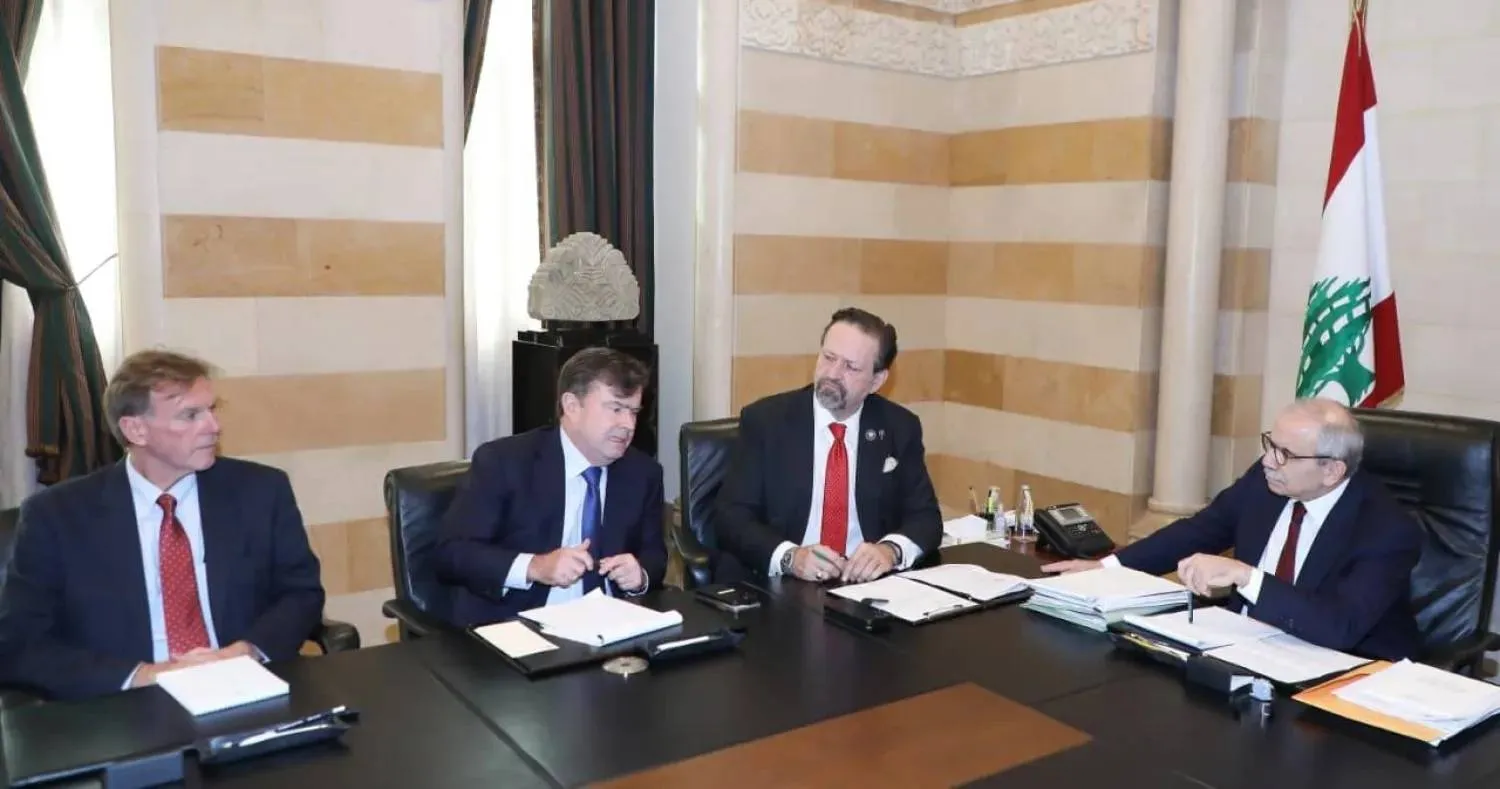
The American delegation, led by Deputy Assistant to the President and Senior Director for Counterterrorism Sebastian Gorka, included Undersecretary of the Treasury for Terrorism and Financial Intelligence (TFI) John Hurley and White House National Security Council counterterrorism specialist Rudolph Atallah.
During their visit to Beirut, they met President Joseph Aoun, Prime Minister Nawaf Salam, Justice Minister Adel Nassar, Interior Minister Ahmad Hajjar, and Central Bank Governor Karim Souaid.
The delegation also met Kataeb Party leader and lawmaker Sami Gemayel, and attended a dinner hosted by MP Fouad Makhzoumi with a group of parliamentarians.
However, the delegation notably excluded Shiite officials. It did not meet Parliament Speaker Nabih Berri — the country’s second-highest official, a key Hezbollah ally and the group’s long-time interlocutor with foreign delegations — nor Finance Minister Yassin Jaber.
No Shiite figures were present at any of the official meetings, including First Vice Governor of the Central Bank Wassim Mansouri, who was absent from the session held with Governor Souaid.
‘No boycott,’ says Shiite bloc
Sources familiar with the visit’s schedule said most meetings were held privately between the delegation and Lebanese officials, including Central Bank Governor Souaid, who met the visitors alone without the presence of senior banking oversight officials, in what they described as an effort to downplay any sectarian undertones.
Sources from the Shiite political alliance known as the “duo” — Hezbollah and the Amal Movement — also dismissed the idea of a boycott. “The delegation met with officials relevant to its mission,” one source told Asharq Al-Awsat.
“The claim of a boycott is inaccurate, as the delegation met Finance Minister Yassin Jaber during the dinner hosted by MP Makhzoumi, which was also attended by another Shiite MP. That confirms there was no boycott.”
Symbolism and political messages
Yet, political analysts say the exclusion carried symbolic weight, noting that the delegation did not seek an appointment with Speaker Berri as visiting US officials typically do, nor did it request a meeting with the finance minister at his office.
That, according to some Lebanese officials following the visit, suggested a political message — one directed at Iran, Hezbollah’s main backer.
“The exclusion signals that the Americans are deliberately avoiding all Shiite officials, regardless of political affiliation,” one ministerial source told Asharq Al-Awsat.
“This was met with a quick response from Iran through Hezbollah Secretary-General Naim Qassem, who on the same day rejected any new negotiations with Israel and refused to discuss surrendering weapons north of the Litani River, saying the agreement applies only to the south.”
Lebanon as a messaging arena
According to the same sources, the issue is “not about boycotting the Shiites, but rather that Lebanon has become a stage for message exchanges — with Washington sending signals and Tehran responding through Hezbollah.”
The sources said this dynamic is not new: “The United States has long sought to push Iran out of Lebanon and force it to relinquish its influence here. Lebanese officials first heard this stance during Donald Trump’s first presidential term in 2017, when the White House insisted Iran must come to the table to discuss its regional role. Ten years later, the message is the same: Washington wants Iran’s hand lifted off Lebanon.”
US-Berri contacts persist
Since the last decade, when pressure mounted on Iran and Hezbollah, Washington has drawn a line between Lebanese Shiites as citizens and Hezbollah as an organization.
US sanctions have targeted individuals it views as part of Hezbollah’s financial or military apparatus, while communication channels with Lebanese officials remained open — particularly through Parliament’s Foreign Affairs Committee.
Speaker Berri himself has sent parliamentary delegations to Washington since 2015 for meetings with members of Congress, maintaining an official dialogue that continues to this day.
Finance Minister Yassin Jaber has also made at least two visits to Washington since joining the cabinet, most recently last month, when he met representatives of the US Treasury Department. In Beirut, he has received multiple American, IMF, and World Bank delegations.
According to parliamentary sources who attended Makhzoumi’s dinner, Jaber delivered a 10-minute briefing to the US delegation outlining the government’s and parliament’s measures to “stabilize the monetary economy, tighten customs controls at airports, seaports, and land borders with Syria, and enhance supervision of money transfer companies.”
He also stressed that “executive reforms are progressing,” while the political aspects of implementation “remain under discussion with the president.”