


Attack on Khor Mor Gas Field Increases Pressure on Baghdad over Armed Factions

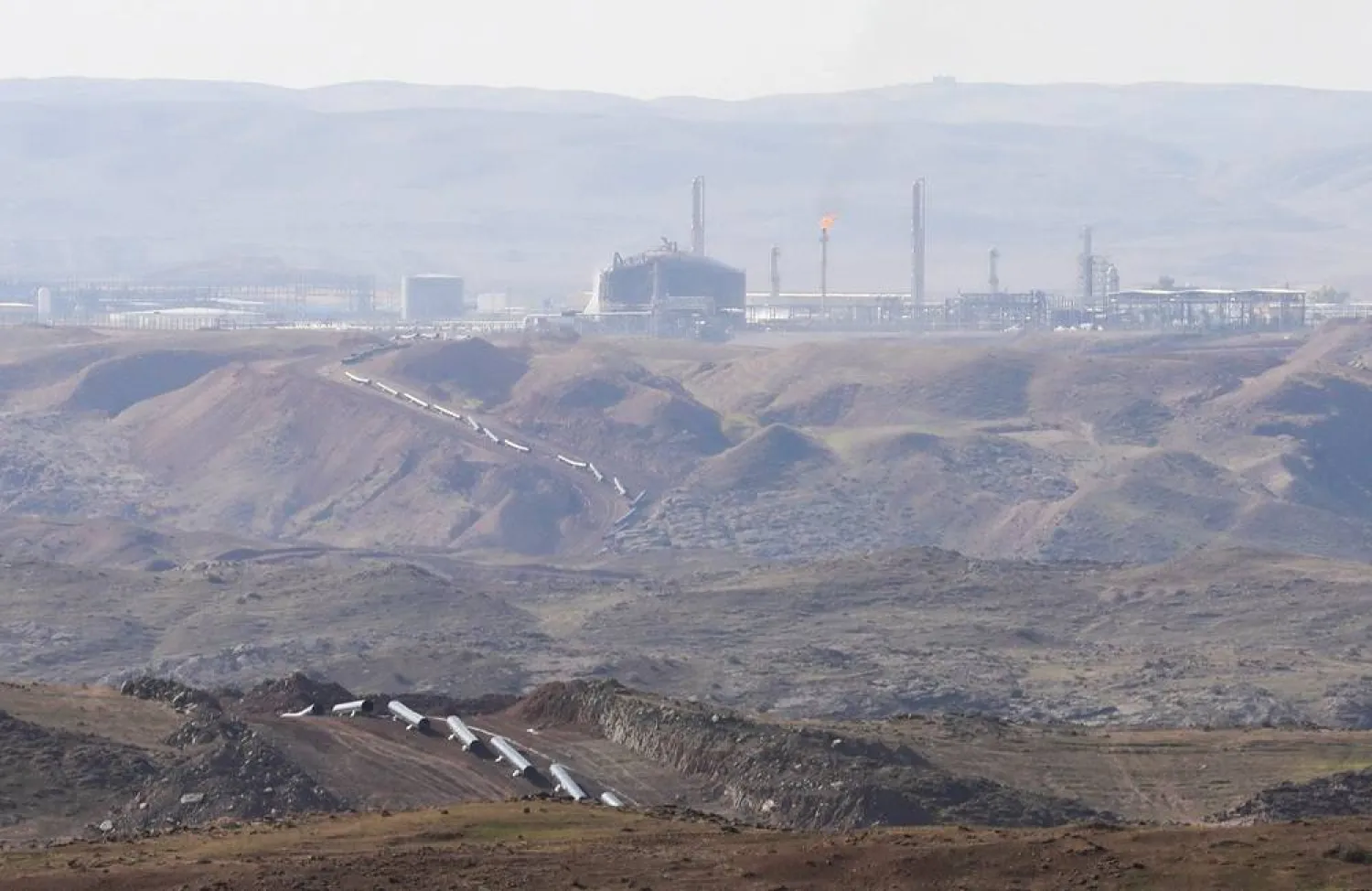
The Khor Mor gas field after a rocket attack near Chamchamal, in Sulaymaniyah province, Iraq, November 27, 2025. (Reuters)
TT

Attack on Khor Mor Gas Field Increases Pressure on Baghdad over Armed Factions

The Khor Mor gas field after a rocket attack near Chamchamal, in Sulaymaniyah province, Iraq, November 27, 2025. (Reuters)

Wednesday’s attack on the Khor Mor gas field in northern Iraq has piled pressure on the country to deal with armed factions. Iraqi authorities have pledged to release the results of a probe into the incident with 72 hours as the United States mounted its criticism of the armed factions.

The attack came at a critical time as Baghdad is in the process of forming a new government in wake of parliamentary elections earlier this month.

A drone attack forced a complete shutdown of gas supplies at a natural gas field in northern Iraq, triggering widespread electricity outages across northern regions.

The strike, the second in a week, caused a fire at one of the field’s main facilities but resulted in no casualties, according to Iraqi authorities.

Khor Mor, in Kurdistan region, is one of northern Iraq's most productive natural gas fields, and its output is used to fuel power plants.

Iraq’s Joint Operations Command said the attack occurred at approximately 11:30 p.m. Wednesday, when an explosive device struck one of the main facilities at the field in Sulaymaniyah province, sparking a fire.

The media has been rife with speculation over who could have been behind the attack, but regardless of who the perpetrator is, the issue is bound to pose a challenge to Shiite powers who are facing intense US pressure over militias in Iraq.

Govt probe

A senior security delegation arrived in the Iraqi Kurdistan Region from Baghdad on Friday to investigate the attack. The delegation was headed by Interior Minister Abdul Amir Al-Shammari. Notably absent was National Security Advisor Qasim al-Araji who was often involved in probes into attacks in Kurdistan.

The delegation met with officials and security leaders in Sulaymaniyah to discuss the attack and coordinate work.

This was the tenth drone attack targeting the field in 2025. Araji had in previous incidents said that the government had identified the perpetrators.

The Joint Operations Command said the results of the probe into Wednesday’s attack will be revealed in 72 hours.

Coordination Framework

The ruling pro-Iran Shiite Coordination Framework expressed its support to Prime Minister Mohammed Shia al-Sudani's efforts to uncover the perpetrators.

Observers said the stance was notable given the Shiite forces’ strong opposition to the PM assuming a second term in office following the November 11 elections.

The Framework said the attack on “national facilities was a threat to Iraq’s security, economy and stability. Such attacks only serve the interests of parties seeking to weaken the state and obstruct development.”

The alliance urged the need to handle the attack as a “national threat that should not be politicized.”

Grad attack?

Iraqi former Foreign Minister and prominent member of the Kurdistan Democratic Party Hoshyar Zebari accused militias of being behind the Khor Mor attack, saying they sought to “ruin the economy of the Kurdistan region.”

In a post on the X platform, he warned that the government has no control over the militias and that the Sudani government has a “golden opportunity” to impose its control and bring the perpetrators to justice, “which will bolster his chances for a second term in office.”

He added that the attack was launched from Kirkuk and that the militias used grad rockets.

Security expert Fadel Abu Ragheef refuted Zebari’s claim, asserting that the attack was carried out by three drones. The first carried out a surveillance operation while the other two launched the attack.

The accuracy of the strike demonstrates that drones, not grad rockets, were used, he added.

He further explained that grad rockets do not have the range to fly from Kirkuk to Sulaymaniyah had they really been fired from the province.
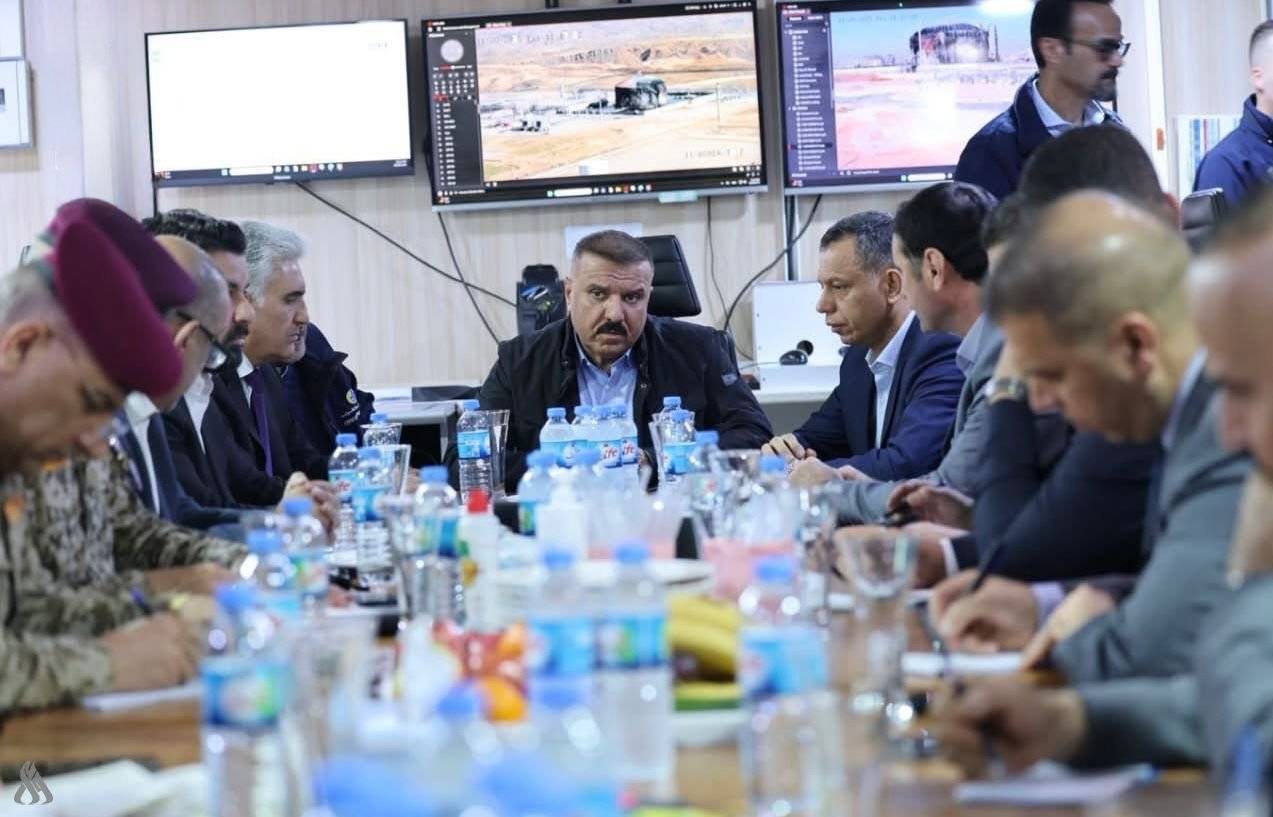
Iraqi Interior Minister Abdul Amir Al-Shammari chairs a security meeting in Khor Mor. (INA)

Erbil ‘despairs’

The Kurdish Interior Ministry said it has “despaired” of investigation committees, adding that the federal government in Baghdad knows who the parties behind the previous attacks on Kurdistan are based on past probes.

It noted that recommendations from previous probes were never implemented.

Sudani had condemned the Khor Mor attack on Thursday, saying it was an “assault on the whole of Iraq”.

Iraqi authorities have not named suspects.

The Asaib Ahl al-Haq armed faction, which has been trying to distance itself from armed groups, condemned the attack, calling for a national probe.

Other armed factions have not commented on the incident.

US stance

The United States issued sharp criticism of the Khor Mor attack.

Mark Savaya, US President Donald Trump’s special envoy to Iraq, said in a post on X that “armed groups operating illegally and driven by hostile foreign agendas” were behind the assault. He urged the Iraqi government to swiftly identify and prosecute those responsible.

“Let it be unequivocal: there is no place for such armed groups in a fully sovereign Iraq,” he wrote. “Every illegal armed group and supporter will be tracked, confronted, and held accountable.”

Savaya said the US supports “a strong Kurdistan within a united and stable Iraq” and encouraged Baghdad and Erbil to deepen security cooperation to protect vital energy infrastructure.

Suspicions

The rocket attack comes days before the United States is set to open a new consulate in Iraqi Kurdistan. The latest strike could be linked to that, according to Ramzy Mardini, the founder of Geopol Labs, a Middle East-based geopolitical risk advisory firm, reported the New York Times.

“I’m sure the Iranians have noticed,” Mardini said. “Having been attacked by the US earlier this year, including the targeting of its nuclear program, Iran may be credibly signaling that their proxies will target American allies next door should another campaign ensue.”

Some Kurdish officials said the attacks may be the result of domestic rivalries. There are longstanding tensions over power sharing and oil revenues between Kurdistan and the Iraqi federal government, which is led by a Shiite coalition that includes some of the militias.

In a post on X, Kurdistan Regional Prime Minister Masrour Barzani urged the federal government to ensure suspects are neither released on bail nor allowed to repeat “these crimes.” He also appealed to the US and international partners to provide additional defensive equipment to protect civilian infrastructure.

“The usual terrorists or whoever may be behind tonight’s attacks cannot be allowed to repeat these crimes,” he wrote.




Israel Permits 10,000 West Bank Palestinians for Friday Prayers at Al Aqsa

Palestinians attend Friday prayers in a mosque following an attack that local Palestinians said was carried out by Israeli settlers, in the village of Deir Istiya near Salfit in the Israeli-occupied West Bank November 14, 2025. REUTERS/Sinan Abu Mayzer
TT

Israel Permits 10,000 West Bank Palestinians for Friday Prayers at Al Aqsa

Palestinians attend Friday prayers in a mosque following an attack that local Palestinians said was carried out by Israeli settlers, in the village of Deir Istiya near Salfit in the Israeli-occupied West Bank November 14, 2025. REUTERS/Sinan Abu Mayzer

Israel announced that it will cap the number of Palestinian worshippers from the occupied West Bank attending weekly Friday prayers at the Al-Aqsa Mosque in east Jerusalem at 10,000 during the holy month of Ramadan, which began Wednesday.

Israeli authorities also imposed age restrictions on West Bank Palestinians, permitting entry only to men aged 55 and older, women aged 50 and older, and children up to age 12.

"Ten thousand Palestinian worshippers will be permitted to enter the Temple Mount for Friday prayers throughout the month of Ramadan, subject to obtaining a dedicated daily permit in advance," COGAT, the Israeli defense ministry agency in charge of civilian matters in the Palestinian territories, said in a statement, AFP reported.

"Entry for men will be permitted from age 55, for women from age 50, and for children up to age 12 when accompanied by a first-degree relative."

COGAT told AFP that the restrictions apply only to Palestinians travelling from the West Bank, which Israel has occupied since the 1967 Arab-Israeli war.

"It is emphasised that all permits are conditional upon prior security approval by the relevant security authorities," COGAT said.

"In addition, residents travelling to prayers at the Temple Mount will be required to undergo digital documentation at the crossings upon their return to the areas of Judea and Samaria at the conclusion of the prayer day," it said, using the Biblical term for the West Bank.

During Ramadan, hundreds of thousands of Palestinians traditionally attend prayers at Al-Aqsa, Islam's third holiest site, located in east Jerusalem, which Israel captured in 1967 and later annexed in a move that is not internationally recognized.

Since the war in Gaza broke out in October 2023, the attendance of worshippers has declined due to security concerns and Israeli restrictions.

The Palestinian Jerusalem Governorate said this week that Israeli authorities had prevented the Islamic Waqf -- the Jordanian-run body that administers the site -- from carrying out routine preparations ahead of Ramadan, including installing shade structures and setting up temporary medical clinics.

A senior imam of the Al-Aqsa Mosque, Sheikh Muhammad al-Abbasi, told AFP that he, too, had been barred from entering the compound.

"I have been barred from the mosque for a week, and the order can be renewed," he said.

Abbasi said he was not informed of the reason for the ban, which came into effect on Monday.

Under longstanding arrangements, Jews may visit the Al-Aqsa compound -- which they revere as the site of the first and second Jewish temples -- but they are not permitted to pray there.

Israel says it is committed to upholding this status quo, though Palestinians fear it is being eroded.

In recent years, a growing number of Jewish ultranationalists have challenged the prayer ban, including far-right politician Itamar Ben Gvir, who prayed at the site while serving as national security minister in 2024 and 2025.


EU Exploring Support for New Gaza Administration Committee, Document Says

Palestinians push a cart past the rubble of residential buildings destroyed during the two-year Israeli offensives, in Gaza City, February 17, 2026. REUTERS/Mahmoud Issa
TT

EU Exploring Support for New Gaza Administration Committee, Document Says

Palestinians push a cart past the rubble of residential buildings destroyed during the two-year Israeli offensives, in Gaza City, February 17, 2026. REUTERS/Mahmoud Issa

The European Union is exploring possible support for a new committee established to take over the civil administration of Gaza, according to a document produced by the bloc's diplomatic arm and seen by Reuters.

"The EU is engaging with the newly established transitional governance structures for Gaza," the European External Action Service wrote in a document circulated to member states on Tuesday.

"The EU is also exploring possible support to the National Committee for the Administration of Gaza," it added.

European foreign ministers will discuss the situation in Gaza during a meeting in Brussels on February 23.


Israel Military Says Soldier Killed in Gaza 

A drone view shows the destruction in a residential neighborhood, after the withdrawal of the Israeli forces from the area, amid a ceasefire between Israel and Hamas in Gaza, in Gaza City, October 21, 2025. (Reuters)
TT

Israel Military Says Soldier Killed in Gaza 

A drone view shows the destruction in a residential neighborhood, after the withdrawal of the Israeli forces from the area, amid a ceasefire between Israel and Hamas in Gaza, in Gaza City, October 21, 2025. (Reuters)

The Israeli military announced that one of its soldiers had been killed in combat in southern Gaza on Wednesday, but a security source said the death appeared to have been caused by "friendly fire".

"Staff Sergeant Ofri Yafe, aged 21, from HaYogev, a soldier in the Paratroopers Reconnaissance Unit, fell during combat in the southern Gaza Strip," the military said in a statement.

A security source, however, told AFP that the soldier appeared to have been "killed by friendly fire", without providing further details.

"The incident is still under investigation," the source added.

The death brings to five the number of Israeli soldiers killed in Gaza since a ceasefire took effect on October 10.