
Egypt is in talks with Washington to co-chair an international conference on “early recovery and reconstruction” in the Gaza Strip.
The diplomatic push comes amid continued Israeli violations and growing concerns that the current ceasefire could collapse.
Experts who spoke to Asharq Al-Awsat said the Egyptian initiative may accelerate the conference - originally expected to be held at the end of November - and help curb further Israeli breaches while reassuring international partners about funding commitments for Gaza’s rebuilding.
Egyptian Foreign Minister Badr Abdelatty said during a press conference in Berlin on Tuesday with German Foreign Minister Johann Wadephul that Cairo is “consulting with the United States to form a joint chairmanship for the reconstruction conference,” adding that Egypt hopes to reach agreement on a date “as soon as possible, in cooperation with partners.”
On Nov. 25, a senior Egyptian source told Asharq Al-Awsat that the conference would be postponed due to escalating conditions in Gaza and the need for “better circumstances on the ground” to ensure meaningful outcomes.
Later that month, Foreign Ministry spokesperson Tamim Khallaf confirmed that Egypt is working with regional and international partners to create a conducive environment for the event, stressing Cairo’s aim to ensure “maximum effectiveness and impact.”
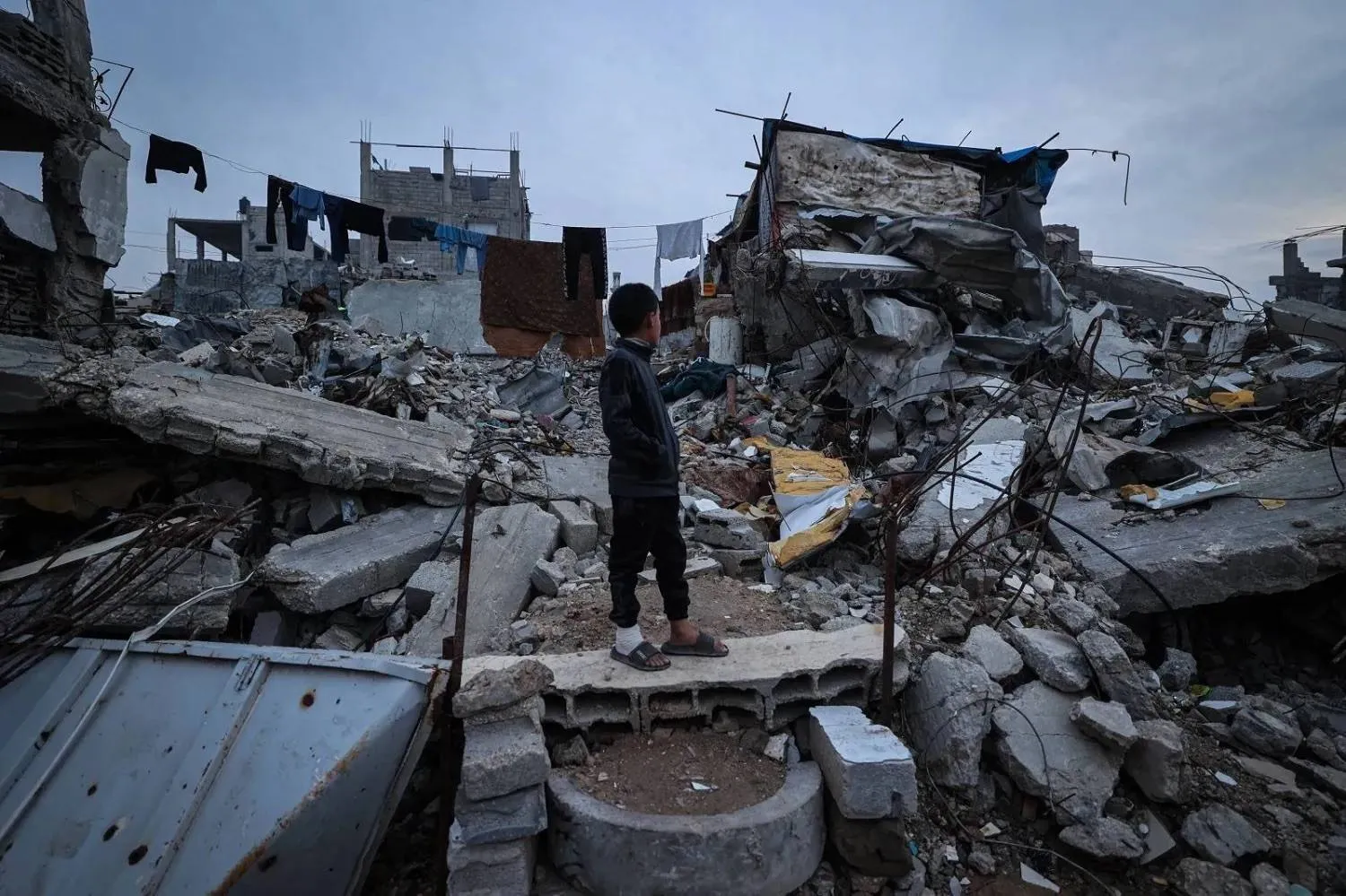
An emergency Arab summit hosted by Cairo on March 4 adopted a five-year, $53-billion plan for Gaza’s reconstruction, prioritizing early recovery and rebuilding without displacing Palestinians. The summit also called for a UN-coordinated international donors’ conference.
At last October’s Sharm El-Sheikh Summit for Peace, which helped secure the Gaza ceasefire, President Abdel Fattah al-Sisi stressed the importance of holding the reconstruction conference in November, according to a presidential statement.
Ezzat Saad, executive director of the Egyptian Council for Foreign Affairs, said US participation is crucial because Washington brokered the ceasefire plan and can help enforce it amid “deliberate Israeli attempts” to undermine the agreement in place since Oct. 10. He added that American involvement would also reassure donors and encourage more substantial contributions.
Barakat al-Farra, former Palestinian ambassador to Egypt, described Egypt’s move to involve Washington as “excellent,” noting that it mirrors the successful model of the Sharm El-Sheikh peace conference.
He said joint leadership would constrain Israeli efforts to impose separate reconstruction zones, maintain occupation, or divide Gaza.
Meanwhile, Qatar’s Foreign Ministry spokesperson Majed al-Ansari said Tuesday that mediation efforts to maintain the ceasefire “are ongoing amid worrying violations,” warning that “each breach weakens the truce.” He noted that despite the challenges, this remains “the longest-lasting ceasefire,” and mediators are working to advance toward the agreement’s second phase.
The ceasefire was shaken in late November after at least 21 people were killed in Israeli strikes, according to Gaza’s Civil Defense, amid stalled progress toward the next phase of the agreement brokered by Egypt, Qatar, the United States, and Türkiye.
Saad said sustained mediation could still move the process forward if US pressure on Israel materializes, paving the way for security arrangements, Israeli withdrawals, and reconstruction.
Al-Farra added that progress toward phase two becomes more likely if Washington agrees to co-chair the conference with Egypt, leaving Israel with little room to obstruct implementation.