
The Israeli army has begun to permanently bolster its forces in the northern West Bank, as part of a broader plan to arm settlers with machine guns and small anti-tank missiles and to build new settlements, and revive others.
Under the cover of war and shifting attention to multiple fronts, the army now says they are required to protect nearly twice the amount of populated territory in the West Bank, following the establishment of dozens of settlements and agricultural outposts over the past three years, according to a report published on Sunday by the Israeli Yedioth Ahronoth newspaper.
The report said military officials estimate that additional territorial security battalions will be required as the 2005 disengagement is effectively reversed in the northern West Bank.
Meanwhile, it noted, the military is already moving to implement the rollback of the disengagement in parts of the West Bank.
In recent days, the Israeli army has begun opening new access routes in the northwestern West Bank to pave a road bypassing the Palestinian village of Silat al-Dahr and to establish a new military outpost.
The outpost is intended to protect the settlement of Sa-Nur, which was evacuated during the disengagement.
According to the report, similar steps are expected near the former settlements of Homesh, Kadim and Ganim, which have remained in ruins for nearly two decades and are slated to be rebuilt.
Following the 2005 disengagement under a plan by Prime Minister Ariel Sharon, the four settlements of Homesh, Sa-Nur, Ganim, and Kadim were dismantled.
But the government of Netanyahu annulled the move and started rebuilding these settlements.
Expansion Led by Smotrich
Yedioth Ahronoth said the expansion is being led by Finance Minister Bezalel Smotrich, who holds responsibility for civilian affairs in the West Bank.
Among senior officers, Smotrich is informally referred to as the “defense minister for the West Bank,” reflecting his growing involvement and influence over policy in the area, the report explained.
It said the government has approved 21 settlements, including Sa-Nur, and an additional 19 have since been authorized.
Central Command officials are now discussing their locations and construction timelines.
According to the report, military officials say the sustained operations carried out in the northern West Bank over the past two years helped create conditions that made settlement activity in the area more feasible from a security standpoint.
“Until a few years ago, entering the Balata refugee camp in Nablus meant facing heavy gunfire and explosive devices,” military officials said. “Today we can enter there in broad daylight and face at most stone throwing. Deterrence has increased due to the change in approach and sustained pressure on terrorist elements.”
Enhancing Capacities
As settlements expand, the report said the military is also increasing intelligence, surveillance and communications capabilities in the northern West Bank, including observation towers, radar systems and enhanced command-and-control infrastructure.
The existing academy and the renewed settlement at Homesh are expected to alter daily life in the northwestern West Bank by 2026, according to the newspaper’s writer, Yoav Zitun.
With the planned changes, the military estimates that at least one additional battalion will be required in the initial stage to protect the rebuilt settlements.
The West Bank Division currently operates 23 permanent territorial defense battalions, from southern Mount Hebron to the Jenin sector near Afula.
In recent years, amid waves of terror attacks, reinforcement deployments have raised the number to nearly 30 battalions.
Zitun wrote that Sa-Nur, which is expected to be rebuilt after nearly 20 years, will fall under the Samaria Regional Brigade, which has already doubled the number of Israeli communities under its responsibility over the past three years to nearly 40 settlements and outposts.
Arming Settlers
According to Yedioth Ahronoth, since October 7, 2023, the Israeli army has focused on protecting residents and road traffic primarily from within Palestinian areas, conducting continuous operations inside Area A.
It said new settlements are to be defended primarily from the surrounding area, while internal security will rely on civilian emergency response squads.
“These squads consist of local residents who receive weapons and military training from the Israeli army and operate under regional security coordinators within the framework of the regional brigades,” the newspaper wrote.
Over the past two years, it said, the military has carried out a broad reform of emergency response squads, particularly in the West Bank.
Members have been equipped not only with rifles and ammunition but also with machine guns, anti-armor weapons, communications gear and additional equipment. The military is also considering issuing fragmentation grenades and small anti-tank missiles.
The army is also planning for scenarios previously considered unlikely, including mass violence involving thousands of armed Palestinians.
Officials stress there is currently no indication of such a development, and that weapons in Palestinian hands are generally limited to small arms and improvised explosive devices.
Last week, the Palestinian Department of Work and Planning has released its 2025 annual report documenting settler violence and Israeli demolition operations across the occupied territories.
In 2025, it said, settler groups carried out 5,538 attacks against Palestinian civilians and their property. These attacks involved live ammunition, arson, and physical assaults.
It noted that 17 Palestinians were killed and 971 were injured, mainly by direct gunfire.
Also, 16,795 fruitful trees were uprooted or destroyed, 5,631 head of livestock stolen or killed,
600 vehicles were damaged and 187 residential and agricultural structures were burned or demolished.
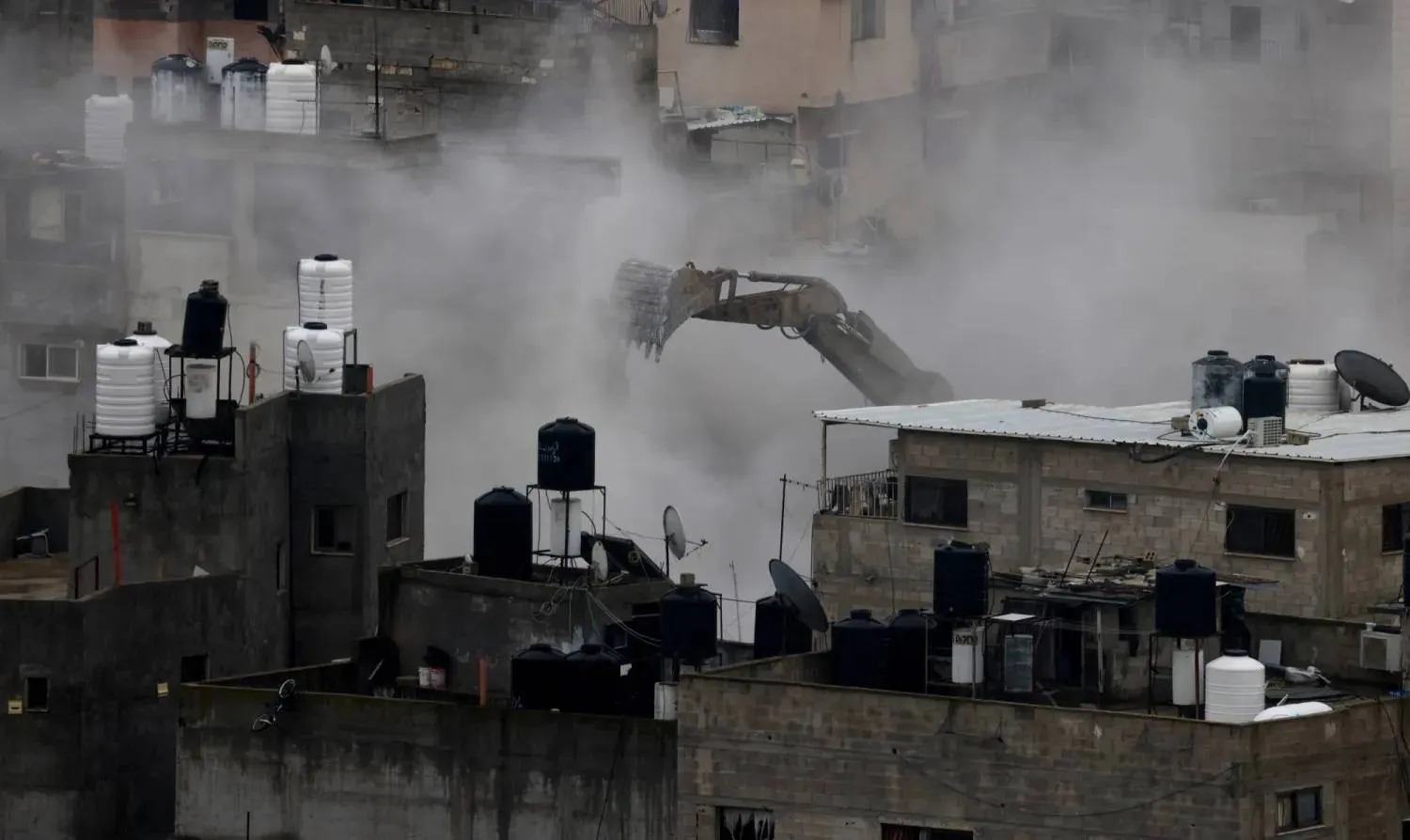
The report also noted demolished 2,047 structures were demolished in 2025, including 1,437 structures and 610 homes.