


Report: US Special Envoy for Iraq Mark Savaya No Longer in the Post

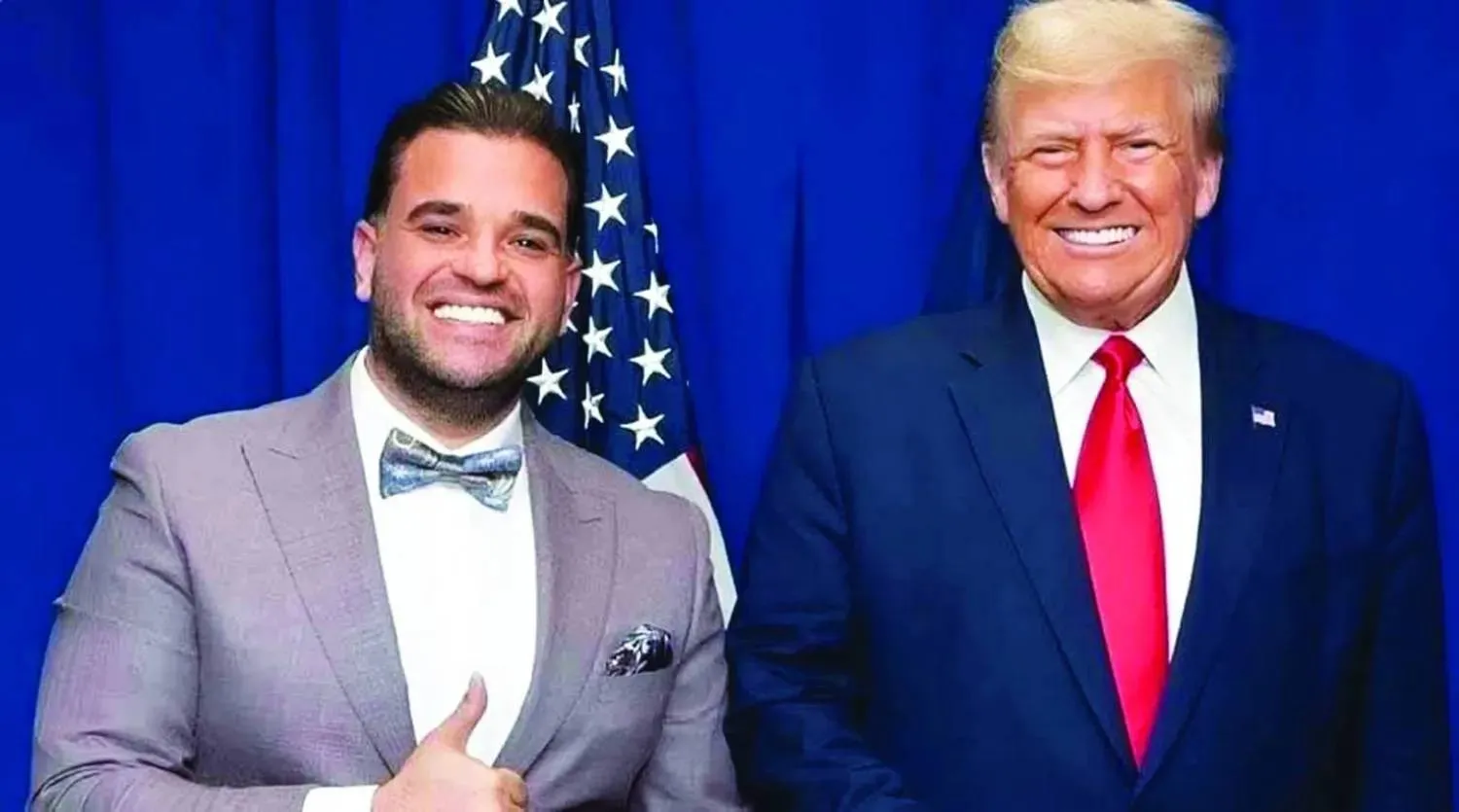
US President Donald Trump and US Special Envoy to Iraq Mark Savaya. (X)
TT

Report: US Special Envoy for Iraq Mark Savaya No Longer in the Post

US President Donald Trump and US Special Envoy to Iraq Mark Savaya. (X)

Mark Savaya, named by US President Donald Trump as special envoy for Iraq in October, is no longer in that role, sources familiar with the move said.

The move comes amid growing tensions between Washington and Baghdad over Washington's push to curb Iranian influence in Iraqi politics.

Savaya, a Christian Iraqi-American entrepreneur, was among a handful of Arab Americans named to senior posts by Trump, who campaigned heavily during the 2024 presidential election to win the Arab and Muslim vote in Detroit and around the country.

It was not immediately clear what prompted Savaya's departure or ‌whether a replacement ‌would be appointed.

One of the sources pointed to Savaya's "mishandling" ‌of ⁠key situations, including ‌his failure to prevent the nomination of former Iraqi prime minister Nouri al-Maliki to be the country's next premier, a move Trump openly warned Baghdad against.

US ambassador to Türkiye and special envoy to Syria Tom Barrack, who traveled to Erbil earlier this week to meet with Kurdish-led Syrian Democratic Forces, is believed to be taking over the State Department's Iraq portfolio, according to the source and a senior Iraqi official.

A spokesperson for Barrack declined to comment.

The State Department referred ⁠queries to the White House, which declined to comment on Savaya's status or any replacement.

Reached by Reuters on Thursday, ‌Savaya denied any change in his role, saying that he ‍was still working on administrative procedures required ‍for him to officially assume the role, but a source familiar with the matter ‍said Savaya never became an employee of the State Department.

Savaya's X account, which was active until recently, has not been available since Thursday.

He did not respond to follow-up messages on Friday and Saturday asking him to clarify whether he was still in his appointed role and explain why his X account was taken down.

Savaya, who ran a cannabis business in Detroit and has close ties to Trump, was a surprising choice for envoy because ⁠he has no diplomatic experience. He has not traveled to Iraq officially since being named to the role, two of the sources said.

He was set to visit Iraq and hold meetings with senior officials last Friday, but abruptly canceled them, two Iraqi officials said.

The personnel move comes days after Trump warned Iraq that if it again chose Maliki as its prime minister, Washington would no longer help the major oil producer and close US ally. Maliki, accused by the US of stoking sectarian strife and allowing the rise of the ISIS group during his time in office, had been tapped for the role by Iraq's largest parliamentary bloc days earlier.

Trump's comments were the starkest example yet of his campaign to curb the influence of Iran-linked groups ‌in Iraq, which has long walked a tightrope between its two closest allies, Washington and Tehran.


Spanish PM to Visit Algeria in Bid to Mend Ties

Spain's Prime Minister Pedro Sanchez talks to media during a visit in the area of a wildfire that killed at least 13 people, at the command post set in Turre, Almeria Province, on July 13, 2026. (AFP)
TT

Spanish PM to Visit Algeria in Bid to Mend Ties

Spain's Prime Minister Pedro Sanchez talks to media during a visit in the area of a wildfire that killed at least 13 people, at the command post set in Turre, Almeria Province, on July 13, 2026. (AFP)

Spanish Prime Minister Pedro Sanchez will travel to Algeria next week for an official visit aimed at ending years of tensions between the two countries over the Western Sahara dispute, his office said on Monday.

The visit on July 20 will be Sanchez's first trip to Algeria since relations deteriorated in 2022 after Madrid shifted its longstanding position of neutrality on Western Sahara and backed Morocco's autonomy plan for the disputed territory.

Spain's move was part of a diplomatic rapprochement with Morocco, ending its decades of ambiguity on the issue but angering Algeria, which supports the pro-independence Polisario Front, which opposes Rabat's claim over the former Spanish colony.

Western Sahara, a mineral-rich desert territory with significant phosphate reserves and fishing resources, was controlled by Spain until 1975.

Morocco now controls most of the territory.

In response to the policy shift in Madrid, Algeria suspended a 2002 friendship treaty with Spain and restricted trade ties between the two countries.

Relations have gradually improved since 2025, with commercial exchanges beginning to recover.


New Round of Lebanon-Israel Talks to Begin on Tuesday

 An Israeli military vehicle covered with netting to protect against FPV drones patrols on the Lebanese side of the border, as seen from an undisclosed location along the border, 13 July 2026. (EPA)
An Israeli military vehicle covered with netting to protect against FPV drones patrols on the Lebanese side of the border, as seen from an undisclosed location along the border, 13 July 2026. (EPA)
TT

New Round of Lebanon-Israel Talks to Begin on Tuesday

 An Israeli military vehicle covered with netting to protect against FPV drones patrols on the Lebanese side of the border, as seen from an undisclosed location along the border, 13 July 2026. (EPA)
An Israeli military vehicle covered with netting to protect against FPV drones patrols on the Lebanese side of the border, as seen from an undisclosed location along the border, 13 July 2026. (EPA)

The sixth round of negotiations between Lebanon and Israel are to begin on Tuesday in Rome, a Lebanese official told AFP on Monday.

The two-day talks will begin at 10.00am (0800 GMT), the official said, requesting anonymity.

An Italian foreign ministry spokesperson had earlier said the talks would be held on July 15 and 16, and Israeli Foreign Minister Gideon Saar had confirmed on July 7 that the negotiations would resume "next week".

The two countries, which have no formal relations, began direct talks in April after Tehran-backed Hezbollah drew Lebanon into the Middle East war by attacking Israel in support of Iran the month prior.

They recently reached a framework agreement that calls for Hezbollah's disarmament and a gradual Israeli withdrawal from occupied Lebanese territory while Lebanon's army deploys into "pilot zones".

But the agreement -- rejected by Hezbollah -- does not set a timetable for Israel's withdrawal, and Israeli officials have also vowed that their forces will remain in a "security zone" 10 kilometers (six miles) deep along the frontier for as long as Hezbollah remains armed.

A US military delegation met with Lebanon's army in Beirut last week to discuss the implementation of Israel's withdrawal from a first pilot zone.


Yemen Signals Military Action and Diplomatic Move Against Iran

A widely circulated image of an Iranian aircraft at Sanaa Airport (X)
TT

Yemen Signals Military Action and Diplomatic Move Against Iran

A widely circulated image of an Iranian aircraft at Sanaa Airport (X)

The Yemeni government has escalated its confrontation with Iran over the operation of a flight to Sanaa International Airport, which is under Houthi control. For the first time, it has signaled military options in response to any future violations of Yemeni airspace, while President of the Presidential Leadership Council Rashad Al-Alimi is leading a diplomatic effort with the permanent members of the UN Security Council ahead of the emergency session requested by the government to discuss what it describes as a violation of Yemen's sovereignty.

Defense Minister Lt. Gen. Taher Al-Aqili announced that the armed forces would respond to any aircraft he described as "hostile" that violates Yemeni airspace "using all available means." He said the government had exhausted legal and diplomatic efforts to persuade Iran and the Houthi group not to operate flights outside the approved framework, but that the latest flight represented what he called "a challenge to international legitimacy."

In a statement addressed to the armed forces and the Yemeni people, Al-Aqili said the government, in cooperation with the regional and international communities, had made every legal and diplomatic effort to deter Tehran and the Houthi group from violating Yemeni airspace. He argued that the latest incident differs from previous ones because it constitutes a direct challenge to international legitimacy.

He added that "patience has run out" and that the armed forces "will deliver an appropriate response to this brutal act and confront hostile aircraft violating Yemeni airspace and sovereignty using all available means until we teach the enemy a lesson." He held the Iranian regime legally and morally responsible for any escalation that may occur in the coming period.

This military escalation comes alongside intensified political efforts led by Presidential Leadership Council President Dr. Rashad Al-Alimi, who on Sunday held separate meetings with Zhao Zheng, chargé d'affaires of the Chinese Embassy in Yemen, and Yevgeny Kudrov, Russia's ambassador to Yemen, as part of the government's consultations with the permanent members of the UN Security Council ahead of the emergency session scheduled for Monday.

Al-Alimi meeting with Russia's ambassador to Yemen (Saba)

Diplomatic Effort

According to the Yemeni presidency, Al-Alimi's discussions with the Chinese and Russian officials focused on bilateral relations as well as developments related to the Iranian flight to Sanaa Airport and what the Yemeni government considers a violation of its sovereign authority.

Al-Alimi stressed that the Yemeni government alone is the legally authorized body to grant permits for operating international flights to Yemeni territory. He emphasized that no armed group, regardless of the territory it controls, has the right to exercise sovereign powers or establish foreign relations on behalf of the state.

Al-Alimi also reaffirmed Yemen's firm commitment to the "One China" principle and its rejection of any actions that undermine China's territorial integrity or sovereignty. He expressed his government's appreciation for China's continued support for Yemen's unity and territorial integrity.

In his meeting with the Russian ambassador, Al-Alimi praised the historic ties between the two countries and Russia's role in helping build Yemen's state institutions. He stressed the importance of continuing to strengthen the partnership between the two sides.

A Houthi delegation arrives in Tehran aboard an aircraft that violated Yemeni airspace (X)


A National Alternative for Flights

Al-Alimi explained to the Russian officials that the government does not oppose the operation of Sanaa Airport for civilian purposes, but rejects its use for activities that violate legal frameworks or for military purposes.

He noted that the government had proposed an initiative to continue flights through Yemenia Airways to any destination agreed upon, while providing the necessary guarantees to ensure the safety of the flights and air crews. The proposal also includes the option of chartering an aircraft to transport members of the Houthi group from Tehran in accordance with legal procedures.

He argued that the rejection of this initiative showed that the issue was not humanitarian in nature, as the Houthi group claims, but rather an attempt to replace the national carrier with Iranian flights, which, he said, no responsible government could accept.

Al-Alimi emphasized that managing Yemen's airspace and approving international flights are exclusive sovereign responsibilities of the Yemeni state. He warned that any violation of this principle would not affect Yemen alone, but would set a precedent that armed groups in other parts of the world could exploit to exercise sovereign functions and establish international relations outside the framework of internationally recognized states.

Al-Alimi concluded his meetings by reaffirming his country's commitment to maintaining balanced relations with all countries. He expressed hope for an international position consistent with the principles of the United Nations that protects state sovereignty and prevents any attempts to undermine legitimate state institutions.
