


Hezbollah Signals Refusal to Work with Lebanese Authorities to Disarm North of Litani

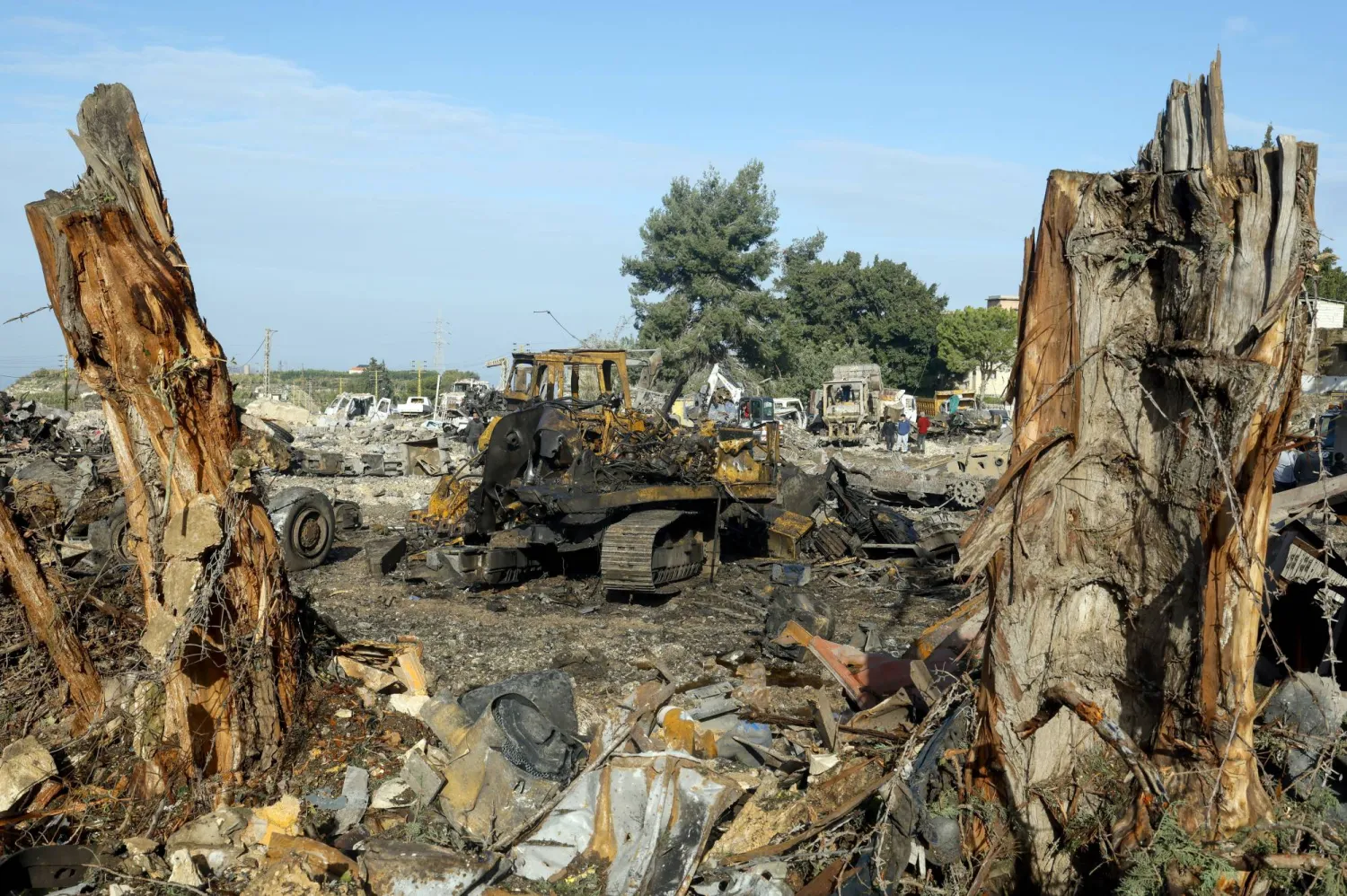
People inspect the site a day after a series of Israeli airstrikes struck a site with industrial machinery in the southern Lebanese village of Al-Marwanieh, Lebanon, on 31 January 2026. (EPA)
TT

Hezbollah Signals Refusal to Work with Lebanese Authorities to Disarm North of Litani

People inspect the site a day after a series of Israeli airstrikes struck a site with industrial machinery in the southern Lebanese village of Al-Marwanieh, Lebanon, on 31 January 2026. (EPA)

Hezbollah announced on Saturday that it will not cooperate with authorities in disarming its weapons north of the Litani River.

Hezbollah MP Hussein al-Hajj Hassan said: “Lebanon did everything asked of it. We have absolutely nothing else to offer or speak about north of the Litani.”

Army Commander Rodolphe Haykal is set to travel to the United States next week on an official visit where he will meet with military officials ahead of a Paris conference on March 5 to support the army. The donor conference aims to provide funds to the military and back its other duties, such as securing the border with Syria.

Hezbollah’s refusal to cooperate north of the Litani is a sign of the daunting task ahead of the army. The Iran-backed party had cooperated with it south of the Litani in line with the first phase to impose state monopoly over arms across Lebanon.

Significantly, Hezbollah’s ties with President Joseph Aoun have become strained in recent weeks amid the latter’s remarks that he is committed to the disarmament plan.

Lebanese sources following up on the government’s plan and contacts with Hezbollah said work north of the Litani demands political and security efforts to be successful.

The sources told Asharq Al-Awsat that the region north is much larger than the one south of it, which demands greater security and political cooperation with Hezbollah.

Hezbollah had reluctantly cooperated with the military south of the Litani.

The US is closely monitoring the situation in Lebanon, as well as the army’s disarmament plan.

Hajj Hassan criticized Lebanese officials, saying they were yielding to “American demands and pressure without having a clear strategic vision. They are just complying with the demands without confronting them with a comprehensive national strategy.”

“How do you intend to deal with the demands of the enemy [Israel] if you don't have any negotiating cards?” he asked.

“Concessions will only lead to endless concessions,” he warned, while urging the government against “ignoring Israel’s ongoing violations and crimes against Lebanon.”

He demanded that Israel withdraw from Lebanese regions it is occupying, end its daily violations and release prisoners. This will pave the way for reconstruction and a national security strategy.

“Only then can we talk about the weapons,” he stressed. “Other than that, we will not grant the enemy what it couldn’t achieve during the most challenging period of the wars that we waged against it with great perseverance.”

An Israeli strike on south Lebanon killed one person on Saturday, Lebanese authorities said, as the Israeli army said it targeted an operative from the party

Israel has kept up regular strikes in Lebanon despite a November 2024 truce that sought to end more than a year of hostilities including two months of all-out war with Hezbollah.

It usually says it is targeting members of the group or its infrastructure, and has kept troops in five south Lebanon border areas that it deems strategic.

Lebanon's health ministry said one person was killed in a strike on the village of Rub Thalatheen, close to the Israeli border.

The state-run National News Agency reported a man was killed in the strike while "carrying out repair work on the roof of a house".

The Israeli army said in a statement that it killed a Hezbollah operative "who took part in attempts to reestablish Hezbollah terror infrastructure in the Markaba area", adjacent to Rub Thalatheen.

It called the alleged activities "a violation of the ceasefire understandings between Israel and Lebanon".

This month, Lebanon's army said it had completed the first phase of its plan to disarm Hezbollah, covering the area south of the Litani river, around 30 kilometers (20 miles) from the Israeli border.

Israel, which accuses Hezbollah of rearming, has criticized the army's progress as insufficient, while Hezbollah has rejected calls to surrender its weapons.

More than 360 people have been killed by Israeli fire in Lebanon since the ceasefire, according to an AFP tally of health ministry reports.



Israel Partially Reopens Gaza’s Rafah Crossing

Ambulances line up to enter the Egyptian gate of the Rafah crossing on the way to the Gaza Strip, in Rafah, Egypt, Sunday, Feb. 1, 2026. (AP Photo/Mohamed Arafat)
TT

Israel Partially Reopens Gaza’s Rafah Crossing

Ambulances line up to enter the Egyptian gate of the Rafah crossing on the way to the Gaza Strip, in Rafah, Egypt, Sunday, Feb. 1, 2026. (AP Photo/Mohamed Arafat)

Israel partially reopened the Rafah crossing between the devastated Gaza Strip and Egypt on Sunday following months of urging from humanitarian organizations, though access is limited to the movement of people. 

The reopening comes as violence continues despite a ceasefire in the Palestinian territory, with Gaza's civil defense agency reporting dozens killed in Israeli attacks on Saturday. The Israeli military said it was retaliating against violations of the truce. 

The Rafah crossing is a vital gateway for both civilians and aid, but it had remained closed since Israeli forces seized control of it in May 2024 during the war with Hamas, aside from a brief and limited reopening in early 2025. 

COGAT, the Israeli defense ministry body coordinating Palestinian civilian affairs, said Sunday that the "Rafah Crossing was opened today for the limited passage of residents only". 

An official at Gaza's health ministry, which operates under Hamas authority, said that about 200 patients were waiting to be permitted to leave the territory once the crossing opened. 

Meanwhile, a group of "around 40 Palestinians affiliated with the Palestinian Authority has arrived on the Egyptian side of the crossing to be allowed into Gaza and begin their work", a Palestinian official told AFP on condition of anonymity. 

Israel had previously said it would not reopen the crossing until the body of Ran Gvili -- the last Israeli hostage held in Gaza -- was returned. 

His remains were recovered days ago and he was laid to rest in Israel on Wednesday, with COGAT announcing the reopening two days later. 

Entry and exit "will be permitted in coordination with Egypt, following prior security clearance of individuals by Israel, and under the supervision of the European Union mission", it said at the time. 

COGAT on Sunday described the reopening as "an initial pilot phase", coordinated with the EU, adding the parties were carrying out "preliminary preparations aimed at increasing readiness for full operation of the crossing". 

"The actual passage of residents in both directions will begin upon completion of these preparations," it added. 

A wider reopening is scheduled for Monday, three sources at the crossing said. 

However, no agreement has yet been reached on the number of Palestinians permitted to enter or exit, the sources added, noting that Egypt plans to admit "all Palestinians whom Israel authorizes to leave". 

- Anxious wait - 

"Every day that passes drains my life and worsens my condition," said Mohammed Shamiya, 33, who suffers from kidney disease and requires dialysis treatment abroad. 

"I'm waiting every moment for the opening of the Rafah land crossing." 

Safa al-Hawajri, who has received a scholarship to study overseas, was also eagerly anticipating the reopening. 

"I'm waiting in the hope of fulfilling my ambition, which is tied to the reopening of the crossing," said Hawajri, 18. 

"I hope to be able to travel as soon as it opens." 

Located on Gaza's southern border with Egypt, Rafah is the only crossing into and out of the territory that does not pass through Israel. 

It lies in an area held by Israeli forces following their withdrawal behind the so-called "Yellow Line" under the terms of the US-brokered ceasefire, which came into effect on October 10. 

Israeli troops still control more than half of Gaza, while the rest remains under Hamas authority. 

The reopening is expected to facilitate the entry of a 15-member Palestinian technocratic body, the National Committee for the Administration of Gaza (NCAG), established to oversee the day-to-day governance of the territory's 2.2 million residents. 

The committee, established under the ceasefire deal, will be supervised by the so-called "Board of Peace" chaired by US President Donald Trump. 

However, the NCAG, headed by former Palestinian Authority deputy minister Ali Shaath, is not expected to enter the Gaza Strip on Sunday, a member of the committee said. 

"The head of the committee was informed that Israel had approved the entry of the members into Gaza but has not yet set a date," he told AFP. 

"We call on the mediators and the US administration to accelerate operations at the crossing and increase the number of travelers." 


Report: US Special Envoy for Iraq Mark Savaya No Longer in the Post

US President Donald Trump and US Special Envoy to Iraq Mark Savaya. (X)
TT

Report: US Special Envoy for Iraq Mark Savaya No Longer in the Post

US President Donald Trump and US Special Envoy to Iraq Mark Savaya. (X)

Mark Savaya, named by US President Donald Trump as special envoy for Iraq in October, is no longer in that role, sources familiar with the move said.

The move comes amid growing tensions between Washington and Baghdad over Washington's push to curb Iranian influence in Iraqi politics.

Savaya, a Christian Iraqi-American entrepreneur, was among a handful of Arab Americans named to senior posts by Trump, who campaigned heavily during the 2024 presidential election to win the Arab and Muslim vote in Detroit and around the country.

It was not immediately clear what prompted Savaya's departure or ‌whether a replacement ‌would be appointed.

One of the sources pointed to Savaya's "mishandling" ‌of ⁠key situations, including ‌his failure to prevent the nomination of former Iraqi prime minister Nouri al-Maliki to be the country's next premier, a move Trump openly warned Baghdad against.

US ambassador to Türkiye and special envoy to Syria Tom Barrack, who traveled to Erbil earlier this week to meet with Kurdish-led Syrian Democratic Forces, is believed to be taking over the State Department's Iraq portfolio, according to the source and a senior Iraqi official.

A spokesperson for Barrack declined to comment.

The State Department referred ⁠queries to the White House, which declined to comment on Savaya's status or any replacement.

Reached by Reuters on Thursday, ‌Savaya denied any change in his role, saying that he ‍was still working on administrative procedures required ‍for him to officially assume the role, but a source familiar with the matter ‍said Savaya never became an employee of the State Department.

Savaya's X account, which was active until recently, has not been available since Thursday.

He did not respond to follow-up messages on Friday and Saturday asking him to clarify whether he was still in his appointed role and explain why his X account was taken down.

Savaya, who ran a cannabis business in Detroit and has close ties to Trump, was a surprising choice for envoy because ⁠he has no diplomatic experience. He has not traveled to Iraq officially since being named to the role, two of the sources said.

He was set to visit Iraq and hold meetings with senior officials last Friday, but abruptly canceled them, two Iraqi officials said.

The personnel move comes days after Trump warned Iraq that if it again chose Maliki as its prime minister, Washington would no longer help the major oil producer and close US ally. Maliki, accused by the US of stoking sectarian strife and allowing the rise of the ISIS group during his time in office, had been tapped for the role by Iraq's largest parliamentary bloc days earlier.

Trump's comments were the starkest example yet of his campaign to curb the influence of Iran-linked groups ‌in Iraq, which has long walked a tightrope between its two closest allies, Washington and Tehran.


Egypt Urges All Parties to Show Restraint before Gaza's Rafah Crossing Reopens

Israeli forces are due to allow the Rafah crossing between Egypt and Gaza to reopen on Sunday - AFP
TT

Egypt Urges All Parties to Show Restraint before Gaza's Rafah Crossing Reopens

Israeli forces are due to allow the Rafah crossing between Egypt and Gaza to reopen on Sunday - AFP

Egypt condemned Israel's latest strikes in Gaza on Saturday and urged all parties to respect a fragile US-brokered ceasefire ahead of the long-awaited reopening of the territory's Rafah border crossing, AFP reported.

In a statement from its foreign ministry, Egypt condemned Israel's "repeated violations" of the truce and demanded all parties "exercise the utmost restraint", after Gaza's civil defense agency said Israeli strikes killed 28 people on Saturday.

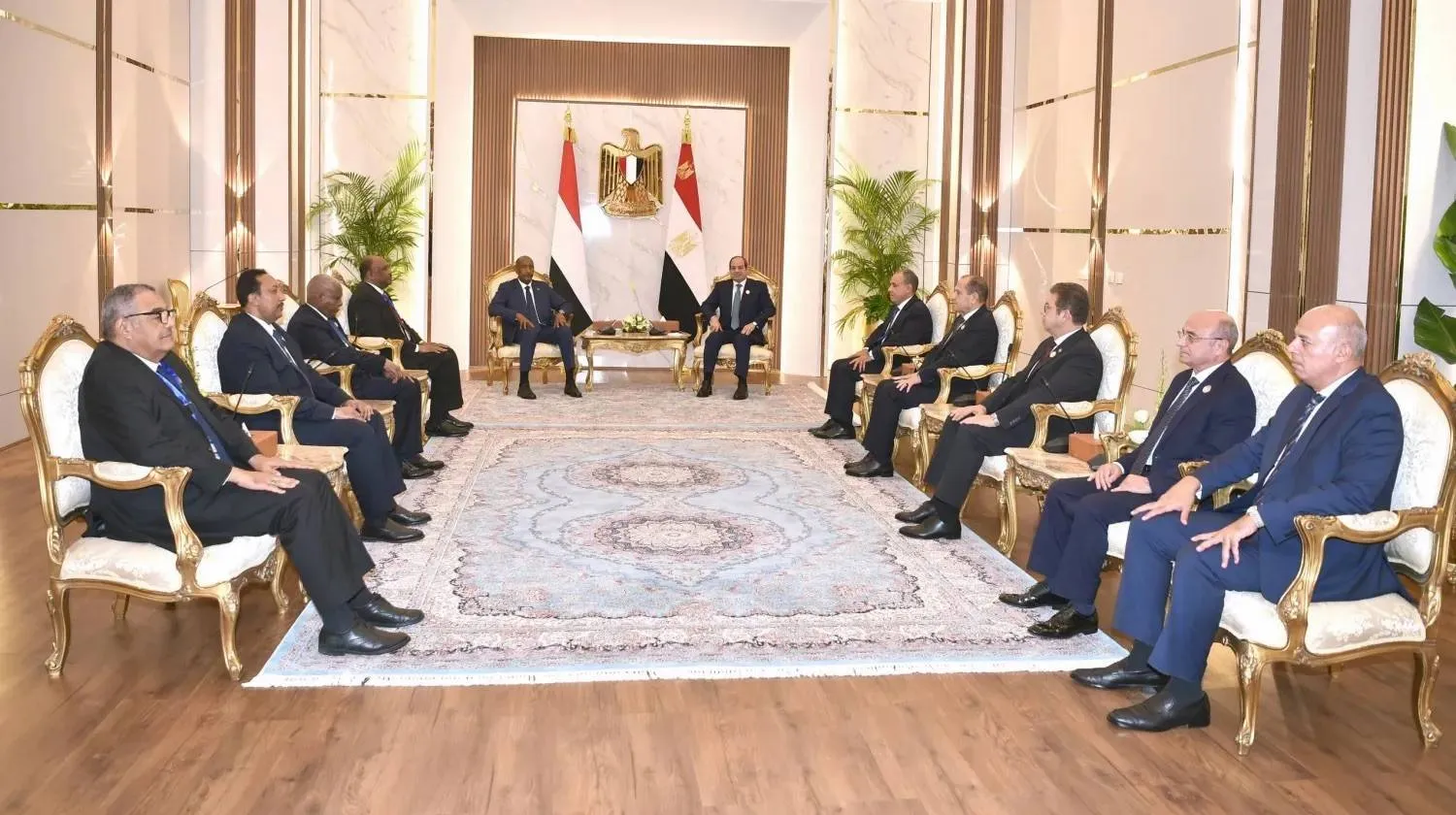
Israeli forces are due to allow the Rafah crossing between Egypt and Gaza to reopen on Sunday on a trial basis and to allow only the "limited movement of people", not aid shipments.