
Slow Movement at Gaza Border After Israel Reopens Rafah Crossing

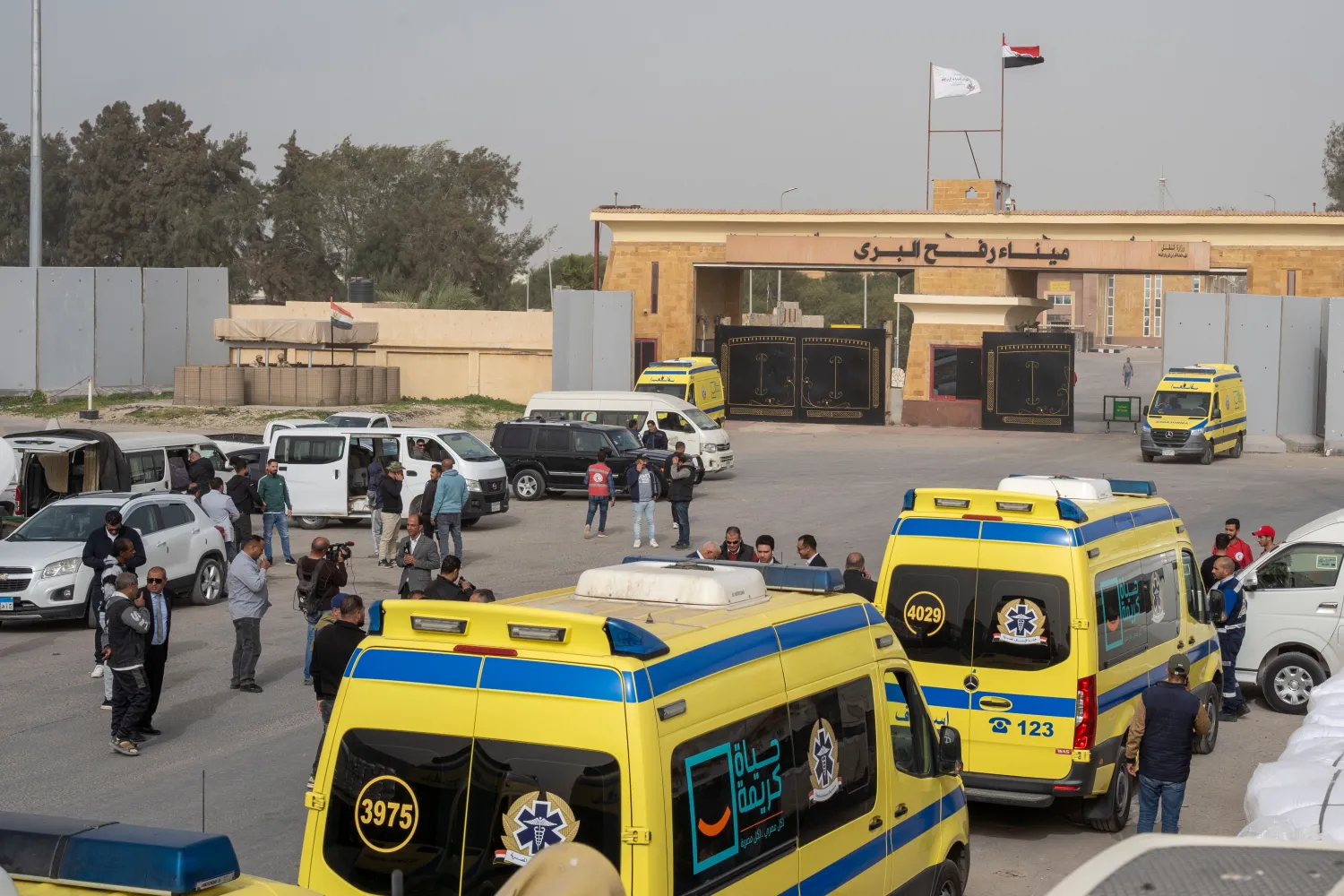
Ambulances line up to enter the Egyptian gate of the Rafah crossing into the Gaza Strip, in Rafah, Egypt, Monday, Feb. 2, 2026. (AP)
TT

Slow Movement at Gaza Border After Israel Reopens Rafah Crossing

Ambulances line up to enter the Egyptian gate of the Rafah crossing into the Gaza Strip, in Rafah, Egypt, Monday, Feb. 2, 2026. (AP)

Dozens of Palestinians were expected to leave or return to Gaza on Monday after Israel reopened the sole pedestrian crossing to Egypt, a major step in the ceasefire intended to end the war, though with strict limitations on access. 

The Rafah crossing, in what was once a city of a quarter of a million people that Israel has since completely demolished and depopulated, is the sole route in or out for nearly all of Gaza's more than 2 million residents. 

It was largely shut for most of the war, and reopening it to allow access to the outside world is one of the last significant steps required under the initial phase of a US-brokered ceasefire reached in October. 

An Israeli security official said Rafah had opened around 9 a.m. "for both entry and exit". A Palestinian source said that on the first day 50 Palestinians were expected to reenter the coastal Gaza Strip. 

Egyptian and Palestinian sources said the 50 Palestinians returning to Gaza were being processed at the Palestinian Israeli-controlled side of the border, but it was unclear when ‌they would enter ‌the enclave, pending Israeli security checks. 

Five patients seeking to leave Gaza for medical treatment, each escorted by ‌two ⁠relatives, were driven ‌to the crossing compound from the Gaza side in a vehicle escorted by World Health Organization personnel, health officials said. 

Later on Monday, Palestinian and Egyptian sources said Gaza patients had crossed into the Egyptian side of the passage and would be directed towards Egyptian hospitals. 

Palestinian officials blamed delays on Israeli security checks. Israel's military had no immediate comment. 

"The crossing is a lifeline for Gaza, it is the lifeline for us, the patients," said Moustafa Abdel Hadi, 32, who receives kidney dialysis at Al-Aqsa Martyrs Hospital in central Gaza and is one of 20,000 Gazans hoping to leave for treatment abroad. 

"We want to be treated in order to return to live our normal life." 

Israel seized the border crossing in May 2024, about seven months into the Gaza war. Since then, it has largely ⁠been closed apart from a brief period during an earlier truce in early 2025. 

Reopening the crossing was one of the requirements under the October ceasefire that outlined the first phase of US President ‌Donald Trump's plan to stop fighting between Israel and Hamas. 

In January, Trump ‍declared the start of the second phase, meant to see the sides ‍negotiate the shattered enclave's future governance and reconstruction. 

Even as the crossing reopened, Israeli strikes killed at least four Palestinians on Monday, including a ‍three-year-old boy, in separate incidents in the north and south of the Strip. The Israeli military had no immediate comment on the incidents. 

ISRAELI INSPECTION 

In the war's early months before Israel shut the crossing, some 100,000 Palestinians exited to Egypt through Rafah. 

Though Egypt has repeatedly made clear it will not allow a large-scale exodus, the route is seen as vital for wounded and sick Palestinians to seek medical care. While it was closed, only a few thousand were allowed out for medical treatment in third countries through Israel. 

Palestinians seeking to cross at Rafah will require Israeli security approval, three Egyptian sources said. Reinforced concrete walls, topped with barbed wire, have been installed along the crossing area, the sources said. 

At the crossing they will have ⁠to pass through three separate gates including one administered by the Palestinian Authority under supervision of a European Union task force but controlled remotely by Israel. 

FOREIGN JOURNALISTS BARRED FROM GAZA 

Despite the reopening of Rafah, Israel is still refusing to allow the entry of foreign journalists, banned from Gaza since the start of the war. Reporting from inside Gaza for international media including Reuters is carried out solely by journalists who live there, hundreds of whom have been killed. 

Israel's Supreme Court is considering a petition by the Foreign Press Association that demands foreign journalists be allowed to enter Gaza. Government lawyers argue this could pose risks to Israeli soldiers. The FPA says the public is being deprived of a vital source of independent information. 

Under the first phase of the ceasefire, major combat was halted, hostages held in Gaza were released in return for thousands of Palestinian prisoners held by Israel, and a surge in humanitarian aid was promised. 

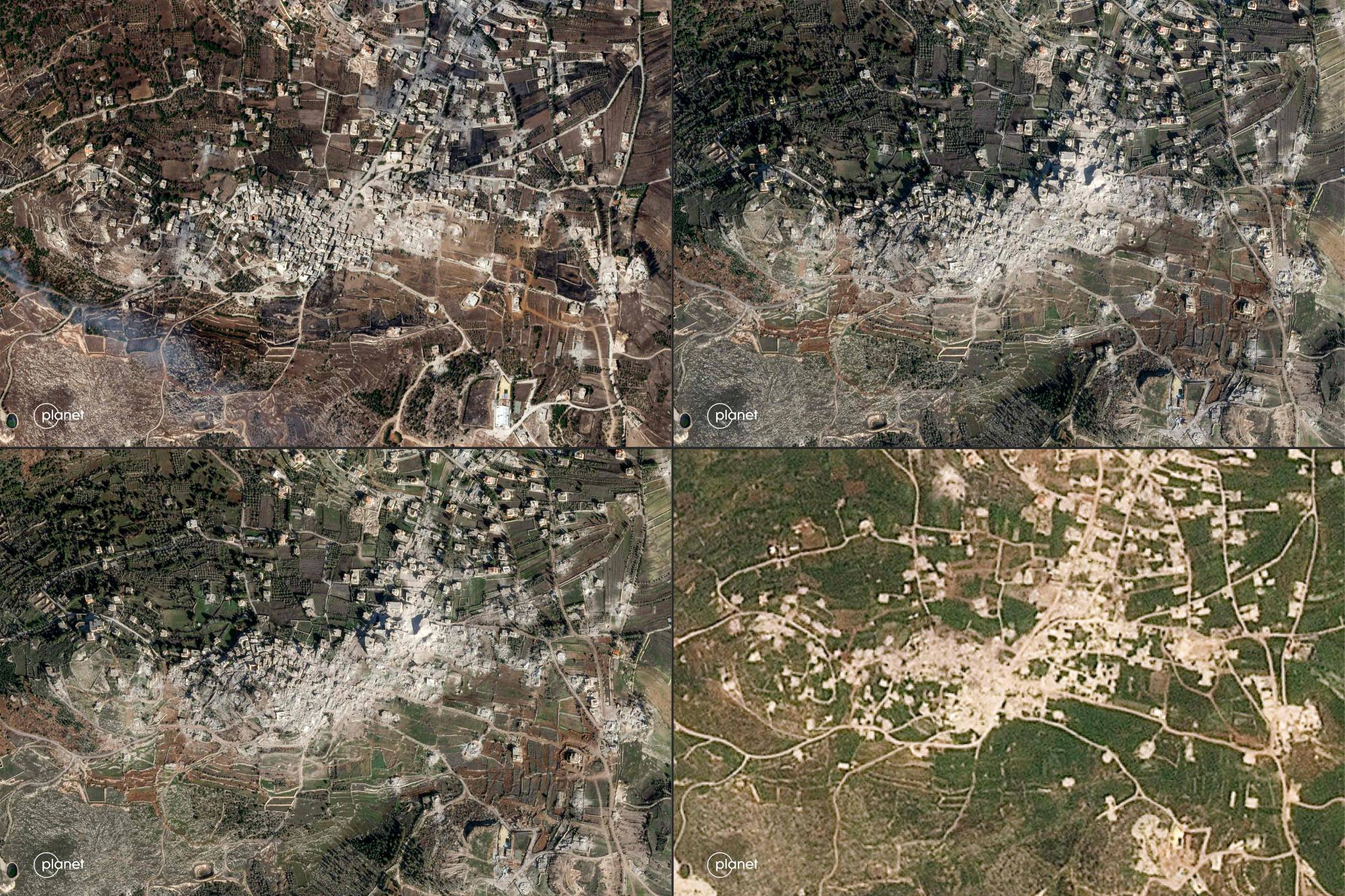
Israeli forces hold more than 53% of Gaza's territory, where they have ordered residents out and razed many remaining buildings. Residents are now confined to a strip along the coast, most living either in makeshift tents or damaged buildings. 

The next phase of Trump's plan foresees Hamas giving up its weapons and relinquishing ‌control to an internationally backed administration that would oversee reconstruction, including luxury residential buildings along the Mediterranean coast. 

Many Israelis and Palestinians see this as unrealistic. Hamas has yet to agree to give up its weapons and Israel says it is prepared to restart the war to disarm the group by force.  


Morocco Evacuates 50,000 as Flooding Threatens City After Weeks of Heavy Rain

Flooding in Ksar el-Kebir, Morocco, 01 February 2026, amid ongoing heavy rainfall and rising water levels in the Loukkos River. (EPA)
TT

Morocco Evacuates 50,000 as Flooding Threatens City After Weeks of Heavy Rain

Flooding in Ksar el-Kebir, Morocco, 01 February 2026, amid ongoing heavy rainfall and rising water levels in the Loukkos River. (EPA)

Morocco has evacuated more than 50,000 people, nearly half the population of the northwestern city of Ksar el-Kebir, as flooding driven by weeks of heavy rain threatened to inundate the city, state media said on Monday.

"The city has become a ghost town," local resident Hicham Ajttou told Reuters by phone. "All markets and shops are closed and most residents have either left voluntarily or been evacuated."

Authorities set up shelters and temporary camps and ‌barred entry into ‌Ksar el-Kebir as rising water ‌levels ⁠in the ‌Loukkos River spread across several neighborhoods. Only departures from the city were permitted, while electricity was cut in parts of it and schools were ordered to remain closed until Saturday.

Officials said the floods were partly triggered by water released from the nearby Oued Makhazine dam, which ⁠had reached full capacity. Ksar el-Kebir lies about 190 km (120 miles) ‌north of Rabat.

Ajttou said he moved his ‍family to Tangier last ‍week and returned to Ksar el-Kebir to volunteer ‍in relief efforts.

"The question that worries us is what comes next. The dam is full and we don't know how long this situation will last," he said.

The army has deployed rescue units, trucks, equipment and medics to support evacuation and rescue operations and buses evacuated ⁠people from the city.

State TV Al Oula showed a helicopter rescuing four people trapped by rising waters in Oued Ouargha in the nearby province of Ouezzane.

Further south, rising levels of the Sebou River prompted authorities to evacuate several villagers in Sidi Kacem and reinforce riverbanks with sandbags and barriers.

The heavy rainfall has brought an end to a seven-year drought that pushed Morocco to invest heavily in desalination plants. The national dam-filling rate ‌is now close to 62%, with several major reservoirs reaching full capacity, according to official data.


Halt to MSF Work Will Be ‘Catastrophic’ for People of Gaza, Warns MSF Chief

 Buildings that were destroyed during the Israeli ground and air operations stand in the northern Gaza Strip as seen from southern Israel, Monday, Feb. 2, 2026. (AP)
Buildings that were destroyed during the Israeli ground and air operations stand in the northern Gaza Strip as seen from southern Israel, Monday, Feb. 2, 2026. (AP)
TT

Halt to MSF Work Will Be ‘Catastrophic’ for People of Gaza, Warns MSF Chief

 Buildings that were destroyed during the Israeli ground and air operations stand in the northern Gaza Strip as seen from southern Israel, Monday, Feb. 2, 2026. (AP)
Buildings that were destroyed during the Israeli ground and air operations stand in the northern Gaza Strip as seen from southern Israel, Monday, Feb. 2, 2026. (AP)

Israel's ban on Doctors Without Borders' humanitarian operation in Gaza spells deeper catastrophe for the Palestinian territory's people, the head of the medical charity told AFP on Monday.

Israel announced on Sunday that it was terminating all the activities in Gaza and the West Bank by the organization, known by its French acronym MSF, after it failed to provide a list of its Palestinian staff.

MSF slammed the move, which takes effect on March 1, as a "pretext" to obstruct aid.

"This is a decision that was made by the Israeli government to restrict humanitarian assistance into Gaza and the West Bank at the most critical time for Palestinians," MSF secretary-general Christopher Lockyear warned in an interview with AFP at the charity's Geneva headquarters.

"We are at a moment where Palestinian people need more humanitarian assistance, not less," he said. "Ceasing MSF activities is going to be catastrophic for the people of the Gaza Strip and the West Bank".

MSF has been a key provider of medical and humanitarian aid in Gaza, particularly since war broke out after Hamas's October 7, 2023 attack on Israel.

The charity says it currently provides at least 20 percent of hospital beds in the territory and operates around 20 health centers.

In 2025 alone, it carried out more than 800,000 medical consultations, treated more than 100,000 trauma cases and assisted more than 10,000 infant deliveries.

It also provided more than 700 million liters of water, Lockyear pointed out.

- 'Impossible choice' -

Israel announced in December that it planned to prevent 37 aid organizations, including MSF, from working in Gaza for failing to submit detailed information about their Palestinian employees. The move drew widespread condemnation from NGOs and the United Nations.

It had alleged that two MSF employees had links with Palestinian armed groups Hamas and Islamic Jihad, which the medical charity vehemently denies.

"If Israel has any evidence of such things, then they should share that evidence," Lockyear said, insisting that "there's been no proof given to us".

He decried "an orchestrated campaign to delegitimize us", calling on other countries to defend efforts to bring desperately-needed humanitarian aid into Gaza.

"They should be speaking to Israel, pressuring Israel to ensure that there is a reverse of any banning of humanitarian organizations."

Lockyear said MSF, which counts around 1,100 staff inside Gaza, had been trying to engage with Israeli authorities for nearly a year over the requested lists.

But it had been left with "an impossible choice", he said.

"We've been forced to choose between the safety and security of our staff and being able to reach patients."

- 'Can only get worse' -

The organization said it decided not to hand over staff names "because Israeli authorities failed to provide the concrete assurances required to guarantee our staff's safety, protect their personal data, and uphold the independence of our medical operation".

Lockyear insisted that was a "very rational" decision, pointing out that 15 MSF staff had been killed in Gaza during the war, out of more than 500 humanitarian workers and more than 1,700 medical workers killed in the Strip.

Lockyear highlighted that without independent humanitarian organizations in Gaza, an already "catastrophic" situation "can only get worse".

"We need to increase massively the humanitarian assistance that's going into Gaza," he said, "not restrict it, not block it."


Palestinian Patients Arriving in Egypt via Rafah Crossing, Says Health Official

UN vehicle escorts a bus carrying Palestinian patients in Khan Younis as they head to the Rafah crossing, leaving the Gaza Strip for medical treatment abroad, Monday, Feb. 2, 2026. (AP Photo/Abdel Kareem Hana)
TT

Palestinian Patients Arriving in Egypt via Rafah Crossing, Says Health Official

UN vehicle escorts a bus carrying Palestinian patients in Khan Younis as they head to the Rafah crossing, leaving the Gaza Strip for medical treatment abroad, Monday, Feb. 2, 2026. (AP Photo/Abdel Kareem Hana)

Palestinians patients and war-wounded began arriving in Egypt via the Rafah border crossing with the Gaza Strip on Monday, an Egyptian health official told AFP.

"They have begun arriving in Egyptian ambulances, accompanied by several escorts," the official at the border said, speaking on condition of anonymity because they were not authorised to brief the media.

"Three ambulances have arrived so far carrying a number of the sick and injured, who were immediately screened upon arrival to determine to which hospital they will be transferred."

According to The AP News, Monday’s opening is a key step in the ceasefire between Israel and Hamas but mostly symbolic as few Palestinians will be allowed to cross in either direction daily. No goods will pass through.

About 20,000 Palestinian children and adults needing medical care hope to leave devastated Gaza via the crossing, according to Gaza health officials.

Thousands of other Palestinians outside the territory hope to enter and return home.

The crossing had been closed since Israeli troops seized it in May 2024.

The number of travelers is expected to increase over time if the system is successful. Israel has said it and Egypt will vet people for exit and entry.