


Ethiopia Builds Secret Camp to Train Sudan RSF Fighters 

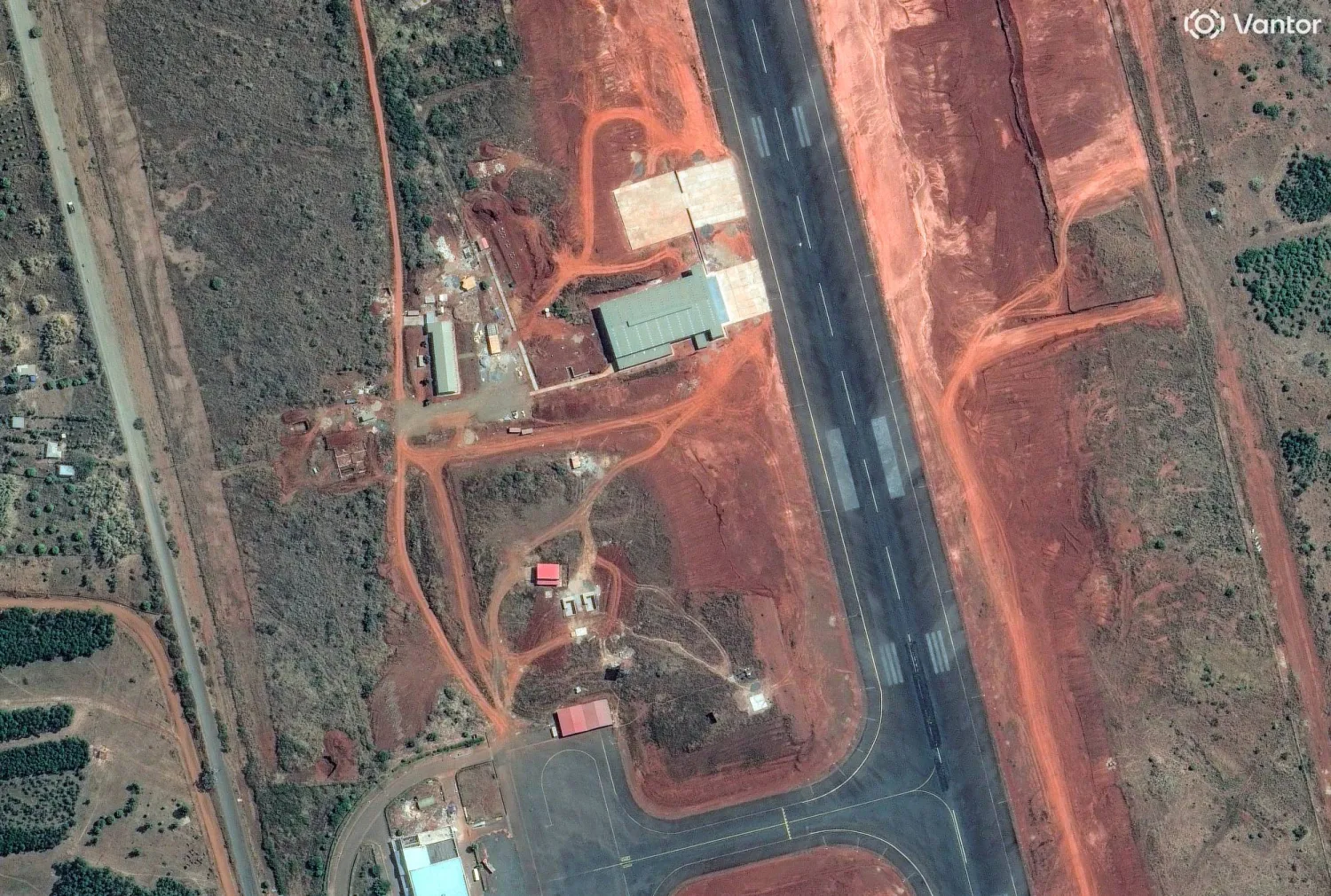
Satellite imagery shows new construction and drone support infrastructure at Asosa airport in Benishangul-Gumuz, Ethiopia, January 28, 2026. (Vantor/Handout via Reuters)
TT

Ethiopia Builds Secret Camp to Train Sudan RSF Fighters 

Satellite imagery shows new construction and drone support infrastructure at Asosa airport in Benishangul-Gumuz, Ethiopia, January 28, 2026. (Vantor/Handout via Reuters)

Ethiopia is hosting a secret camp to train thousands of fighters for the paramilitary Rapid Support Forces in neighboring Sudan, Reuters reporting has found, in the latest sign that one of the world’s deadliest conflicts is sucking in regional powers from Africa and the Middle East.

The camp is the first direct evidence of Ethiopia’s involvement in Sudan’s civil war, marking a potentially dangerous development that provides the RSF a substantial supply of fresh soldiers as fighting escalates in Sudan’s south.

Eight sources, including a senior Ethiopian government official, said the United Arab Emirates financed the camp’s construction and provided military trainers and logistical support to the site, a view also shared in an internal note by Ethiopia’s security services and in a diplomatic cable, reviewed by Reuters.

The news agency could not independently verify UAE involvement in the project or the purpose of the camp. In response to a request for comment, the UAE foreign ministry said it was not a party to the conflict or “in any way” involved in the hostilities.

Reuters spoke to 15 sources familiar with the camp's construction and operations, including Ethiopian officials and diplomats, and analyzed satellite imagery of the area. Two Ethiopian intelligence officials and the satellite images provided information that corroborated details contained in the security memo and cable.

The location and scale of the camp and the detailed allegations of the UAE’s involvement have not been previously reported. The images show the extent of the new development, as recently as in the past few weeks, along with construction for a drone ground control station at a nearby airport.
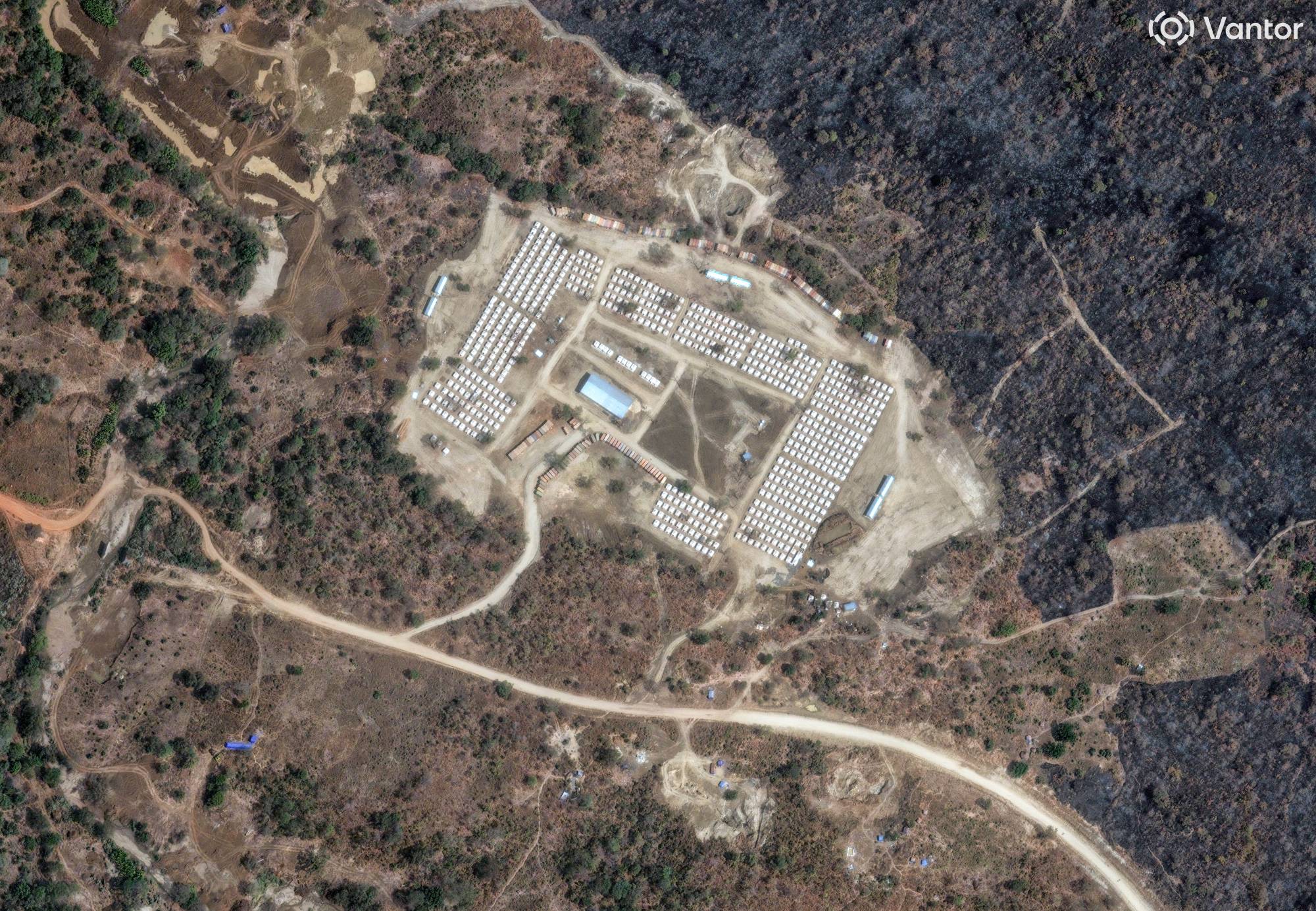
Satellite imagery shows a camp with hundreds of tents in Benishangul-Gumuz, Ethiopia, January 22, 2026. (Vantor/Handout via Reuters)

Activity picked up in October at the camp, which is located in the remote western region of Benishangul-Gumuz, near the border with Sudan, satellite images show.

Ethiopia’s government spokesperson, its army and the RSF did not respond to detailed requests for comment about the findings of this story.

On January 6, UAE and Ethiopia issued a joint statement that included a call for a ceasefire in Sudan, as well as celebrating ties they said served the defense of each other’s security.

The Sudanese Armed Forces did not respond to a request for comment.

As of early January, 4,300 RSF fighters were undergoing military training at the site and “their logistical and military supplies are being provided by the UAE,” the note by Ethiopia’s security services seen by Reuters read.

Sudan's army has previously accused the UAE of supplying the RSF with weapons, a claim UN experts and US lawmakers have found credible.

The camp’s recruits are mainly Ethiopians, but citizens from South Sudan and Sudan, including from the SPLM-N, a Sudanese rebel group that controls territory in Sudan’s neighboring Blue Nile state, are also present, six officials said.

Reuters was unable to independently establish who was at the camp or the terms or conditions of recruitment.

A senior leader of the SPLM-N, who declined to be named, denied his forces had a presence in Ethiopia.

The six officials said the recruits are expected to join the RSF battling Sudanese soldiers in Blue Nile, which has emerged as a front in the struggle for control of Sudan. Two of the officials said hundreds had already crossed in recent weeks to support the paramilitaries in Blue Nile.

The internal security note said General Getachew Gudina, the Chief of the Defense Intelligence Department of the Ethiopian National Defense Force, was responsible for setting up the camp. A senior Ethiopian government official as well as four diplomatic and security sources confirmed Getachew’s role in launching the project.

Getachew did not respond to a request for comment.

The camp was carved out of forested land in a district called Menge, about 32 km from the border and strategically located at the intersection of the two countries and South Sudan, according to the satellite imagery and the diplomatic cable.

The first sign of activity in the area began in April, with forest clearing and the construction of metal-roofed buildings in a small area to the north of what is now the area of the camp with tents, where work began in the second half of October.
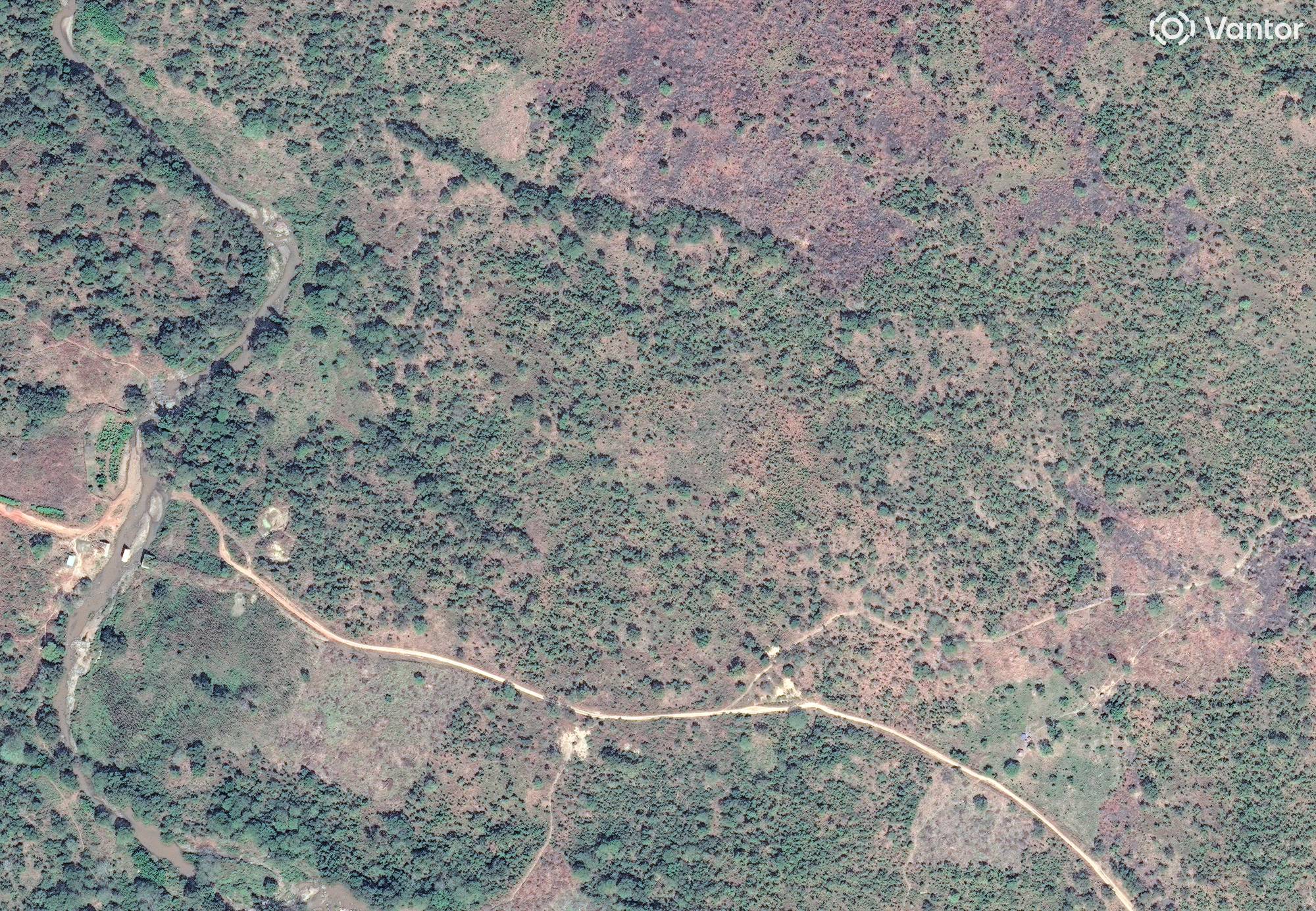
Satellite imagery shows a forested area where, ten months later, a camp with hundreds of tents was built in Benishangul-Gumuz, Ethiopia, December 15, 2024. (Vantor/Handout via Reuters)

The diplomatic cable, dated November, described the camp as having a capacity of up to 10,000 fighters, saying activity began in October with the arrival of dozens of Land Cruisers, heavy trucks, RSF units and UAE trainers. Reuters is not revealing the country that wrote the cable, to protect the source.

Two of the officials described seeing trucks with the logo of the Emirati logistics company Gorica Group heading through the town of Asosa and towards the camp in October. Gorica did not respond to a request for comment.

The news agency was able to match elements of the timeframe specified in the diplomatic cable with satellite imagery. Images from Airbus Defense and Space show that after the initial clearing work, tents began filling the area from early November. Multiple diggers are visible in the imagery.

An image taken by US space technology firm Vantor on November 24 shows more than 640 tents at the camp, approximately four meters square. Each tent could comfortably house four people with some individual equipment, so the camp could accommodate at least 2,500 people, according to an analysis of the satellite imagery by defense intelligence company Janes.

Janes said it could not confirm the site was military based on their analysis of the imagery.

New recruits were spotted travelling to the camp in mid-November, two senior military officials said.
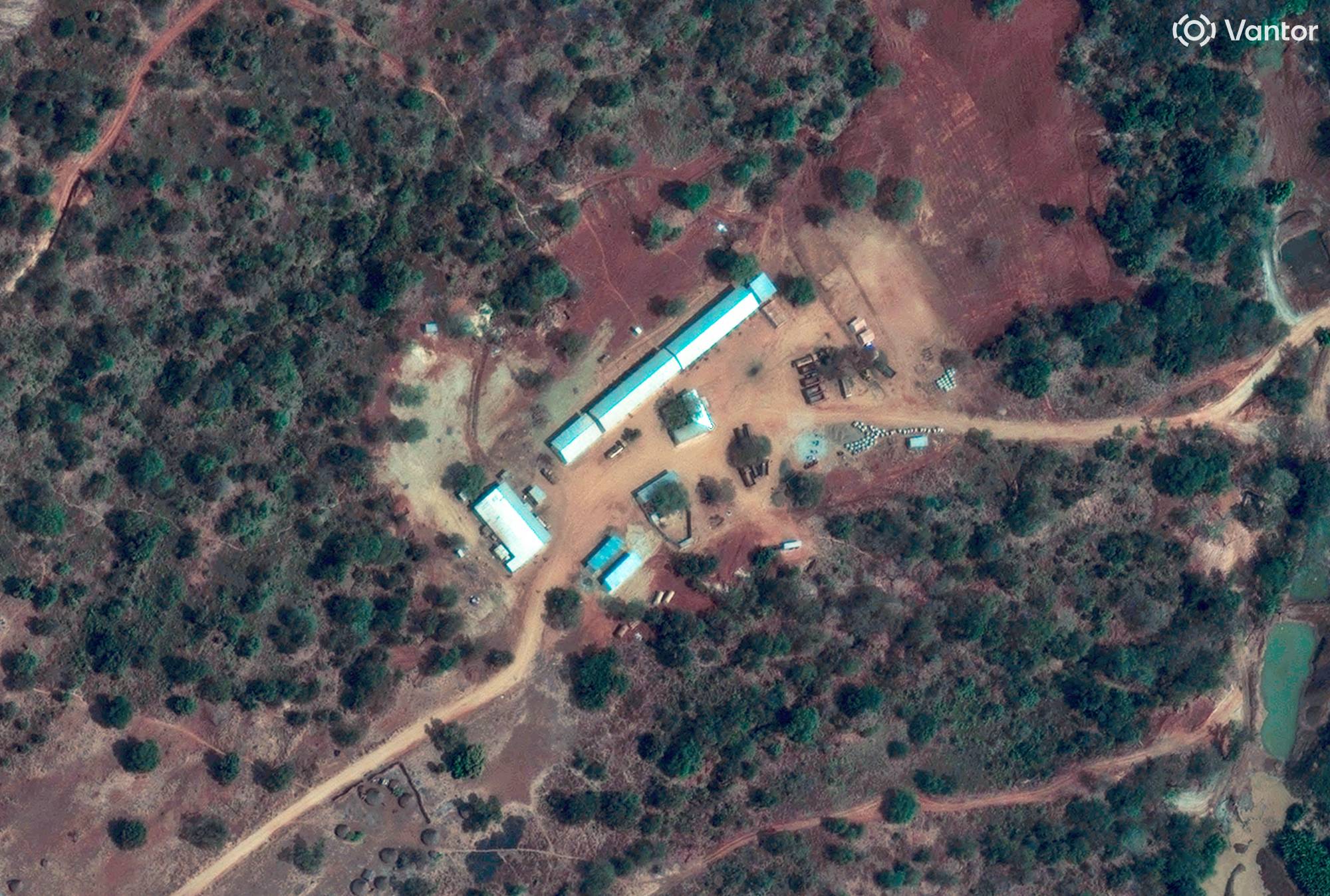
Satellite imagery shows an area where trucks come and go at a camp in Benishangul-Gumuz, Ethiopia, January 22, 2026. (Vantor/Handout via Reuters)

On November 17, a column of 56 trucks packed with trainees rumbled through dirt roads of the remote region, the officials, who witnessed the convoys, told Reuters, with each truck holding between 50 and 60 fighters, the officials estimated.

Two days later, both officials saw another convoy of 70 trucks carrying soldiers driving in the same direction, they said.

The November 24 image shows at least 18 large trucks at the site. The vehicles’ size, shape and design match those of models frequently used by the Ethiopian military and its allies to transport soldiers, according to Reuters analysis.

Development continued in late January, the Vantor images show, including new clearing and digging in the riverbed just north of the main camp and dozens of shipping containers lined around the camp visible in a January 22 image. A senior Ethiopian government official said construction on the camp was ongoing but did not elaborate on future building plans.

Sudan’s civil war erupted in 2023 after a power struggle between the Sudanese army and the RSF ahead of a planned transition to civilian rule.



What Remains of Hezbollah’s Military Arsenal?

Damage after a rocket fired by Hezbollah toward Nahariya (Reuters)
TT

What Remains of Hezbollah’s Military Arsenal?

Damage after a rocket fired by Hezbollah toward Nahariya (Reuters)

The rockets that Hezbollah continues to fire, since its decision to join what it calls a support war for Iran, have surprised observers with their intensity and type, particularly in Israel.

Israeli media have expressed astonishment that the group still retains such military capabilities, despite the ongoing war against it since September 2023.

Previous Israeli assessments suggested that a large part of Hezbollah’s arsenal had been eroded during the last war and the bombardment campaigns that followed, which continued for 15 months against its depots and positions.

However, the pace of launches since the start of the new round of fighting has raised serious questions about the actual size of this arsenal, its sources, how it has been preserved, where the remaining stockpiles are located, and how they are managed and used under these complex conditions.

This comes as the Lebanese army had also seized a considerable portion of these weapons in the area south of the Litani River.

Questions also extend beyond the military stockpile to Hezbollah’s ability to fill leadership vacancies after assassination operations that targeted hundreds of its commanders and fighters, and how large numbers of these fighters have been able to reach and take part in ground combat in border villages and towns.

Secret storage sites

Most military experts believe these fighters have not left their towns and villages during this period, keeping their weapons in private facilities that have not been raided.

Riad Kahwaji, a researcher and writer on security and defense affairs, said Israeli estimates indicate that between 50% and 70% of Hezbollah’s arsenal was destroyed during the previous war and subsequent operations over the past 15 months.

He added that if the group possessed around 100,000 rockets, as prevailing narratives claim, then even if 70% were eliminated, about 30,000 would remain, which is not a small number.

He added that the arsenal in the Bekaa Valley has not yet been used.

On the locations of the rockets and storage sites, Kahwaji told Asharq Al-Awsat that Israel had often destroyed the entrances to some tunnels, whether in the south or along the eastern mountain range, but had not been able to destroy them entirely, meaning their contents likely remain intact.

This, he said, explains talk of intentions to reach these tunnels through ground operations to seize them.

Kahwaji also said Hezbollah had not cooperated with the Lebanese army, either south or north of the Litani River. As a result, most army raids targeted sites identified by Israel and the mechanism committee, meaning many other locations remain untouched.

He added that Hezbollah fighters had not left south of the Litani and remained with their weapons in private facilities that the Lebanese army had refused to enter, which had long cast doubt on claims that the area had been fully cleared. Recent developments, he said, showed that this was not the case.

Kahwaji added that Hezbollah also has facilities for manufacturing Katyusha and Grad rockets and assembling drones. He noted that most of the rockets fired recently belong to these types, which the group possesses in large quantities.

By contrast, the number of long-range missiles in its possession is limited, although some have been fired as far as 150 km into Israel. He also pointed to smuggling operations that had taken place via Syria to bolster its arsenal with guided missiles such as the Kornet.

Tunnels and underground centers

Retired Brig. Gen. Khalil Helou, a lecturer in geopolitics, said it was not surprising that Hezbollah still possesses such an arsenal and capabilities despite what it has faced over the past two years and the closure of the Syrian border.

He noted that from 2006 to 2023, over 17 years, Hezbollah had dug tunnels and underground facilities and stockpiled weapons arriving from Iran via Damascus and Aleppo airports, before being transported by land into Lebanon around the clock.

Israel, he said, had been unable to effectively target these supply lines over the years, intercepting only about 50%, according to Israeli sources.

Helou told Asharq Al-Awsat that Hezbollah had made extensive preparations at all levels, not only in terms of weapons, but also logistically and medically.

Although Israel destroyed a large portion of these weapons and facilities during the last war, and supply lines through Syria have since been cut, some capabilities remain intact.

He added that while the Lebanese army in the south had raided sites it was able to identify, other locations likely remain undiscovered.

He said rockets currently being fired are launched either from the Bekaa Valley or areas north of the Litani River, as battlefield developments indicate that much of the area south of the Litani was in fact largely devoid of weapons.


Esmail Khatib, Iran Spy Chief, from Shadow War to Assassination

A photo released by the Iranian supreme leader’s official website shows Intelligence Minister Esmail Khatib in November last year
TT

Esmail Khatib, Iran Spy Chief, from Shadow War to Assassination

A photo released by the Iranian supreme leader’s official website shows Intelligence Minister Esmail Khatib in November last year

Within Iran’s ruling structure in Tehran, the post of intelligence minister is far from a routine cabinet role. The ministry, established after the 1979 revolution, is a central pillar of the security system, overseeing a wide network of intelligence operations at home and abroad.

While the president formally nominates the minister, the appointment is effectively decided with the Supreme Leader's approval, placing the role within a security structure closely tied to his office.

From this position, conservative cleric Esmail Khatib rose to lead Iran’s intelligence apparatus in 2021, after more than four decades in the Islamic Republic’s security and judicial institutions.

His career ended dramatically during the Iran-Israel war. On the 19th day of the conflict, Israeli Defense Minister Israel Katz said the Israeli air force had carried out a strike in Tehran that killed Khatib.

The Israeli military said Khatib oversaw an apparatus responsible for espionage and covert operations, and played a role in suppressing protests inside Iran.

The announcement came days after his name surfaced outside Iran, when the US State Department’s Rewards for Justice program offered up to $10 million for information on several senior Iranian officials linked to the Revolutionary Guards and the Supreme Leader’s office, including Khatib.

For years, Khatib operated largely in the shadows within intelligence institutions. He moved to the center of the Iran-Israel confrontation as the shadow conflict between the two sides escalated in recent years.

The announcement of his death added his name to a list of figures from Iran’s Supreme National Security Council killed in the conflict, including Secretary Ali Larijani and Mohammad Bagher Pakpour, commander of the Islamic Revolutionary Guard Corps.

From seminary to state institutions

Esmail Khatib was born in 1961 in Qaenat, South Khorasan province, eastern Iran. In the mid-1970s, he moved to the seminary in Qom, where he studied Islamic jurisprudence under senior clerics.

His teachers included Mohammad Fazel Lankarani, Nasser Makarem Shirazi and Mojtaba Tehrani. He also attended jurisprudence lessons taught by Ali Khamenei before he became the supreme leader. This religious path was common for clerics who entered state institutions after the 1979 revolution that toppled the Shah.

After the establishment of the Islamic Republic, Khatib quickly joined the new system. At 19, he enlisted in the Revolutionary Guards and worked in intelligence and operations units during the Iran-Iraq war in the 1980s. Reports indicate he was wounded, later placing him among recognized veterans, a status that carries political weight in Iran.

Entry into the intelligence ministry

In the mid-1980s, after the creation of the Ministry of Intelligence and Security in 1983, Khatib moved to the new body, which became Iran’s main civilian intelligence agency. He worked in several departments, including foreign affairs and intelligence analysis.

He gained prominence in the 1990s when he was appointed head of intelligence in Qom province.

Qom, a stronghold of the clerical establishment, is among Iran’s most sensitive provinces due to its religious institutions. Managing security there required navigating complex balances among clerics and political factions.

Khatib held the post for more than a decade, during a period marked by political tensions in the city, including developments linked to senior cleric Hossein Ali Montazeri, once seen as a potential successor to Ruhollah Khomeini before being sidelined.

Closer to the center of power

Over time, Khatib moved into roles closer to decision-making centers. In 2010, he joined the office of Supreme Leader Ali Khamenei in a unit responsible for his security and protection, a position reserved for senior intelligence officials.

Two years later, he was appointed head of the judiciary’s protection and intelligence center, tasked with monitoring judicial institutions and ensuring their political loyalty.

He remained in the role until 2019, during the tenure of judiciary chief Sadeq Larijani. With Ebrahim Raisi’s later appointment as head of the judiciary, ties between the two men strengthened.

The Astan Quds phase

In 2019, Khatib moved to Astan Quds Razavi in Mashhad, one of Iran’s largest economic and religious institutions, which oversees the Imam Reza shrine.

He took charge of security and protection within the organization, part of a network of institutions directly linked to the supreme leader’s office. He remained there until 2021, when he returned to the intelligence ministry, this time as its head.

Intelligence minister

In August 2021, after Ebrahim Raisi was elected president, he nominated Khatib as intelligence minister. As is customary, the appointment came after approval from Supreme Leader Ali Khamenei, who had the final say on sensitive security posts.

Khatib became the eighth intelligence minister since the ministry’s establishment. He took office as Iran faced multiple security challenges, including sabotage at nuclear facilities, assassinations of scientists and officials, and an escalating intelligence confrontation with Israel.

Iran’s political landscape shifted after President Ebrahim Raisi died in May 2024 in a helicopter crash in the northwest. After subsequent elections, President Masoud Pezeshkian formed a new government.

Khatib was among the few ministers to retain his post. Pezeshkian renominated him, a move analysts said reflected the sensitivity of the role.

His retention drew criticism from some political and reformist circles that had hoped for changes in the leadership of security agencies.

Rivalry within the security apparatus

At the start of his tenure, Khatib worked to manage a key issue within the security establishment, the complex relationship between the intelligence ministry and its parallel counterpart, the Revolutionary Guards Intelligence Organization.

The two bodies have overlapping mandates and often compete over major security files. Khatib sought to improve coordination, particularly in countering what the system described as foreign infiltration. The balance, however, remained complicated, reflecting ties to different power centers.

Protests and sanctions

Khatib’s tenure saw one of Iran’s largest protest waves in the past decade. In 2022, demonstrations erupted after the death of Mahsa Amini while in the morality police custody.

Security agencies, including the intelligence ministry, played a central role in responding through arrests, investigations and the pursuit of activists.

Khatib echoed the official line, describing the protests as driven by foreign interference and accusing the United States, Britain and Israel of involvement.

In September 2022, the United States imposed sanctions on Khatib and the ministry, accusing it of running cyberattack networks targeting governments and companies in multiple countries, including Albania.

Security failures

Despite repeated announcements of dismantling espionage networks, Iran’s security apparatus faced criticism over several failures.

Among the most notable was a deadly attack in Kerman in 2024 during a ceremony marking the anniversary of Qassem Soleimani’s killing, which left dozens dead.

Assassinations inside Iran, including those targeting figures linked to the so-called resistance axis, also exposed vulnerabilities.

These incidents sparked debate within Iran’s elite over the system’s ability to counter external infiltration.

Criticism intensified after the killing of numerous Iranian officials, including military commanders and nuclear scientists, during the 12-day war in June, amid reports of extensive intelligence breaches.

End of a security career

Throughout his career, Esmail Khatib remained largely out of the spotlight. He was not a mass political figure, but a security official who rose steadily through state institutions.

The Iran-Israel war in 2026, however, thrust him into the center of the confrontation. The Israeli announcement of his killing on the 19th day of the war ended a career spanning more than 40 years in the security services.

Whether seen as a major intelligence blow or another chapter in the regional conflict, Khatib’s trajectory reflects a common path within Iran’s complex security establishment: a cleric who began in the seminary, joined the Revolutionary Guards in the early years of the revolution, and rose through the ranks to one of the most sensitive posts in the Iranian state.


Killing of Larijani Complicates Iran’s Decision-Making, Shrinks Its Options

 People gather around the coffin of Iranian security chief Ali Larijani during a funeral for Larijani and victims of the IRIS Dena warship at Enghelab Square, amid the US-Israeli conflict with Iran, in Tehran, Iran, March 18, 2026. (Reuters)
People gather around the coffin of Iranian security chief Ali Larijani during a funeral for Larijani and victims of the IRIS Dena warship at Enghelab Square, amid the US-Israeli conflict with Iran, in Tehran, Iran, March 18, 2026. (Reuters)
TT

Killing of Larijani Complicates Iran’s Decision-Making, Shrinks Its Options

 People gather around the coffin of Iranian security chief Ali Larijani during a funeral for Larijani and victims of the IRIS Dena warship at Enghelab Square, amid the US-Israeli conflict with Iran, in Tehran, Iran, March 18, 2026. (Reuters)
People gather around the coffin of Iranian security chief Ali Larijani during a funeral for Larijani and victims of the IRIS Dena warship at Enghelab Square, amid the US-Israeli conflict with Iran, in Tehran, Iran, March 18, 2026. (Reuters)

The killing of Iran's most influential powerbroker, Ali Larijani, has pushed the country into a more uncertain phase, complicating decision-making in Tehran and narrowing its options as the war grinds on.

The US-Israeli war on Iran began with the killing of Supreme Leader Ali Khamenei alongside a group of military commanders, and shows no sign of abating, with several more senior officials now targeted by air strikes.

The deeper challenge for Tehran is increasingly structural. A system built for endurance is being tested by attrition. As experienced officials are picked off in targeted killings, the pool of figures capable of managing both war and statecraft is shrinking.

Four senior Iranian officials said there were few figures in the establishment like Larijani who could translate battlefield realities into political strategy — a gap that could slow decision-making and coordination.

Iran's security chief Larijani combined rare clerical legitimacy, rooted in his prominent religious family, with the stature of a seasoned politician who had deep ties to the Iranian Revolutionary Guards Corps (IRGC).

Those credentials made him a trusted intermediary in a system where power centers — from clerics to the security apparatus — often compete for influence, one of the ‌officials said.

Alex Vatanka, a ‌senior fellow at the Middle East Institute in Washington, D.C., said Larijani's death and those of many other ‌senior ⁠figures will "obviously upset ⁠the political process in Tehran and might even jeopardize policy continuity or policy flexibility."

The Iranian regime has long been structured to withstand the loss of senior officials, two of the officials said, but they added that replacing Larijani as a powerbroker under wartime conditions will be far more difficult.

Another official said the immediate effect is "not necessarily weakness of the regime, but disarray," because losing someone like Larijani risks making governance more fragmented and reactive.

SURVIVAL TRUMPS IDEOLOGY

Larijani's death is likely to tilt the system further toward its security institutions, tightening control but reducing flexibility — both in prosecuting the war and in shaping any eventual endgame, analysts said.

Ali Vaez, the International Crisis Group's Iran Project Director, said Larijani's removal would not paralyze the system, but it "would deprive it of yet another ⁠senior figure capable of exercising prudence at a dangerous moment".

"With every assassination, Iran moves further away from democratic ‌opening and closer to either praetorian rule or state collapse," said Vaez.

All the officials who ‌spoke to Reuters said the establishment's main goal was survival.

"The regime as a whole has always been anchored around the Iran of survival and expediency. In ‌that sense, they are ideological radicals who will go a long way in this war or as long as they can but will ‌also look for a way out," said Vatanka.

Analysts have ruled out an imminent collapse of the clerical rule in Iran amid the war or a military coup by the Guards, which have tightened their grip on wartime decision-making despite the loss of top commanders.

Asked about the possibility of a coup, Vaez said: "They do not need to. They’re already in full control." One of the officials said the Guards are committed to the system of velayat-e faqih, or guardianship of the Islamic ‌jurist.

A senior reformist former official said the core supporters of the clerical establishment number around 12 million people, and "many of them support the regime because they believe in a system run by a ⁠religious figure."

ATTENTION TURNS TO QALIBAF

If ⁠Israel's targeted killing continues, the regime may find that survival is not simply a matter of resilience but of replacement — and that replacing men like Larijani is far harder than the system was built to admit, analysts said.

With several top officials killed, parliament speaker Mohammad Baqer Qalibaf stands out as one of the few remaining figures with both military credentials and political clout.

Qalibaf, a former commander with close ties to the Guards and the new Supreme Leader Mojtaba Khamenei, has long cast himself as a strongman in the mold of a modernizing authoritarian.

Sima Shine, a former chief Mossad analyst and currently a researcher at Israel's Institute for National Security Studies, said the emerging power structure appears increasingly concentrated in Qalibaf and the security establishment.

"We assume that the IRGC and Qalibaf are the most important people now ... It will be Qalibaf on the level of a decision, and the IRGC on the practical level of pushing the button,” Shine said.

Even so, Qalibaf lacks Larijani's clerical pedigree and the same depth of relationships within Iran's religious hierarchy. That deficit could complicate efforts to unify the system's competing factions, even if it strengthens alignment with the security forces.

For now, the war may be buying the leadership time, rallying the state even as it weakens it. But that balance may not hold indefinitely. If the leadership begins to see a real risk to its survival, Shine said, it could become more willing to compromise "because the survival of the regime is the most important goal."