


Sudan Oil Minister Says War Losses in Billions

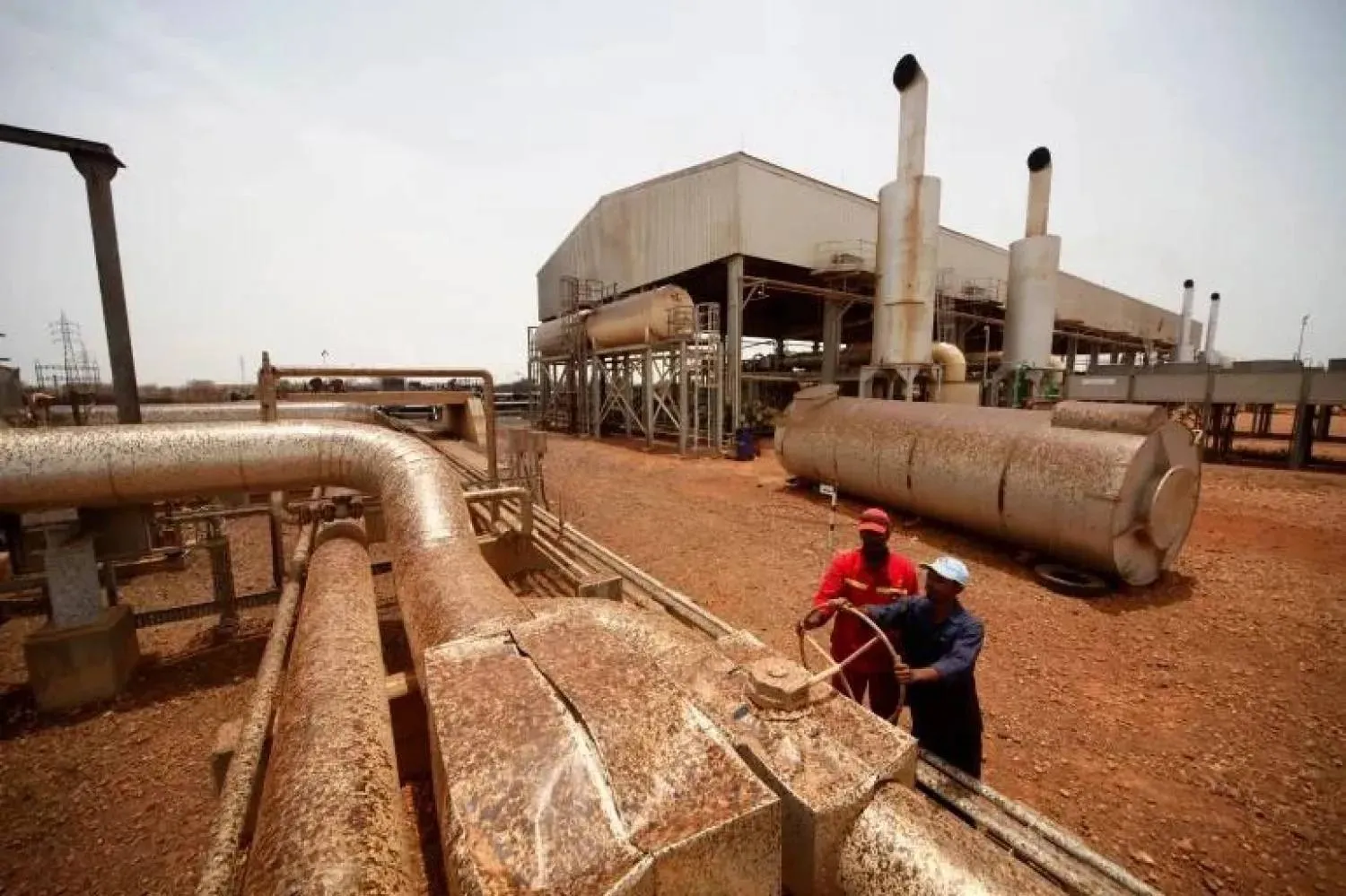
File photo of the Heglig oil field in southern Kordofan, Sudan (Reuters)
TT

Sudan Oil Minister Says War Losses in Billions

File photo of the Heglig oil field in southern Kordofan, Sudan (Reuters)

Sudan’s Oil and Energy Minister Al-Mutasim Ibrahim said the estimated cost of heavy losses and damage inflicted on the oil and energy sector by the war amounts to billions of dollars, blaming the Rapid Support Forces for directly targeting infrastructure across the country.

In exclusive remarks to Asharq Al-Awsat, Ibrahim said the government had fully restarted the Heglig oil field and that “all employees on site are carrying out their duties normally.”

He said the protection and operation of the field are a joint responsibility between Sudan and the Republic of South Sudan, as provided for in previously signed agreements between the two countries.

Ibrahim strongly denied recent reports of a three-way agreement between the governments of Sudan and South Sudan and the Rapid Support Forces regarding the Heglig field, located in the far south of the Kordofan region bordering South Sudan.

Authorities in South Sudan announced a settlement between the Sudanese army and the Rapid Support Forces after the latter took control of the area, stipulating the withdrawal of both sides and assigning the South Sudan army the task of securing oil facilities in Heglig.

Heglig is Sudan’s largest oil field, producing between 40,000 and 80,000 barrels per day of crude. Output fell by about 20,000 to 25,000 barrels per day after the outbreak of war due to the shutdown of many wells and damage to infrastructure.

The field also serves as the central processing facility for South Sudan’s crude, which produces nearly 130,000 barrels per day and is exported through Sudanese ports on the Red Sea coast.

China talks

Meanwhile, the minister said negotiations with the Chinese government were ongoing over its return to operations in Block 6 in the Balila area of West Kordofan. China had announced the termination of its agreement with the Sudanese government due to deteriorating security conditions and the collapse of supply chains caused by the fighting.

“Work at the Balila field is currently suspended, but the Chinese partner has not withdrawn from the country,” Ibrahim said.

“We recently held joint meetings with the Chinese side in Cairo and informed them of our desire to continue the partnership in the field, and we also presented opportunities to invest in other fields.”

He expressed optimism about the continuation of the partnership between Khartoum and Beijing in the sector, pointing to various oil investments expected to flow in after the war ends, particularly in areas under army control, which he said are witnessing significant security stability.

Last December, the Chinese government informed Sudan that it was ending the oil partnership after years of cooperation.

Khartoum refinery

According to the minister, preliminary estimates of heavy losses to the oil and energy sector since the war erupted in mid-April 2023 amount to billions of dollars, with damage assessments still underway.

He said the Rapid Support Forces had deliberately sabotaged infrastructure in both sectors, adding that the government had made progress in rehabilitating them after the army pushed the forces out of many areas across the country.

Ibrahim put losses at the Khartoum oil refinery at around $6 billion, saying it would need to be rebuilt from scratch.

“We have begun preparing the necessary designs and securing requirements to restart it,” he said, noting that several countries had expressed serious interest in investing in refineries in Khartoum, El-Obeid, and Port Sudan.

Before the war, the Al-Jaili refinery north of the capital, Khartoum, met more than 40 percent of the country’s demand for gasoline, diesel, and cooking gas. Still, it halted operations due to severe damage to its processing and refining facilities.

Ibrahim said petroleum products were flowing normally and that their availability had helped stabilize fuel supplies nationwide. He added that most fuel stations in areas without electricity had been equipped with solar power.



Syria Foils Weapons Smuggling Attempt Near Lebanese Border

A photo released by Syrian authorities shows weapons they said were intended to be smuggled across the border into Lebanon. (Rif Dimashq Media Directorate)
TT

Syria Foils Weapons Smuggling Attempt Near Lebanese Border

A photo released by Syrian authorities shows weapons they said were intended to be smuggled across the border into Lebanon. (Rif Dimashq Media Directorate)

Syrian authorities announced on Saturday the seizure of a shipment of weapons allegedly prepared for smuggling across the Syrian-Lebanese border, amid rising tensions along the frontier.

The Rif Dimashq Media Directorate said the weapons were confiscated in the al-Nabk area of the Qalamoun region, north of Damascus, but provided no details about the quantity or type of arms.

In a brief statement, the Internal Security Directorate said the shipment had been intended for smuggling into Lebanon.

Officials said the operation was part of ongoing efforts to combat organized crime and curb cross-border trafficking.

The seizure comes as concerns grow along the Syrian-Lebanese border following the Syrian army’s decision to reinforce its deployment along areas with both Lebanon and Iraq in a bid to tighten security and prevent the smuggling of weapons and narcotics.

Sources in Damascus told Asharq Al-Awsat that Syrian authorities are reviewing all options to address tensions with Hezbollah in border areas.

They said Damascus does not favor intervention, while emphasizing Syria’s support for Lebanon’s stability and the authority of the Lebanese state.

The sources added that Syria’s position remains aligned with that of Arab and regional countries supporting efforts to contain the current escalation.

Meanwhile, Hassan Abdul Ghani, spokesman for the Syrian Ministry of Defense, denied reports suggesting Syria intends to intervene militarily in Lebanon.

In an interview with a Lebanese television channel, he said the military buildup near the Lebanese border was a precautionary defensive measure rather than an offensive deployment.

Since the eruption of the US-Israel war on Iran and Israel intensified strikes against Hezbollah in Lebanon, Syrian President Ahmed al-Sharaa has reiterated Syria’s support for Lebanon’s stability and security, backing the Lebanese government’s efforts to restore sovereignty and strengthen state authority.

During a three-way phone call earlier this week with French President Emmanuel Macron and Lebanese President Joseph Aoun, al-Sharaa stressed the importance of opening a new chapter in Syrian-Lebanese relations based on cooperation and coordination between the two countries, reported the Syrian state news agency SANA.

Israel had previously destroyed many Hezbollah positions and weapons depots in Syria before the fall of Bashar al-Assad’s regime in 2024, including stockpiles in border areas of Homs and Damascus countryside.

Local sources say weapons were looted from former regime barracks and militia caches following the collapse of Assad’s rule.

While Syrian authorities continue campaigns to collect weapons and restrict them to state control, armed groups and criminal networks are reportedly picking up war remnants left behind in abandoned military sites.

The danger posed by such remnants has been underscored by recent incidents. Earlier this month, a missile left over from the former regime exploded in a metal workshop in the industrial zone of Sweida while it was being dismantled, killing five people and injuring three.

On Friday, two separate explosions linked to war remnants occurred in Homs and Aleppo. In Homs, more than 31 civilians were injured when a missile exploded inside an abandoned military barracks in the Abbasiya residential district.

In al-Atarib, in western Aleppo province, three civilians, including two children, were killed and eight others wounded when leftover munitions exploded inside a house.


Al-Hamidawi: Iran’s Elusive Man in Iraq

A photo believed to be al-Hamidawi wearing a mask, sunglasses and a head covering during his only public appearance on Nov. 6, 2021.
TT

Al-Hamidawi: Iran’s Elusive Man in Iraq

A photo believed to be al-Hamidawi wearing a mask, sunglasses and a head covering during his only public appearance on Nov. 6, 2021.

Conflicting reports have emerged about the fate of Kataib Hezbollah leader Abu Hussein al-Hamidawi after a strike early Saturday targeted a house linked to the group in Baghdad’s Karrada district.

Some reports said al-Hamidawi was killed in the attack, while others suggested he survived. A video circulated online later appeared to show a man believed to be al-Hamidawi with a head injury.

The incident has again drawn attention to the figure often described as “Iran’s mysterious man in Iraq.”

Despite the influence of Kataib Hezbollah — founded by Abu Mahdi al-Muhandis, the former deputy head of Iraq’s Popular Mobilization Forces (PMF) who was killed in a US strike near Baghdad International Airport in January 2020 — the group’s leadership has long remained shrouded in secrecy.

Although the faction plays a key military role within the PMF and has been linked to attacks targeting US interests in Iraq, its senior figures rarely appear in public and operate under strict security protocols that limit information about them.

Shadowy figure

The name Ahmad Mohsen Faraj al-Hamidawi, better known by the nom de guerre Abu Hussein al-Hamidawi, has been associated with several major developments in Iraq in recent years. Yet reliable details about him remain scarce. Apart from widely circulated images of his father, Mohsen al-Hamidawi, the commander himself has largely remained absent from public view.

Available information indicates al-Hamidawi was born in Baghdad in 1971. His family is believed to originate from the southern province of Maysan, likely moving to the capital in the 1950s or 1960s.

Some reports suggest he comes from a family with influence inside Kataib Hezbollah.

His son, Zaid al-Hamidawi, is widely believed to run the “Abu Ali al-Askari” account on X, which releases statements attributed to the group. His brothers are also said to hold senior roles within the faction.

Sources close to PMF factions say al-Hamidawi maintains strict security measures. He rarely uses mobile phones or electronic devices directly and communicates through trusted aides, with knowledge of his movements restricted to a very small circle.

Despite the secrecy surrounding him, al-Hamidawi has long been described as a key Iranian-aligned figure in Iraq. His role in Kataib Hezbollah has also placed him under US sanctions.

In February 2020, the US State Department designated him a Specially Designated Global Terrorist (SDGT) for leading the group, which Washington classified as a terrorist organization in 2009.

Kataib Hezbollah

Kataib Hezbollah and its leader have been accused by activists from Iraq’s 2019 protest movement of involvement in killings and assassinations of demonstrators.

The group is also widely believed to be responsible for multiple attacks targeting the US Embassy in Baghdad and locations hosting American forces across the country.

Some Shiite political circles regard it as the most powerful Iran-aligned armed faction in Iraq, closely linked to Iran’s Revolutionary Guard Corps.

In November 2023, the US Treasury imposed additional sanctions on leaders of Iraqi armed factions and reaffirmed restrictions on al-Hamidawi as the head of Kataib Hezbollah.

Further sanctions followed in January 2024 targeting members of the group, including his brother Awqad al-Hamidawi, on accusations of providing logistical support and facilitating the group’s financial and operational activities.


Iraq Warns of Strikes Near Prison Housing ISIS Detainees

 An Iraqi army armored humvee vehicle is deployed near the banks of the Tigris River to protect the US Embassy fortified "Green Zone" in Baghdad, Saturday, March 14, 2026. (AP)
An Iraqi army armored humvee vehicle is deployed near the banks of the Tigris River to protect the US Embassy fortified "Green Zone" in Baghdad, Saturday, March 14, 2026. (AP)
TT

Iraq Warns of Strikes Near Prison Housing ISIS Detainees

 An Iraqi army armored humvee vehicle is deployed near the banks of the Tigris River to protect the US Embassy fortified "Green Zone" in Baghdad, Saturday, March 14, 2026. (AP)
An Iraqi army armored humvee vehicle is deployed near the banks of the Tigris River to protect the US Embassy fortified "Green Zone" in Baghdad, Saturday, March 14, 2026. (AP)

Iraq warned on Sunday that drone attacks near Baghdad airport threatened the security of the nearby prison housing ISIS group suspects recently brought from Syria.

In February, the United States completed the transfer of 5,700 ISIS detainees from Syria to Iraq.

They have been held since in Baghdad's al-Karkh prison, once a US Army detention center known as Camp Cropper, which is part of Baghdad airport's complex.

Justice ministry spokesperson Ahmed Laibi said in a statement that "the areas surrounding Baghdad International Airport and the airport prison (Al-Karkh Central) have been subjected to repeated strikes".

Some strikes hit "near the facility, raising concerns regarding the impact on the security of a prison that houses high-risk terrorist inmates", Laibi added.

The most intense strikes took place Saturday, hitting "in very close proximity to the prison," he said.

Since the start of the Middle East war, Tehran-backed armed groups have been claiming daily drone and rocket attacks against US bases in Iraq.

Baghdad airport houses a US diplomatic facility and until recently also hosted troops from the US-led international coalition against exremists.

Laibi said while security measures were in place to "ensure stability", "the frequency of these attacks and the proximity of falling projectiles remain a cause for concern".

ISIS swept across Syria and Iraq in 2014, committing massacres. Backed by US-led forces, Iraq proclaimed the defeat of ISIS in the country in 2017, and the Kurdish-led Syrian forces ultimately beat back the group in Syria two years later.